ANDA Process: Legal Requirements for Generic Drug Approval in the U.S.
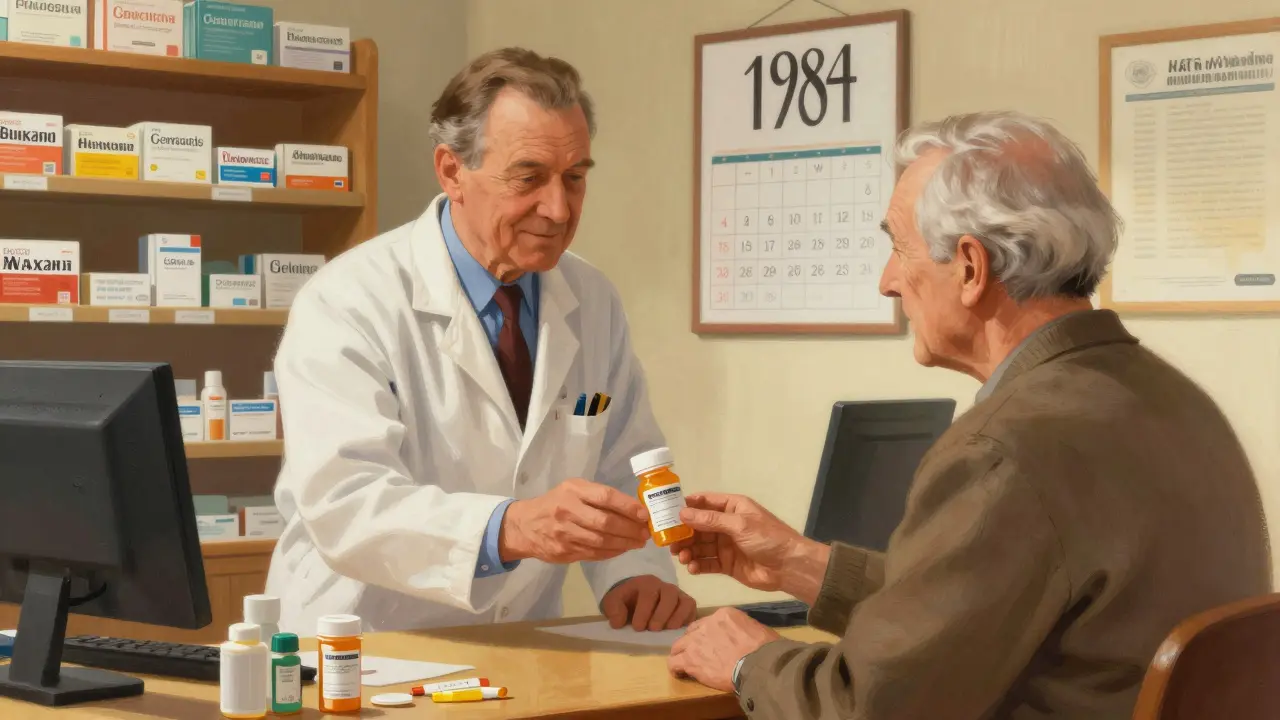
The ANDA process is the legal pathway in the United States that lets generic drug makers get their products approved without redoing the expensive clinical trials already done by the original brand-name drug company. It’s not a shortcut-it’s a carefully designed system built to balance innovation with affordability. Since the Hatch-Waxman Act became law in 1984, this process has made it possible for 9 out of 10 prescriptions in the U.S. to be filled with generic drugs, saving consumers over $2.2 trillion in the last decade alone.
What Is the ANDA Process?
The Abbreviated New Drug Application, or ANDA, is a submission to the U.S. Food and Drug Administration (FDA) that proves a generic drug is the same as its brand-name counterpart in every way that matters: active ingredient, strength, dosage form, route of administration, and how the body absorbs it. The word "abbreviated" doesn’t mean less rigorous-it means the generic maker doesn’t have to repeat the original safety and efficacy studies. Instead, they rely on the FDA’s prior approval of the brand-name drug, called the Reference Listed Drug (RLD).
Before the ANDA process existed, generic manufacturers had to run full clinical trials just to prove their drug worked. That made generics too expensive to produce. The Hatch-Waxman Act changed that by creating a legal framework where generic companies could prove equivalence through science-not retesting on humans. Today, developing a generic drug costs between $5 million and $10 million, compared to over $2.3 billion for a new brand-name drug.
Core Legal Requirements for ANDA Approval
To get an ANDA approved, manufacturers must meet five non-negotiable legal requirements set by the FDA:
- Identical active ingredient: The generic must contain the same active pharmaceutical ingredient (API) as the RLD. No exceptions unless a suitability petition is approved under Section 505(j)(2)(C) of the FD&C Act.
- Same dosage form and strength: Tablets, capsules, injections, creams-all must match the RLD exactly. If you want to change the form, you need a different pathway, like a 505(b)(2) application.
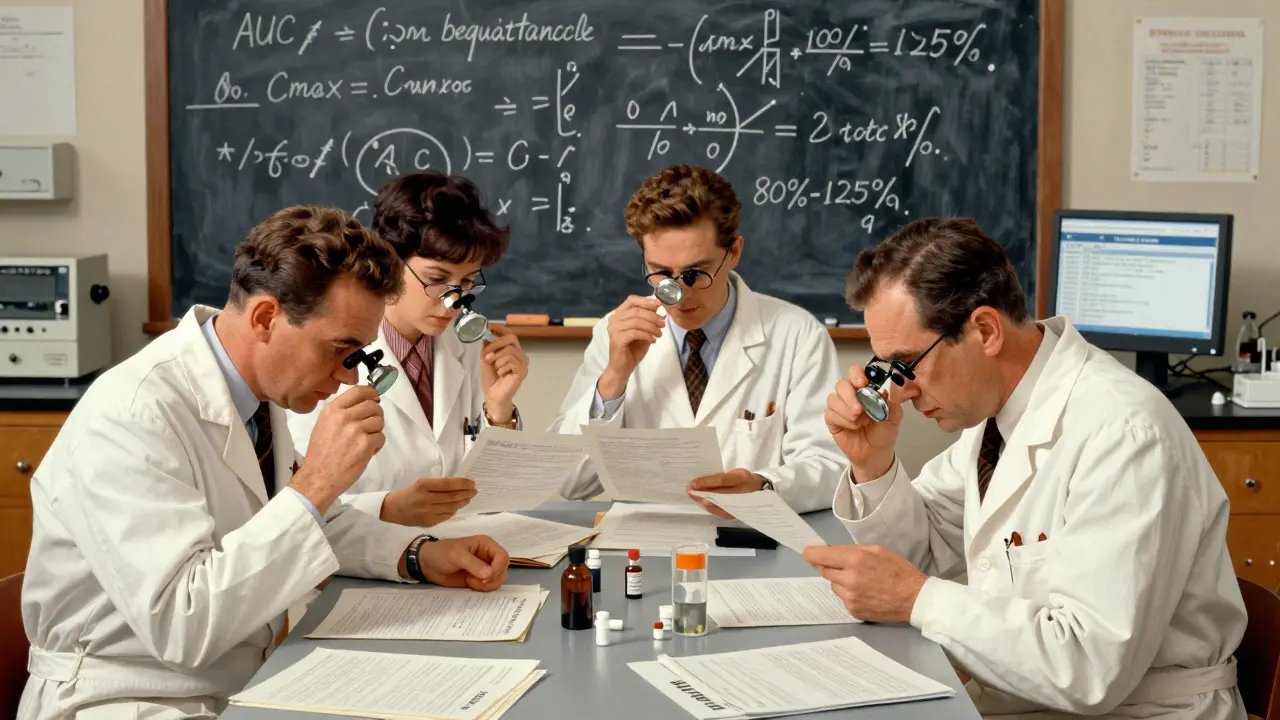
- Bioequivalence: This is the scientific heart of the ANDA. The generic must show that it delivers the same amount of drug into the bloodstream at the same rate as the brand. The FDA requires pharmacokinetic studies proving the 90% confidence interval for AUC and Cmax falls between 80% and 125% of the RLD. This isn’t a suggestion-it’s a legal threshold.
- Identical labeling: The prescribing information must be the same, except for minor differences like the manufacturer’s name or patent statements. You can’t add new warnings or remove existing ones without FDA approval.
- Comprehensive CMC data: Chemistry, Manufacturing, and Controls documentation must prove the generic is made under strict quality standards. This includes details on raw materials, manufacturing processes, equipment, packaging, and stability testing over time.
Every ANDA must be submitted in the Electronic Common Technical Document (eCTD) format. It also requires Form FDA-356h (the application form) and Form FDA-3674 (user fee cover sheet). Missing any of these? The FDA will refuse to receive it-no review, no second chance.
Manufacturing and Quality Rules
It’s not enough to say your drug is the same-you have to prove you can make it the same, every single time. The FDA requires all ANDA submissions to include data from exhibit batches made at commercial scale. That means at least 10% of your planned commercial batch size, or 100,000 dosage units, whichever is larger. These batches aren’t lab samples-they’re real production runs.
Manufacturing facilities must follow Current Good Manufacturing Practices (cGMP). The FDA inspects these sites before approving the ANDA. In 2022, 68% of all FDA Form 483 observations (which document violations) were at overseas facilities. If your plant fails inspection, your ANDA won’t get approved-no matter how perfect your bioequivalence data is.
Patent and Exclusivity Hurdles
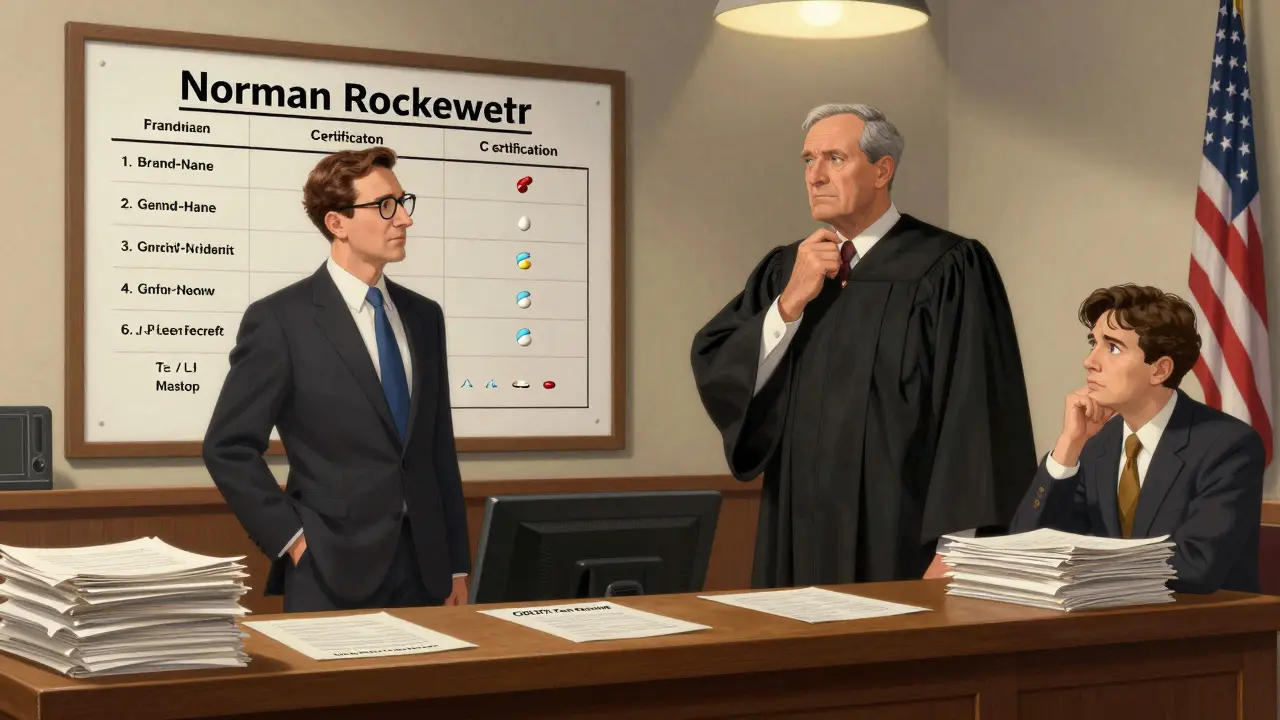
One of the most complex parts of the ANDA process is navigating patents. The Hatch-Waxman Act requires generic applicants to certify how they’re dealing with existing patents on the RLD. There are four types of certifications:
- Paragraph I: No patent listed in the Orange Book.
- Paragraph II: Patent has expired.
- Paragraph III: Patent will expire on a certain date-your product will launch after that.
- Paragraph IV: The patent is invalid or won’t be infringed. This is the most legally risky route-it triggers a 30-month stay if the brand company sues you for infringement.
Paragraph IV certifications are common-but dangerous. In 2023, one company on a pharmaceutical forum reported a 41-month delay because a Paragraph IV filing led to patent litigation. Even if your drug is perfectly bioequivalent, you can be blocked for years by lawsuits. That’s why many generic companies hire patent lawyers just to file an ANDA.
Costs, Fees, and Timelines
The FDA charges user fees under the Generic Drug User Fee Amendments (GDUFA). For fiscal year 2024, the fee for a new ANDA is $129,500. There’s also a $5,000 fee for each supplement. These fees fund the FDA’s review process, and they’re non-negotiable.
Timeline-wise, the FDA aims to review standard ANDAs within 10 months under GDUFA III (2023-2027). But reality often lags. In 2022, the average review time was 36 months. Why? First-cycle deficiency rates are high-58% of applications get a letter asking for more information. The most common reasons? Incomplete bioequivalence protocols (28%) and weak CMC data (23%).
Some companies get lucky. Lupin Limited got approval for a generic version of Jardiance in just 9.5 months because they submitted a "clean application" with flawless documentation. Others, like Teva, spent $28 million and 42 months trying to get approval for a generic inhaler. Complexity matters.
Complex Generics: The New Challenge
Not all drugs are created equal. Simple tablets? Easy. Inhalers, nasal sprays, topical creams, injectables? Not so much. These are called complex generics, and they’re the biggest bottleneck in the system today.
Why? Because you can’t just measure blood levels to prove they work. For an inhaler, you need to show the device delivers the same amount of drug to the lungs. For a topical cream, you need to prove the skin absorbs it the same way. The science is harder. The FDA’s approval rate for complex generics on first review is only 42%, compared to 78% for simple tablets.
That’s why the FDA launched its 2023 Drug Competition Action Plan II, investing $15 million in new scientific tools to help assess these products. But until those tools are fully developed, companies are stuck in a cycle of delays, re-submissions, and expensive retesting.
Who Succeeds in the ANDA Process?
Success doesn’t come from cutting corners. It comes from preparation. Companies that win have:
- Regulatory affairs teams with 2-3 years of experience
- Strong relationships with the FDA through pre-ANDA meetings (1,842 were held in FY2022)
- Deep expertise in CMC documentation
- Patent lawyers who understand Paragraph IV strategy
Many small companies fail because they underestimate the CMC section. One regulatory specialist on Reddit said: "We’ve had three ANDAs rejected solely because of inadequate container closure system validation data." That’s not a technical glitch-it’s a failure to follow the law.
The market is dominated by a few big players: Teva (18.7% share), Sandoz (14.2%), Amneal (9.8%), and Mylan (8.5%). But new entrants still succeed-especially those that focus on niche, high-demand generics like insulin or injectables, where brand companies haven’t fully protected their products.
What’s Next for the ANDA Process?
The future of the ANDA process is about speed and precision. GDUFA III is pushing the FDA to approve 90% of standard ANDAs within 10 months. AI-assisted document review is being tested to cut through paperwork faster. The CARES Act is also laying groundwork for a new pathway for biosimilars, though that’s separate from traditional ANDAs.
Meanwhile, Congress is looking at bills like the Affordable Prescriptions for Patients Act of 2023, which would limit "patent thickets"-the practice of filing dozens of minor patents to delay generics. If passed, it could reduce legal delays by up to 18 months.
But the biggest change? The market itself. As more complex drugs go off-patent-like biologics, inhalers, and injectables-the ANDA process will have to evolve. Companies that invest in scientific expertise, not just paperwork, will be the ones who thrive.
What is the difference between ANDA and NDA?
An NDA (New Drug Application) is for brand-name drugs and requires full clinical trials to prove safety and effectiveness. An ANDA is for generics and relies on the FDA’s prior approval of the brand-name drug, skipping clinical trials. NDA development takes 10-15 years and costs over $2 billion. ANDA takes 3-5 years and costs $5-10 million.
Can you change the formulation in an ANDA?
No. The generic must be identical in active ingredient, dosage form, strength, route of administration, and labeling. If you want to change the formulation-like adding a new excipient or changing the tablet coating-you need a 505(b)(2) NDA, which requires additional data and costs $50-100 million.
How long does an ANDA take to get approved?
The FDA’s goal is 10 months for standard ANDAs under GDUFA III. But in practice, it averages 30-36 months due to deficiencies in submissions. Complex generics often take over 40 months. Speed depends on application quality, patent issues, and whether the product is simple or complex.
What happens if the FDA refuses to receive an ANDA?
Refusal to receive means the application is incomplete or doesn’t meet minimum standards. The FDA won’t review it. Common reasons: missing forms, incomplete bioequivalence protocols, or inadequate CMC data. You must fix the issues and resubmit, paying the fee again. About 20% of first submissions are refused.
Why are generic drugs so much cheaper?
Generic drugs are cheaper because they don’t repeat the original clinical trials. They rely on the FDA’s prior approval of the brand-name drug. Development costs drop from $2.3 billion to $5-10 million. Competition among multiple generic makers drives prices down further-often by 80-90% after the first generic enters the market.
Jeffrey Frye
December 25, 2025 AT 02:12Aurora Daisy
December 25, 2025 AT 06:48Usha Sundar
December 25, 2025 AT 12:57claire davies
December 26, 2025 AT 19:40Wilton Holliday
December 28, 2025 AT 11:55Raja P
December 29, 2025 AT 12:13Joseph Manuel
December 30, 2025 AT 09:44Harsh Khandelwal
December 30, 2025 AT 16:13Andy Grace
January 1, 2026 AT 03:43Delilah Rose
January 1, 2026 AT 11:45Spencer Garcia
January 2, 2026 AT 00:53Abby Polhill
January 3, 2026 AT 09:13CHETAN MANDLECHA
January 4, 2026 AT 11:59Jillian Angus
January 4, 2026 AT 21:32Pankaj Chaudhary IPS
January 6, 2026 AT 04:14