Autoimmune Overlap: When PBC, PSC, and AIH Share Symptoms and Signs
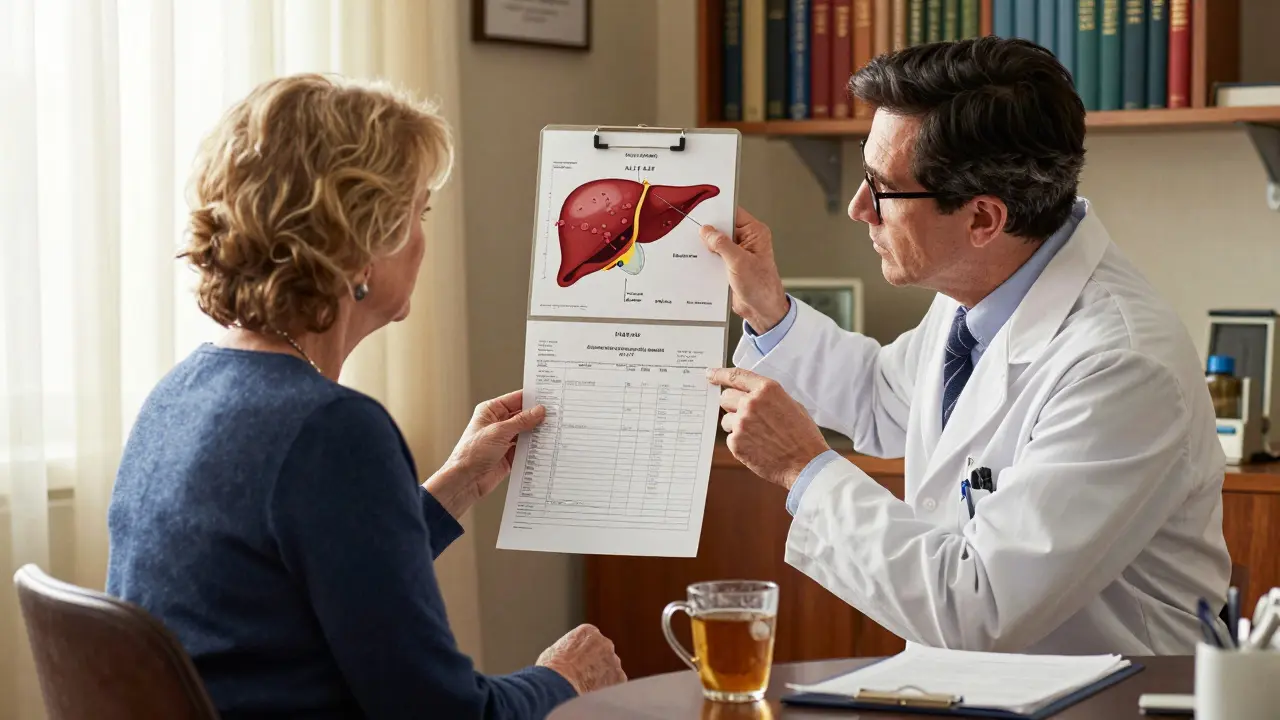
Most people think of liver diseases as separate conditions - one is PBC, another is AIH, and PSC is something else entirely. But in real life, the lines often blur. Some patients don’t fit neatly into one box. They show signs of two or even three autoimmune liver diseases at once. This isn’t rare. It’s more common than many doctors realize. And it changes everything - how you diagnose, how you treat, and what happens next.
What Exactly Is an Autoimmune Overlap Syndrome?
An autoimmune overlap syndrome happens when a person has features of more than one autoimmune liver disease at the same time. The most common combo is AIH and PBC. Less often, you’ll see AIH with PSC. But PBC and PSC together? That’s still debated. Most experts say it doesn’t really exist as a true overlap - just scattered case reports.
Think of it like this: your liver is under attack by your own immune system. In AIH, the attack targets liver cells. In PBC, it goes after the small bile ducts. In PSC, the bigger bile ducts get scarred and narrowed. When two of these attacks happen at once, your blood tests, biopsy results, and symptoms don’t look like either disease alone. They look like a mix.
Studies show AIH-PBC overlap occurs in 1% to 3% of people with PBC. But in people already diagnosed with AIH, up to 7% show signs of PBC too. That’s not a tiny group. That’s hundreds of thousands worldwide. And many go undiagnosed because doctors aren’t looking for it.
How Do You Spot an Overlap?
It starts with blood tests. Normal liver disease checks look for patterns. AIH usually means high ALT and AST - signs of liver cell damage. PBC and PSC? They spike ALP and GGT - that’s bile duct trouble. But in overlap syndrome, you get both. High ALT and high ALP. That’s your first red flag.
Then come the antibodies. PBC patients almost always have AMA - anti-mitochondrial antibodies. That’s the gold standard. If you have AMA, there’s a 95% chance it’s PBC. But in overlap cases, you might also have ANA or SMA - the antibodies linked to AIH. And IgG levels? They’re usually high in AIH. In PBC, IgM is the one that climbs. In overlap, you see both.
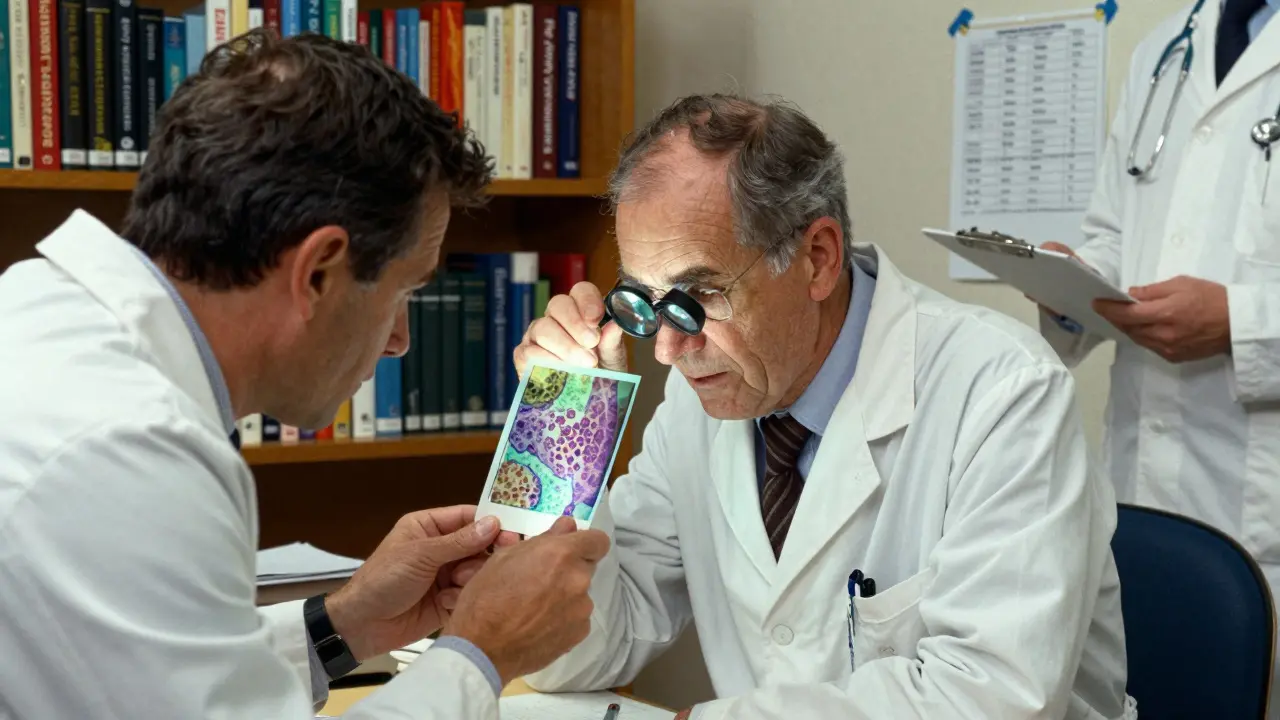
And then there’s the biopsy. A liver sample can show interface hepatitis - the hallmark of AIH - mixed with bile duct damage from PBC. It’s like finding two different types of damage in the same organ. That’s not coincidence. That’s overlap.
Here’s the catch: you can’t rely on one test. You need all the pieces. A positive AMA doesn’t rule out AIH. High IgG doesn’t mean you don’t have PBC. Doctors who only check for one thing miss this. And that’s why misdiagnosis happens in 15% to 20% of cases in community clinics.
Why AIH-PBC Is the Most Common Overlap
Why do AIH and PBC team up so often? No one knows for sure. But both diseases hit women more than men - around 90% of cases are female. Both tend to show up between ages 40 and 60. Both can run in families. And both involve immune cells attacking the liver in ways that sometimes look eerily similar.
Studies from Europe and the U.S. show that about 9% of PBC patients meet the criteria for overlap with AIH. That’s based on having at least two of the three diagnostic features for each disease: elevated ALP and AMA for PBC; elevated IgG, autoantibodies, and interface hepatitis for AIH.
One 2020 case study followed a 39-year-old man who had no symptoms for six years. His liver enzymes were just slightly off. Then, over time, his ALT rose sharply while ALP stayed high. AMA was positive. IgG was sky-high. The biopsy showed both bile duct loss and interface hepatitis. He didn’t fit PBC alone. He didn’t fit AIH alone. He fit both.
That’s the pattern. It’s not flashy. No jaundice. No fever. Just fatigue, joint aches, and slowly rising enzymes. Easy to ignore. Easy to misread.
What About PSC and PBC Together?
Here’s where things get murky. There are case reports - single patients who had bile duct scarring like PSC and AMA positivity like PBC. But experts agree: there’s no solid evidence this is a real overlap syndrome.
PSC usually affects younger people, often men, and is linked to inflammatory bowel disease. PBC is older, mostly women, and has no clear gut connection. Their patterns of bile duct damage are different. PSC scars the big ducts. PBC destroys the tiny ones. You don’t see both in the same person - not in a consistent, repeatable way.
So if someone has PSC-like changes on an MRCP scan and also tests positive for AMA, most hepatologists still call it PSC with a side of AMA - not a true overlap. It’s an anomaly, not a syndrome.
Treatment Is Not One-Size-Fits-All
This is where things get urgent. If you treat an overlap like it’s just PBC, you’ll fail. Ursodeoxycholic acid (UDCA) works great for PBC. But if AIH is also active, UDCA alone won’t stop the liver cell damage.
Studies show 30% to 40% of AIH-PBC overlap patients don’t respond to UDCA alone. Their ALT stays high. Their liver keeps getting injured. That’s when you need steroids - prednisone - or azathioprine. Sometimes both.
One 2008 review of nearly 200 patients found that 8% had overlap features. And those patients needed dual therapy. One patient in a 2020 case report started on UDCA. His enzymes improved a bit. But his ALT kept creeping up. He was added to low-dose prednisone. Within three months, his ALT dropped back to normal. His fatigue lifted. He didn’t need a transplant.
But here’s the hard part: you can’t start steroids without knowing for sure. Too much immunosuppression can make PBC worse. Too little, and AIH keeps eating away at the liver. It’s a tightrope walk. That’s why liver biopsy is so important - even if you already have AMA.

What Happens If You Don’t Treat It Right?
Left untreated, both PBC and AIH can lead to cirrhosis. In overlap syndrome, the risk is just as high - maybe higher. About 30% to 40% of untreated patients develop cirrhosis within 10 years. That’s the same as single-disease cases. But the path is faster because two systems are attacking at once.
And cirrhosis isn’t the end. It raises the risk of liver cancer. That’s why lifelong monitoring is non-negotiable. Every six months, you need blood tests, ultrasound scans, and sometimes a repeat biopsy. You’re not just watching enzymes. You’re watching for fibrosis, nodules, and changes in bile flow.
Transplant is still an option if things go south. But outcomes in overlap patients aren’t always the same as in pure PBC or AIH. Some studies suggest they have slightly higher rejection rates. Others show no difference. The data is still being collected.
What’s Next for Diagnosis and Treatment?
Right now, there are no official guidelines for diagnosing overlap syndromes. The criteria we use - two out of three features for each disease - are based on expert opinion, not large trials. That’s changing.
The European Association for the Study of the Liver and the International Autoimmune Hepatitis Group are running new studies right now. Their goal? To create validated diagnostic criteria by 2025. They’re looking at new antibodies - like sp100 and gp210 - that show up in 5% to 10% of AMA-negative PBC cases. These could help spot hidden overlaps.
Also, researchers are starting to see autoimmune liver diseases not as separate boxes, but as a spectrum. AIH-PBC overlap might just be one point on that line. Maybe the immune system doesn’t pick one target - it picks several. That could explain why some people respond better to combination therapy.
For now, the message is simple: if your liver enzymes don’t make sense, dig deeper. If you have AMA but your ALT is high, don’t assume it’s just PBC. If you have AIH but your ALP is climbing, check for AMA. Don’t stop at one test. Don’t stop at one diagnosis.
What Should You Do If You Suspect an Overlap?
If you’ve been diagnosed with PBC or AIH - and you’re not improving, or your numbers keep acting weird - ask for a full workup. That means:
- Check for AMA, ANA, SMA, and IgG levels
- Get a liver biopsy if your doctor hasn’t already done one
- Review your imaging - especially if you have PSC-like features
- Ask if your treatment plan includes both UDCA and immunosuppressants
- Find a hepatologist who’s seen overlap cases before
Don’t wait for symptoms to get worse. Fatigue, joint pain, and itching are common - but they’re not normal. They’re your body’s way of saying something’s off.
And if you’re a doctor reading this? Look beyond the textbook. Look at the whole picture. The liver doesn’t care about labels. It just reacts.
Can you have PBC and PSC at the same time?
There are rare case reports of people with both PBC and PSC features - like AMA positivity and bile duct scarring on imaging. But experts don’t consider this a true overlap syndrome. The two diseases affect different parts of the bile duct system and have different causes. Most hepatologists believe these are coincidental findings, not a combined disease.
Is an overlap syndrome more dangerous than a single autoimmune liver disease?
It’s not necessarily more dangerous, but it’s harder to treat. If you have both AIH and PBC, one treatment won’t fix both problems. Missing the overlap means your liver keeps getting damaged - even if you’re taking the right medicine for one part. That’s why early diagnosis matters. Untreated, about 30-40% of overlap patients develop cirrhosis within 10 years.
Do I need a liver biopsy if I already have AMA?
Yes, if your ALT or AST levels are unusually high, or if you have signs of inflammation like high IgG or symptoms that don’t match typical PBC. AMA confirms PBC, but it doesn’t rule out AIH. A biopsy is the only way to see if you have interface hepatitis - the key sign of AIH. Many overlap cases are missed because doctors skip the biopsy.
Can medications cause an autoimmune overlap?
Yes. There are documented cases where drugs like hydralazine triggered both AIH and PBC features in the same person. This is rare, but it shows that environmental triggers can push the immune system into attacking multiple liver targets. If you recently started a new medication and your liver tests changed, tell your doctor.
What’s the best treatment for AIH-PBC overlap?
The standard approach is combining ursodeoxycholic acid (UDCA) for PBC with immunosuppressants like prednisone or azathioprine for AIH. About 30-40% of patients need both. Starting with UDCA alone often fails if AIH is active. Treatment is personalized - based on which disease is more aggressive, your antibody profile, and how your liver responds over time.
Christina Widodo
January 12, 2026 AT 06:37So if you have AMA and high ALT, you can't just assume it's PBC? That makes so much sense. I knew someone whose doctor kept saying 'it's just PBC' for years until she finally got a biopsy and turned out to have AIH too. She was on UDCA alone and getting worse. The fatigue, the joint pain - it wasn't 'just aging.' It was her immune system tearing her liver apart from two sides.
Prachi Chauhan
January 13, 2026 AT 09:25bro this is wild. i thought liver stuff was like one disease one fix. turns out your body just throws a party and invites every autoimmune friend it has. AMA + ANA + high IgG? that's not a diagnosis, that's a cocktail. and no one tells you until your liver is screaming.
Sona Chandra
January 15, 2026 AT 04:38Doctors are still treating this like it's 1995. They see AMA and they stop. They see ALT and they shrug. This isn't rocket science. It's basic logic. If your liver looks like it's being attacked by two armies, you don't give one soldier a gun and call it a day. You arm both. But no, they'd rather let patients rot than admit they don't know everything.
Lawrence Jung
January 16, 2026 AT 04:45It's funny how medicine still thinks in boxes when biology doesn't. The liver doesn't care if your antibodies are labeled PBC or AIH. It just knows it's being eaten alive. The real problem isn't the overlap - it's the arrogance of specialists who think their domain is the only one that matters. You don't diagnose a storm by looking at one raindrop.
Jennifer Phelps
January 18, 2026 AT 04:23I had a biopsy done last year after my ALT stayed high despite UDCA. They found interface hepatitis. I didn't even know what that was. Turns out I had AIH-PBC overlap. No one mentioned it until I asked about the biopsy results. Why do they wait for you to figure it out yourself?
Lauren Warner
January 19, 2026 AT 20:53Let's be real. The medical system doesn't want to admit overlap syndromes exist because it breaks the billing codes. One diagnosis = one drug = one reimbursement. Two diagnoses? Now you need two specialists, two sets of tests, and a therapy combo that's not FDA-approved as a package. So they ignore it. It's not negligence. It's economics.
Amanda Eichstaedt
January 20, 2026 AT 22:22In India we call this 'dual fire' - two fires burning in the same house. You can't put out one fire and expect the house to be safe. Same with the liver. I’ve seen patients come in with AMA, normal ALP, but sky-high IgG and fatigue so bad they can't hold a spoon. They're told 'you're fine' because their PBC numbers look okay. But the AIH is quietly burning the foundation. That's the silent killer.
It's not just about labs. It's about listening. A woman told me her hands hurt every morning like she'd been lifting bricks. That wasn't arthritis. That was systemic inflammation. They missed it for two years.
Jose Mecanico
January 22, 2026 AT 17:05Just wanted to add - I'm a GI nurse and we've had 3 overlap cases in the last year. All women in their 50s. All were initially diagnosed with PBC. All had persistent ALT elevation. All improved after adding azathioprine. The biopsy was the key. One guy said 'I thought the AMA meant I was fixed.' I told him, 'AMA just tells you what's attacking. It doesn't tell you how many are attacking.' He cried. I didn't know what to say.
Abner San Diego
January 24, 2026 AT 14:58So what you're saying is the whole autoimmune liver thing is just a big mess and doctors are too lazy to untangle it? Classic. I bet if you told a German doctor this they'd write a 200-page paper with charts. Here? We just give you a pill and hope you don't die before your next appointment.
Katherine Carlock
January 25, 2026 AT 23:53I just want to say thank you to whoever wrote this. I’ve been lost for years. My doctor said 'it’s PBC' and I believed him. Then I found a Reddit thread about overlap syndromes and finally asked for a biopsy. It changed everything. I’m on UDCA and low-dose prednisone now. My energy is back. I’m not just surviving. I’m living. If you’re reading this and your numbers don’t add up - don’t give up. Keep asking. Keep pushing. You’re not crazy. Your liver is just fighting two wars at once.