Cirrhosis: Understanding Liver Scarring, Failure Risk, and Transplantation
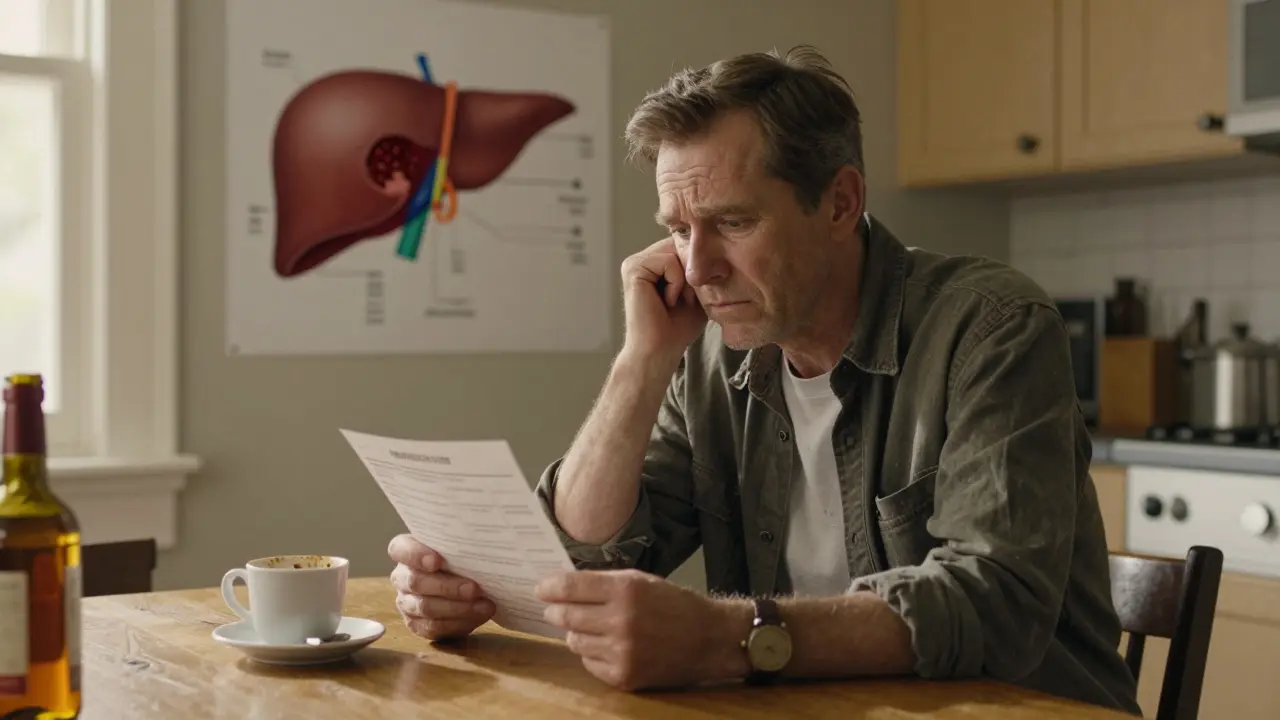
When your liver starts to scar, it doesn’t just get damaged-it slowly loses its ability to do the things your body absolutely depends on. Cirrhosis isn’t a sudden illness. It’s the quiet, steady breakdown of a vital organ, often going unnoticed until it’s too late. By the time symptoms show up, the liver may already be failing. This isn’t just about one disease. It’s about what happens when years of damage-from alcohol, hepatitis, or even fatty liver-pile up and turn healthy tissue into useless scar. And when that happens, the only real chance for survival is a transplant.
What Cirrhosis Really Means
Cirrhosis means your liver is covered in scar tissue. Not a little. Not a patch. A web of thick, stiff fibrous bands that twist around nodules of surviving liver cells. This isn’t healing. It’s a failed repair job. The liver tries to fix itself after injury, but when the damage keeps coming-year after year-it overreacts. Scar tissue builds up, blocks blood flow, and smothers the liver’s natural ability to regenerate.
The term comes from the Greek word kirrhos, meaning tawny yellow. That’s the color a cirrhotic liver turns. It’s not just cosmetic. That color comes from bile buildup, because the scar tissue clogs the ducts that carry bile out of the liver. And when bile backs up, toxins don’t get filtered. Nutrients aren’t processed. Blood doesn’t clot right. Your body starts to unravel.
Think of the liver as a factory. It cleans your blood, makes proteins, stores energy, breaks down drugs, and produces bile to digest fats. When cirrhosis sets in, half the factory shuts down. The rest struggles to keep up. And once scar tissue forms, it’s permanent. No pill, no diet, no supplement can undo it.
Compensated vs. Decompensated: The Two Faces of Cirrhosis
Not all cirrhosis is the same. There are two stages, and the difference between them can mean the difference between living for years and fighting for your life.
Compensated cirrhosis means your liver is scarred, but it’s still doing enough to keep you alive. You might feel fine. No jaundice. No swelling. No confusion. Blood tests might show elevated enzymes or low platelets, but you’re not sick. About 80-90% of people with compensated cirrhosis survive five years or more. But here’s the catch: you don’t feel it. That’s why so many people are diagnosed only after a routine blood test or an ultrasound for something else.
Decompensated cirrhosis is when the liver finally gives out. This is when symptoms crash in: fluid builds up in the belly (ascites), legs swell, you get confused or forget your own name (hepatic encephalopathy), your skin turns yellow (jaundice), and you start vomiting blood from ruptured veins in your esophagus (variceal bleeding). At this stage, survival drops to 20-50% over five years. And there’s no going back. The liver can’t recover. The only option is a transplant.
Doctors use scoring systems to measure how bad it is. The MELD score (Model for End-Stage Liver Disease) uses bilirubin, creatinine, and INR to predict death risk within three months. A score above 15 means serious danger. A score above 25? You’re in urgent need of a transplant. The Child-Pugh score looks at ascites, encephalopathy, bilirubin, albumin, and clotting time. Class A? You’re stable. Class C? You’re in critical condition.
What Causes Cirrhosis? The Big Three-and the Rising Fourth
It’s not one cause. It’s a list of habits, infections, and conditions that slowly destroy the liver over decades.
- Alcohol: Heavy drinking for 10+ years is the classic cause. But even moderate daily use can do damage over time. Alcohol doesn’t just hurt the liver-it triggers inflammation that turns into scarring.
- Hepatitis B and C: These viruses attack liver cells directly. Hepatitis C, in particular, is silent. Many people don’t know they’re infected until cirrhosis shows up. Thankfully, new antiviral drugs can cure hepatitis C in most cases-if caught early.
- Non-alcoholic fatty liver disease (NAFLD): This is the fastest-growing cause. It’s linked to obesity, diabetes, and high cholesterol. Fat builds up in the liver, triggers inflammation, and eventually leads to scarring. In the U.S., NAFLD now causes 24% of cirrhosis cases, surpassing alcohol. It’s happening in people who never drank a drop.
- Other causes: Autoimmune diseases, genetic disorders like hemochromatosis (too much iron), or blocked bile ducts (primary biliary cholangitis) can also lead to cirrhosis. But these are less common.
Here’s the hard truth: once cirrhosis develops, stopping the cause doesn’t reverse it. Quitting alcohol won’t undo the scars. Losing weight won’t clear the fibrosis. But it can stop it from getting worse. That’s why early detection matters more than anything.

How Is It Diagnosed? Blood Tests, Scans, and the Truth About Biopsies
Doctors don’t just guess. They piece together clues.
First, blood tests. High bilirubin? Low albumin? Long clotting time? Low platelets? These are red flags. Platelets drop because scar tissue blocks blood flow to the spleen, which then swells and traps platelets. Albumin falls because the liver can’t make it. Bilirubin rises because it can’t be processed.
Imaging is next. An ultrasound can show a shrunken, bumpy liver. But the real game-changer is elastography. This non-invasive test measures liver stiffness. A value over 12.5 kPa strongly suggests cirrhosis. Magnetic resonance elastography (MRE) is even more accurate-90% reliable, compared to 75% for the cheaper ultrasound-based version.
For years, liver biopsy was the gold standard. A needle pulls out a tiny piece of liver tissue, and a pathologist looks at it under a microscope. It’s accurate-but risky. Bleeding, infection, pain. Now, most doctors skip it unless they’re unsure. If blood tests, imaging, and history all point to cirrhosis, they don’t need to cut into you.
But here’s a warning: elastography can overestimate scarring if you have active inflammation, congestion, or recent alcohol use. That’s why doctors look at the full picture-not one test.
The Reality of Liver Transplantation
If you reach decompensated cirrhosis, transplant is your only hope. Not a cure. Not a fix. A lifeline.
Every year, about 8,780 liver transplants happen in the U.S. But there are 14,300 people on the waiting list. That means 12% of people on the list die each year before they get a donor liver. The system is stretched thin.
Who gets priority? The MELD-Na score. Higher score? Higher priority. It’s cold, clinical, and fair. A 60-year-old with a MELD of 32 gets a liver before a 30-year-old with a MELD of 18. No exceptions. No favoritism.
Transplant isn’t simple. You need to be healthy enough to survive surgery. No active infection. No uncontrolled cancer. No recent alcohol use for at least six months. You need a strong support system. Recovery takes months. Immunosuppressant drugs are lifelong. Infections, kidney damage, and rejection are constant risks.
But the results? They’re powerful. One-year survival after transplant is over 90%. Five-year survival? About 70%. For many, it’s a second chance at life. One patient on Reddit said: “Even after transplant, the mental fog took six months to clear. But I slept through the night for the first time in years.”
What You Can Do-Before It’s Too Late
If you have risk factors-obesity, diabetes, heavy drinking, hepatitis, or a family history-don’t wait for symptoms.
- Get tested. Ask for a liver enzyme panel (ALT, AST) and a FibroScan if available.
- Stop drinking. Even if you don’t have cirrhosis, alcohol accelerates damage.
- Control your weight and blood sugar. Losing 5-10% of body weight can reverse early fatty liver.
- Treat hepatitis C. It’s curable with 8-12 weeks of pills. No more needles. No more liver damage.
- Watch your sodium. If you already have cirrhosis, less than 2,000 mg a day helps prevent fluid buildup.
- Find a liver specialist. Not a general doctor. A hepatologist. They know the signs, the tests, and the timing.
There’s no magic pill. No miracle diet. But there is time-if you act early.
What’s Next? The Future of Cirrhosis Treatment
Science isn’t standing still. New drugs are in trials. One, called simtuzumab, targets the fibrosis process directly. In early studies, it slowed scarring by 30% in patients with fatty liver-related cirrhosis. Another, obeticholic acid, is already approved for a rare form of cirrhosis caused by bile duct damage.
Transplant tech is improving too. Machines that keep donor livers alive and beating outside the body (normothermic perfusion) are increasing the number of usable organs by 22%. Stem cell therapies are being tested to regenerate liver tissue. In one trial, patients saw their MELD scores drop by 40% after receiving hepatocyte transplants.
But the biggest breakthrough won’t be a drug or a machine. It’ll be early detection. If we can find cirrhosis before symptoms show, we can stop it. And that’s the real goal.
Can cirrhosis be reversed?
No-not once cirrhosis is fully developed. Scar tissue doesn’t go away. But if you catch liver damage early-before scarring sets in-you can reverse fatty liver or stop hepatitis from progressing. Quitting alcohol, losing weight, or curing hepatitis C can halt the damage. But once the liver is scarred, the focus shifts to preventing further harm and avoiding complications.
What are the early warning signs of cirrhosis?
There often aren’t any. That’s why cirrhosis is called a silent disease. But some people notice fatigue, unexplained weight loss, loss of appetite, or mild discomfort in the upper right abdomen. Blood tests showing elevated liver enzymes or low platelets are often the first clue. Jaundice, swelling, or confusion mean it’s already advanced.
Is a liver transplant a cure for cirrhosis?
It’s not a cure, but it’s the only way to replace a failed liver. After transplant, the new liver functions normally. But you still need to take anti-rejection drugs for life. You also need to avoid alcohol, maintain a healthy weight, and watch for infections. The transplant fixes the organ-but not the underlying risk factors. If you go back to drinking or gain weight, you can damage the new liver too.
How long can someone live with cirrhosis?
It depends on the stage. With compensated cirrhosis, many live 10-12 years or longer if they avoid alcohol, control their weight, and get regular care. Once decompensation happens, survival drops sharply. Without a transplant, only 20-50% live five years. With a transplant, over 90% survive at least one year. The key is timing-getting help before the liver collapses.
Can you die from cirrhosis without a transplant?
Yes. In fact, most people with advanced cirrhosis do. Complications like internal bleeding from swollen veins, brain damage from toxin buildup, kidney failure, or severe infections are common causes of death. These aren’t sudden. They build up over time. Without a transplant, the body eventually can’t compensate anymore. That’s why doctors push for transplant evaluation early-before it’s too late.
Roland Silber
March 6, 2026 AT 20:42One thing that really hits home is how silent cirrhosis is. I had a cousin who was always healthy-no drinking, no obesity-but got diagnosed with advanced NAFLD after a routine blood test. No symptoms, no warning. It’s scary how much damage can build up without you even noticing. I started getting regular liver panels after that. Seriously, if you’re over 40 and have any risk factors, just get tested. It’s cheaper than a transplant.
Also, the MELD score thing? That’s brutal but fair. No emotional appeals, just numbers. That’s how it should be. Everyone deserves a shot, but the system has to prioritize the sickest. I wish more people understood that.
Weston Potgieter
March 7, 2026 AT 20:38Transplant is just a bandaid. You think you’re fixed after surgery but you’re just on life support with a side of immunosuppressants. And don’t get me started on the 6-month sobriety rule. What if you’re a former alcoholic who’s been clean for 10 years? You still get penalized because some bureaucrat decided you’re a risk. Total nonsense.
Also who the hell is still drinking after being told they have cirrhosis? Like… are you trying to die faster?
Sean Callahan
March 8, 2026 AT 13:25so i had this friend who got diagnosed with cirrhosis and he was like oh its fine i just cut back on beer and started taking milk thistle
bro. no. no no no. it dont work like that. scar tissue dont undo itself. i watched him go from ‘i feel fine’ to ‘why am i peeing blood’ in 8 months. liver dont care about your intentions. it cares about what you put in it. and milk thistle is just a fancy tea.
Ferdinand Aton
March 8, 2026 AT 20:36Wait so you’re saying NAFLD is now the #1 cause of cirrhosis? Bro. That’s wild. I thought it was all about whiskey and hepatitis. Turns out the real villain is pizza, soda, and Netflix binges. We’re all just slowly cooking our livers with convenience food.
Also, I’m pretty sure the liver transplant waiting list is just a lottery where the only prize is death. How is this still a thing in 2025? We’ve got robots and AI, but we can’t fix organ donation? Come on.
William Minks
March 10, 2026 AT 02:34Just wanted to say thanks for this post. I’ve been living with NAFLD for 3 years now and this is the first time I’ve seen someone explain it without making me feel guilty. I lost 12% of my body weight, started walking daily, and my last FibroScan showed improvement. It’s not magic, but it’s possible.
Also, if you’re reading this and you’re scared-don’t be. Just take one step. Get tested. Talk to a hepatologist. You’re not alone. 🌱
Jeff Mirisola
March 11, 2026 AT 14:06People act like cirrhosis is some distant disease that happens to ‘other people.’ Nah. It’s happening to your neighbor, your coworker, your cousin who ‘only drinks on weekends.’ And the worst part? We don’t talk about it. We talk about heart disease. We talk about diabetes. But liver disease? Silence.
Why? Because it’s ‘self-inflicted.’ Bullshit. You don’t choose to be born with a genetic predisposition. You don’t choose to get hepatitis C from a blood transfusion in 1987. You don’t choose to work 80-hour weeks and eat takeout every night.
Stop shaming. Start screening.
Susan Purney Mark
March 13, 2026 AT 04:13This was so well written. I’m a nurse in a hepatology clinic and I see this every day. The guilt, the fear, the denial. So many patients think if they stop drinking, the damage disappears. I wish I could hand out copies of this to everyone who walks in.
Also-please, if you’re worried about your liver, ask for a FibroScan. It’s painless. No needles. No fasting. And it’s way more accurate than a biopsy. Most doctors don’t even know about it. Be your own advocate.
Ian Kiplagat
March 13, 2026 AT 18:19Interesting breakdown. UK stats show similar trends-NAFLD now leads alcohol in cirrhosis cases. But here’s the kicker: we’ve got no national screening program. No public health campaign. Just silence.
Meanwhile, people get told to ‘drink less’ like it’s a moral failing. We need policy, not just personal responsibility. Tax sugary drinks. Fund liver clinics. Train GPs. Simple.
Amina Aminkhuslen
March 15, 2026 AT 03:15Wow. Just… wow. You’d think after all these years we’d have figured out that the liver is not a sponge. You pour poison into it, it doesn’t just soak it up. It screams. It bleeds. It shuts down. And then you get to watch your body rot from the inside out.
And yet people still think a detox tea will fix it. Or that ‘I only drink on weekends’ makes me innocent. Honey. Your liver doesn’t keep a calendar. It keeps a ledger. And you’re way overdrawn.
amber carrillo
March 15, 2026 AT 18:57Thank you for this. As someone who works in public health, I’ve seen how little awareness there is. Most people think liver disease only affects heavy drinkers. The truth is far more complex. Early detection saves lives. Simple blood tests can catch it before it’s too late. We need to make this part of routine care, not something you only think about when you’re already sick.