Cochlear Implants: How Surgical Hearing Restoration Works for Profound Deafness

For someone with profound deafness, the world doesn’t just get quieter-it disappears. Conversations fade. Music becomes a memory. Even the sound of your own voice vanishes. Hearing aids won’t help here. They amplify sound, but if the inner ear’s hair cells are gone, amplification does nothing. That’s where cochlear implants come in. They don’t make sound louder. They bypass the broken parts of the ear entirely and speak directly to the brain.
How Cochlear Implants Work
A cochlear implant isn’t one device. It’s two parts working together: an external processor worn behind the ear, and a tiny internal implant surgically placed under the skin. The external part has a microphone that picks up sound, a processor that turns it into digital signals, and a coil that sends those signals through the skin to the internal implant. The internal part-a receiver-stimulator about the size of a quarter-then converts those signals into electrical pulses. These pulses travel along a thin electrode array, threaded into the cochlea, and stimulate the auditory nerve directly. The electrode array has between 12 and 22 contacts, each spaced less than a millimeter apart. Each contact targets a specific frequency range, mimicking how a healthy cochlea naturally separates pitch. High notes stimulate the front of the cochlea. Low notes hit the back. This isn’t perfect hearing. It’s not like listening to a song on a high-end speaker. But it’s enough to rebuild understanding. Adults who’ve been deaf for years often describe their first experience with the implant as hearing voices like robots or cartoon characters. Over time, the brain learns to interpret these signals as speech.Who Gets a Cochlear Implant?
Not everyone with hearing loss qualifies. Cochlear implants are meant for those with severe-to-profound sensorineural hearing loss-meaning the damage is in the inner ear or auditory nerve. Most candidates have tried hearing aids for months or years and still struggle to understand speech, even in quiet rooms. The standard test? If someone scores below 50% on sentence recognition tests with hearing aids turned up all the way, they’re likely a candidate. Children as young as 9 months old can get implants today. That’s a huge shift from the 1980s, when only adults who lost hearing after learning to speak were eligible. Now, babies born deaf can receive implants before they turn one. Early implantation means they can develop spoken language alongside their hearing peers. Kids implanted before age two often catch up to normal speech development by age five. Those implanted after age seven usually need years of intensive therapy just to reach the same level. Adults who’ve been deaf for decades can also benefit. One woman in New Zealand, deaf since her 30s, received her implant at 62. She told her audiologist she heard her granddaughter say ‘Mama’ for the first time in 15 years. That moment-simple, emotional, impossible with hearing aids-was why she had the surgery.The Surgery: What Happens on the Operating Table
The surgery takes about two hours. A small incision is made behind the ear, about 4 to 6 centimeters long. The surgeon drills through the mastoid bone to reach the middle ear. Then comes the delicate part: opening the cochlea. This can be done through the round window-a natural opening-or by making a tiny hole called a cochleostomy. The electrode array is gently threaded into the cochlea’s spiral, following its natural curve. Surgeons use real-time monitoring to avoid the facial nerve, which runs dangerously close. If the nerve twitches, the equipment alerts them. That’s how they prevent facial paralysis-a rare but serious risk. The receiver-stimulator is tucked into a pocket carved into the skull bone behind the ear. It’s held in place with screws. The whole thing is sealed under the skin. No wires stick out. No visible hardware. The only sign of the implant is a small, flat bump under the skin, usually hidden by hair. Most people go home the same day. There’s some swelling, mild pain, and numbness around the ear that lasts a few weeks. Dizziness is common for a few days but fades. Complications are rare-under 5% of cases-and major ones like infection or nerve damage happen in less than 1% when done by experienced teams.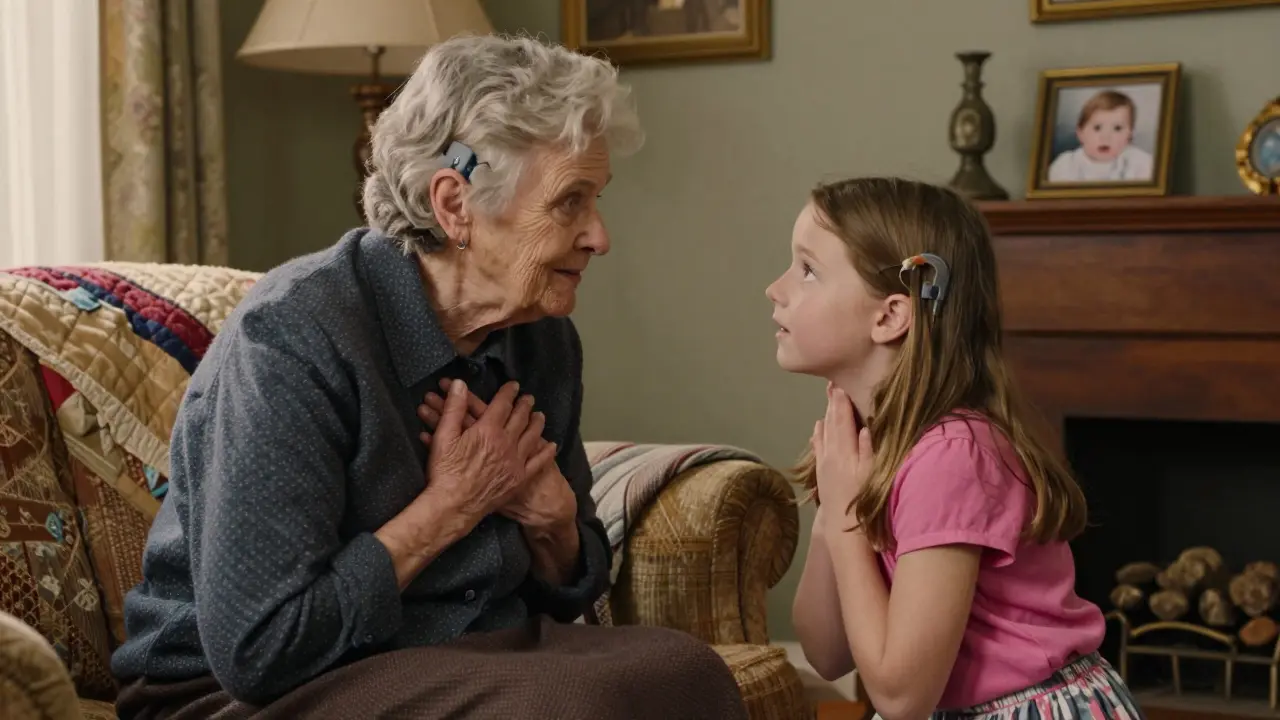
Activation and Rehabilitation: The Real Work Begins
The implant doesn’t turn on right away. You wait 2 to 4 weeks for the swelling to go down and the tissues to heal. Then comes activation. The audiologist connects the external processor, turns it on, and begins mapping-adjusting how much electrical current each electrode delivers. The first time you hear sound, it’s strange. Metallic. Beepy. Like a robot talking through a tin can. That’s normal. The brain hasn’t heard anything in years, or maybe ever. Rehabilitation is the key. This isn’t a plug-and-play device. It’s a skill. Adults need weekly sessions for months. Children need daily listening practice, speech therapy, and family involvement. A child implanted at age one might need two years of therapy to speak clearly. An adult who lost hearing at 40 might need six months to understand phone calls without lip-reading. Success isn’t guaranteed. About 90% of adults report major improvements in communication. But 15-20% still struggle with music. The brain doesn’t process pitch the same way through electrical pulses. Many users say they can recognize a song’s rhythm but not the melody. Others find voices clearer in quiet rooms but lose understanding in noisy places like restaurants or busy streets. In a 10-decibel noisy environment, speech recognition can drop from 80% to 40%.What’s New in Cochlear Implant Tech
The last decade brought big leaps. Older implants couldn’t go near MRI machines. You had to have surgery to remove the magnet inside before an MRI scan. Now, systems like the MED-EL SYNCHRONY 2 are fully compatible with 3.0 Tesla MRI machines. No extra surgery. No risk. That’s huge for older patients who might need brain or joint scans later in life. Newer processors use AI to filter background noise. They can focus on a single voice in a crowd, even when multiple people are talking. Hybrid implants are another breakthrough. They combine electrical stimulation for high pitches with acoustic amplification for low ones. That’s perfect for people who still hear low tones but lose the high ones-like the sound of birds or children’s voices. The internal device is built to last 20 to 30 years. The external processor? That’s upgradeable. Every few years, you can swap out the processor for a newer model without another surgery. That means your implant keeps getting better as technology improves.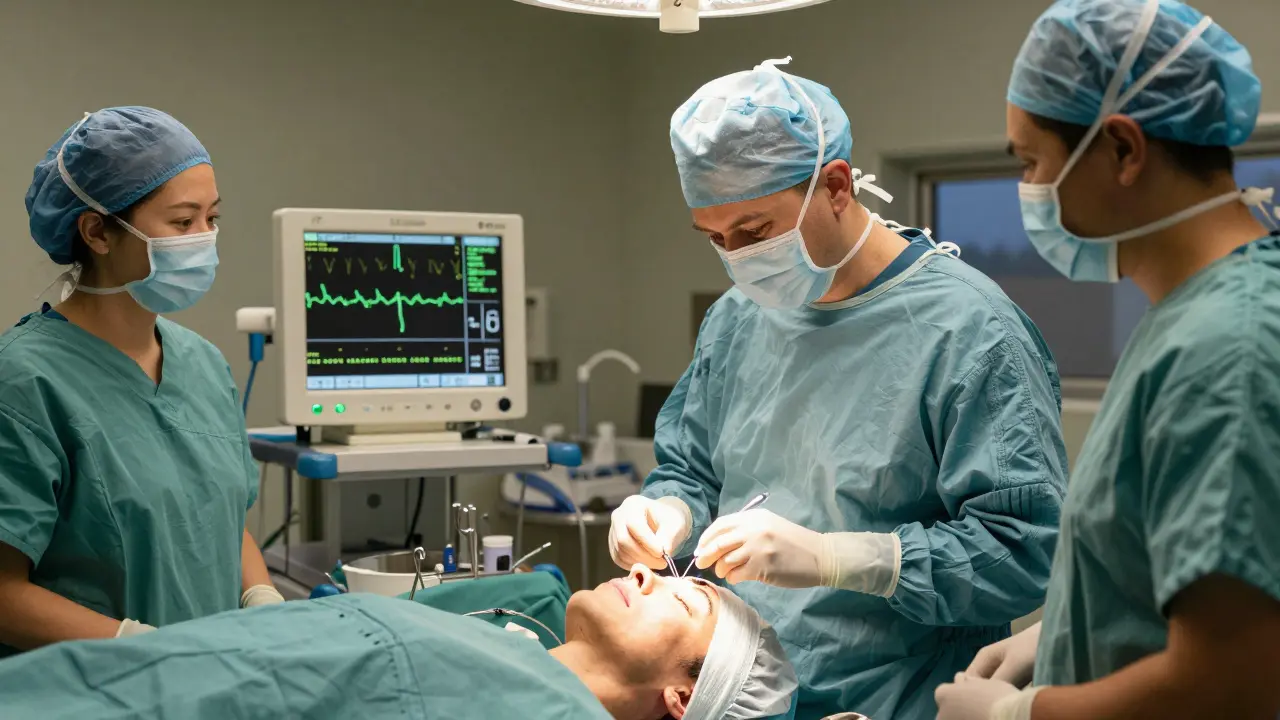
Limitations and Realistic Expectations
Cochlear implants don’t cure deafness. They don’t restore natural hearing. They give access to sound, and with time and effort, that can mean understanding speech, answering the phone, or hearing your name called across a room. But they won’t make you hear a whisper in a windstorm. They won’t let you enjoy a symphony like you used to. They’re also not for everyone. If the auditory nerve is damaged or missing, the implant won’t work. That’s why testing is so thorough before surgery. Some people experience persistent tinnitus or dizziness after implantation. About 5-10% need revision surgery due to device failure or electrode migration. And cost? In the U.S., insurance usually covers it if you meet strict criteria: pure-tone average over 70 dB, speech recognition under 50% with hearing aids. But access isn’t equal. In rural areas or low-income countries, finding a qualified implant center can be hard. Even in places like New Zealand, wait times can stretch over a year.What Comes Next?
Researchers are working on drug-coated electrodes to reduce scar tissue buildup around the implant, which can dull signal strength over time. Others are testing wireless charging so you won’t need to wear an external battery pack. Some labs are even exploring direct brain interfaces-bypassing the cochlea and auditory nerve altogether. For now, cochlear implants remain the most effective way to restore hearing for those with profound deafness. They’ve given thousands of people back their connection to the world-not perfectly, but meaningfully. A child who speaks clearly. A grandmother who hears her grandchild laugh. A man who finally understands his wife’s voice after decades of silence. That’s the real measure of success.Can cochlear implants restore normal hearing?
No. Cochlear implants don’t restore natural hearing. They bypass damaged parts of the ear and send electrical signals directly to the auditory nerve. Users hear sound differently-often described as robotic or mechanical at first. With time and therapy, most learn to understand speech clearly, but music and background noise remain challenging. The goal isn’t to replicate natural hearing, but to provide functional communication ability.
How long does it take to hear properly after implant surgery?
Activation happens 2 to 4 weeks after surgery, once healing is complete. But understanding speech takes months. Most adults notice improvement within 3 to 6 months, with continued progress up to a year. Children need 1 to 2 years of daily therapy to reach age-appropriate speech and language levels. The brain needs time to learn how to interpret the new signals.
Are cochlear implants safe for MRI scans?
Yes, but only with newer models. Implants like the MED-EL SYNCHRONY 2 and Cochlear Nucleus 7 are fully compatible with 3.0 Tesla MRI machines without requiring magnet removal surgery. Older models may require a surgical procedure to remove the internal magnet before an MRI. Always check your device model and consult your implant center before scheduling any imaging.
Can children with cochlear implants learn to speak normally?
Yes, if implanted early. Children who receive implants before age two, and receive consistent auditory-verbal therapy, often develop speech and language skills close to their hearing peers. Those implanted after age seven typically need more intensive, long-term therapy and may not reach the same level of fluency. Early intervention is the biggest factor in long-term success.
What are the risks of cochlear implant surgery?
Serious complications are rare, occurring in less than 1% of cases when performed by experienced teams. Possible risks include infection, facial nerve injury (which can cause temporary or permanent weakness), dizziness, tinnitus, or device failure. About 5-10% of recipients need revision surgery due to internal component malfunction or electrode displacement. Most side effects, like scalp numbness, resolve within weeks.
Do cochlear implants work for single-sided deafness?
Yes. Recent FDA guidelines now include adults with single-sided deafness (SSD) as candidates, especially if they struggle with localizing sound or understanding speech in noisy environments. While not as common as bilateral implants, single-sided implants can significantly improve spatial hearing and reduce listening fatigue in challenging environments.
How long do cochlear implants last?
The internal implant is designed to last 20 to 30 years and often functions for life. The external sound processor is upgradeable-every few years, you can get a newer model without another surgery. Most users keep the same internal device for decades, only replacing the external unit as technology improves.
Katie Mccreary
January 27, 2026 AT 10:39This is wild-I had no idea implants could work for single-sided deafness. My cousin’s been struggling with that for years, and now I’m gonna push her to get tested.
Lance Long
January 27, 2026 AT 19:00Let me tell you, I cried when my mom heard her granddaughter say ‘I love you’ for the first time after her implant. Not some Hollywood moment-just a quiet kitchen, 7 a.m., coffee steaming, and her whispering back like she’d forgotten how. This tech? It’s not magic. It’s miracles with wires.
Timothy Davis
January 28, 2026 AT 07:5490% success rate? That’s a lie. You’re ignoring the 15-20% who still can’t distinguish voices in noise, the ones who develop chronic tinnitus, and the 5-10% who need revision surgery. This isn’t a cure-it’s a compromise with a $100k price tag and a skull screw.
fiona vaz
January 29, 2026 AT 20:03Early implantation is everything. My niece got hers at 11 months. Now she’s in kindergarten, reading chapter books, and asking why her classmates wear ‘ear things.’ No therapy, no drama-just normal. The brain adapts faster than we think.
Sue Latham
January 31, 2026 AT 13:05Ugh, I just don’t get why people are so obsessed with ‘hearing’ anymore. Sign language is beautiful, expressive, cultural. Why force kids into this robotic auditory world? It’s like making a painter learn to play piano because ‘it’s progress.’
John Rose
February 1, 2026 AT 00:56Can anyone confirm if the newer MRI-compatible implants still require a head wrap during scans? I’ve heard conflicting reports, and my neurologist seems unsure. I’m scheduled for a brain MRI next month and need clarity.
Lexi Karuzis
February 2, 2026 AT 16:22Wait-so they’re putting a metal device in your skull and calling it safe? And you’re just supposed to trust that it won’t interfere with your brain? What about long-term EMF exposure? Who’s funding this? Big Pharma? The military? I’m not buying it. This is surveillance tech disguised as medicine.
Brittany Fiddes
February 3, 2026 AT 22:32Oh, so now Americans think they’ve invented the wheel? In the UK, we’ve had cochlear implants since the 80s-and our NHS covered them without the $100k drama. You people turn every medical breakthrough into a capitalist carnival. We don’t need your ‘hybrid’ nonsense. We’ve had it right for decades.
Colin Pierce
February 4, 2026 AT 23:56My brother got his implant at 52 after 20 years of silence. First thing he heard? His dog barking. He just sat there, staring at the ceiling, crying silently. Didn’t say a word for 10 minutes. That’s the real win-not speech tests, not stats. It’s the dog.
Mark Alan
February 6, 2026 AT 20:40THIS IS THE FUTURE!! 🤯⚡️ I just got my Nucleus 7 last month and I can hear my phone ring from another room! No more yelling ‘WHAT?!’ at my wife! 😭👏 #CochlearRevolution #HearingIsFreedom
Amber Daugs
February 7, 2026 AT 11:16People act like this is some miracle, but what about the kids who grow up with implants and still feel like outsiders? They don’t belong in the hearing world-and they’re not fully part of Deaf culture either. You’re creating a generation of lost kids in the name of ‘normalcy.’
Robert Cardoso
February 9, 2026 AT 07:02The entire premise is flawed. You’re not restoring hearing-you’re replacing a biological system with a crude electrical approximation. The brain is not a speaker. It’s not meant to interpret digitized waveforms as speech. This is neurological hacking, not medicine. And we’re celebrating it like it’s enlightenment.
James Dwyer
February 10, 2026 AT 07:08My dad got his at 68. He still can’t enjoy music, but he hears the rain on the roof now. And that’s enough. Sometimes the smallest things are the loudest.
jonathan soba
February 12, 2026 AT 02:25Interesting how the article glosses over the fact that most users still can’t use the phone without visual cues. That’s not functional hearing-that’s assisted lip-reading with static.
matthew martin
February 12, 2026 AT 17:11Imagine your whole life, silence. Then one day, you hear your kid’s laugh-really hear it, not feel it in your chest, but actually *hear* it, like a bell ringing inside your skull. That’s not tech. That’s a second chance at being human. I don’t care if it sounds like a robot. I’d take a thousand robot voices over silence any day.