Compounding Pharmacies: Alternatives When Drugs Are Unavailable
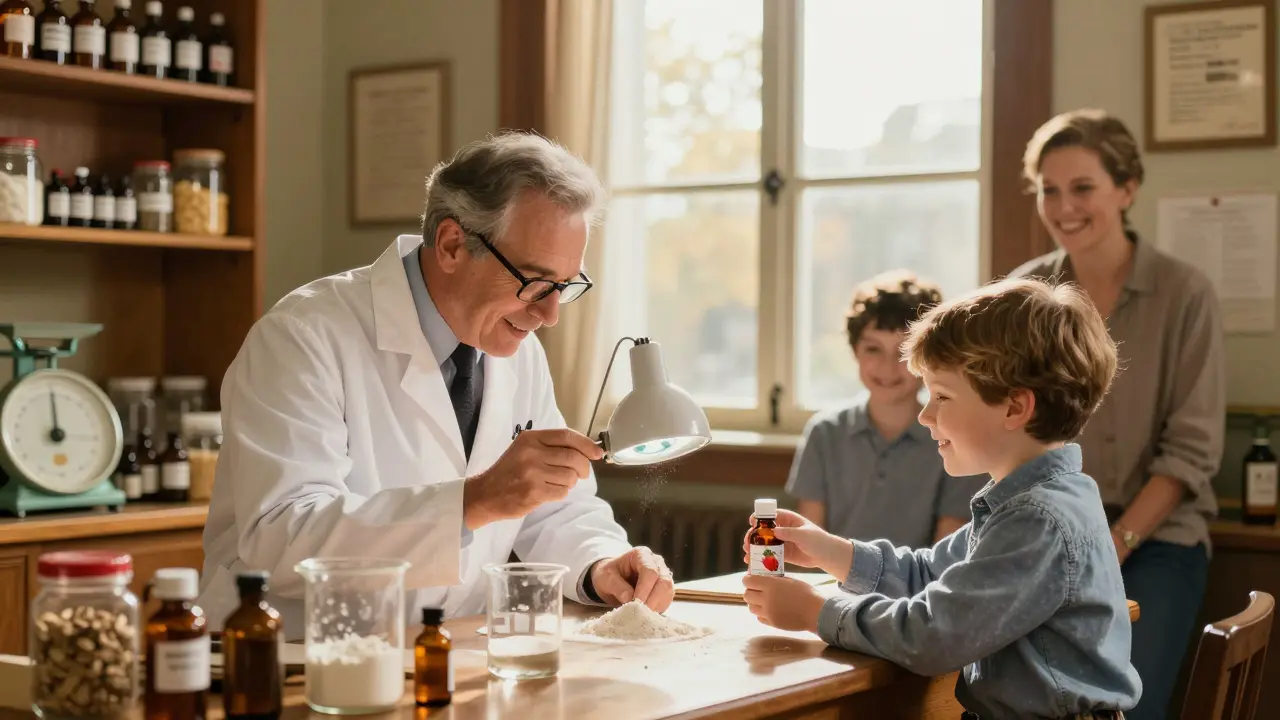
When your prescription runs out and the pharmacy says it’s backordered-again-you’re not alone. In 2025, over 350 drugs in the U.S. were in short supply, from simple antibiotics to life-saving heart medications. For many, the answer isn’t waiting weeks or switching to a different drug that might not work. It’s compounding pharmacies.
What Exactly Is a Compounding Pharmacy?
A compounding pharmacy doesn’t just fill prescriptions. It builds them. These specialized labs take raw ingredients and mix them into custom formulas that aren’t available in stores. Need a liquid version of a pill your child can’t swallow? Done. Need a cream without dyes or gluten because you’re allergic? They make it. Need a dose that’s exactly 12.5 mg when the closest commercial option is 25 mg? They’ll measure it down to the milligram. Unlike regular pharmacies that stock mass-produced drugs, compounding pharmacies work like custom kitchens. They don’t serve pre-made meals-they cook to your exact recipe. And they do it under strict rules. In the U.S., they follow USP <795> for non-sterile mixes and USP <797> for sterile ones, meaning they work in clean rooms with controlled air and equipment designed to avoid contamination.Why Do People Need Them?
Drug shortages aren’t rare. They happen every year. In 2023, the FDA recorded 387 shortages. Some are temporary. Others last months. When that happens, patients with chronic conditions-like epilepsy, thyroid disorders, or hormone imbalances-face real risks. Compounding pharmacies step in where big manufacturers can’t or won’t. Here’s how they help in real cases:- Children who can’t swallow pills get flavored liquids-strawberry, bubblegum, even grape-that actually taste good. One study showed adherence jumped from 40% to 73% when kids got a palatable version.
- Seniors with swallowing problems get topical gels or troches (lozenges) instead of tablets.
- People allergic to lactose, dyes, or preservatives get formulations stripped of those triggers. About 1 in 5 people have sensitivities to these additives, and regular meds can cause rashes, stomach pain, or worse.
- Patients on hormone therapy get personalized doses based on blood tests, not the one-size-fits-all pills sold in stores.
How Do They Compare to Regular Pharmacies?
Regular pharmacies are great for standard meds. Fast. Affordable. Covered by insurance. But they’re limited to what’s on the shelf. Compounding pharmacies fill the gaps:| Feature | Standard Pharmacy | Compounding Pharmacy |
|---|---|---|
| Availability | Immediate | 24-72 hours |
| Dosage Flexibility | Fixed strengths only | Custom microgram to milligram doses |
| Form Options | Pills, capsules, injections | Liquids, creams, gels, suppositories, troches |
| Allergen-Free | Usually contains additives | Can remove gluten, dyes, lactose, preservatives |
| Insurance Coverage | Usually covered | Often out-of-pocket (45% of cases) |
| Regulatory Approval | FDA-approved | Not FDA-approved, but must follow USP standards |

When Can’t They Help?
Compounding isn’t magic. It can’t replicate everything. You can’t get a compounded version of a biologic drug-like insulin or Humira-because those are made from living cells. You can’t compound a drug that requires factory-level purity or complex synthesis. And if a regular version of your medicine is available and safe, pharmacists won’t compound it. Dr. Robert Smith from the National Community Pharmacists Association points out that about 15% of compounded prescriptions could’ve been filled with standard drugs. That’s unnecessary risk. Compounding isn’t a loophole. It’s a lifeline-for the right cases.How to Find a Good One
Not all compounding pharmacies are equal. Some follow strict guidelines. Others cut corners. Here’s how to pick wisely:- Look for PCAB accreditation. The Pharmacy Compounding Accreditation Board only accredits about 1,200 pharmacies nationwide. That’s less than 20% of all compounding pharmacies. It means they’ve passed inspections on cleanliness, training, and record-keeping.
- Ask if they use verified raw ingredients. Reputable pharmacies get their chemicals from FDA-registered suppliers.
- Check if they do stability testing. Good labs test how long their compounds last. Some last 30 days. Others last 90. Don’t assume.
- Ask your doctor to write a clear prescription with medical rationale. For example: “Patient allergic to FD&C Red No. 40. Require liquid formulation of levothyroxine without alcohol or preservatives.”
Cost and Insurance
This is the biggest hurdle. Most insurance plans don’t cover compounded meds-or they cover them poorly. About 45% of patients pay full price out of pocket. A compounded thyroid pill might cost $60 instead of $10. A hormone cream can run $120 a month. But here’s the twist: sometimes, it’s cheaper than the alternative. If you’re having side effects from a commercial drug and ending up in the ER, or missing doses because your child won’t take the pill, the cost of non-adherence is higher than the compound. Some pharmacies offer payment plans. Others work with specialty pharmacies that bill insurance as a “specialty medication.” It’s not guaranteed, but it’s worth asking.
Real Stories, Real Results
One Reddit user shared how their son, diagnosed with ADHD, couldn’t tolerate the dye in Adderall. He’d break out in hives. A compounded version without dyes or fillers? No reaction. He’s been on it for two years. Another patient with chronic pain switched from oral opioids to a topical compounded gel with lidocaine, ketamine, and gabapentin. She went from needing 10 pills a day to one application twice daily. Her GI issues disappeared. Her pain dropped by 60%. Even in hair loss treatment, a topical finasteride cream reduced side effects from 32% to just 8% compared to the pill. That’s not a fluke-it’s science.The Future of Compounding
The market is growing. It was worth $11.2 billion in 2022 and is projected to hit $15.8 billion by 2027. Why? Because drug shortages aren’t going away. And people want more control over their meds. New tech is helping too. Digital formulation tools reduce errors by 37%. Stability testing now extends shelf life by up to 40%. Some labs are even starting to use genetic data to tailor doses-like adjusting a pain med based on how fast your body metabolizes it. Regulators are paying attention. The FDA updated its guidance in 2022 to clarify when compounding is acceptable during shortages. PCAB raised its standards in January 2023. That’s good news. It means the best pharmacies are getting better.Bottom Line
Compounding pharmacies aren’t the answer to every drug shortage. But for people with allergies, swallowing issues, rare conditions, or those who just need a dose that doesn’t exist on a shelf-they’re essential. They’re not a backup. They’re a bridge. If your doctor says, “There’s no alternative,” ask: “Have you talked to a compounding pharmacist?” It might change everything.Are compounded medications safe?
Yes-when they’re made by accredited pharmacies following USP standards. Compounded drugs aren’t FDA-approved like mass-produced ones, but they’re held to strict quality rules. Look for PCAB accreditation, ask about ingredient sources, and check if the pharmacy does stability testing. Avoid pharmacies that don’t provide documentation or seem rushed.
Can any pharmacy compound drugs?
Technically, many can-but not all should. Only about 7,500 U.S. pharmacies specialize in compounding. Most retail pharmacies do little to no compounding. Even if your local pharmacy offers it, they may lack the clean room, training, or equipment needed for safe, sterile preparations. Always ask if they’re PCAB-accredited or if they outsource to a specialized lab.
How long does it take to get a compounded prescription?
Typically 24 to 72 hours. Simple non-sterile formulas (like creams or liquids) often take a day. Sterile compounds-like injections or IV solutions-take longer because they require extra testing and validation. Plan ahead. Don’t wait until your last pill is gone.
Will my insurance cover compounded medications?
Sometimes. Many plans don’t cover them outright, or they require prior authorization. About 45% of patients pay out of pocket. But some pharmacies help you file claims as specialty medications. Ask if they work with a specialty pharmacy network. If the compound is medically necessary, your doctor can write a letter of medical necessity to appeal.
Can compounding pharmacies make any drug I want?
No. They can’t make drugs that require complex manufacturing-like biologics, vaccines, or insulin. They also can’t make drugs that are unsafe, illegal, or already available in a suitable form. The FDA and state boards regulate what’s allowed. Compounding is meant for real gaps in care, not convenience.
Brian Anaz
January 6, 2026 AT 01:13This whole compounding thing is just a scam to get rich off desperate people. Big Pharma doesn't want you to know this, but most of these 'custom' meds are just rehashed junk with fancy labels. If your kid can't swallow a pill, get a syringe. If you're allergic to dye, use a different med. Stop paying $60 for a pill that should cost $5.
Saylor Frye
January 7, 2026 AT 22:16Let’s be real-compounding pharmacies are the last refuge of the medically eccentric. I mean, who needs FDA approval when you can just have your cousin’s neighbor’s lab mix up some ‘hormone cream’ with a dropper and a prayer? It’s like artisanal cheese, but for your endocrine system. Delightfully unnecessary.
Kiran Plaha
January 7, 2026 AT 22:40Interesting. In India, we don’t have many compounding pharmacies, but I’ve seen people use herbal mixes for thyroid and pain. Not the same, but similar idea-customizing treatment because the standard options don’t work. I wonder if these US labs follow the same safety steps as our Ayurvedic labs?
Harshit Kansal
January 8, 2026 AT 11:52My aunt took a compounded version of her blood pressure med after her insurance dropped coverage. She cried when she got it because she hadn’t slept in three nights from the side effects of the generic. This isn’t luxury-it’s survival. If you’re not crying over someone’s medicine, you’re not paying attention.
Vinayak Naik
January 8, 2026 AT 12:34Yo, I used to work at a compounding lab in Austin-yeah, the real deal, PCAB-certified, clean rooms, the whole nine. We made this wild lil’ cream for a kid with eczema who couldn’t touch ANY commercial lotion. Added colloidal oat, no parabens, no fragrance-just pure chill. He started hugging his mom again after two weeks. That’s the magic. Not hype. Real shit.
Cam Jane
January 9, 2026 AT 16:46Guys. I know this sounds like a niche thing, but if you’ve ever had to give a toddler medicine and they spit it out or scream like they’re being tortured, this is your lifeline. My daughter had epilepsy meds that tasted like battery acid-until we got a strawberry-flavored liquid from a compounding pharmacy. She took it like candy. We went from 3 ER visits a month to zero. This isn’t ‘alternative medicine.’ This is just smart medicine.
Amy Le
January 10, 2026 AT 23:23Compounding = government failure. Why are we letting private labs fill in for a broken drug supply chain? This isn’t innovation-it’s chaos. If the FDA can’t ensure availability, why are we trusting some guy in a basement with a beaker? Also, $120 for a cream? I’d rather take the side effects.
Pavan Vora
January 12, 2026 AT 05:10My uncle in Kerala used to get his insulin compounded by a local pharmacist-yes, in a small shop with a fridge and a white coat. No fancy lab, but he lived 15 years longer than expected. So maybe standards aren’t everything? Maybe care is? Just saying…
Indra Triawan
January 13, 2026 AT 19:26I used to think this was just a rich person’s luxury… until I saw my best friend’s daughter go into anaphylaxis from a dye in her ADHD med. Now I see it as a quiet revolution. People are being forced to take back control of their bodies because the system failed them. It’s beautiful and terrifying at the same time.
Susan Arlene
January 13, 2026 AT 23:33My mom’s on a compounded thyroid med. Costs more. Takes longer. But she doesn’t feel like a zombie anymore. So yeah. I’m not here to debate regulations. I’m here to say: if it works, and it’s safe, why are we arguing?
Joann Absi
January 13, 2026 AT 23:44THIS IS THE FUTURE. 🌟 Imagine if your meds were tailored to your DNA, your gut biome, your stress levels. Compounding isn’t a workaround-it’s evolution. Big Pharma is scared because they can’t mass-produce individuality. This is personal medicine. And it’s GLORIOUS. 💪
Ashley S
January 14, 2026 AT 07:39So we’re just going to let unregulated labs make drugs now? That’s how people die. Remember the fungal meningitis outbreak? That was compounding. This isn’t ‘personalized care’-it’s a lawsuit waiting to happen.
Venkataramanan Viswanathan
January 14, 2026 AT 23:26While I appreciate the innovation described, I must emphasize that regulatory oversight remains non-negotiable. The Indian Pharmaceutical Alliance has long advocated for centralized quality control in customized formulations. Without standardized protocols, even well-intentioned compounding can lead to unintended harm. Safety must precede convenience.