Decreased Sweating and Heat Intolerance from Medications: A Complete Guide
Medication Heat Risk Estimator
Select your primary medication class to see its specific impact on your body's cooling system.
Risk Assessment
Configure settings and click calculate to view your personalized heat risk profile.
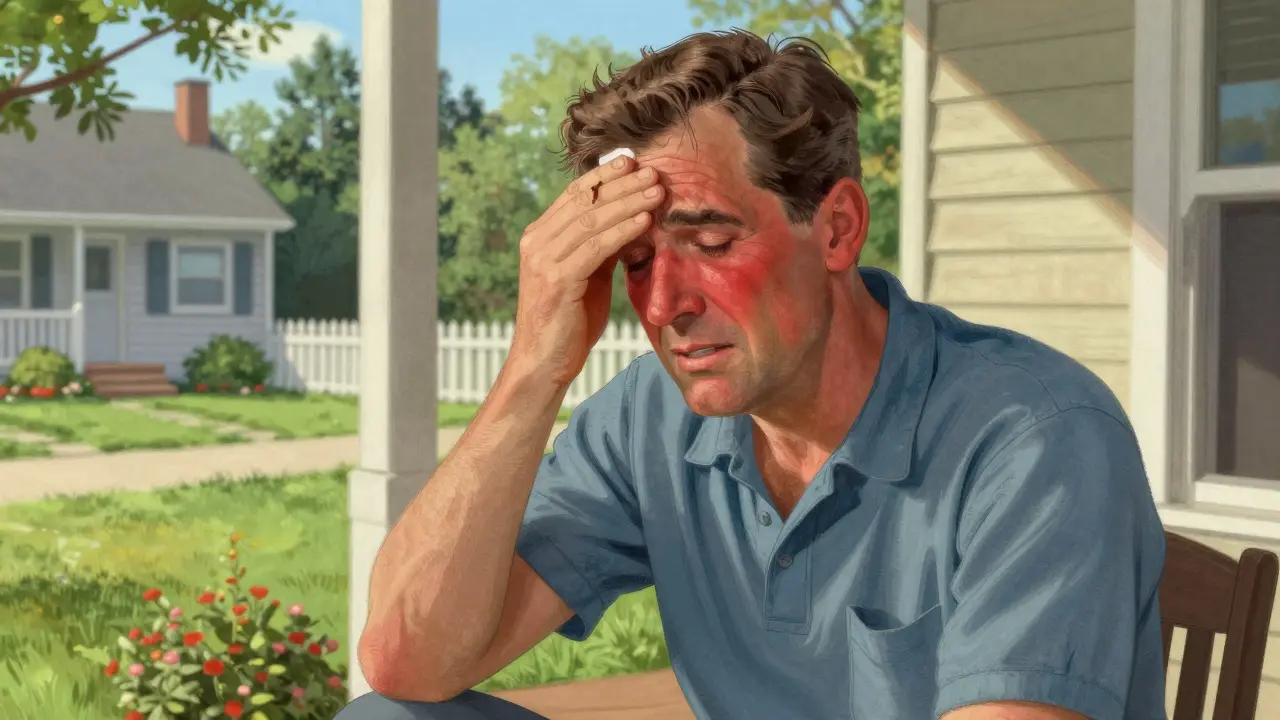
Imagine stepping out into a warm afternoon, expecting your body to cool itself naturally. Instead, you feel flushed, dizzy, and dangerously hot. You aren't just sensitive to the sun; your medication has quietly turned off your internal cooling system. This is decreased sweating, also known as anhidrosis or hypohidrosis, often paired with heat intolerance. It’s a silent but serious side effect that affects millions of people taking common prescription drugs.
You might assume that if you are sweating less, you are just dehydrated. But when medications block your sweat glands or restrict blood flow to your skin, water alone won’t fix the problem. Your core temperature rises because the mechanism designed to release heat is broken. According to the Centers for Disease Control and Prevention (CDC), approximately 15% of U.S. adults take prescription drugs that impair thermoregulation. During extreme heat events between 2010 and 2022, hospitalizations for heat-related illness jumped by 67% among these individuals. Understanding which drugs cause this and how to manage it isn’t just helpful-it can save your life.
How Medications Block Your Body’s Cooling System
Your body stays cool through two main processes: sweating and vasodilation. Vasodilation is when blood vessels near your skin widen to let heat escape into the air. Sweating cools you down as moisture evaporates from your skin. Many medications interfere with one or both of these mechanisms. When they do, your internal temperature climbs faster than usual, leading to heat exhaustion or even heat stroke.
The primary culprit is often the disruption of chemical signals in your nervous system. For example, acetylcholine is a neurotransmitter that tells your sweat glands to produce sweat. If a drug blocks the receptors that receive this signal, your sweat glands simply stop working. Other drugs constrict blood vessels, trapping heat inside your core instead of letting it radiate away. Some increase your metabolic rate, generating more internal heat while simultaneously making it harder to cool down. The result is a perfect storm where your body produces heat but cannot get rid of it.
High-Risk Medication Classes and Their Effects
Not all drugs affect heat tolerance equally. Researchers have identified 14 distinct medication classes that pose significant risks. Here is a breakdown of the most common offenders and how they impact your physiology.
| Medication Class | Common Examples | Mechanism of Action | Severity of Impact |
|---|---|---|---|
| Anticholinergics | Oxybutynin, Diphenhydramine (Benadryl) | Blocks acetylcholine receptors needed for sweat gland activation | Reduces sweating capacity by 60-80% |
| Beta Blockers | Metoprolol (Toprol XL), Propranolol (Inderal) | Decreases cutaneous blood flow, inhibiting heat dissipation | Reduces skin blood flow by 25-40% |
| Diuretics | Hydrochlorothiazide (Microzide), Chlorthalidone | Forces fluid excretion, causing dehydration and reduced sweat volume | Reduces sweat production by 30-50% |
| Antipsychotics | Haloperidol, Olanzapine, Risperidone | Impairs sweating and disrupts hypothalamic temperature regulation | Reduces output by 50-70%; high heat stroke risk |
| Stimulants | Methylphenidate (Ritalin), Amphetamines (Adderall) | Increases metabolic rate, generating excess internal heat | Increases metabolic heat by 15-25% |
| GLP-1 Agonists | Semaglutide (Ozempic, Wegovy) | Suppresses thirst sensation, increasing dehydration risk | Suppresses thirst by 40-50% |
Anticholinergics: The Sweat Blockers
Anticholinergic medications are among the most potent inhibitors of sweating. These drugs include treatments for overactive bladder like oxybutynin and common allergy medicines like diphenhydramine. They work by blocking acetylcholine receptors. Without this chemical signal, your sweat glands remain dormant. Studies show this can reduce your sweating capacity by up to 80%. Even in moderate temperatures, you may find yourself unable to sweat at all, causing your core temperature to rise rapidly.
Beta Blockers: Trapping Heat Inside
Diuretics: Dehydration Danger
Antipsychotics: Dual Threats
Newer Risks: GLP-1 Agonists and Stimulants
Recognizing the Warning Signs
Heat intolerance doesn't always announce itself with dramatic symptoms. Often, the signs are subtle until it's too late. The Catholic Health System identifies specific symptoms that appear within 30 to 90 minutes of heat exposure. If you notice any of these, seek cool shelter immediately:
- Headache: Occurs in 70% of heat intolerance cases. It’s often throbbing and persistent.
- Lack of Sweating: In 85% of cases, patients report either heavy, ineffective sweating or no sweating at all despite feeling hot.
- Dizziness: Reported by 55% of affected individuals. This indicates reduced blood flow to the brain.
- Flushed Skin: Seen in 45% of cases. Your skin may look red and feel hot to the touch.
- Weakness: Affects 60% of patients. You may feel suddenly exhausted or unable to stand.
- Nausea or Vomiting: Occurs in 35% of cases. This is a sign that your body is struggling to cope.
- Cramps: Muscle cramps occur in 65% of cases due to electrolyte imbalances from fluid loss.
If you experience confusion, slurred speech, or loss of consciousness, call emergency services immediately. These are signs of heat stroke, which carries a mortality rate of 10-65% if untreated.
Practical Management Strategies
Living with medication-induced heat intolerance requires proactive management. You can’t change your prescription overnight, but you can change your behavior to stay safe.
Hydration Beyond Thirst
If you take GLP-1 agonists or diuretics, relying on thirst is dangerous. The CDC recommends increasing your fluid intake by 500-1000mL beyond your normal requirements during heat advisories. Don’t just drink water; consider electrolyte solutions to replace salts lost through minimal sweating or urine. Monitor your weight daily. A loss of more than 2% of your body weight indicates significant dehydration.
Environmental Control
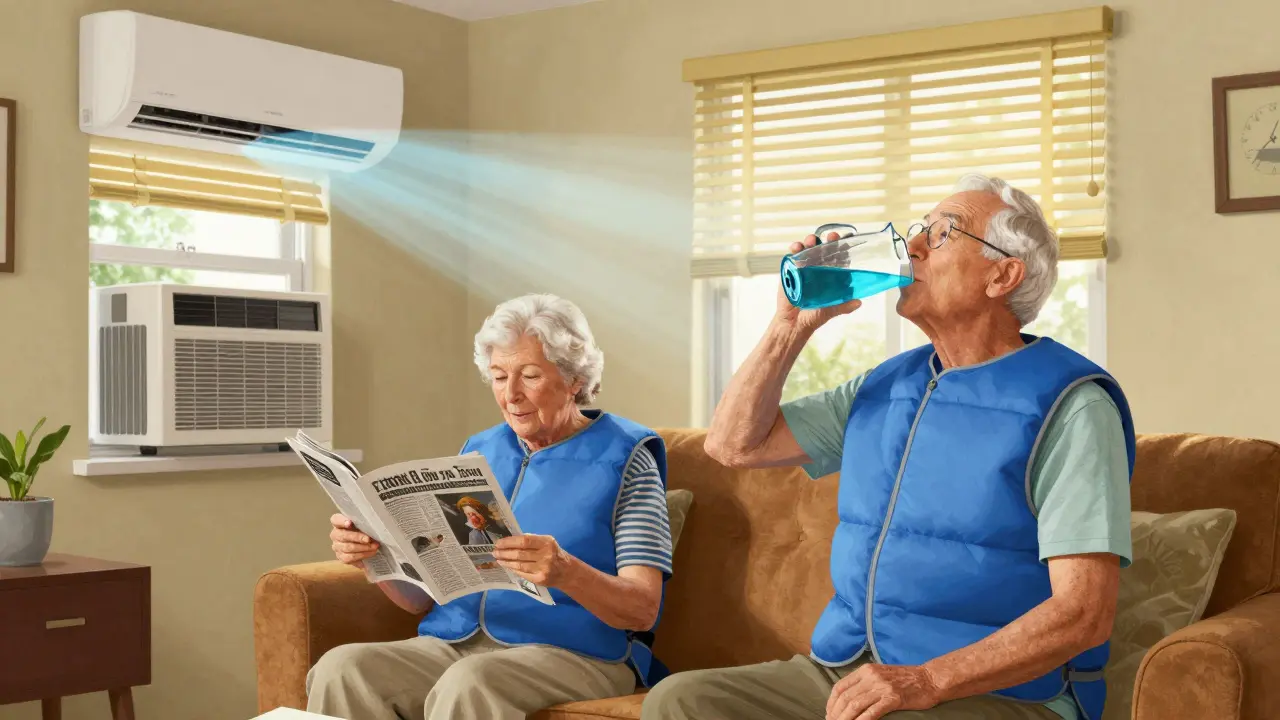
Avoid outdoor activity between 10 AM and 4 PM. Solar radiation is most intense during these hours, accounting for 70-80% of daily ultraviolet exposure. Stay in air-conditioned environments when temperatures exceed 32°C (90°F). If you must go outside, use cooling vests. For patients on antipsychotics or anticholinergics, cooling vests can reduce core temperature by 0.5-1.0°C, potentially preventing heat stroke.
Sun Protection
Some medications, including calcium channel blockers and ACE inhibitors, make your skin more sensitive to sunlight. Use sunscreen with SPF 30+ daily. Wear lightweight, light-colored clothing that allows air circulation. Avoid dark colors that absorb heat.
Medication Review
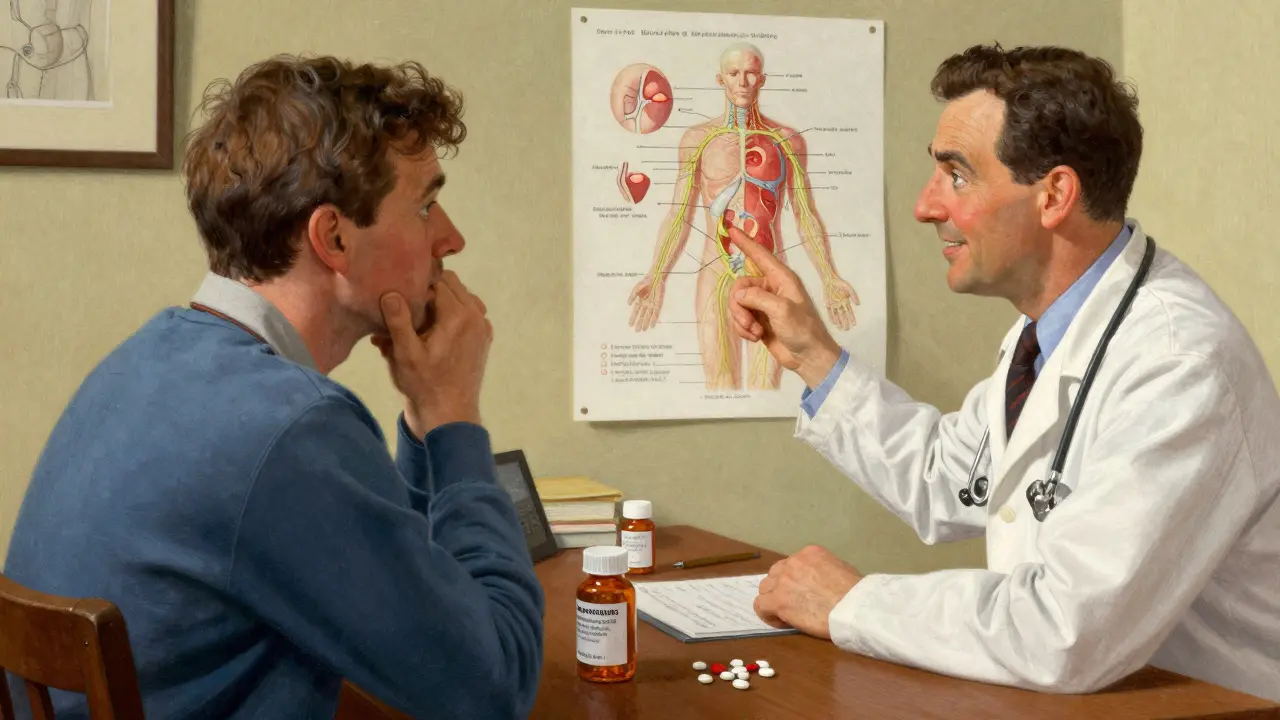
Talk to your doctor about your medication regimen. Ask if there are alternatives with fewer thermoregulatory side effects. For example, switching from a non-selective beta blocker to a selective one might reduce heat retention. Never stop taking prescribed medication without medical supervision, especially lithium, which requires careful monitoring during heat waves due to toxicity risks.
Who Is Most at Risk?
Certain groups face higher dangers. Adults over 65 are particularly vulnerable. The American Geriatrics Society notes that polypharmacy-taking five or more medications-increases heat stroke risk by 300% compared to younger, healthier individuals. Medication-related heat illness accounts for 18-22% of all heat-related emergency department visits among adults over 50.
Climate change exacerbates this risk. With global temperatures rising, the window for safe outdoor activity shrinks. Projections indicate a 40-60% increase in heat-related medication complications by 2050. Staying informed and prepared is no longer optional; it’s essential for survival.
Can I reverse decreased sweating caused by medication?
In most cases, decreased sweating is reversible once the medication is discontinued or switched. However, some long-term anticholinergic use can lead to temporary glandular dysfunction. Always consult your healthcare provider before changing your medication regimen. They may suggest alternative drugs with fewer side effects or adjust your dosage.
What should I do if I feel overheated while taking beta blockers?
Move to a cool, air-conditioned environment immediately. Remove excess clothing and apply cool, wet cloths to your neck, wrists, and groin. Drink water slowly. If you experience chest pain, shortness of breath, or confusion, seek emergency medical attention. Beta blockers can mask some symptoms of heat stress, so err on the side of caution.
Do all antidepressants cause heat intolerance?
No, not all antidepressants cause heat intolerance. Tricyclic antidepressants (TCAs) like amitriptyline significantly decrease sweating capacity by 65-75%. In contrast, SSRIs like fluoxetine and sertraline may actually increase sweating by 20-30%, which can lead to dehydration but does not block cooling mechanisms. Discuss your specific medication with your doctor to understand your individual risk.
How does lithium interact with heat?
Lithium has a narrow therapeutic index, meaning small changes in concentration can be dangerous. Dehydration from heat can increase lithium levels in your blood by 25-35%, potentially triggering toxicity. Symptoms include tremors, confusion, and kidney issues. The CDC recommends regular serum concentration monitoring during heat waves, especially when temperatures exceed 29°C (85°F).
Are there devices to monitor my core temperature?
Yes, wearable core temperature monitors like TempTraq were FDA-approved in December 2023 specifically for patients on heat-affecting medications. These devices provide real-time data on your internal temperature, allowing you to take preventive action before heat stroke occurs. Consult your doctor to see if such a device is appropriate for your condition.