Digoxin Generics: Managing Bioavailability and Monitoring Needs
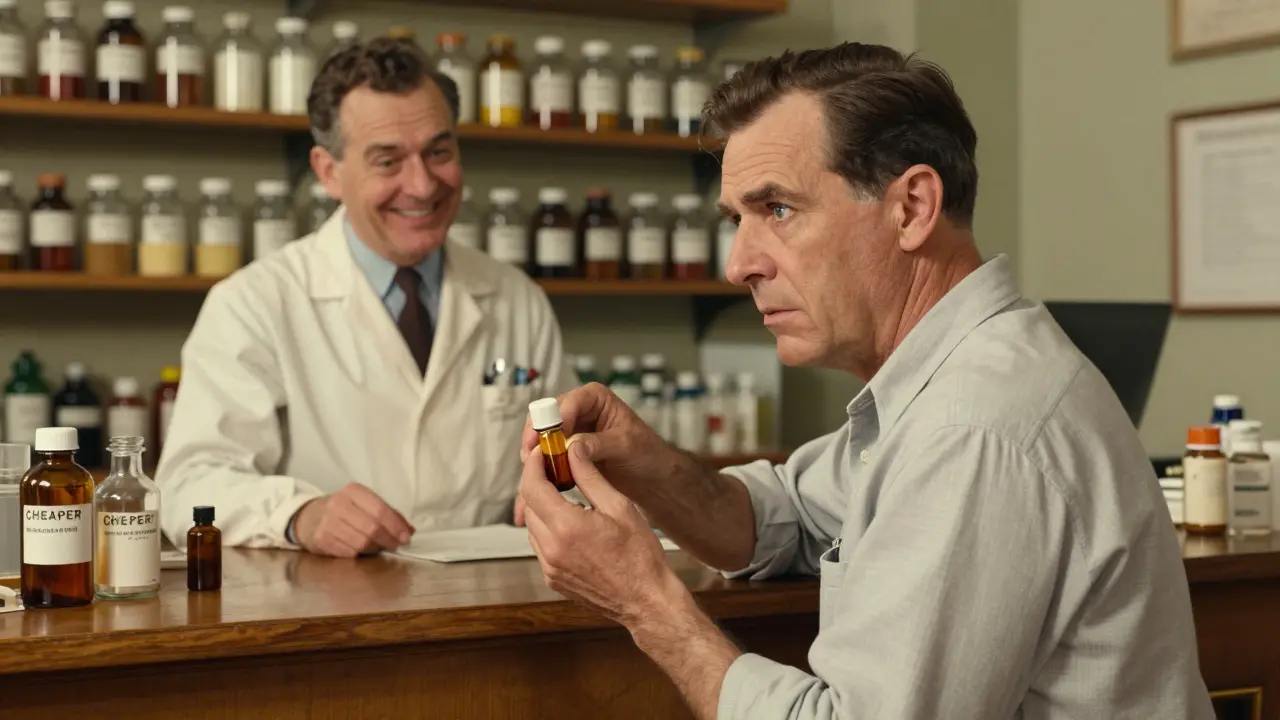
Imagine taking a pill every day for years to keep your heart beating steadily, only for a pharmacy switch to a "cheaper version" of that same drug to land you in the emergency room with nausea and blurred vision. This isn't a rare medical anomaly; it's a real risk when dealing with digoxin is a cardiac glycoside medication used primarily to treat heart failure and atrial fibrillation. It is the textbook example of a narrow therapeutic index (NTI) drug, meaning the gap between a dose that helps you and a dose that poisons you is incredibly small.
The Narrow Therapeutic Index Problem
When we talk about a narrow therapeutic index, we're talking about a tightrope walk. For most people, the therapeutic range for this medication is between 0.5 and 2.0 ng/mL. If the concentration in your blood drops below that, your heart failure symptoms might return or your heart rate might spike. If it creeps too high, you hit the toxicity zone.
The danger isn't just about the dose on the bottle; it's about how much of that dose actually reaches your bloodstream. This is called bioavailability. While most drugs have a wide margin for error, Lanoxin (the brand-name version of digoxin) and its generics must be incredibly precise. Even a slight shift in how a tablet dissolves can change the amount of drug absorbed, potentially pushing a stable patient into toxicity.
Generic Bioequivalence vs. Individual Reality
You'll often hear that generics are "bioequivalent" to the brand name. In the eyes of the FDA, this means the 90% confidence interval for the drug's absorption (specifically the Cmax and AUC) falls between 80% and 125% of the reference product. On paper, a study might show that a generic like Cardixin is perfectly safe because the average of the group is within that range.
But here is the catch: averages can hide dangerous outliers. If one patient in a study has a bioavailability of only 45%, the group average might still look fine, and the drug gets the "AB" rating in the FDA's Orange Book. However, that specific patient is now severely under-dosed. Conversely, another patient might absorb way more than expected, leading to drug accumulation due to the medication's long half-life.
| Formulation Type | Approximate Bioavailability | Key Characteristic |
|---|---|---|
| Oral Tablets (Generic/Brand) | Variable | Subject to individual absorption differences |
| Digoxin Elixir | 70% to 85% | Generally more bioavailable than tablets |
| Intravenous (IV) | 100% | Immediate systemic availability |

The Danger of "Generic Hopping"
The biggest red flag occurs when a patient switches not from brand to generic, but from one generic manufacturer to another. Why? Because the FDA requires generics to be bioequivalent to the brand name, not necessarily to each other. There is a lack of direct bioequivalence studies between different generic versions.
When a pharmacy switches your generic provider, you're essentially starting a new medication with a different absorption profile. Clinical reports have shown cases where switching generics caused serum concentrations to shift by more than 25%. In the world of NTI drugs, a 25% jump is the difference between a stable heartbeat and a trip to the hospital. This is why the American Heart Association recommends sticking to a single manufacturer's product whenever possible.
Essential Monitoring Strategies
Because of these risks, you can't just "set it and forget it" with therapeutic drug monitoring (TDM) is the clinical practice of measuring drug levels in the blood to maintain a therapeutic concentration. . If you or a loved one are on this medication, there are specific rules for monitoring that can save lives.
The American College of Clinical Pharmacy suggests measuring trough levels-the lowest concentration of the drug in your blood-immediately before your next dose. While 0.5 to 2.0 ng/mL is the general range, modern evidence suggests that for heart failure patients, a tighter window of 0.5 to 0.9 ng/mL might actually be better for reducing mortality risk.
If a formulation change is unavoidable, follow this timeline:
- Baseline: Check serum levels 4 to 7 days after starting a new dose or manufacturer.
- Post-Switch Check: Re-test concentrations 3 to 5 days after switching generic brands.
- Ongoing Vigilance: Repeat measurements whenever renal function changes, as the kidneys are responsible for clearing digoxin from the body.

Spotting the Warning Signs
Since lab tests take time, knowing how to spot the symptoms of toxicity is your first line of defense. Digoxin toxicity often manifests in ways that are easy to dismiss as "getting older" or "having a stomach bug," especially in elderly patients.
- Digestive Issues: Unexpected nausea or vomiting.
- Visual Disturbances: A classic sign is seeing a yellowish-green halo around objects (xanthopsia).
- Heart Rhythm: New or worsening arrhythmias or an unusually slow heart rate.
- Cognitive Changes: Confusion or extreme fatigue.
If any of these appear after a pharmacy change, it's not a coincidence. It's a signal that the new formulation's bioavailability is interacting poorly with your system.
Are all generic digoxin tablets the same?
While the FDA requires generics to be bioequivalent to the brand-name Lanoxin, they may differ slightly from each other. Because digoxin has a narrow therapeutic index, these small differences in absorption can lead to significant changes in blood levels for some patients.
Why is my doctor checking my blood levels so often?
Digoxin has a long half-life, meaning it stays in your system for a while. If you absorb slightly more than you clear, the drug accumulates in your body, which can lead to toxicity. Regular monitoring ensures you stay within the safe range of 0.5 to 2.0 ng/mL.
Is the elixir version better than the tablets?
The elixir formulation is generally more bioavailable (absorbing 70% to 85% of the dose) compared to tablets. While this might be helpful for some, any switch between tablets and elixir requires close medical supervision and dose adjustment.
What should I do if my pharmacy changes my generic brand?
Notify your prescribing physician immediately. You should be monitored for signs of toxicity (like nausea or visual changes) and likely have a serum digoxin concentration test performed 3 to 5 days after the switch to ensure your levels remain stable.
How does kidney function affect digoxin?
Digoxin is primarily cleared by the kidneys. If your renal function declines-which is common in elderly patients-the drug clears more slowly, increasing the risk of accumulation and toxicity even if the dose hasn't changed.
Next Steps for Patients and Caregivers
If you are currently taking a generic version of this medication, take a look at your prescription bottle. Note the manufacturer's name. Every time you refill your prescription, check to see if the manufacturer has changed. If it has, don't wait for symptoms to appear; call your doctor to discuss if a blood test is necessary.
For those managing care for an elderly parent, be particularly mindful of changes in appetite or mood. Sudden confusion or nausea in a patient on digoxin should be treated as a potential toxicity event until proven otherwise by a blood test. Consistency is the key to safety with NTI medications.
Simon Jenkins
April 11, 2026 AT 23:30It is absolutely appalling that the average consumer is expected to navigate the labyrinthine complexities of bioavailability without a degree in pharmacology! The sheer audacity of the FDA to rely on a 90% confidence interval while ignoring the catastrophic reality of individual outliers is a travesty of the highest order! We are talking about a narrow therapeutic index, for heaven's sake, not some generic vitamin supplement!
Will Gray
April 13, 2026 AT 08:12Who knows where these generics are actually being made anyway? Probably some offshore plant with zero oversight while our own healthcare system just lets the profits roll in and the patients take the risk. This reeks of a systemic failure designed to keep us dependent and sick while they play with our blood levels like it's some kind of social experiment.
Emily Wheeler
April 13, 2026 AT 11:31I think it is so important that we all approach this with a spirit of collaborative vigilance because while the medical system has its flaws, we can empower ourselves by simply keeping a careful log of our manufacturers and sharing that knowledge with our loved ones, perhaps creating a small community support system where we remind each other to check the bottles at the pharmacy, since a little bit of collective awareness can truly make a world of difference in ensuring everyone stays within that safe therapeutic window together.
kalpana Nepal
April 15, 2026 AT 07:28Money is greed and this medicine game is just a way to trick poor people. My country knows how to handle health better than these big companies that only care about money.
Kelly DeVries
April 16, 2026 AT 10:39honestly this is just a nightmare waiting to happen and i cant even believe people trust these pharmacies to just switch brands without a heads up lol like just totally casual about your heart stopping
Rakesh Tiwari
April 17, 2026 AT 06:58Oh, wonderful. Let's just trust the "bioequivalence" studies conducted by the very companies making the profit. I'm sure the 20% margin of error is just a tiny, insignificant detail when you're trying not to have your heart stop. Truly a masterclass in corporate ethics.
Ryan Hogg
April 17, 2026 AT 17:11This is honestly terrifying. I can't even imagine the anxiety of wondering if the pill I took today is slightly different from the one I took yesterday. It's just too much to handle.
danny Gaming
April 18, 2026 AT 13:15total joke how they let this happen in the US... legit scamming ppl with these cheap generics and then wonder why we have so many ER visits... just keep the money flowin right
Danny Wilks
April 19, 2026 AT 08:37It is quite fascinating to observe how the systemic integration of pharmaceutical cost-cutting measures often clashes with the biological necessity of precision in NTI drugs. While the pursuit of affordability is a noble goal in a public health context, the clinical reality of digoxin suggests that a more personalized, stable approach to procurement would significantly mitigate the risks of toxicity.
Lynn Bowen
April 21, 2026 AT 06:59Consistency is key.
Simon Stockdale
April 22, 2026 AT 21:03I am tellin you right now this is why you cant trust these big city pharmacies that just swap your meds for the cheapest junk they can find just to pad their pockets while we're out here tryin to actually live our lives and keep our hearts tickin without some corporate suit decidng that a 25 percent shift in blood levels is just a "statistickal anomaly" lol what a joke
Robin Walton
April 24, 2026 AT 14:30It's really scary to think about, but I'm glad there are tips here for caregivers to watch for those yellow halos. It could really save a grandparent's life.
Thabo Leshoro
April 24, 2026 AT 15:23This is very serious... The pharmacokinetics of NTI drugs are so tricky... we must be very careful with the serum levels...