Generic Combinations vs. Individual Generics: A Cost Savings Guide
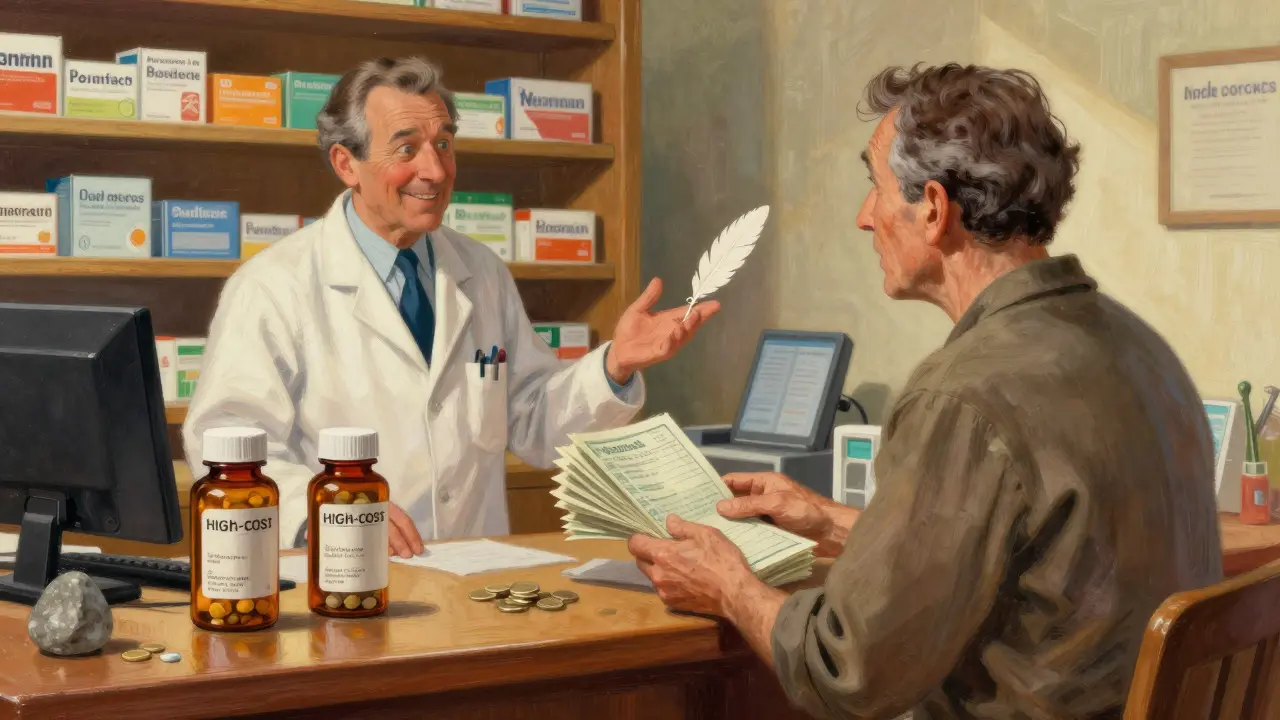
Did you know that some generic drugs cost 15 times more than their direct alternatives? It sounds like a glitch in the system, but for millions of patients and insurers, it’s a harsh reality. When you look at your pharmacy bill, you might assume that switching from a brand-name drug to a generic is the end of the savings journey. But there’s a hidden layer of economics playing out behind the scenes, specifically when comparing generic combinations against individual generic components.
The core issue isn’t just about whether a drug is generic or not; it’s about which specific version of that generic you’re getting. Sometimes, a combination product (like an inhaler with two active ingredients) can be significantly cheaper than buying the two single-ingredient generics separately. Other times, a "high-cost" generic exists simply because no one else has approved a cheaper version yet, despite clinical equivalents being available. Understanding this dynamic can save you hundreds, if not thousands, of dollars annually.
The Hidden Cost of High-Cost Generics
Not all generics are created equal in terms of price. In a pivotal study published in JAMA Network Open in November 2022, researchers analyzed the top 1,000 generics in Colorado’s all-payer claims database. They identified 45 "high-cost generics"-drugs that were generic but priced similarly to their brand-name predecessors due to limited competition. The finding was stark: these high-cost generics were 15.6 times more expensive than lower-cost therapeutic alternatives with equivalent clinical value.
If those lower-cost alternatives had been used instead, potential savings would have reached 88.3%. To put that in perspective, total spending on these specific drugs could have dropped from $7.5 million to just $873,711. This isn't theoretical; it's a documented financial leak in many insurance plans. The study highlighted that 62.2% of these viable substitutions involved different dosage forms or strengths of the same drug. For example, a patient might be prescribed a 50mg tablet when a 25mg capsule offers the same therapeutic benefit at half the price. These small clinical adjustments translate into massive aggregate savings.
Combination Products vs. Single-Ingredient Generics
This is where it gets tricky for consumers. Combination products bundle two or more active ingredients into one pill or device. You might think, "If I buy the two separate generics, it must be cheaper." Not always. Manufacturing efficiency and patent structures often make the combination unit price lower than the sum of its parts.
A clear example comes from respiratory care. The approval of generic Wixela Inhub, a combination inhaled corticosteroid and long-acting beta agonist (ICS/LABA), provided a direct alternative to the brand-name Advair Diskus. Data from a 2022 study showed that the average cost of an Advair Diskus inhaler was $334, while the generic Wixela Inhub cost $115 per unit. That’s a 65.6% reduction. Furthermore, the entry of this generic combination led to an estimated annual cost savings of $941 million across the U.S. market. The overall monthly prescription cost for this class of drugs dropped from $337 million in January 2019 to $233 million by January 2020.
However, the math doesn't always favor the combo. In some cases, if you only need one of the two ingredients, paying for the unused component in a combination product is a waste. Here, splitting the therapy into two separate, highly competitive single-ingredient generics can yield better results. The key is knowing which scenario applies to your specific medication profile.

The Role of Competition in Pricing
Why do some generics stay expensive? It’s largely a game of numbers. According to the FDA’s Center for Drug Evaluation and Research, price declines correlate directly with the number of competitors. Markets with approximately three generic competitors see price reductions of about 20% after three years. As competition increases, prices drop further.
The Department of Health and Human Services confirmed that generic drug prices are consistently 20-80% lower than brand-name prices, but the largest savings occur in markets with multiple generic competitors. If a generic drug has only one manufacturer, it behaves much like a monopoly. The Association for Accessible Medicines reported that in 2023, the 10 most dispensed generic medicines accounted for $89.5 billion in savings. Drugs like Crestor generics, launched in 2015, saw costs plummet from $5.78 to $0.08 per unit-a 99% savings. This dramatic drop happened because multiple manufacturers entered the market, driving the price down to near-zero margins.
Practical Strategies for Maximizing Savings
You don’t need to be a health economist to leverage these insights. Here are actionable steps to ensure you’re getting the best deal:
- Ask about Therapeutic Substitution: Ask your pharmacist if there is a lower-cost generic alternative with the same clinical effect. Often, a different strength or form of the same drug works just as well but costs significantly less.
- Compare Combo vs. Split Costs: If you take a combination drug, ask your doctor if splitting it into two separate generics is clinically appropriate and potentially cheaper. Use your pharmacy app to compare the total monthly cost of both options.
- Check Formulary Status: Insurance plans update their formularies quarterly. A drug that was expensive last year might be moved to a preferred tier this year. Verify your specific plan’s coverage before assuming a price is fixed.
- Monitor for New Entrants: Keep an eye on news regarding new generic approvals. The moment a second or third competitor enters the market for a high-cost generic, prices often drop sharply within months.
Dr. Gerard F. Anderson, a co-author of the JAMA study, advises plan sponsors to periodically review specific products driving generic spending. For individuals, this translates to an annual review of your medication list. If you’ve been on the same regimen for years, re-evaluate the cost-effectiveness of each item. It’s possible that a newer, cheaper alternative has become available since you started your treatment.
Navigating Insurance and Out-of-Pocket Costs
Your insurance type heavily influences how much you actually save. A 2023 study in JAMA Health Forum analyzing over 843 million prescription fills found that savings varied significantly by coverage status. Uninsured individuals experienced the highest absolute savings, averaging $6.08 per prescription when switching to lower-cost options. Those with private insurance saw average savings of $3.69, while Medicare beneficiaries saved $4.64.
Interestingly, Medicaid users showed little to no observed savings in this dataset, likely because their reimbursement rates are already set low by the government, leaving little room for further reduction. If you are uninsured or under-insured, the impact of choosing the right generic combination or individual generic is far more pronounced. You are bearing the full weight of the price differential, making strategic choices critical.
| Factor | Generic Combinations | Individual Generics |
|---|---|---|
| Typical Use Case | Conditions requiring dual therapy (e.g., asthma, hypertension) | Single-condition treatment or split-therapy regimens |
| Price Dynamics | Often cheaper per unit than sum of parts due to manufacturing efficiency | Prices drop rapidly with increased competitor count (3+ makers) |
| Risk Factor | Paying for unused ingredient if one component is unnecessary | High-cost outliers if only one manufacturer exists |
| Savings Potential | Up to 65-90% vs. brand-name combos | Up to 80-99% vs. brand-name singles |
| Best Action | Verify if both ingredients are clinically necessary | Check for therapeutic substitutes with lower cost/equivalent efficacy |
The Future of Generic Pricing
The landscape is shifting. While generics represent 90% of prescriptions dispensed in the U.S., they account for only 23% of total drug spending. This gap highlights the remaining opportunity for savings. However, the market faces challenges. Generic drug shortages rose from 166 in 2012 to 258 in 2022, according to FDA data. Market consolidation among the top 10 manufacturers, who control about 40% of the $70 billion U.S. generic market, poses a risk to price stability.
Despite these hurdles, the long-term outlook remains positive for consumers. The Department of Health and Human Services projects that generic and biosimilar competition could generate an additional $1.2 trillion in savings over the next decade. Biosimilars, which are the complex-molecule cousins of traditional generics, are entering the market for drugs like Humira, offering similar cost-reduction pathways for autoimmune and cancer treatments.
To maximize your benefits, stay informed. The era of passive prescription filling is ending. Active management of your medication portfolio, understanding the difference between a high-cost generic and a competitive one, and leveraging the power of combination versus single-ingredient strategies will define your healthcare costs in the coming years. The tools are available; now it’s about using them wisely.
Are generic combination drugs always cheaper than buying two separate generics?
Not always. While combination products often benefit from manufacturing efficiencies that lower the per-unit cost compared to the sum of two individual generics, it depends on the specific drugs and their competitive landscapes. If one of the two ingredients in a combination is not strictly necessary for your condition, buying the single generic for the required ingredient may be cheaper. Always compare the total monthly cost of both approaches with your pharmacist.
What is a "high-cost generic"?
A high-cost generic is a drug that has lost its brand-name patent protection and is classified as generic, but still commands a high price due to limited competition. This often happens when only one or two manufacturers produce the drug, allowing them to maintain prices closer to the original brand-name level. Studies show these drugs can be up to 15 times more expensive than lower-cost therapeutic alternatives.
How does insurance coverage affect generic savings?
Insurance type significantly impacts out-of-pocket savings. Uninsured individuals typically see the highest absolute dollar savings when switching to lower-cost generics because they pay the full retail price. Those with private insurance or Medicare see moderate savings, while Medicaid beneficiaries often see minimal savings because their reimbursement rates are already regulated to be very low. Always check your specific plan's formulary to understand your copay structure.
Can my doctor switch me to a different generic without changing my treatment?
Yes, through a process called therapeutic substitution. If a lower-cost generic with equivalent clinical value exists, your doctor or pharmacist may recommend switching to it. This often involves changing the dosage strength or form (e.g., from a tablet to a capsule) rather than the active ingredient itself. This is a common strategy to reduce costs without altering therapeutic outcomes.
Why do some generic prices go up instead of down?
Generic prices can rise due to market consolidation, where fewer manufacturers dominate the supply chain, or due to supply chain disruptions and shortages. Additionally, if a high-cost generic faces no immediate competition, the manufacturer may raise prices. Monitoring the number of approved competitors for a specific drug is a good indicator of future price trends; more competitors generally mean lower prices.