Hatch-Waxman Act: How U.S. Law Made Generic Drugs Fast, Affordable, and Legal
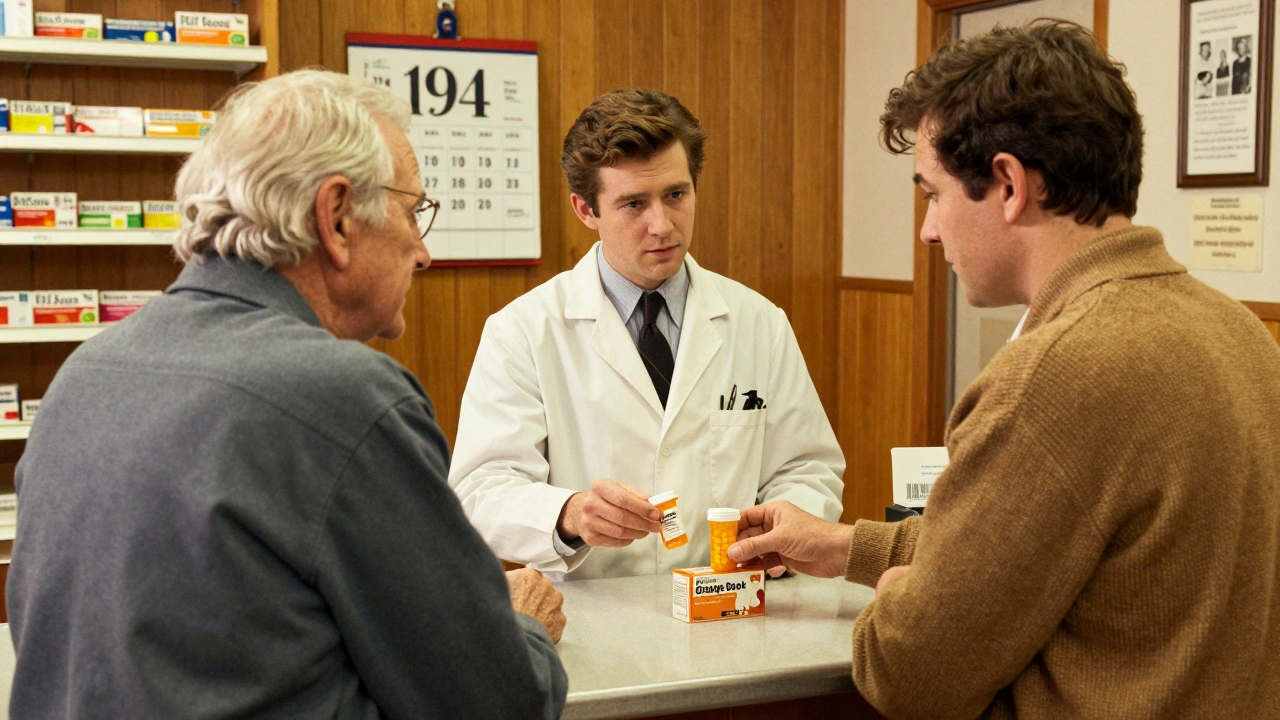
The U.S. generic drug market didn’t just grow-it exploded. Today, 90% of all prescriptions filled in America are for generic drugs. But that wasn’t always the case. Before 1984, getting a generic version of a brand-name drug was nearly impossible. Generic companies had to run full clinical trials from scratch, even though the original drug had already been proven safe and effective. That meant long delays, high costs, and almost no competition. Then came the Hatch-Waxman Act.
What the Hatch-Waxman Act Actually Did
The Drug Price Competition and Patent Term Restoration Act of 1984, better known as the Hatch-Waxman Act, wasn’t just another law. It was a deal. A carefully balanced compromise between two powerful forces: big pharma that needed patent protection to recoup research costs, and patients who needed affordable medicine. Before this law, generic manufacturers couldn’t rely on the FDA’s prior approval of brand-name drugs. They had to prove safety and effectiveness all over again. That cost about $2.6 million in 1984 dollars-more than most small companies could afford. The Hatch-Waxman Act changed that by creating the Abbreviated New Drug Application (ANDA). Suddenly, generics didn’t need to repeat clinical trials. They just had to prove their drug was the same as the brand in active ingredient, strength, dosage form, and route of administration. And crucially, they had to show bioequivalence: that their version absorbed into the body at the same rate and amount as the original. The FDA requires this to be within 80-125% of the brand’s performance. That’s tight enough to ensure safety, loose enough to allow competition.The Orange Book: The Secret Map to Generic Entry
To make this system work, the law created something called the Orange Book. Officially titled Approved Drug Products with Therapeutic Equivalence Evaluations, it’s a public list of all FDA-approved drugs and the patents tied to them. Brand-name companies must list every patent that could block a generic. That includes not just the main drug patent, but also ones for packaging, uses, or delivery methods. The Orange Book became the roadmap for generic companies. If a patent expired, the generic could move forward. If it hadn’t, the generic had to wait-or challenge it. That’s where things got interesting.Paragraph IV Certifications and the 180-Day Gold Rush
When a generic company files an ANDA, it must make one of four patent certifications. The most important? Paragraph IV. This is where the generic says: “Your patent is invalid, or we won’t infringe it.” It’s a legal shot across the bow. The first company to file a Paragraph IV certification gets a huge reward: 180 days of exclusive market access. No other generic can enter during that time. That’s not just a bonus-it’s a fortune. In those six months, the first filer can capture up to 80% of the market before prices drop. That’s why companies used to camp outside FDA offices in the 1990s, waiting to be the first to submit. But there’s a catch. The brand-name company can sue. If they do, the FDA is forced to delay approval for up to 30 months. That’s called the 30-month stay. It’s meant to protect patent rights-but it’s also been used to delay competition. In fact, 90% of Paragraph IV filings lead to lawsuits. And since lawsuits often take 31 months to resolve, the brand often gets extra time on the market anyway.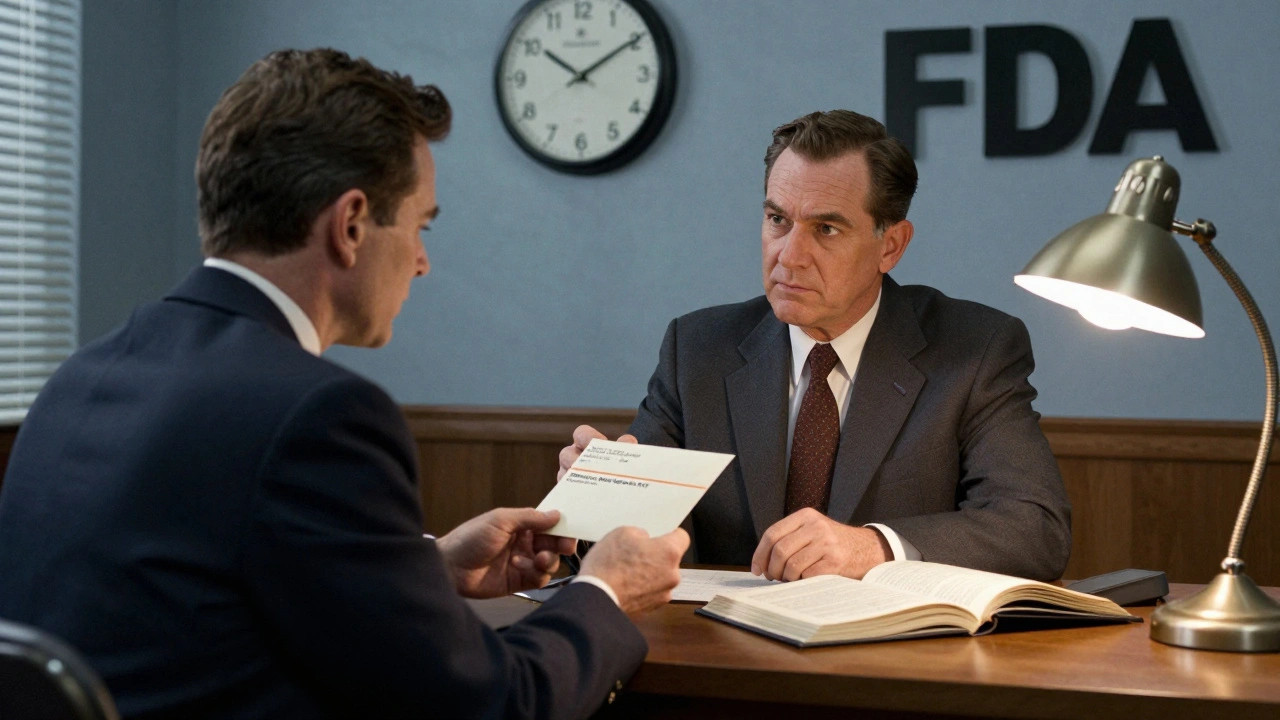
Patent Games and Pay-for-Delay Deals
Not all patent challenges are honest. Some brand companies stack dozens of minor patents on a single drug-what’s called a “patent thicket.” They get a patent on the pill shape, another on the coating, another on how it’s taken with food. Each one adds another hurdle. Even worse are “pay-for-delay” deals. In these cases, the brand pays the generic company to stay out of the market. The generic gets a cut of the brand’s profits. The brand avoids competition. Patients pay more. The FTC has fought these deals for years. In 2013, the Supreme Court ruled they could be illegal if they unreasonably delay competition. But they still happen. The law tried to fix this by allowing the 180-day exclusivity to be forfeited if the first filer doesn’t market within 75 days of approval or if they’re involved in a settlement. But enforcement is patchy.Who Wins? Who Loses?
The numbers don’t lie. Since Hatch-Waxman, the U.S. has saved an estimated $1.7 trillion on drug costs over the past decade. In 2023 alone, generic drugs saved the system $158 billion. Medicare Part D beneficiaries saved an average of $3,200 per person that year. Patients win. Insurers win. Taxpayers win. Generic manufacturers win too-there are now over 11,000 approved generic products, and the industry is worth $70 billion. But the system isn’t perfect. Complex drugs like biologics don’t fit neatly into the Hatch-Waxman model. That’s why Congress passed the Biologics Price Competition and Innovation Act (BPCIA) in 2010 to create a separate pathway. Even then, biosimilars still face delays due to patent battles. Drug shortages are another problem. In 2023, 283 generic drugs were in short supply. Many of those are old, cheap, low-margin drugs that manufacturers don’t prioritize. The FDA has cracked down on companies that refuse to supply samples to generics for testing-a practice banned under the 2019 CREATES Act.
What’s Next for Generic Drugs?
The FDA is trying to speed things up. Under the Generic Drug User Fee Amendments (GDUFA) III, the average ANDA review time dropped from 36 months in 2012 to just 18 months in 2023. More guidance documents are coming out every year to help manufacturers navigate complex bioequivalence requirements. But the real challenge ahead? Complex drugs. Inhalers, injectables, topical creams-these aren’t simple pills. They’re harder to copy. The FDA is working on new standards for these “complex generics,” but progress is slow. Meanwhile, Congress keeps debating whether to limit patent evergreening or ban pay-for-delay outright. The 40th anniversary of Hatch-Waxman in 2024 sparked renewed calls for reform. But any change has to walk a tightrope: too much pressure on brand companies, and innovation slows. Too much protection, and prices stay high.Why This Matters to You
If you’ve ever filled a prescription for a generic drug and paid $4 instead of $400, you’re seeing the Hatch-Waxman Act in action. It’s not flashy. It’s not glamorous. But it’s one of the most effective public health laws ever passed in the U.S. It didn’t just make drugs cheaper. It made them accessible. It turned a broken system into a functioning market. And it did it without killing innovation. Brand-name companies still get their 12-14 years of protection. They still get patent extensions. They still make billions. But now, so do patients.What is the Hatch-Waxman Act?
The Hatch-Waxman Act, passed in 1984, is a U.S. federal law that created a legal pathway for generic drugs to enter the market without repeating costly clinical trials. It balanced innovation by protecting brand-name drug patents while speeding up generic approval through the ANDA process.
How do generic drugs get approved under Hatch-Waxman?
Generic manufacturers submit an Abbreviated New Drug Application (ANDA). They must prove their product is identical in active ingredient, strength, dosage form, and route of administration to the brand-name drug. They also must show bioequivalence-meaning the generic absorbs into the body at the same rate and extent as the brand, within 80-125% of the original.
What is the Orange Book?
The Orange Book is the FDA’s official list of approved drug products and their associated patents. Brand-name companies must list patents that could block generics. Generic manufacturers use this list to determine when they can legally enter the market or whether to challenge a patent.
What is a Paragraph IV certification?
A Paragraph IV certification is a legal statement by a generic drug applicant claiming that a listed patent is invalid or won’t be infringed. It triggers a patent lawsuit from the brand-name company and gives the generic a chance to win 180 days of market exclusivity if they’re the first to file.
Why do generic drug prices drop so much after approval?
Once a generic enters the market, competition drives prices down. The first generic often captures 80% of sales. Within a year, multiple generics enter, and prices typically fall 80-90% compared to the brand. The Hatch-Waxman Act’s structure ensures this competition happens quickly after patent expiration.
Are all drugs eligible for generic versions under Hatch-Waxman?
No. Hatch-Waxman was designed for small-molecule drugs-like pills and injections. Complex drugs like biologics (insulin, cancer antibodies) require a different pathway called the BPCIA, passed in 2010. Even then, biosimilars face longer approval times and more legal hurdles.
Scott Butler
December 13, 2025 AT 19:34Deborah Andrich
December 13, 2025 AT 23:12John Fred
December 15, 2025 AT 01:09Hamza Laassili
December 16, 2025 AT 11:33Cole Newman
December 18, 2025 AT 08:15Casey Mellish
December 19, 2025 AT 20:15Tyrone Marshall
December 20, 2025 AT 09:10Emily Haworth
December 20, 2025 AT 15:23