Heart Arrhythmias from Medications: Warning Signs and How to Manage Them

Many people don’t realize that the very medicines meant to help their heart can sometimes make it beat the wrong way. Medication-induced arrhythmias aren’t rare-they’re one of the most common yet overlooked causes of dangerous heart rhythm problems. Even common drugs like antibiotics, antidepressants, and heart medications themselves can trigger irregular beats that lead to hospital visits, pacemakers, or worse. The good news? You can spot the warning signs early and take steps to stop it before it escalates.
What Exactly Is a Drug-Induced Arrhythmia?
An arrhythmia is when your heart skips, races, or pounds oddly. When it’s caused by a medication, it’s called a drug-induced arrhythmia. It happens because certain drugs interfere with the tiny electrical signals that control your heartbeat. Some mess with potassium or magnesium levels in your blood. Others block ion channels in heart cells, throwing off the timing of each beat. The most dangerous type is QT prolongation-a delay in the heart’s electrical reset that can spiral into torsades de pointes, a life-threatening ventricular rhythm.
Over 400 medications carry this risk. That includes things you might not expect: antihistamines for allergies, antibiotics like azithromycin, antidepressants like citalopram, even some diabetes and cholesterol pills. And here’s the twist: antiarrhythmic drugs-meant to fix rhythm problems-can actually cause them in 5-10% of people who take them. Amiodarone, for example, can trigger atrial fibrillation. Flecainide can turn atrial flutter into a dangerous fast rhythm.
Who’s Most at Risk?
Not everyone who takes these drugs will have problems. But some people are far more vulnerable. Age is a big factor. Sixty to seventy percent of severe cases happen in people 65 and older. Why? Kidneys slow down with age, making it harder to clear drugs from the body. That means even normal doses can build up to toxic levels.
Electrolyte imbalances are another major trigger. Low potassium (hypokalemia) affects about 20% of hospitalized patients. Low magnesium (hypomagnesemia) hits 10-15%. Both make the heart extra sensitive to drug effects. Alcohol is another silent culprit. Drinking more than three drinks a day triples your risk.
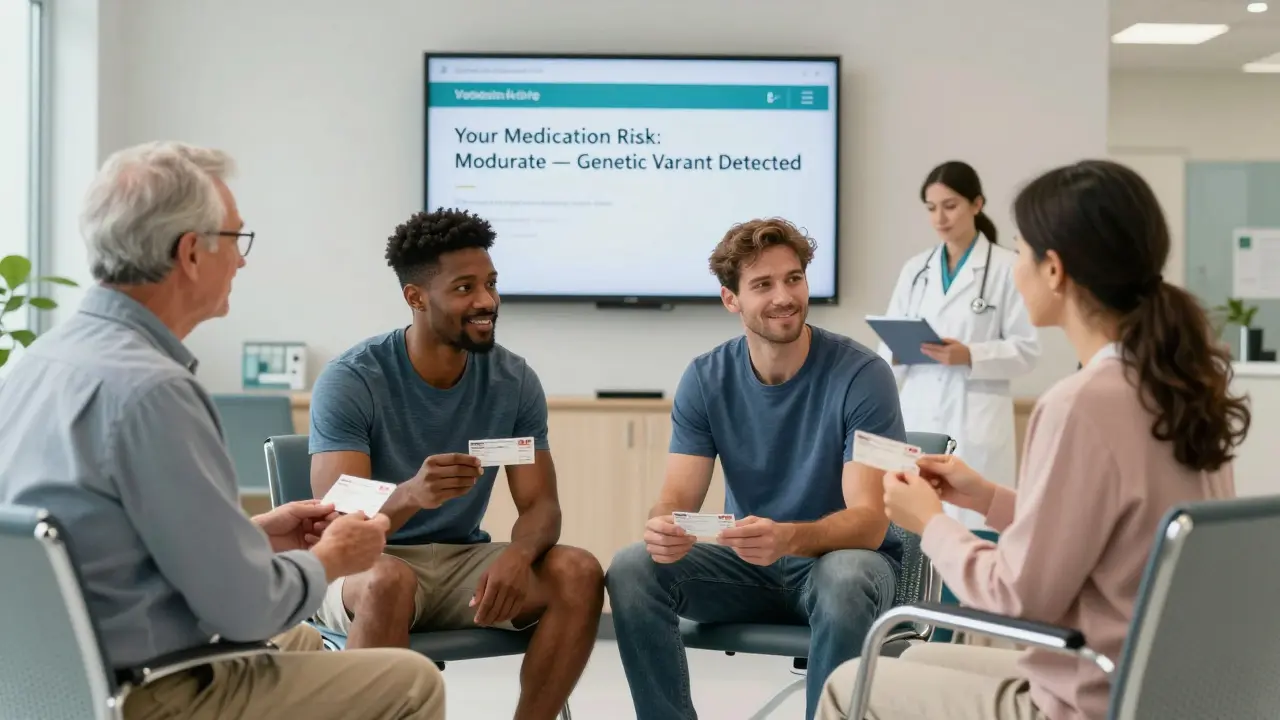
Genetics also play a role. About 15% of people of African ancestry carry the S1103Y gene variant. Around 12% of East Asian individuals have the R1193Q variant. These changes make heart cells more likely to misfire when exposed to QT-prolonging drugs. Scientists are now testing whether genetic screening before prescribing high-risk meds could prevent thousands of cases.
Warning Signs You Can’t Ignore
These aren’t vague feelings-they’re clear signals your heart is out of sync.
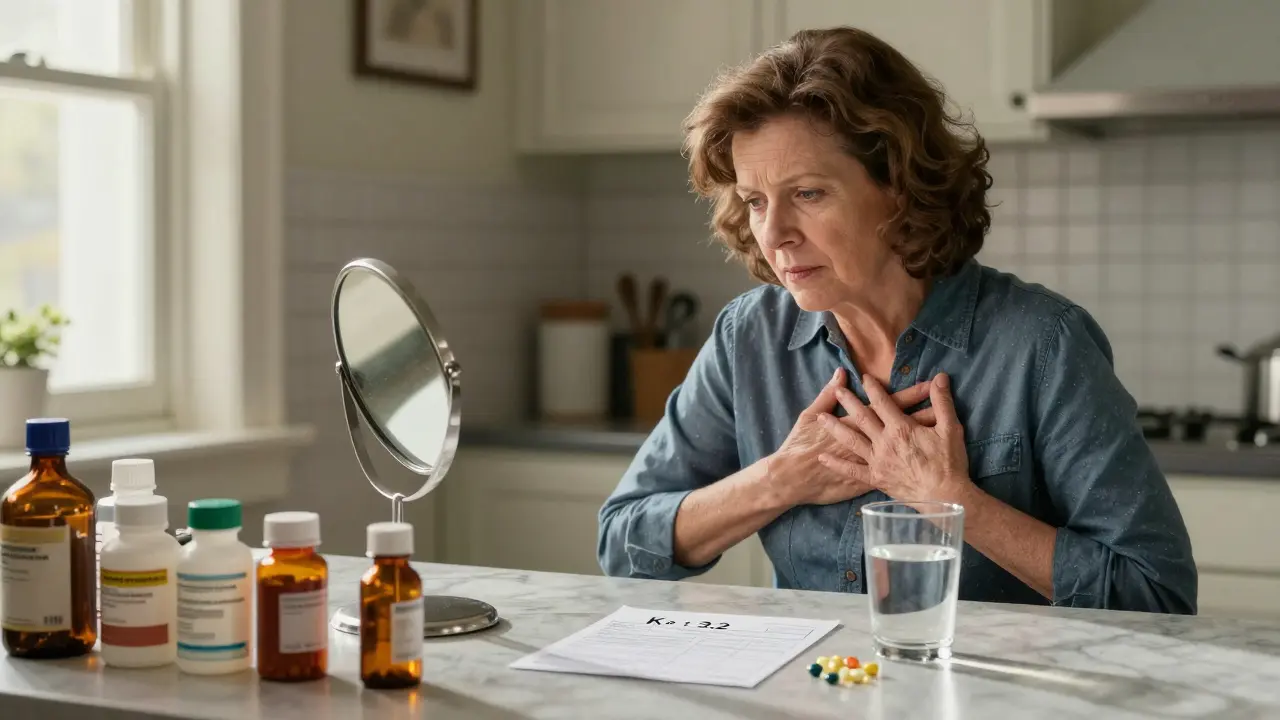
- Palpitations: That fluttering, pounding, or skipping feeling in your chest. Reported by 70-80% of people with drug-induced arrhythmias.
- Dizziness or lightheadedness: Especially when standing up. This isn’t just “getting old”-it’s your brain not getting enough blood because your heart isn’t pumping right.
- Fatigue: Feeling wiped out even after a full night’s sleep. Often mistaken for stress or aging, but it can be your heart struggling.
- Chest discomfort: Not always sharp pain. Sometimes just pressure, tightness, or a weird ache that doesn’t go away.
- Fainting or near-fainting: This is a red flag. If you’ve passed out or felt like you were about to, get checked immediately.
These symptoms don’t always show up right away. With antibiotics like azithromycin, problems often start within the first week. With digoxin, they creep in slowly over weeks. That’s why monitoring matters.
Which Medications Are Most Likely to Cause Trouble?
Some drugs are riskier than others. Here’s a breakdown of the most common culprits:
| Medication Class | Examples | Primary Risk | Estimated Incidence |
|---|---|---|---|
| Antibiotics | Azithromycin, Levofloxacin | QT prolongation | 3-5% |
| Antidepressants | Citalopram, Escitalopram | QT prolongation | 1-3% |
| Antiarrhythmics | Flecainide, Propafenone | Proarrhythmia | 5-10% |
| Diuretics | Furosemide, Hydrochlorothiazide | Electrolyte loss (K+, Mg2+) | Up to 20% with long-term use |
| Digoxin | Digoxin | AV block, atrial tachycardia | 1% (higher with kidney disease) |
| Antipsychotics | Haloperidol, Quetiapine | QT prolongation | 5-8% |
| Antiemetics | Ondansetron | QT prolongation | 2-4% |
Combining two or more QT-prolonging drugs? That’s when risk jumps 300-500%. A common scenario: someone on citalopram for depression gets azithromycin for a sinus infection. No one checks for interactions. Within days, they’re in the ER with a dangerous rhythm.
What Should You Do If You Suspect a Problem?
Don’t panic. Don’t stop your meds cold turkey. But do act.
- Call your doctor. Don’t wait for your next appointment. Describe your symptoms clearly: when they started, how often, what you were taking.
- Get an ECG. A simple 10-second test can show QT prolongation, bradycardia, or other abnormalities. Baseline ECGs should be done before starting high-risk drugs. Repeat within 72 hours of starting treatment.
- Check your electrolytes. Ask for blood tests for potassium and magnesium. Target levels: potassium above 4.0 mEq/L, magnesium above 2.0 mg/dL.
- Review all your meds. Include over-the-counter drugs, supplements, and herbal remedies. Some cold medicines and weight-loss pills contain hidden QT-prolonging ingredients.
For many people, simply lowering the dose or switching to a safer drug fixes the problem. Studies show 75-85% of cases resolve with medication changes. In rare cases, a pacemaker or ablation may be needed.
How to Reduce Your Risk
Prevention beats treatment every time. Here’s what works:
- Know your meds. Ask your pharmacist or doctor: “Could this affect my heart rhythm?”
- Don’t mix drugs. Avoid combining multiple QT-prolonging medications unless absolutely necessary and under close supervision.
- Limit alcohol. More than three drinks a day is a major risk factor.
- Stay hydrated and eat well. Bananas, spinach, nuts, and beans help keep potassium and magnesium levels up.
- Watch your caffeine. While caffeine alone rarely causes serious arrhythmias, it can trigger palpitations in sensitive people. If you notice your heart races after coffee, cut back.
- Get regular checkups. Especially if you’re over 65, have kidney disease, or take multiple prescriptions.
Exercise helps too. Thirty minutes a day on most days improves heart resilience. But if you’re already feeling dizzy or fatigued, don’t push through it. Rest and get checked.
What Happens Next?
The medical world is catching up. The FDA has added black box warnings-its strongest alert-to 25 drugs since 2010. Eight were added just in 2022. That means regulators are paying attention.
Big changes are coming. The American College of Cardiology is rolling out a clinical tool in 2024 that calculates your personal risk based on age, meds, electrolytes, and genetics. Imagine walking into your doctor’s office and getting a real-time risk score for your next prescription. That’s the future.
Meanwhile, genetic testing is becoming more accessible. If you’ve had a bad reaction to a drug before, or if you have a family history of sudden cardiac events, ask about pharmacogenetic screening. It’s not perfect yet-but it’s getting closer.
Drug-induced arrhythmias are preventable. They’re not a mystery. They’re a signal. Pay attention to your body. Ask questions. Don’t assume your meds are safe just because they’re prescribed. Your heart is counting on it.
Can over-the-counter drugs cause heart arrhythmias?
Yes. Many OTC cold and allergy meds contain pseudoephedrine or phenylephrine, which can speed up your heart. Some antihistamines like diphenhydramine (Benadryl) and dimenhydrinate (Dramamine) can prolong the QT interval. Even certain herbal supplements, like licorice root or bitter orange, carry risks. Always check labels and ask your pharmacist before taking new OTC products, especially if you’re on heart medication.
Is it safe to keep taking my medication if I feel occasional palpitations?
Not without checking. Occasional palpitations might be harmless, but when they start after beginning a new drug, they could be a warning sign. Don’t ignore them. Keep a symptom diary: note when they happen, how long they last, what you were doing, and what meds you took. Bring this to your doctor. In many cases, adjusting the dose or switching drugs eliminates the problem without losing the benefit.
Can electrolyte supplements prevent drug-induced arrhythmias?
They can help-but only if you’re actually low. Taking extra potassium or magnesium when your levels are normal won’t protect you and could even be harmful. Blood tests are needed to confirm deficiency. If your doctor says you’re low, they’ll recommend the right dose. Don’t self-prescribe supplements, especially if you have kidney disease. Too much potassium can cause cardiac arrest.
Do I need a pacemaker if I get an arrhythmia from medication?
Rarely. Most cases are fixed by changing or stopping the drug. Only about 10-15% of patients on beta-blockers for atrial fibrillation need a pacemaker, and that’s usually because their heart rate drops too low to be safe-even at the lowest dose. If you’re on a life-saving drug that causes bradycardia, a pacemaker lets you keep taking it safely. It’s not a failure-it’s a solution.
Are younger people at risk for medication-induced arrhythmias?
Yes, especially if they have genetic variants like S1103Y or R1193Q. Young athletes on antibiotics or stimulant medications for ADHD have had serious events. While older adults make up the majority of cases, no one is immune. If you’re young, healthy, and suddenly develop unexplained dizziness or fainting after starting a new drug, get an ECG. Early detection saves lives.
How long does it take for a drug-induced arrhythmia to go away after stopping the medication?
It varies. For drugs cleared quickly, like antibiotics, rhythms often normalize within 24-72 hours. For drugs that build up in tissues-like amiodarone or digoxin-it can take weeks or even months. Electrolyte levels also need time to rebalance. Your doctor will monitor you with repeat ECGs and blood tests until everything returns to normal. Don’t assume you’re safe just because symptoms disappear.
Jaspreet Kaur Chana
January 14, 2026 AT 17:26Man, I never thought my allergy meds could mess with my heart like this. I’ve been taking diphenhydramine for years after soccer games-just to sleep-and last month I started feeling like my chest was doing backflips. Got an ECG and they found QT prolongation. Doc switched me to loratadine and boom-no more fluttering. This post saved me from ending up in the ER. Seriously, if you’re on anything long-term, ask about heart risks. It’s not paranoia, it’s smart.
Haley Graves
January 16, 2026 AT 15:59If you’re taking citalopram and azithromycin together, you’re playing Russian roulette with your heart. I work in cardiology. I’ve seen three patients in six months with torsades from this combo. No one checks interactions. Pharmacists are overworked. Doctors are rushed. But you? You can check. Use Medscape or Epocrates before you swallow that antibiotic. Your life isn’t a gamble.
ellen adamina
January 17, 2026 AT 13:41I’ve had palpitations for months. Thought it was stress. Then I started tracking everything-what I ate, when I took my meds, how much coffee. Turns out my hydrochlorothiazide and my multivitamin with magnesium were clashing. My potassium dropped to 3.2. Doc adjusted the dose and added a banana a day. No more dizziness. Simple stuff. But nobody tells you this.
Jami Reynolds
January 19, 2026 AT 03:49This is all part of the pharmaceutical industry’s grand design. They know these drugs are dangerous. They know genetic variants exist. But they don’t test for them because it’s cheaper to treat the aftermath than prevent it. The FDA adds black box warnings only after people die. That’s not regulation-that’s damage control. And now they want to sell you genetic tests? That’s the next profit center. Wake up.
Iona Jane
January 20, 2026 AT 13:53They’re hiding the truth. The same labs that test for QT prolongation are funded by Big Pharma. The doctors who prescribe these meds get bonuses for prescribing more. My cousin died after taking ondansetron for nausea. They said it was 'unexplained.' But the ECG showed torsades. No one admitted the drug caused it. Now I don’t trust anything. Not prescriptions. Not supplements. Not even the air I breathe.
Nishant Garg
January 20, 2026 AT 21:46Back home in Delhi, we don’t even think twice about mixing ayurvedic herbs with Western meds. Licorice root? Common. Turmeric with blood thinners? No problem. But I read this and realized-maybe we’re just lucky. Or maybe we’re not getting tested. My uncle had a stroke after combining ashwagandha with his beta-blocker. No one knew it could interact. This isn’t just a Western problem. It’s a global blind spot.
Nilesh Khedekar
January 22, 2026 AT 01:43Oh wow, so now I’m supposed to be a cardiologist before taking a Z-pack? Great. Thanks for adding another 47 things to worry about while I’m already juggling work, kids, and my mom’s dementia meds. I get it-be careful. But you’re making people paranoid instead of empowered. The solution isn’t fear-it’s better communication. Ask your pharmacist. Write it down. Bring a list. Done. Stop turning every pill into a life-or-death mystery.
Niki Van den Bossche
January 23, 2026 AT 03:37It’s fascinating how modern medicine has divorced itself from the holistic understanding of the body as an interconnected ecosystem. We reduce cardiac function to ion channels and pharmacokinetics, yet ignore the soul’s resonance with rhythm-the heartbeat as metaphysical metronome. When you ingest synthetic compounds, you’re not just altering physiology-you’re disrupting the ancient symphony of biological harmony. Are you truly alive if your heart’s tempo is dictated by a corporate patent?
Jan Hess
January 25, 2026 AT 00:12Good post. I’ve been on amiodarone for 8 years. My doctor monitors me every 3 months. ECG. Blood work. Thyroid levels. I take magnesium daily. I don’t drink. I don’t mix meds. I’m alive because I stayed on top of it. It’s not scary if you’re informed. Just be proactive. Talk to your team. Don’t wait for symptoms to get bad.
Diane Hendriks
January 25, 2026 AT 20:00The notion that 'genetic screening' will solve this problem is a fallacy rooted in technocratic hubris. The human genome is not a database to be queried for compliance. It is a dynamic, epigenetically influenced tapestry. To reduce cardiac risk to single-nucleotide polymorphisms is not science-it is reductionist dogma masquerading as progress. True prevention lies in systemic reform, not genetic surveillance.
Gloria Montero Puertas
January 26, 2026 AT 03:29You think this is bad? Wait until you find out how many people are on statins and don’t even know their liver enzymes are spiking. Or how many diabetics are on metformin while their kidneys are failing. Everyone’s so focused on heart rhythm, they ignore the other 12 organ systems crumbling under polypharmacy. You’re not safe. You’re just not dead yet. And you will be. Eventually. Because the system doesn’t care.