How Brand Manufacturers Produce Their Own Generic Versions
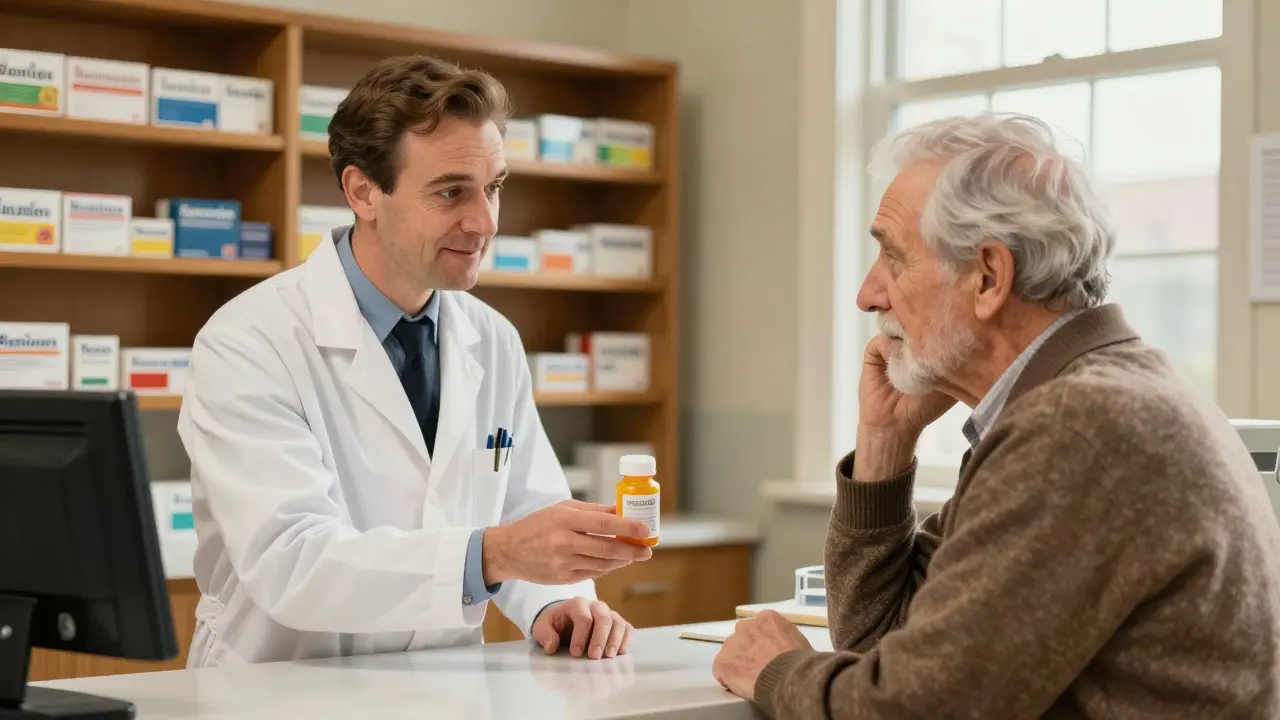
Imagine you have been taking the same prescription medication for years. You trust the pill’s shape, color, and how it makes you feel. Then, one day, your pharmacist hands you a different-looking box. It costs less, but the label says it is made by the exact same company that created the original brand-name drug. This isn’t a mistake. It is a calculated business move known as an authorized generic, which is a generic version of a brand-name drug produced and marketed by the original brand manufacturer or their authorized partner.
You might wonder why a big pharma company would cannibalize its own high-priced product. The answer lies in the brutal economics of patent expiration. When a drug’s patent expires, competitors can flood the market with cheaper versions, often slashing prices by 80% to 85% within the first year. By producing their own generic version, brand manufacturers try to keep some of that money in their pocket rather than losing it entirely to rival companies.
The Legal Foundation: How Authorized Generics Work
To understand this strategy, we need to look at the Hatch-Waxman Act, also known as the Drug Price Competition and Patent Term Restoration Act of 1984. This law changed the pharmaceutical industry forever. It created a pathway for generic drugs to enter the market without repeating costly clinical trials, provided they proved bioequivalence to the brand-name drug.
However, the law also left a loophole-or perhaps an opportunity-for brand owners. It allows the original manufacturer to sell a generic version of their own drug. These authorized generics are chemically identical to the brand-name version. They contain the same active ingredients, the same inactive ingredients, and are manufactured in the same facilities under the same Good Manufacturing Practice (GMP) standards. The only difference is the packaging and labeling. U.S. trademark laws prevent them from looking exactly like the brand-name box, so they must wear a generic label.
This distinction is crucial. A traditional generic is made by a completely different company that has to build new production lines and undergo rigorous inspections. An authorized generic skips most of that hassle because the data and factories already exist. The first major test of this strategy happened in 1997 when AstraZeneca launched an authorized generic of Prilosec (omeprazole). Within six months, they captured about 30% of the total market share, proving that this was a viable way to defend revenue.
The Production Process: Same Pill, Different Label
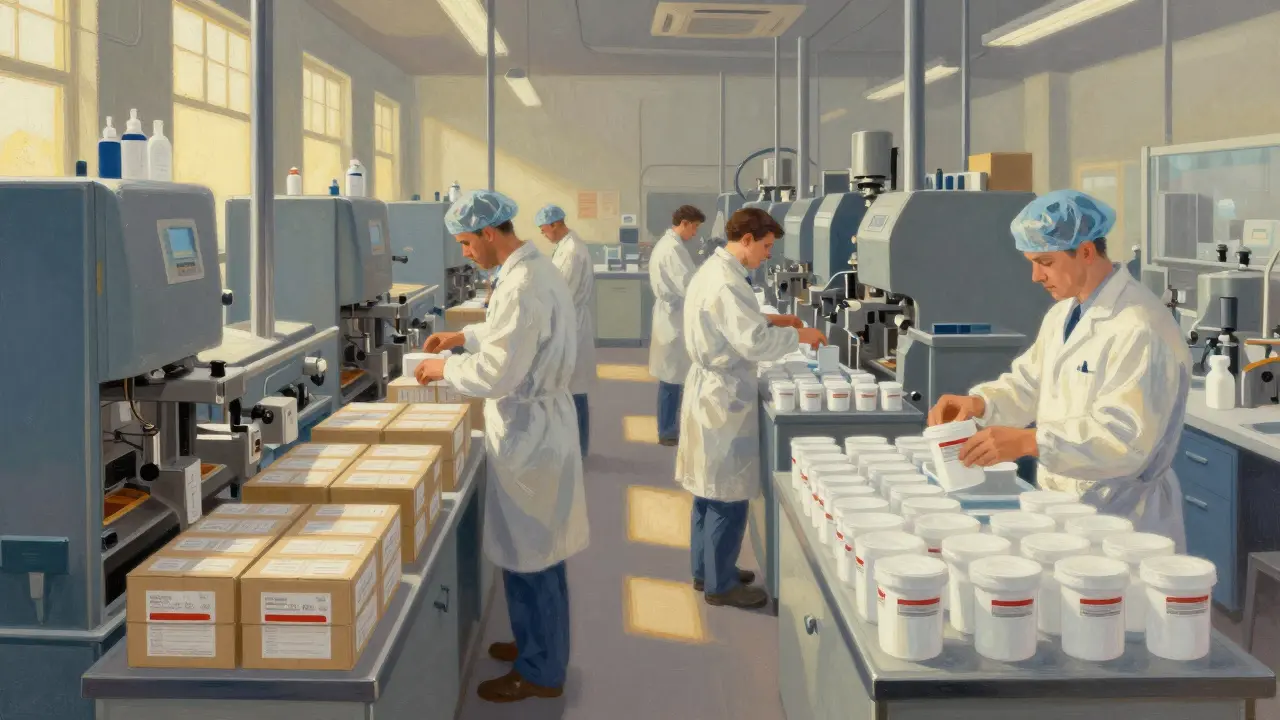
If you were walking through a pharmaceutical plant, you wouldn’t be able to tell which line was making the brand-name drug and which was making the authorized generic. That is because, physically, they are the same. The production process relies on leveraging existing infrastructure.
Brand manufacturers typically start planning for this transition 24 to 36 months before a patent expires. According to analysis by McKinsey & Company, this early preparation is vital. The manufacturing adjustments focus almost entirely on repackaging and labeling rather than reformulating the drug itself. The facility maintains the same quality controls required for the originator drug.
Here is how the timeline usually plays out:
- Regulatory Filing: The brand manufacturer files an Abbreviated New Drug Application (ANDA) for their own product. Because they already possess complete safety and efficacy data, they do not need to run new clinical trials.
- FDA Review: Traditional generic applications take an average of 17 months to review. Authorized generics can often bypass much of this delay because the FDA already knows the drug’s profile. Pfizer’s internal documentation suggests the transition requires only 6 to 9 months for regulatory adjustments.
- Market Entry: Crucially, authorized generics do not have to wait for the 180-day exclusivity period granted to the first traditional generic applicant. This means the brand owner can launch their generic on the exact day the patent expires.
In 2019, Teva Pharmaceuticals used this tactic with Copaxone (glatiramer acetate). They launched their authorized generic on the very day the patent expired, capturing 22% of the generic market in the first quarter alone.
Pricing Strategy: The Middle Ground
Why would a patient choose an authorized generic over a cheaper traditional generic? Often, they don’t have a choice if their insurance formulary favors it, but the pricing structure is designed to confuse and capture value.
Authorized generics are priced strategically between the brand-name drug and traditional generics. Typically, they are sold 10% to 15% below the brand-name price but 5% to 10% above competing generic versions. This creates a "middle tier" option.
| Drug Type | Price Relative to Brand | Manufacturer | Patient Perception |
|---|---|---|---|
| Brand-Name | 100% | Original Innovator | High trust, high cost |
| Authorized Generic | 85%-90% | Original Innovator | Same quality, slightly lower cost |
| Traditional Generic | 15%-20% | Third-Party Competitor | Lowest cost, variable trust |
A notable example is Eli Lilly and its drug Cialis (tadalafil). When the patent expired in 2018, Lilly introduced an authorized generic. Despite competition, this strategy helped maintain 78% of the drug’s total market revenue, according to Lilly’s 2019 annual report. Without the authorized generic, that number would likely have plummeted closer to traditional generic margins.
Market Impact and Consumer Confusion
For the pharmaceutical industry, authorized generics are a shield against the "patent cliff." Data from the Generic Pharmaceutical Association shows that 68% of top 50 brand-name drugs that lost patent protection between 2018 and 2022 had authorized generic versions introduced by the originator company.
However, this strategy is not without controversy. Critics argue it stifles true competition. Dr. Aaron Kesselheim, a professor at Harvard Medical School, published a 2022 analysis in JAMA stating that authorized generics provide minimal cost savings to consumers while allowing brands to maintain disproportionate market control. He noted that markets with authorized generics saw only a 32% price reduction, compared to 68% in markets with only traditional generics.
Patients often feel caught in the middle. On Reddit’s r/pharmacy community, discussions reveal skepticism. One user noted that an authorized generic was priced at $85, just $5 less than the brand name, while a traditional generic from a competitor was available for $30. Independent pharmacists report similar issues. A 2022 survey by the National Community Pharmacists Association found that 63% of owners said authorized generics created confusion among patients who couldn’t distinguish between the brand and the "generic" made by the same company.
Yet, there is a segment of patients who prefer them. A 2023 Kaiser Family Foundation survey found that 71% of patients preferred authorized generics when available due to familiarity. They know the manufacturing source and trust the consistency. Patient reviews on Drugs.com show higher satisfaction rates (4.2/5 stars) for authorized generics compared to traditional generics (3.8/5 stars), with comments frequently mentioning "same pill I've been taking for years" as a key benefit.
Legal Scrutiny and Antitrust Concerns
The line between smart business and anti-competitive behavior is thin. The Federal Trade Commission (FTC) has filed antitrust complaints against several manufacturers between 2015 and 2020, alleging that authorized generics were used to improperly extend market dominance.
The most famous case involved Actavis and its drug Namenda. In 2017, the FTC settled for $448 million after arguing that Actavis used its authorized generic to block competitors and delay the entry of cheaper traditional generics. This settlement established important legal boundaries. Companies can no longer use exclusive agreements to prevent other generics from entering the market once the patent expires.
Implementation challenges remain. Navigating the Hatch-Waxman Act’s provisions regarding patent challenges is complex. For instance, Mylan faced an 8-month delay in launching an authorized generic of Advair due to a legal dispute with GlaxoSmithKline in 2019. These legal hurdles mean that while the strategy is powerful, it is not risk-free.
The Future: Biologics and Biosimilars
As the industry evolves, so does the authorized generic strategy. With approximately $250 billion in brand-name drug revenues facing patent expiration between 2023 and 2027, the stakes are higher than ever. But the next frontier is biologics-complex drugs made from living organisms, unlike small-molecule chemical drugs.
Biologics have biosimilars instead of generics. Producing a biosimilar is harder and more expensive. In 2023, Amgen received approval for the first authorized biosimilar of its own drug, Enbrel. This signals a major shift. Because manufacturing expertise creates higher barriers to entry for traditional biosimilar competitors, brand manufacturers may find even more success with authorized versions in this space.
Analysts at SVB Securities predict that by 2025, 40% of small-molecule drugs losing patent protection will have authorized generic versions introduced by the originator company. Meanwhile, Johnson & Johnson launched an authorized generic of Invega Sustenna in 2023, the first authorized generic of a long-acting injectable medication. This required specialized manufacturing adaptations, showing that the strategy is becoming more sophisticated.
For patients, understanding this landscape is empowering. When you see a generic drug, check the manufacturer. If it is the same as the brand, you are getting an authorized generic. It offers the comfort of familiarity with a modest price drop. If you want the lowest possible price, ask your pharmacist about traditional generics from third-party manufacturers. Knowing the difference helps you navigate the complex world of pharmaceutical pricing.
Are authorized generics safe?
Yes, authorized generics are considered safe. They are produced by the same manufacturer as the brand-name drug using the same formulation, active ingredients, and manufacturing facilities. They meet the same FDA Good Manufacturing Practice (GMP) standards and have the same FDA approval status as the original brand product.
Why do brand manufacturers make their own generics?
Brand manufacturers produce authorized generics to preserve market share and revenue when a drug's patent expires. Instead of losing all sales to cheaper third-party generics, they capture a portion of the generic market themselves, maintaining control over quality and supply while offering a slightly lower price point than the brand name.
What is the difference between an authorized generic and a traditional generic?
The main difference is the manufacturer. An authorized generic is made by the original brand-name company, while a traditional generic is made by a different, competing company. Both are bioequivalent to the brand-name drug, but authorized generics often cost more than traditional generics because the brand manufacturer aims to retain higher profit margins.
Can I request a specific generic manufacturer at the pharmacy?
You can ask your pharmacist for a specific manufacturer, but it depends on your insurance formulary and what the pharmacy has in stock. Pharmacists often substitute generics based on cost contracts with insurers. If you prefer a traditional generic for lower cost or an authorized generic for familiarity, you should explicitly discuss this with your doctor and pharmacist.
Are authorized generics legal?
Yes, authorized generics are legal under the Hatch-Waxman Act of 1984. However, they are subject to antitrust scrutiny. The Federal Trade Commission (FTC) monitors these practices to ensure manufacturers are not using authorized generics to illegally block competition or delay the entry of cheaper traditional generics.