How to Avoid Contamination When Splitting or Crushing Pills: A Practical Safety Guide
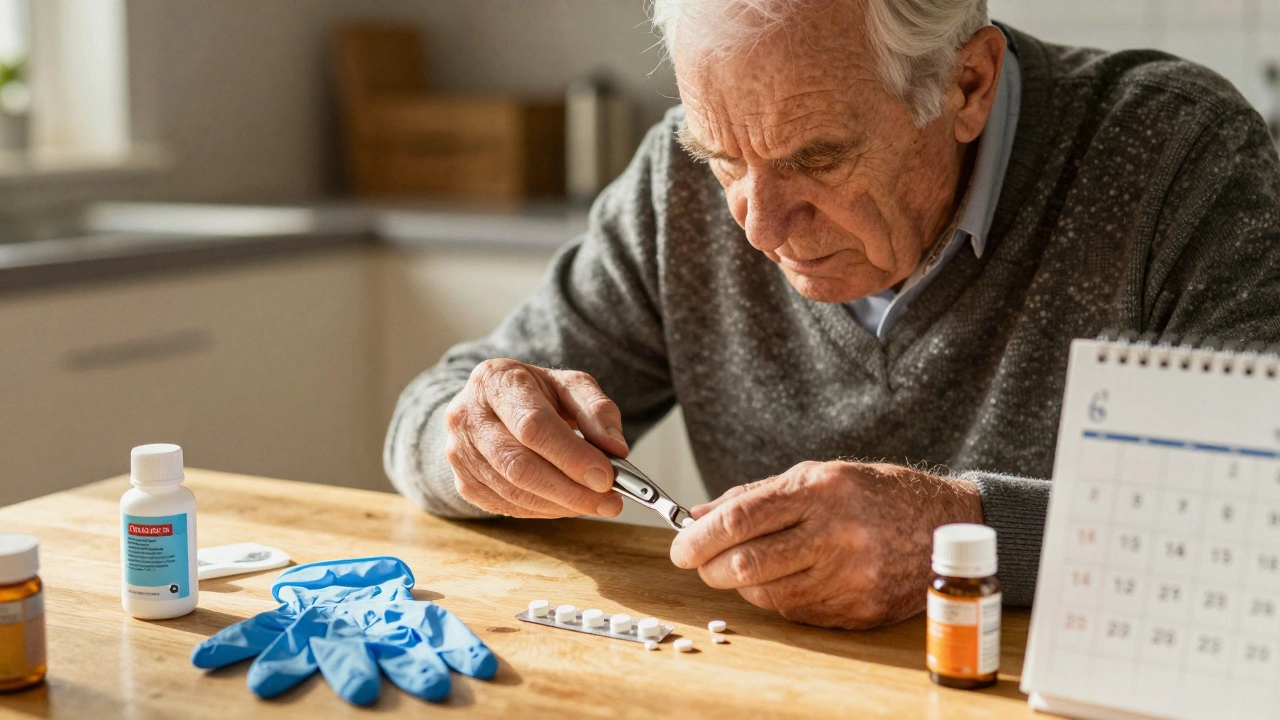
Splitting or crushing pills might seem like a simple fix-maybe you’re trying to save money, make it easier to swallow, or adjust a dose for a child or elderly person. But if you don’t do it right, you’re not just risking an incorrect dose. You could be exposing yourself or someone else to dangerous contamination, chemical degradation, or even life-threatening side effects. This isn’t just theory. In 2023, a care home in Wisconsin had 14 residents affected by warfarin cross-contamination because the same pill splitter was used for multiple drugs without cleaning between uses. That’s not an isolated case. It’s a common mistake.
Why Contamination Happens
Pills aren’t just little chunks of medicine. Many are built with special coatings or time-release layers. An enteric-coated pill, for example, is designed to dissolve only in the intestines, not the stomach. Crush it, and you destroy that protection. The drug might irritate the stomach lining or get absorbed too fast, causing toxicity. Sustained-release tablets work slowly over hours. Split or crush them, and you release the full dose all at once-like taking a whole bottle at once. Then there’s the physical risk: residue. When you split a pill, tiny particles stick to blades, surfaces, and tools. If you use the same splitter for warfarin, then for a blood pressure pill, you’re giving someone a tiny, unpredictable dose of blood thinner. Even 0.1 milligrams of a potent drug like levothyroxine or cyclophosphamide can cause harm. NIOSH testing shows that open crushing of hazardous drugs can leave up to 27.9% of the original dose airborne or on surfaces. That’s enough to be absorbed through skin contact or inhalation.What You Should Never Split or Crush
Not all pills are created equal. The FDA says 97.8% of these types should never be altered:- Enteric-coated pills (look for "EC" or "SR" on the label)
- Sustained-release or extended-release tablets (labeled ER, XR, XL, SR)
- Capsules (even if you think you can open them)
- Hazardous drugs (chemotherapy agents like cyclophosphamide, methotrexate, or hormone therapies)
- Sublingual or buccal tablets (meant to dissolve under the tongue)
- Any pill without a score line
The Right Tools for the Job
Using scissors, knives, or your fingers is not just unsafe-it’s dangerously inaccurate. A 2021 University of Jordan study found that manual splitting resulted in dose variability of up to 36%. That’s like taking a full dose one day and half a dose the next. Use a dedicated pill splitter with a v-shaped holder and retractable stainless steel blade. Look for models with a 0.05mm tolerance-this ensures clean, even splits. Brands like Silent Knight or Med-Plus Pro (2024 model) are designed for this. They’re not expensive. You can buy one for under $15. For crushing, use a closed-system pill crusher. Open cups or mortar-and-pestle methods spread powder everywhere. Closed systems like the Silent Knight crusher trap 99.8% of particles. That’s not marketing-it’s lab-tested. OSHA requires these for hazardous drugs, and for good reason. In one case, healthcare workers handling crushed cyclophosphamide without a closed system had contamination levels of 4.7 ng/cm² on their gloves. That’s enough to cause bone marrow suppression over time.
Step-by-Step: How to Split or Crush Safely
Follow this routine every single time. No shortcuts.- Wash your hands with soap and water for 20 seconds. Dry them completely.
- Put on clean gloves-nitrile or latex-free. Don’t reuse them.
- Disinfect your tool with a 70% isopropyl alcohol wipe. Let it air dry. Don’t wipe it with a cloth-fibers can contaminate.
- Use only one pill at a time. Don’t pre-split a week’s supply. Medication can degrade when exposed to air, light, or moisture.
- Split or crush immediately before administration. Don’t store split pills in a pill organizer unless the manufacturer explicitly says it’s safe.
- Clean the tool again after each use. Even if you’re splitting the same pill type, residue builds up.
- Dispose of gloves and wipes properly. Don’t toss them in regular trash if you’ve crushed a hazardous drug. Use a hazardous waste container if available.
Never Share Equipment
This is the most common error in homes and care facilities. One splitter used for multiple residents. One crusher used for different medications. It’s cheap. It’s convenient. And it’s deadly. In 2022, a survey of 300 care homes found that only 34.6% cleaned their pill splitters between different medications. That’s a 17.8% higher risk of cross-contamination. If someone takes blood thinners, antidepressants, or chemotherapy, sharing equipment can lead to overdose, organ damage, or even death. Solution? Assign a splitter or crusher to one person. Label it with their name. Keep it in their medication drawer. If you’re in a facility, demand dedicated equipment. If you’re a caregiver, buy your own. It’s not selfish-it’s life-saving.What to Do If You’ve Already Split or Crushed Wrong
If you’ve already split a pill that shouldn’t have been split, or used the same tool for multiple drugs, stop. Don’t give it to anyone. Don’t try to "wash it off." Call your pharmacist or doctor immediately. Tell them exactly what you did. They’ll tell you if the dose is still safe or if you need to get a new prescription. In some cases, you might need to monitor for side effects for 24-48 hours. If you crushed a hazardous drug and got powder on your skin, wash the area with soap and water right away. If you inhaled it, or if you’re pregnant or immunocompromised, seek medical advice immediately.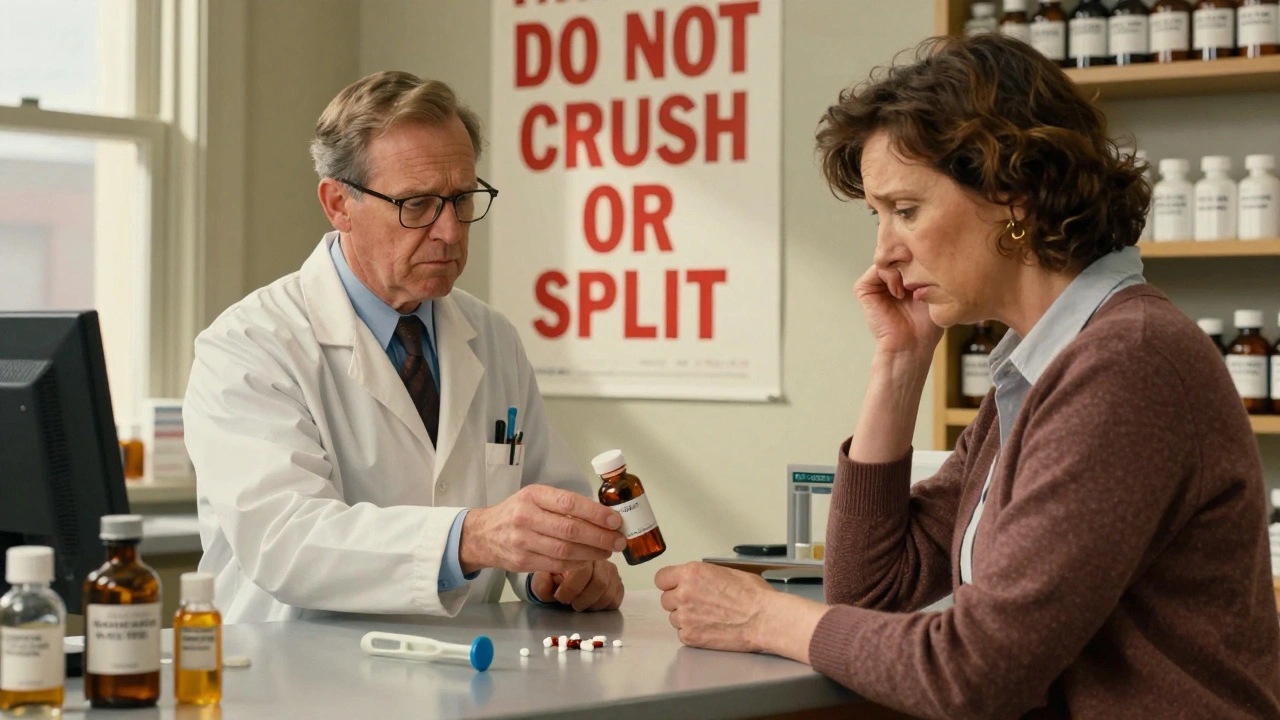
How to Know If a Pill Can Be Split
Look for three things:- A score line-a visible groove down the middle. Not all scored pills are safe, but none without one should be split.
- Label instructions-check the packaging or patient leaflet for "Do not crush or split."
- Ask your pharmacist-they have access to databases that tell them exactly which formulations are safe to alter. Don’t rely on online forums or YouTube videos.
What’s Changing in 2025-2026
Regulations are tightening. Starting January 1, 2025, OSHA mandates closed-system crushing for all NIOSH-listed hazardous drugs in healthcare settings. Pharmacies are now required to flag "DO NOT CRUSH OR SPLIT" in bold on electronic prescriptions. Medicare Part D plans are pushing for split-dose programs to cut costs, but only if done safely. New smart splitters are coming. Devices like Med-Engage’s 2024 FDA-cleared splitter can verify the dose before splitting and alert you if the pill isn’t meant to be altered. These aren’t widely available yet, but they’re the future.Final Reality Check
Most people split pills because they think it’s harmless. It’s not. Even if you’re careful, contamination is invisible. A single particle of chemotherapy drug on a blade can linger for days. A 0.5% error in a thyroid pill can throw your whole metabolism off. The best way to avoid contamination? Don’t split or crush unless you absolutely have to. Talk to your doctor. Ask if there’s a liquid form, a lower-strength tablet, or a different medication that doesn’t require alteration. Often, there is. If you must split or crush, do it right. Use the right tool. Clean it every time. Never share. And never assume.Can I split a pill with a knife or scissors?
No. Knives and scissors are not precise enough and can crush or crumble pills, leading to uneven doses and airborne particles. Studies show manual splitting results in up to 36% dose variation. Always use a dedicated pill splitter with a stainless steel blade and v-shaped holder.
Is it safe to crush pills for elderly people who have trouble swallowing?
Only if the pill is specifically approved for crushing. Most extended-release, enteric-coated, or hazardous drugs must never be crushed. Even if the person has trouble swallowing, ask your pharmacist for a liquid version, a dissolvable tablet, or a different formulation. Crushing the wrong pill can cause overdose, stomach damage, or toxic exposure.
Can I reuse a pill splitter for multiple medications?
Never. Even if you wipe it down, microscopic residue remains. Sharing splitters between different drugs has caused deadly cross-contamination cases, including warfarin overdoses. Assign one splitter per person or per medication. Clean it with 70% isopropyl alcohol after every use.
How do I know if a pill is safe to split?
Look for a score line on the tablet, check the label for "Do not crush or split," and always confirm with your pharmacist. The FDA requires manufacturers to test and label splitability by 2026, but until then, assume it’s unsafe unless verified. Never split pills without a score or without professional confirmation.
What should I do if I accidentally crush a hazardous drug?
Stop immediately. Wash your hands and any exposed skin with soap and water. Avoid touching your face or eyes. If you inhaled powder or got it on clothing, change clothes and clean the area thoroughly. Contact your doctor or poison control center. If you’re pregnant, immunocompromised, or work in healthcare, seek medical advice even if you feel fine-some effects are delayed.
Can I store split pills in a pill organizer?
Only if the medication’s manufacturer says it’s safe. Most split pills degrade faster when exposed to air, moisture, or light. Hormones, antibiotics, and heart medications are especially sensitive. If you must store split pills, keep them in their original blister pack, use them within 24 hours, and avoid humid areas like bathrooms.
Rupa DasGupta
December 4, 2025 AT 07:34Marvin Gordon
December 4, 2025 AT 21:09Mark Ziegenbein
December 6, 2025 AT 20:34Lynette Myles
December 7, 2025 AT 23:14Annie Grajewski
December 8, 2025 AT 06:45Jimmy Jude
December 10, 2025 AT 03:57an mo
December 10, 2025 AT 23:41aditya dixit
December 11, 2025 AT 13:23ashlie perry
December 11, 2025 AT 18:04