How to Create a Food and Medication Interaction Checklist at Home

Every year, over 1.3 million people in the U.S. end up in the emergency room because of bad reactions to their medications. About 12% of those cases involve something simple: what they ate for breakfast. If you’re taking more than one medication - especially if you’re over 40 - you’re at risk. And it’s not just pills. It’s grapefruit juice, dairy, leafy greens, even your morning coffee. The good news? You can protect yourself with a simple, handwritten checklist you make at home.
Why This Checklist Matters
You might think your doctor already knows what you’re taking. But here’s the reality: most doctors see 20+ patients a day. They don’t remember every supplement you mentioned in passing. And pharmacies don’t always catch interactions between your blood pressure pill and your daily spinach smoothie. A food and medication interaction checklist is your personal safety net. It’s not just a list of drugs. It’s a record of what foods, drinks, or supplements can make your meds work too well - or not at all. For example, if you’re on warfarin (a blood thinner), eating a big salad one day and none the next can throw your blood clotting levels off. That’s not a guess. That’s a documented risk. The American Pharmacists Association found that people who use a detailed medication checklist have 37% fewer dangerous reactions. That’s not a small number. That’s the difference between staying out of the hospital and ending up in one.What to Include on Your Checklist
Start with a blank sheet of paper or a simple document on your phone. Don’t overcomplicate it. You need five key pieces of info for every medication:- Drug name - both brand and generic (e.g., “Lipitor” and “atorvastatin”)
- Dosage and schedule - “10mg once daily at 8 AM”
- Purpose - “lowers cholesterol” or “prevents blood clots”
- Prescribing doctor - name and clinic (e.g., “Dr. Sarah Chen, Cardiology Associates”)
- Food or drink interaction - this is the most important part
- High Risk - Avoid completely. One bite could be dangerous. Example: grapefruit juice with statins like atorvastatin. This combo can spike drug levels by 300-500%, leading to muscle damage or kidney failure.
- Moderate Risk - Keep time between food and medicine. Example: dairy products (milk, yogurt, cheese) with antibiotics like ciprofloxacin. Wait at least 2 hours after taking the pill before eating dairy. Calcium binds to the drug and stops it from being absorbed.
- Low Risk - Monitor, don’t avoid. Example: vitamin K-rich foods like kale, spinach, or broccoli with warfarin. You don’t need to stop eating them. You need to eat about the same amount every day. Sudden changes in intake can make your blood too thick or too thin.
Where to Find Reliable Info
Don’t rely on Google or random apps. Many free apps give wrong or outdated info. Use trusted sources:- New Zealand Formulary Interaction Checker - Free, updated monthly, and tailored to local meds and foods. Use this as your main reference.
- Medication guides from the pharmacy - The small paper insert that comes with your prescription has interaction info in section 4.5. Keep these.
- SEFH Drug-Food/Herb Interaction Guide (2024 edition) - A laminated card set sold in pharmacies. Hang it on your fridge. It shows color-coded risks and exact time gaps.
- FDA Drug Safety Communications - Search “FDA drug interaction [medication name]” on their website. They issue warnings for serious risks.
How to Use It Every Day
Your checklist only works if you use it. Here’s how:- Put it where you see it - The fridge. The bathroom mirror. Your wallet. The University of Florida found that 82% of people who kept their checklist visible had fewer errors.
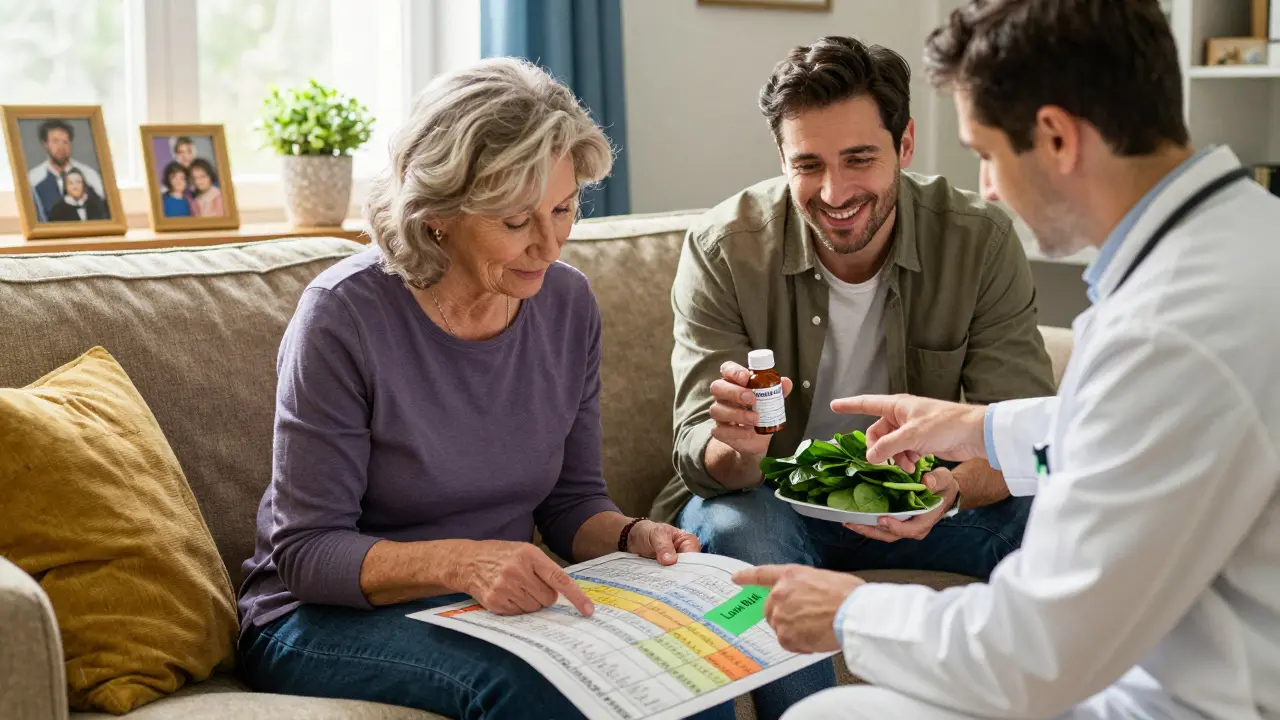
- Use color - Red for high risk. Yellow for moderate. Green for low. This helps you react fast, especially if you’re in a hurry or stressed.
- Review it weekly - Every Sunday, spend 10 minutes checking if anything changed. Did you start a new med? Did you add a new supplement? Update it right away.
- Bring it to every appointment - Even if your doctor has your file, bring your checklist. Most doctors don’t know what you’re eating. This gives them the full picture.
What Not to Do
Avoid these common mistakes:- Don’t write “avoid citrus” - Be specific. “Avoid grapefruit, Seville oranges, pomelos.” Regular oranges are fine.
- Don’t say “some greens” - Say “1 cup raw spinach” or “½ cup cooked kale.” Cooking changes vitamin K levels by up to 70%.
- Don’t ignore OTC meds - Painkillers like ibuprofen can interact with blood pressure meds. Cold medicines often contain decongestants that raise blood pressure.
- Don’t wait until you feel sick - Interactions don’t always cause immediate symptoms. Some build up slowly. Your checklist is prevention, not reaction.
Paper vs. Digital
You can use paper or a phone app. Both work - but they have trade-offs.Paper checklist: Works without power. Easy to show in an emergency. 92% of seniors over 75 use paper. But it doesn’t update itself. If you switch from one statin to another, you have to rewrite it.
Digital apps: Tools like Medisafe or MyTherapy can warn you in real time. They link to updated databases. But they need a smartphone, Wi-Fi, and regular updates. A 2023 JAMA study found digital tools cut errors by 42% - but only if people actually kept them current. Many users delete them after a month.
For most people, start with paper. It’s simple, reliable, and you can’t lose it if your phone dies. If you’re tech-savvy and update it weekly, a digital tool can help. But never rely on an app alone. Always have a printed copy.
Real Stories, Real Risks
One man in Dunedin was on tacrolimus after a kidney transplant. He drank grapefruit juice every morning because he liked the taste. He didn’t know it could cause his drug levels to spike. He ended up in the hospital with kidney damage. After his checklist was updated, he switched to apple juice. He’s fine now. Another woman took tranylcypromine (an antidepressant) and ate aged cheese and salami. She didn’t realize those foods have tyramine. Her blood pressure shot up to 185/110. She had a near-stroke. Now she keeps a red sticker on her fridge: “NO aged cheese, soy sauce, or cured meats.” These aren’t rare. They happen every day.
Keep It Updated
Your checklist is useless if it’s old. The FDA says 28% of checklist-related errors come from outdated info. So here’s your rule: update it every time your meds change.- When your doctor prescribes a new drug - update immediately.
- When you stop a drug - cross it out and write “discontinued” and the date.
- When you start a new supplement - add it.
- When you change your diet - if you start eating more kale or quit dairy, update the interaction notes.
Who Should Do This
You don’t need to be sick or old to need this. If you take:- Two or more prescription drugs
- Any blood thinner, antidepressant, statin, or antibiotic
- Supplements like fish oil, vitamin K, or St. John’s wort
- Any medication and drink alcohol, coffee, or grapefruit juice daily
Start Today
Grab a pen. Get your meds out of the cabinet. Open the NZ Formulary website. Spend 30 minutes. Write it all down. Don’t wait. Don’t think you’ll remember. You won’t. This isn’t about being perfect. It’s about being safe. One mistake can land you in the hospital. One checklist can keep you out.Can I use a free app instead of making my own checklist?
Some apps like Medisafe or MyTherapy are helpful, but they’re not foolproof. Many don’t include local foods or updated interaction data. The FDA found that 62% of unregulated apps give wrong advice. Always cross-check with the New Zealand Formulary or your pharmacist. Keep a printed copy too - apps can crash, lose data, or require updates you forget.
Do I need to avoid all citrus if I’m on a statin?
No. Only grapefruit, Seville oranges, and pomelos are dangerous. Regular oranges, lemons, and limes are safe. The problem is a compound in grapefruit that blocks how your body breaks down statins. This causes too much drug to build up in your blood. Other citrus doesn’t have this effect.
What if I eat a high-risk food by accident?
Don’t panic. One time usually won’t cause harm. But record it in your checklist: “ate grapefruit with atorvastatin on March 5.” Then monitor for symptoms like muscle pain, dark urine, dizziness, or nausea. If you feel unwell, call your doctor or pharmacist. If you’re on warfarin and eat a huge amount of kale, get your INR checked sooner than scheduled.
Should I tell my pharmacist about my checklist?
Yes - always. Pharmacists are trained to spot interactions. During your monthly refill, ask them to review your list. Medicare Advantage plans now cover this as part of Medication Therapy Management. It’s free, takes 15 minutes, and can catch errors you missed.
Is this only for older people?
No. While 78% of people over 65 use some kind of medication list, younger people are at risk too. If you’re on antibiotics, birth control, antidepressants, or statins - and you eat dairy, grapefruit, or take supplements - you need this checklist. Interactions don’t care about your age.
How often should I update my checklist?
Update it every time your meds change - new prescription, stopped drug, added supplement. Also, review it every month. Set a phone reminder for the first Monday of each month. Outdated checklists cause 28% of errors, according to the FDA. Keeping it current is the most important step.