How to Prevent Liver Injury from Acetaminophen Combination Products

Every year, thousands of people end up in the hospital with severe liver damage-not from alcohol, not from viruses, but from a common painkiller they thought was safe: acetaminophen. The problem isn’t just taking too much at once. It’s taking too much over time, without realizing it, because acetaminophen hides in dozens of medications you might be using every day.
Why Combination Products Are Dangerous
You’ve probably seen them: Vicodin, Percocet, Tylenol with Codeine. These are prescription painkillers that mix acetaminophen with an opioid like hydrocodone or oxycodone. They’re effective for moderate to severe pain, but here’s the catch: every pill contains acetaminophen. And if you’re also taking Advil PM, NyQuil, Excedrin, or even some cold and flu remedies, you’re adding more acetaminophen without knowing it. The FDA set a safe daily limit of 4,000 mg for adults. But that’s easy to exceed. One Vicodin tablet has 325 mg. Take four of them? That’s 1,300 mg. Add two extra-strength Tylenol tablets (1,000 mg)? Now you’re at 2,300 mg. Throw in a night of NyQuil (650 mg)? You’re over 3,000 mg. And you haven’t even hit the max yet. But here’s the scary part: you don’t need to hit 4,000 mg to hurt your liver. People with alcohol use disorder, malnutrition, or existing liver issues can suffer damage at just 2,000-3,000 mg.How Acetaminophen Damages the Liver
Your liver normally breaks down acetaminophen safely using two main pathways: glucuronidation and sulfation. But when you take too much, those pathways get overwhelmed. The extra acetaminophen gets processed by a different system-cytochrome P450 2E1-which turns it into a toxic byproduct called NAPQI. NAPQI is dangerous because it eats through your liver’s natural defense: glutathione. Think of glutathione as your liver’s antioxidant shield. Once it’s gone below 30%, NAPQI starts attacking liver cells directly. This triggers a chain reaction: mitochondrial damage, oxidative stress, and cell death. The result? Acute liver injury-or worse, acute liver failure. This isn’t theoretical. In 2011, acetaminophen caused 40% of all unintentional overdose-related liver failures in the U.S. Even today, it’s responsible for nearly one-third of all acetaminophen-related liver injuries. And most of those cases? People didn’t mean to overdose. They just didn’t know they were taking multiple doses.What the FDA Did-and What’s Still Missing
In 2011, the FDA stepped in. They forced manufacturers to cap acetaminophen in prescription combination products at 325 mg per tablet or capsule. That rule took full effect by 2014. The goal? Make it harder to accidentally overdose. They also required clearer labeling. Look at any prescription bottle today: the acetaminophen content is printed in bold. Some even use red text. That helped. According to the Institute for Safe Medication Practices, unintentional overdoses dropped 29% after these changes. But here’s the problem: the rules don’t fully cover over-the-counter (OTC) products. You can still buy Tylenol in 1,000 mg tablets. Some cold medicines still contain 650 mg per dose. And many people don’t check the label. A 2021 Consumer Reports survey found only 37% of people knew acetaminophen was the active ingredient in Tylenol. Only 28% knew the daily limit. Worse, many don’t realize that “APAP” on a drug label means acetaminophen. If you see “APAP 500 mg” on a bottle, that’s 500 mg of acetaminophen. That’s not a different drug. It’s the same thing.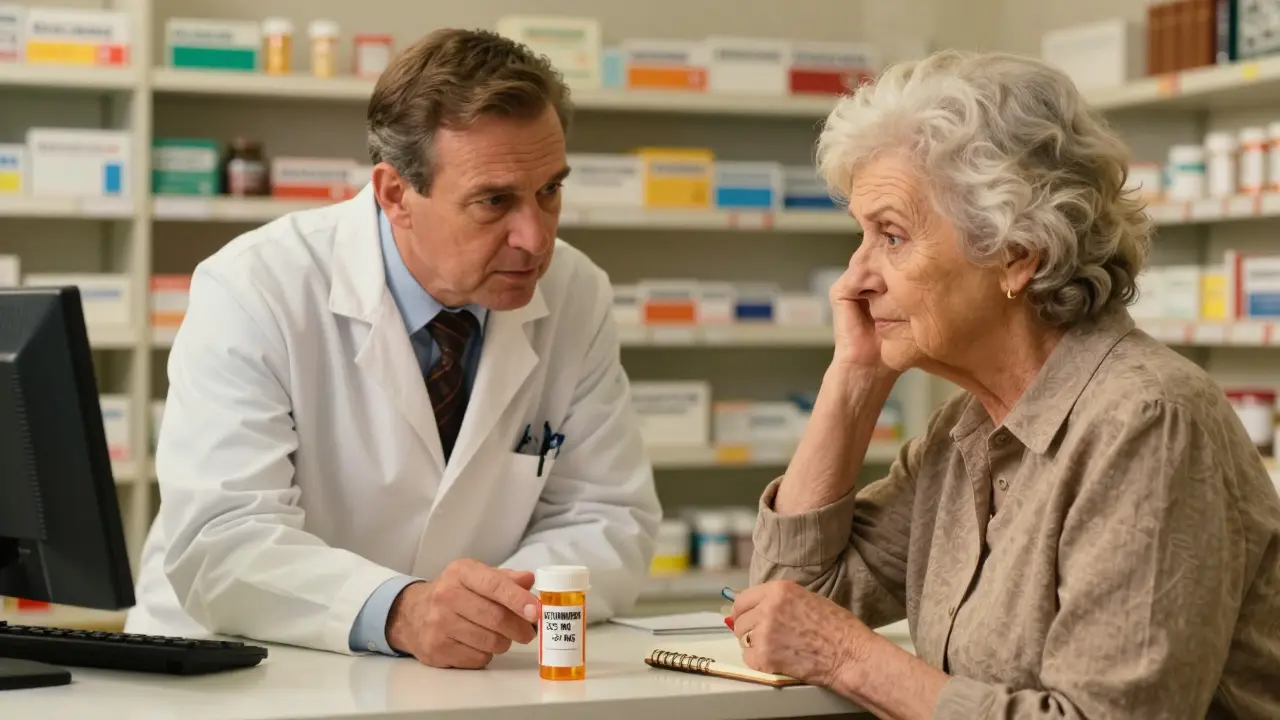
How to Protect Yourself
The best way to prevent liver injury isn’t waiting for the next FDA rule. It’s changing how you take medicine.- Always read every label. Check for “acetaminophen,” “APAP,” or “paracetamol.” If it’s listed, write it down. Add up the total from all your medications.
- Never take more than one acetaminophen-containing product at a time. Even if one is prescription and the other is OTC, they’re still adding up.
- Set a daily cap of 3,000 mg if you drink alcohol, have liver disease, or are underweight. Your liver can’t handle the full 4,000 mg.
- Use a medication tracker. Write down every pill you take, including dose and time. Or use a free app like Medisafe or MyTherapy. Some new apps can scan barcodes and auto-calculate your total acetaminophen intake.
- Ask your pharmacist. When you pick up a new prescription, ask: “Does this contain acetaminophen? And is it safe with what I’m already taking?” Pharmacists are trained to catch these overlaps-and they catch 41% more overdoses when they counsel patients.
- Teach your family. If you’re caring for an elderly parent or someone with cognitive issues, check their medicine cabinet. They might be taking three different pills that all contain acetaminophen.
What to Do If You Think You’ve Taken Too Much
If you’ve taken more than the safe limit-even if you feel fine-don’t wait. Liver damage doesn’t always cause symptoms right away. Nausea, vomiting, and fatigue can show up 12-24 hours later. By then, it might be too late. The antidote is N-acetylcysteine (NAC). It works by restoring glutathione and protecting liver cells. It’s most effective if given within 8 hours of overdose. But even if it’s been 24 or 48 hours, NAC still helps. Emergency rooms keep it on hand. Don’t wait to see if you feel sick. Call poison control or go to the ER. There’s also a new option: fomepizole. Approved by the FDA in 2021, it blocks the enzyme that turns acetaminophen into NAPQI. It’s not a replacement for NAC-but when used together, especially in late-presenting cases, it reduces severe liver injury by 32%.
Tatiana Bandurina
January 21, 2026 AT 16:18Acetaminophen is a silent killer because we treat it like candy. People think if it’s sold over the counter, it’s harmless. They pop Tylenol for headaches, NyQuil for colds, and Vicodin for back pain - and never add it up. I’ve seen patients with liver failure who swore they ‘only took a few.’ The math doesn’t lie. 325 mg times six pills is almost the entire daily limit. No one checks the labels. No one reads the fine print. And when the liver gives out, they’re shocked. It’s not an accident - it’s negligence dressed up as convenience.
Liberty C
January 22, 2026 AT 09:29It’s not just ignorance - it’s cultural. Americans treat medication like snacks. We don’t have a relationship with drugs; we have a transaction. You feel bad? Grab something. Doesn’t matter what. We’ve turned pharmacology into a vending machine culture. The FDA capped prescriptions at 325 mg? Cute. But you can still buy 1,000 mg Tylenol in bulk at Walmart like it’s toilet paper. The real problem isn’t labeling - it’s the belief that our bodies are infinite, and chemicals are infinite too. We need a moral reckoning, not another warning label.
Alec Amiri
January 22, 2026 AT 13:29So let me get this straight - you’re telling me I can’t take NyQuil if I took a Tylenol for my headache? That’s insane. I’ve been doing this for years. I feel fine. My liver’s fine. You’re scaring people with numbers. What’s next? No aspirin unless you have a PhD in biochemistry?
Neil Ellis
January 23, 2026 AT 07:12Actually, I think this is a great wake-up call. I used to take three Advil PMs before bed and a Tylenol for my knee - never thinking twice. After reading this, I started tracking everything in an app. Now I know exactly how much I’m ingesting. It’s scary how easy it is to overdose without meaning to. I’m not scared of acetaminophen - I’m scared of how little we’re taught about it. This deserves way more attention. Thank you for sharing this.
Lana Kabulova
January 24, 2026 AT 23:48Wait - so APAP is acetaminophen? I thought it was some kind of new anti-inflammatory? I’ve been reading labels for years and never connected the dots. I’ve been taking cold meds with APAP and Tylenol together for months. Oh my god. I’m going to check my cabinet right now. I feel like an idiot. I didn’t even know APAP meant acetaminophen. How is this not common knowledge?
Rob Sims
January 25, 2026 AT 21:55Oh wow. Another ‘wake-up call’ from someone who thinks the government should police your medicine cabinet. Next they’ll ban sugar because it’s ‘toxic.’ People are adults. If you want to poison your liver, go ahead. But don’t lecture me about ‘safety’ when your solution is more bureaucracy and less personal responsibility. I take what I want. I know my body. I don’t need an app to tell me how many pills I can swallow.
Oren Prettyman
January 26, 2026 AT 10:00It is, of course, entirely fallacious to suggest that the human liver is incapable of metabolizing acetaminophen in quantities exceeding the arbitrary threshold of 4,000 mg per day. The FDA’s regulatory framework is based on population-level statistical models that fail to account for interindividual variability in hepatic enzyme expression, particularly cytochrome P450 2E1 polymorphisms. Moreover, the assumption that NAPQI toxicity is linearly correlated with dosage ignores the role of glutathione resynthesis kinetics, which in healthy individuals may maintain protective thresholds even above 5,000 mg. To impose a 3,000 mg cap for alcohol users is not only medically unsound but also stigmatizing - it presumes biochemical incompetence based on lifestyle. The real issue is not dosage - it is the pathologization of normal pharmacological behavior.
Keith Helm
January 27, 2026 AT 03:09APAP = acetaminophen. Always check. Always add. Never assume.
arun mehta
January 27, 2026 AT 23:47Thank you for this detailed and vital post 🙏. In India, we often see people take multiple painkillers without knowing they contain paracetamol (same as acetaminophen). My grandfather once took four different cold medicines in one day - he ended up in the hospital. Since then, I’ve started a small campaign in my village to teach people to read labels. Simple things like writing ‘APAP’ in Hindi on pill bottles help. Education, not fear, saves lives. 🌿
Chiraghuddin Qureshi
January 28, 2026 AT 00:34Love this post! 🙌 In my family, we now have a ‘medication night’ every Sunday - we lay out all pills, check labels, and write down what’s what. My mom used to take NyQuil and Tylenol together - she didn’t even know they were the same thing. Now she laughs about it. Small changes, big impact. Keep spreading awareness! 💪🌍
Patrick Roth
January 28, 2026 AT 12:43So the FDA capped prescription acetaminophen at 325mg, but you can still buy 1000mg tablets over the counter? That’s not safety - that’s hypocrisy. They’re protecting the pharmaceutical industry’s profit margins. If they really cared, they’d ban high-dose OTC pills entirely. But they won’t. Because then people might have to buy fewer bottles. This isn’t about health. It’s about corporate control disguised as regulation.
Daphne Mallari - Tolentino
January 29, 2026 AT 06:46One cannot overstate the significance of pharmacovigilance in the context of polypharmacy. The conflation of active pharmaceutical ingredients under proprietary branding, particularly in over-the-counter formulations, constitutes a systemic failure in patient education. The term ‘APAP’ is not merely an abbreviation - it is a linguistic obfuscation deliberately preserved by industry stakeholders to obscure dosage accumulation. A mandatory, standardized nomenclature - perhaps ‘Acetaminophen (APAP)’ - should be enforced across all labeling, both prescription and OTC, to mitigate inadvertent toxicity. This is not a matter of personal responsibility; it is a matter of regulatory integrity.
Philip House
January 30, 2026 AT 06:26Look, I get it. But here’s the truth: if you’re taking 10 different meds and don’t know what’s in them, maybe you shouldn’t be taking 10 different meds. My grandma takes 14 pills a day. She doesn’t know half of them. She just trusts the doctor. That’s the real problem - not acetaminophen. It’s the system that lets people get prescribed 14 pills and never explain what they do. Fix the system. Don’t just slap labels on bottles and call it a day.