How to Store Insulin Pens, Vials, and Supplies Correctly
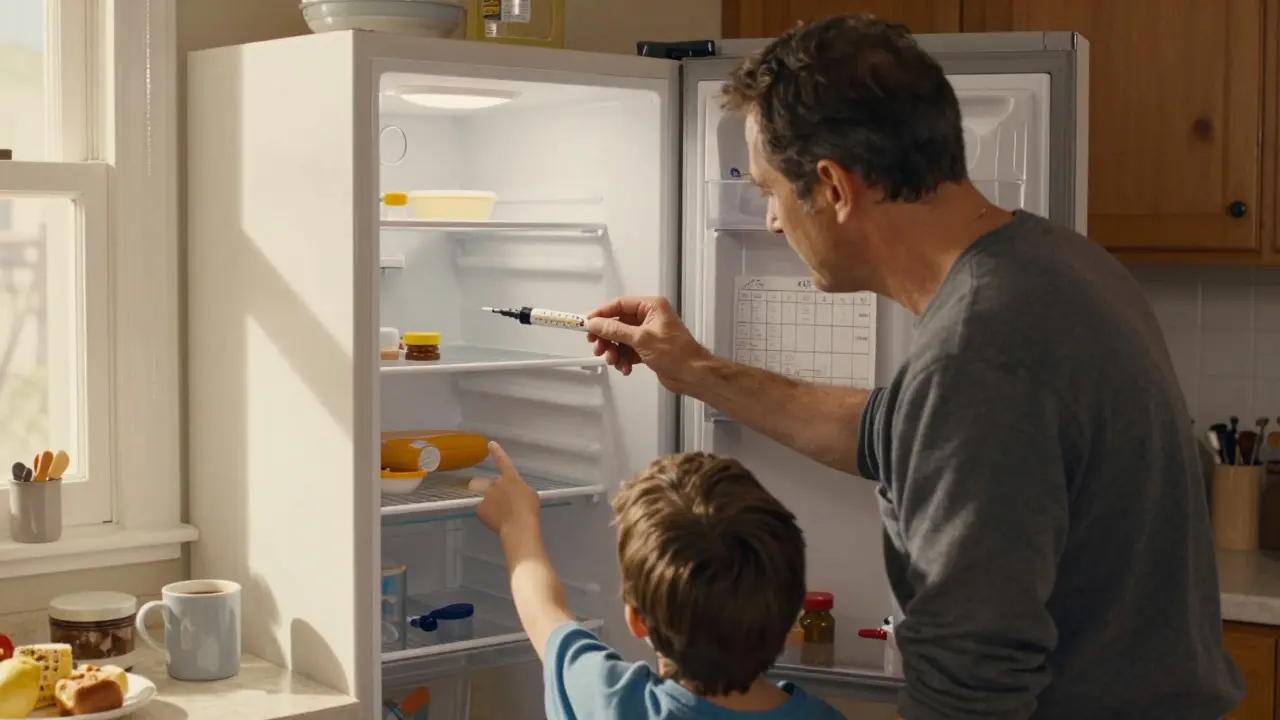
Storing insulin the right way isn’t just a suggestion-it’s a matter of life and death. If your insulin loses potency because it got too hot, too cold, or sat out too long, your blood sugar can spike unpredictably. You might think you’re doing fine, but your body is fighting a silent battle. And you won’t even know why.
Unopened Insulin: Keep It Cold, But Not Frozen
Before you open a new insulin vial, pen, or cartridge, it needs to stay refrigerated. The sweet spot is between 36°F and 46°F (2°C to 8°C). That’s your fridge’s main compartment-not the door, not the back wall, and definitely not the freezer. Many home fridges have spots that dip below freezing, especially near the back or bottom. If insulin freezes, it forms crystals. Those crystals don’t melt back into working insulin. Once frozen, it’s trash.
Manufacturers like Eli Lilly, Novo Nordisk, and Sanofi all agree: unopened insulin stays good until its printed expiration date if kept in this range. That’s the baseline. Don’t assume it’s fine just because it looks clear. Even if it looks perfect, freezing ruins it at the molecular level.
Opened Insulin: Room Temperature Is Okay-For a While
Once you start using insulin, you don’t need to keep it cold. In fact, injecting cold insulin hurts. Most people prefer letting it warm up for 30 minutes before use. After opening, you can store it at room temperature-between 59°F and 86°F (15°C to 30°C). But here’s the catch: time matters.
For most insulins, that’s 28 days max. After that, even if it looks fine, it’s losing power. The American Diabetes Association says 23.1 million Americans use insulin. That’s millions of people who need to know this. But not all insulins follow the same rules.
- Insulin glargine (Lantus, Basaglar): 28 days at room temp
- Insulin aspart (NovoLog): 28 days
- Insulin lispro (Humalog): 28 days
- Insulin NPH (Humulin N, Novolin N): 14 days at room temp
- Insulin degludec (Tresiba): 8 weeks at room temp
- Insulin glargine U300 (Toujeo): 56 days at room temp (newer approval)
Always check the package insert. If you’re unsure, call your pharmacist. Don’t guess. The difference between 28 days and 56 days could save you money-and prevent dangerous highs.
What Happens When Insulin Gets Too Hot?
Heat is the silent killer of insulin. If it hits 98.6°F (37°C) or higher, it starts breaking down. At 104°F (40°C), it can lose potency fast-about 1.3% per hour. That means after 48 hours at that heat, you’re using mostly water with a little insulin left.
Here’s the scary part: cars get hot. A 75°F day can turn your glove compartment into a 110°F oven in under 30 minutes. That’s not theory. That’s what happened to a user on Reddit who lost $380 worth of insulin after their fridge broke and hit 50°F for two days. Their blood sugar went wild. They didn’t know why until they checked the fridge.
And no, putting it in a cooler with ice doesn’t fix everything. If the ice melts and the insulin sits in water, it’s ruined. Insulin must stay dry.
Insulin Pumps: A Different Rulebook
If you use an insulin pump, the rules change. Insulin in the reservoir or tubing has a much shorter life. Even if it’s kept cool, you must replace it every 72 hours. That’s not a suggestion. That’s the manufacturer’s requirement.
And if your pump insulin gets above 98.6°F? Throw it out-even if it’s only been 24 hours. The tubing traps heat. You can’t see it, but it’s degrading. The American Diabetes Association’s journal confirmed this in 2010. Pump users are at higher risk for unexplained highs because of this.
Also, insulin you draw from a vial into your pump? Discard after 14 days. That’s half the time of a pen. Why? Because once it’s out of the sealed vial, it’s more exposed to air and bacteria.
Signs Your Insulin Is Bad
Insulin should be clear. Always. If you’re using a cloudy insulin like NPH, it’s supposed to look milky-but not clumpy. If you see particles, strings, or chunks, toss it. That’s not normal sediment. That’s damage.
Even if it’s within the 28-day window, if your blood sugar is suddenly erratic and you haven’t changed your routine, suspect the insulin. One study found that 28% of people who used insulin past its shelf life had noticeable control issues. That’s almost one in three.
And don’t ignore the expiration date. A 2022 survey showed 41% of insulin users don’t check it regularly. That’s dangerous. Expired insulin doesn’t just lose power-it can behave unpredictably.
Traveling With Insulin? Here’s How to Stay Safe
Going on a trip? Don’t rely on hotel fridges. They’re not reliable. Don’t pack insulin in checked luggage. The cargo hold can drop below freezing or spike above 100°F.
Use a cooling case. Products like the Frio Wallet, MedAngel, or VidaCool are designed to keep insulin between 59°F and 86°F for 45+ hours without ice. They work by evaporative cooling. You soak them in water, and they stay cool for days. Amazon reviews show a 4.3-star average from over 2,800 users. They cost $25 to $50. That’s cheaper than one wasted insulin pen.
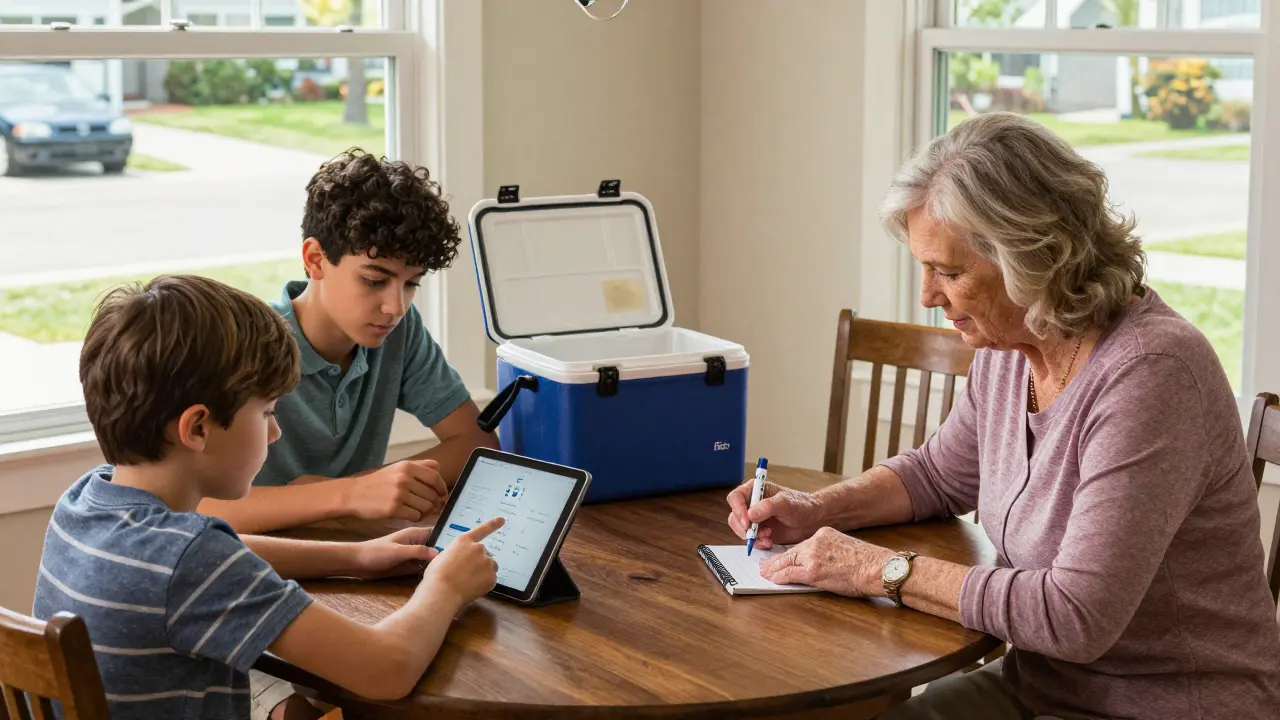
Always carry insulin in your carry-on. Bring extra. And write the opening date on the pen or vial with a permanent marker. A University of Michigan study found that people who marked their insulin reduced expired use by 68%.
What About Emergency Situations?
Power outages, natural disasters, or travel mishaps happen. The FDA updated its emergency guidance in August 2023: if you can’t keep insulin cold, most types will still work for up to 28 days at temperatures up to 86°F. That’s your safety net.
But if it hits 95°F? After seven days, potency drops by 35%. That’s not safe. If you’re stuck without refrigeration and your insulin is over 86°F for more than a few hours, use it only as a last resort. Monitor your blood sugar closely. If it’s not responding, get new insulin ASAP.

Storage Mistakes People Make (And How to Avoid Them)
- Mistake: Leaving insulin in the car. Solution: Always carry it with you. Use a cooling case.
- Mistake: Storing it in the fridge door. Solution: Put it on a middle shelf, away from the freezer.
- Mistake: Using insulin past 28 days because it “looks fine.” Solution: Mark the date. Set a phone reminder.
- Mistake: Not checking for cloudiness or clumps. Solution: Inspect every time before use.
- Mistake: Assuming all insulins are the same. Solution: Read the label. Ask your pharmacist.
Dr. Robert Gabbay from the ADA says improperly stored insulin causes about 17% of unexplained blood sugar swings. That’s not a small number. That’s one in six people who think they’re doing everything right-but aren’t.
Waste and Cost: It’s More Than Just Money
Improper storage isn’t just a health risk-it’s a financial one. In the U.S. alone, $1.2 billion is wasted every year on insulin that’s been ruined by bad storage. That’s billions in wasted medication, ER visits, and hospital stays.
And it’s preventable. A $30 cooling case lasts years. A permanent marker costs less than a dollar. A phone reminder takes 10 seconds to set. These small habits save lives and money.
What’s Changing in Insulin Storage?
Manufacturers are listening. New insulins are being designed to handle heat better. Toujeo’s 56-day room temperature stability was a game-changer. Biocon’s next-gen biosimilars are showing promise-some staying potent at 104°F for 14 days in trials.
By 2027, 60% of new insulins are expected to last 35+ days at room temperature. That’s huge. But until then, you still need to follow the rules. Don’t wait for the next breakthrough. Your body needs you to act now.
Can I store insulin in the freezer if I want to make it last longer?
No. Freezing insulin permanently damages it. Even if it thaws, the molecules are broken. You’ll get inconsistent results, dangerous highs, or even diabetic ketoacidosis. Always keep insulin in the fridge, not the freezer.
What if my insulin looks cloudy but it’s not supposed to be?
If you’re using a clear insulin like Humalog, Lantus, or Tresiba, and it looks cloudy, milky, or has particles, throw it out. That’s a sign of degradation. Even if it’s within the 28-day window, it’s no longer safe to use.
Is it okay to use insulin after the 28-day mark if it still looks fine?
No. Insulin loses potency over time, even if it looks clear. After 28 days (or the specific timeframe for your type), it won’t work as well. You might not notice right away, but your blood sugar will become harder to control. Don’t risk it.
Can I travel with insulin in my checked luggage?
Never. Checked baggage can freeze in cargo holds or overheat. Always carry insulin in your carry-on. Use a cooling case and keep it with you at all times.
How do I know if my insulin has gone bad during a power outage?
If your fridge was off for more than 4 hours and the temperature rose above 86°F, assume it’s compromised. If you can’t get new insulin right away, use it only if absolutely necessary and monitor your blood sugar closely. Replace it as soon as possible.
Do I need to refrigerate insulin pens after I start using them?
No. Once opened, insulin pens can stay at room temperature (59°F-86°F) for their approved time-usually 28 days. Refrigerating them after opening isn’t necessary and can make injections more painful. Let them warm up before use.
What’s the best way to mark when I opened my insulin?
Use a permanent marker to write the date and time directly on the pen or vial. Set a phone reminder for 28 days (or whatever your insulin’s shelf life is). Studies show this simple step cuts expired use by nearly 70%.
Dave Alponvyr
December 15, 2025 AT 09:10Kim Hines
December 16, 2025 AT 08:15Cassandra Collins
December 16, 2025 AT 23:48Joanna Ebizie
December 17, 2025 AT 23:54Elizabeth Bauman
December 19, 2025 AT 20:20Dylan Smith
December 21, 2025 AT 02:56Mike Smith
December 21, 2025 AT 05:21Ron Williams
December 21, 2025 AT 17:33Kitty Price
December 21, 2025 AT 19:25Aditya Kumar
December 21, 2025 AT 22:57Colleen Bigelow
December 22, 2025 AT 12:17Billy Poling
December 24, 2025 AT 10:16