How to Use Pharmacy Delivery and Mail-Order for Convenience
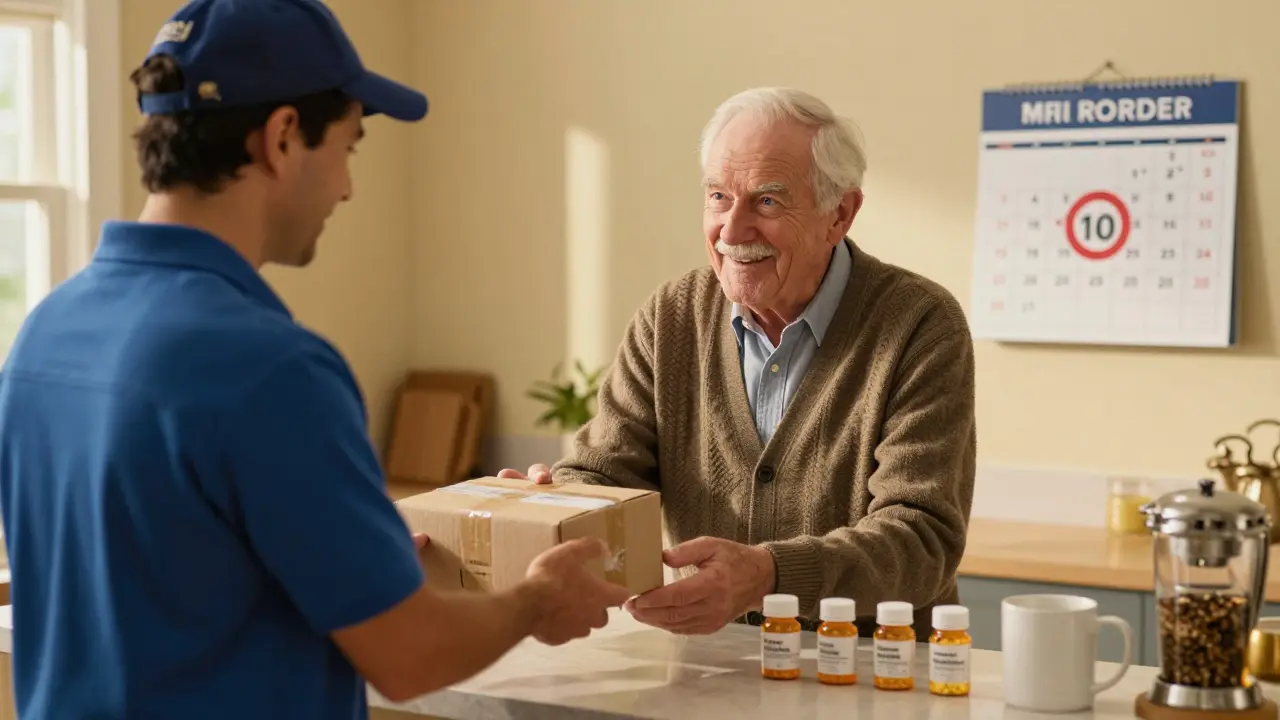
Why Pharmacy Delivery Makes Life Easier
If you take medication every day for high blood pressure, diabetes, or cholesterol, you know how easy it is to forget. Life gets busy. The pharmacy is closed when you need it. The bus doesn’t run on weekends. You’re tired after work. That’s where pharmacy delivery and mail-order services step in-not as a luxury, but as a practical tool to keep you healthy without adding stress.
Studies show people who get their meds delivered are 82% likely to take them on time. That’s compared to just 52% for those who pick them up at the local pharmacy. The difference isn’t magic. It’s convenience. When your pills show up at your door every three months, you don’t have to remember to refill. You don’t have to drive. You don’t have to wait in line.
How Mail-Order Pharmacy Works
Mail-order pharmacies aren’t some distant warehouse. They’re licensed, regulated, and built for accuracy. Most use robotic systems to count pills, reducing errors by 23 times compared to retail pharmacies. Your prescription gets filled in a secure facility, checked twice, then shipped in temperature-controlled packaging if needed.
You don’t need to be tech-savvy to use it. Most services let you order online, by phone, or even through your health plan’s app. You’ll need:
- A valid prescription from your doctor
- Insurance that covers mail-order (most do, for free)
- Or the ability to pay cash-many plans offer lower prices than retail
Once you sign up, your first order takes 3-5 days. After that, refills are automatic. Most services will even sync all your meds to arrive on the same day, so you’re not opening three different boxes throughout the month.
Cost Savings You Can’t Ignore
Let’s say you take a $120-a-month brand-name pill. At a retail pharmacy, you pay $40 per 30-day supply. That’s $120 a month. At a mail-order pharmacy, you get a 90-day supply for the price of two copays-so $80 total. That’s $40 saved every month. Over a year? $480. For chronic meds, that adds up fast.
Some plans even let you pay less than $10 per month for generic drugs. Blue Cross NC found patients on mail-order saved $150-$300 a year on average. That’s not a small amount. It’s money you can use for groceries, gas, or a doctor’s visit you’ve been putting off.
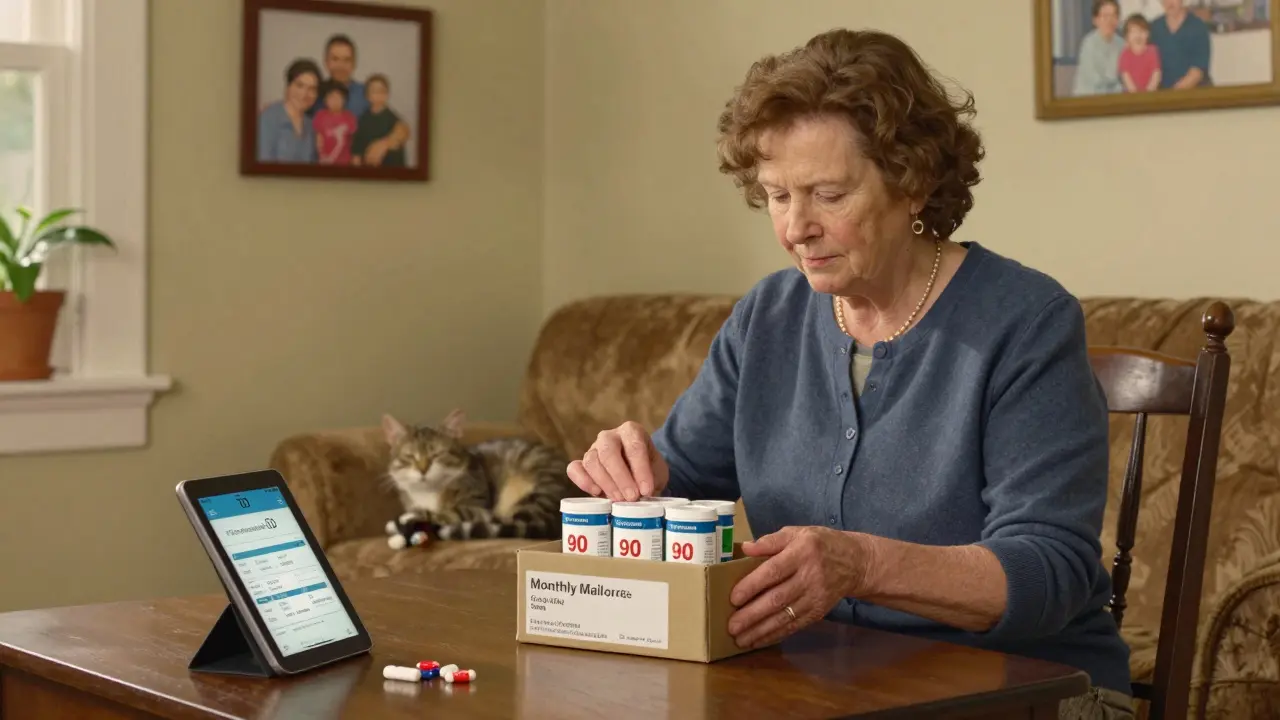
What You Can’t Get by Mail
Mail-order isn’t for everything. If you need an antibiotic right now because your throat is swollen, you can’t wait five days. Controlled substances like opioids, ADHD meds, or certain painkillers can’t be mailed either-federal rules require you to pick those up in person.
Same goes for new prescriptions. If your doctor just changed your dose or added a new drug, go to a local pharmacy first. A pharmacist can walk you through side effects, check for interactions, and answer questions on the spot. Mail-order is best for stable, long-term meds you’ve been on for months.
And yes, sometimes packages get lost. About 1.2% of shipments are damaged or delayed. That’s rare, but it happens. That’s why experts recommend ordering refills at least 10 days before you run out. Don’t wait until your bottle is empty.
Who Benefits the Most
People with mobility issues, chronic illnesses, or no car benefit the most. One Reddit user with MS said mail-order was “life-changing” because they couldn’t get to the pharmacy anymore. Seniors on Medicare use it at a 42% rate-higher than any other group. People with jobs that don’t let them leave during the day rely on it too.
It’s not just for older adults. Younger people with asthma, thyroid disease, or depression use it just as much. If your medication is part of your daily routine, delivery makes it easier to stick with it.
Employers are catching on too. Eighty-five percent of Fortune 500 companies now offer mail-order as part of their health plans. Why? Because when employees stay on their meds, they miss less work. Fewer hospital visits. Lower overall costs.
How to Get Started
Here’s how to sign up in three simple steps:
- Check your insurance plan. Log into your health plan’s website or call member services. Ask: “Do you offer mail-order pharmacy? Is it free?” Most plans cover it at no extra cost.
- Transfer your prescriptions. You can do this online, over the phone, or ask your doctor to send it electronically. The pharmacy handles the rest. It usually takes 3-5 days.
- Order your first 90-day supply. Most services let you choose delivery speed. Standard is 3-5 days. Some offer next-day delivery for urgent needs.
After that, you’ll get reminders when it’s time to refill. Many apps even let you schedule deliveries around your vacation or work trips.

What to Watch Out For
Not all mail-order services are the same. Stick with big names like Express Scripts, CVS Caremark, or OptumRx-they’re reliable and widely accepted. Smaller ones might not work with your insurance.
Watch for:
- Delayed deliveries-always order early
- Confusion over copays-double-check your plan’s mail-order pricing
- Missing meds-call the pharmacy if your package doesn’t arrive within 7 days
And if you have questions about your meds, don’t hesitate to call their 24/7 pharmacist line. Most offer free counseling-same as your local pharmacy.
The Future of Medication Delivery
Pharmacy delivery is getting smarter. Some companies now use AI to predict when you might skip a dose and send you a text reminder. Others are testing drone deliveries in rural areas. Smart packaging with temperature sensors is being rolled out for expensive biologic drugs.
It’s not about replacing your local pharmacist. It’s about giving you more choices. Use your neighborhood pharmacy for new prescriptions, urgent needs, or quick advice. Use mail-order for the meds you take every day. That combo keeps you safe, saves you money, and makes life easier.
Final Tip: Don’t Wait Until You’re Out
The biggest mistake people make? Waiting until the last pill is gone. That’s when stress sets in. The pharmacy is closed. The doctor’s office is busy. You feel guilty for forgetting.
Set a calendar reminder: 10 days before your supply runs out, order your next 90-day pack. That’s it. No more panic. No more missed doses. Just steady, reliable care-delivered to your door.
Gerald Tardif
December 28, 2025 AT 12:25Raushan Richardson
December 29, 2025 AT 09:33John Barron
December 29, 2025 AT 11:56Will Neitzer
December 30, 2025 AT 06:49Janice Holmes
December 31, 2025 AT 09:16Alex Lopez
January 1, 2026 AT 08:13Andrew Gurung
January 1, 2026 AT 14:16Paula Alencar
January 3, 2026 AT 07:28Chris Garcia
January 4, 2026 AT 06:44