Informed Decision-Making: Choosing Between Generic and Brand Medications
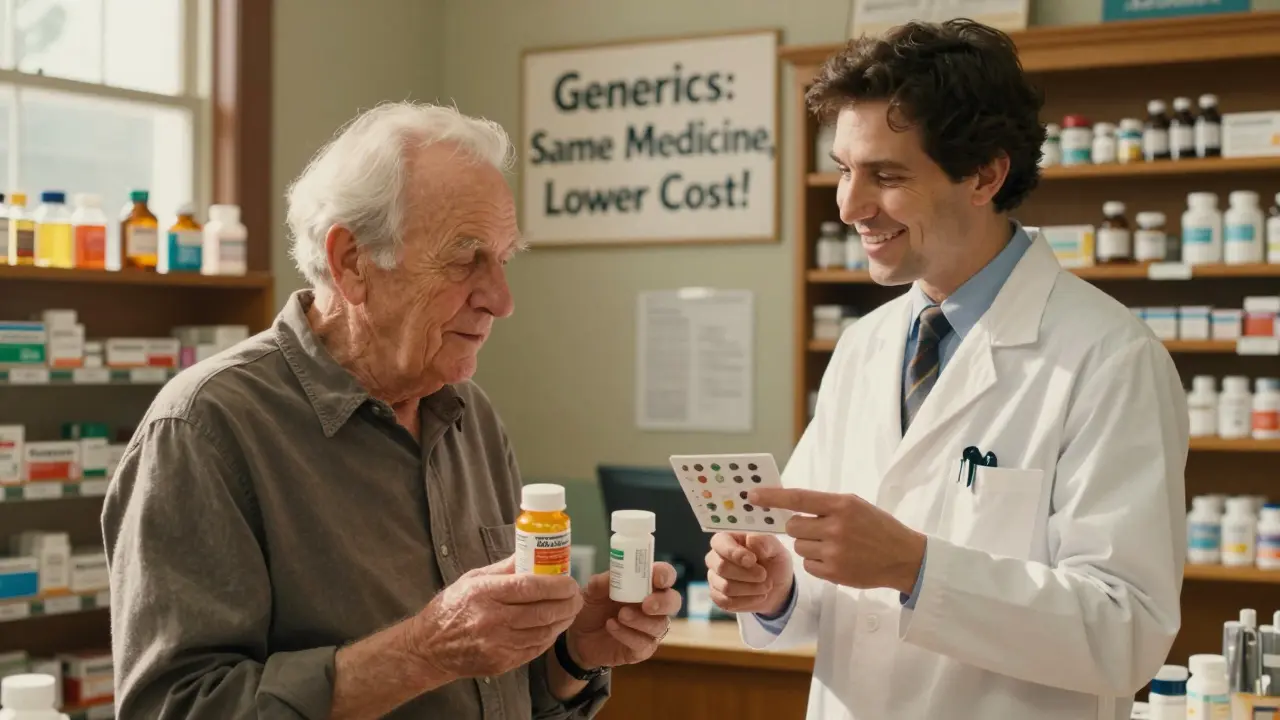
When you walk into the pharmacy to pick up your prescription, you might see two options: the familiar brand-name pill in its colorful packaging, or a plain, cheaper version with a different shape and color. You might wonder-is the generic version really the same? Or are you risking your health to save a few dollars?
They’re Not Just Cheaper-They’re the Same Medicine
Generic medications contain the exact same active ingredient as their brand-name counterparts. That means if you’re taking sertraline for depression, whether it’s called Zoloft or just sertraline, your body gets the same molecule that works the same way. The U.S. Food and Drug Administration (FDA) requires generics to prove they deliver the same amount of active drug into your bloodstream at the same speed as the brand. This is called bioequivalence. The standard? The difference in absorption must fall within 80% to 125% of the brand. In real-world testing, the average difference is just 3.5%-less than the natural variation your body shows from day to day.Why the Big Price Difference?
Brand-name drugs cost so much because the company that invented them had to pay for years of research, clinical trials, and marketing. Once the patent expires-usually 20 years after the drug was first filed-other companies can make the same medicine without repeating those expensive steps. That’s why a 30-day supply of brand-name Lipitor might cost $450, while the generic atorvastatin costs less than $4. According to IQVIA, generics make up 90% of all prescriptions filled in the U.S., but only 23% of total drug spending. Over the last decade, generics saved Americans $1.67 trillion. That’s $265 per person, every year.What’s Different? (And Why It Matters)
The only differences between generic and brand-name drugs are the inactive ingredients-things like fillers, dyes, and binders. These don’t affect how the medicine works, but they can change the pill’s color, shape, or size. Sometimes, a generic version might even taste different. For most people, this doesn’t matter. But for some, it can cause confusion. A 2023 study found that when patients get a different-looking pill from their usual brand, they’re more likely to think it’s wrong or less effective. That’s why pharmacists now often hand out small visual guides showing what your pills should look like when switched to a new generic.When Generics Might Need Extra Care
Most of the time, generics work just as well. But there are a few situations where even tiny differences matter. These are called narrow therapeutic index drugs-medicines where the difference between a helpful dose and a dangerous one is very small. Examples include warfarin (a blood thinner), levothyroxine (for thyroid issues), and some seizure medications like phenytoin. For these, even a 5% change in how the drug is absorbed could, in theory, affect outcomes. The FDA has special rules here: 28 states require doctors to specifically say “dispense as written” if they want the brand version for these drugs. And even then, studies show that switching to a generic doesn’t cause more problems for most patients. One large study of over 100,000 Medicare patients on generic warfarin found no increase in hospitalizations or bleeding events.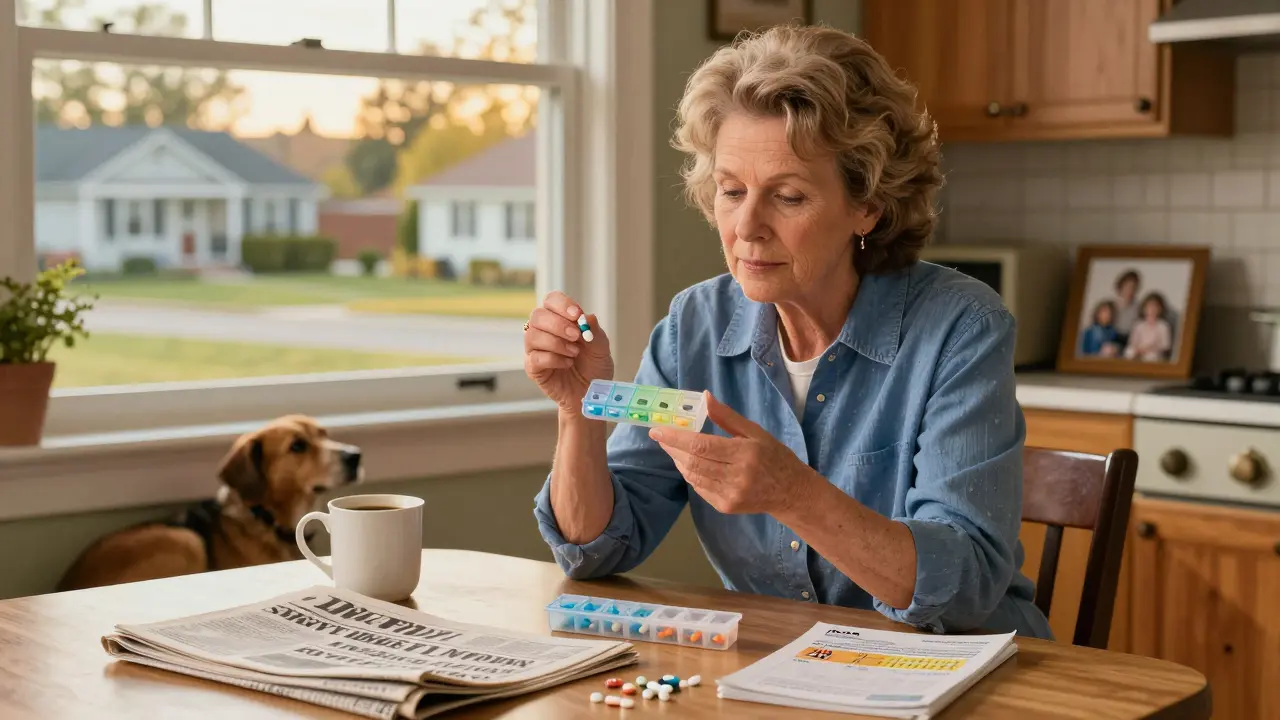
Complex Delivery Systems Are the Real Challenge
Some drugs aren’t just pills-they’re inhalers, patches, or injectables. Here, the device matters as much as the medicine. A 2016 study found that 12% of patients using a generic version of Advair Diskus had trouble getting the full dose because the inhaler felt different. The same thing happened with EpiPen generics-the device design changed, and some users couldn’t activate it properly. That’s not because the drug inside was weaker. It’s because the delivery system wasn’t identical. For these types of medications, the FDA now requires extra testing to make sure the generic device works just as well. But not all do. If you’re using an inhaler, patch, or auto-injector, ask your pharmacist: “Is this generic the same device as the brand?”What About Brand-Name Generics?
You might see a generic version that still carries the brand name-like Eli Lilly’s Humalog insulin, sold as an “authorized generic.” These are made by the original company but sold without the brand marketing. They cost 20-30% less than the original brand but are identical in every way. These are great options if you want the comfort of the original manufacturer but need to save money. Many insurance plans prefer these because they’re cheaper than the branded version but still trusted by patients.What Do Patients Really Think?
A review of over 15,000 patient reviews on Drugs.com found that 82% of people were satisfied with generics, compared to 85% for brand-name drugs. The biggest complaints? Pills looking different. One Reddit user wrote, “I switched from brand-name Wellbutrin XL to generic bupropion and felt like I lost my mood stability.” That’s not uncommon. The FDA issued a warning in 2012 about certain extended-release generics of bupropion, noting some formulations didn’t release the drug the same way. Since then, better testing has fixed most of those issues. But it’s why some patients stick with the brand-even if it costs $600 a month. The emotional comfort of familiarity can be powerful.
How to Make the Switch Safely
If you’re thinking about switching to a generic, here’s how to do it right:- Ask your doctor if your medication is on the list of drugs where generics are proven safe. Most are.
- Check your state’s rules. In 49 states, pharmacists can automatically switch you to a generic unless your doctor writes “dispense as written.”
- Use the FDA’s Drugs@FDA database to look up your medication and see which generics are approved and rated “AB” (therapeutically equivalent).
- Stick with the same pharmacy. They’ll track which manufacturer’s version you’re on. If it changes, they’ll let you know.
- Keep an eye out for pill appearance changes. If your pill looks different and you’re unsure, call your pharmacist. Don’t assume it’s wrong.
- For narrow therapeutic index drugs, ask for a follow-up blood test after switching (like TSH for thyroid meds or INR for warfarin).
Why This Matters for Your Health
Cost is the biggest barrier to taking your medicine. A Kaiser Family Foundation study found that 29% of people who get brand-only prescriptions skip doses because they can’t afford them. That number drops to 14% when generics are available. Skipping doses doesn’t just mean your condition doesn’t improve-it can lead to hospital visits, complications, and even death. Choosing a generic isn’t just about saving money. It’s about making sure you can stick with your treatment long-term.What’s Changing in 2026?
The Inflation Reduction Act, passed in 2022, lets Medicare negotiate prices for 10 high-cost drugs starting in 2026. That could push more brand-name drugs to go generic sooner. At the same time, the FDA is speeding up approval for complex generics-like inhalers and eye drops-that have been slow to come to market. By 2027, experts predict generics will make up 93% of all prescriptions filled. The future isn’t about brand vs. generic-it’s about making sure every patient gets the medicine they need, at a price they can afford.Are generic medications as safe as brand-name drugs?
Yes. The FDA requires generic drugs to meet the same strict standards for safety, strength, quality, and performance as brand-name drugs. They must prove they deliver the same active ingredient at the same rate and amount into your bloodstream. Over 98.5% of generic drugs perform identically to their brand-name versions in clinical studies.
Why do generic pills look different?
By law, generic drugs can’t look exactly like the brand-name version, so manufacturers change the color, shape, or size to avoid trademark issues. These differences are only in inactive ingredients like dyes or fillers-they don’t affect how the medicine works. If your pill looks different, it doesn’t mean it’s weaker or fake.
Can I switch from a brand to a generic without telling my doctor?
In most cases, yes. Pharmacists can substitute a generic unless your doctor specifically wrote “dispense as written.” But it’s still a good idea to tell your doctor you’ve switched, especially if you’re taking a medication with a narrow therapeutic index-like warfarin or thyroid medicine-so they can monitor your response.
Are there any drugs where generics don’t work as well?
For most drugs, generics work just as well. But for complex delivery systems-like inhalers, patches, or injectables-the device matters. If the generic inhaler feels different, you might not get the full dose. Also, some extended-release formulations (like bupropion XL) had issues in the past, though most have been fixed. Always check with your pharmacist if you’re unsure.
How do I know if my generic is FDA-approved?
Look up your drug on the FDA’s Drugs@FDA database. Approved generics will be listed with an “AB” rating, meaning they’re therapeutically equivalent. If you’re unsure, ask your pharmacist-they can check the Orange Book, which lists all approved generics and their equivalence ratings.
Why do some people say generics don’t work for them?
Sometimes it’s the placebo effect-people believe the brand is better, so they feel like the generic isn’t working. Other times, switching between different generic manufacturers can cause slight variations in how the drug is released, especially with extended-release pills. If you notice a change in how you feel after switching, talk to your doctor or pharmacist. It’s not common, but it can happen.
Will my insurance cover the generic?
Almost always. Most insurance plans, including Medicare Part D, require you to try the generic first. If you want the brand, you’ll usually pay more out-of-pocket. Some plans even offer $0 copays for generics. Check your plan’s formulary or ask your pharmacist.
Can I ask my doctor to prescribe the brand-name drug instead?
Yes, you can. But your doctor will need to write “dispense as written” on the prescription. Insurance may still require you to pay the difference in cost. If cost is a concern, ask your doctor if there’s a lower-cost brand or an authorized generic available.
Beth Cooper
January 30, 2026 AT 19:56So let me get this straight - the FDA says generics are identical, but the same people who approved Big Pharma’s $10,000 insulin are now telling us it’s ‘the same molecule’? LOL. I’ve seen people switch to generics and suddenly their anxiety spiked, their thyroid went haywire, and their pharmacist couldn’t even tell them which factory made it. Coincidence? Or just another cover-up for corporate greed? They don’t want you to know the inactive ingredients can be toxic sludge from unregulated overseas labs.
Melissa Cogswell
January 31, 2026 AT 20:02Actually, the FDA’s AB rating system is extremely rigorous - if a generic has an AB rating, it’s bioequivalent within 3.5% on average, which is less than normal daily physiological variation. The real issue isn’t efficacy - it’s consistency across manufacturers. If you switch between different generic brands repeatedly, you might notice subtle changes in absorption, especially with extended-release formulations. Stick with one pharmacy and one manufacturer if you’re sensitive. And yes, the pill shape changing is totally normal - it’s just trademark law, not a quality issue.
Bobbi Van Riet
February 1, 2026 AT 18:51I switched from brand-name Lexapro to generic escitalopram last year and honestly? I didn’t notice a difference. But I also didn’t switch pharmacies, and I kept the same batch for months. The one time my pharmacist switched me to a different generic without telling me, I felt kinda off for a week - like my brain was foggy. Turns out, the new one had a different filler. I called them, they apologized, and gave me back the old one. Moral of the story? Don’t assume it’s ‘all the same.’ If you feel weird after a switch, it’s not ‘in your head.’ Talk to your pharmacist. They’re the real MVPs here.
Donna Fleetwood
February 3, 2026 AT 17:12You guys are overthinking this. The science is clear - generics work. If you’re worried, start with something simple like ibuprofen or metformin. You’ll save hundreds and feel the same. And if you’re on something critical like warfarin? Just get your INR checked after switching. Easy. Life’s too short to stress over pill colors. Be kind to your wallet - and your future self will thank you.
Holly Robin
February 4, 2026 AT 20:08GENERIC DRUGS ARE A SCAM. I know a guy whose mom died after switching to a generic blood thinner. They didn’t even test it properly. The FDA is bought off. Big Pharma pays them to say it’s ‘safe.’ The pills look different because they’re made in China with rat poison fillers. Why do you think the brand name costs so much? Because it’s REAL. The rest? Poison with a barcode.
Blair Kelly
February 5, 2026 AT 09:58Let’s be clear: the FDA’s bioequivalence standard is 80–125%. That’s a 45% range. That’s not ‘the same.’ That’s a gamble. And when you’re talking about anticonvulsants or thyroid meds, a 10% difference in absorption isn’t a ‘minor fluctuation’ - it’s a medical emergency waiting to happen. The fact that 49 states allow automatic substitution without physician consent is reckless. This isn’t about cost - it’s about negligence disguised as policy.
kate jones
February 6, 2026 AT 13:54For narrow therapeutic index drugs, the AB rating is critical - but not sufficient. The 2016 Advair Diskus study showed that 12% of patients had suboptimal dosing due to device differences, not drug content. The FDA now requires device equivalence testing for complex delivery systems, but enforcement is inconsistent. If you’re using an inhaler, patch, or auto-injector, ask for the manufacturer’s name and cross-reference it with the Orange Book. If it’s not listed as ‘AB’ or has no device equivalence data, request the brand. Safety > savings.
Kathleen Riley
February 7, 2026 AT 15:03It is not merely a matter of pharmacological equivalence, but of epistemological trust. The patient’s perception of efficacy is not a cognitive fallacy - it is a phenomenological reality. When the external form of the therapeutic agent is altered - its chromatic signature, its tactile geometry - the patient’s somatic schema is disrupted. This is not placebo; it is hermeneutic dissonance. The pharmaceutical industry, in its pursuit of commodification, has divorced the medicine from its symbolic integrity. And in doing so, it has fractured the therapeutic alliance. One cannot prescribe a molecule without also prescribing its ritual.
Rohit Kumar
February 8, 2026 AT 09:15In India, generics are the backbone of healthcare. We don’t have luxury of brand names. But we also have strict standards - DCGI requires bioequivalence studies before approval. The problem isn’t generics - it’s lack of regulation in some countries exporting to the US. If you’re worried, check the manufacturer. Many Indian companies like Dr. Reddy’s and Sun Pharma make high-quality generics. It’s not about origin - it’s about oversight. Trust the science, not the brand name.