Kidney Failure Causes: How Diabetes, Hypertension, and Glomerulonephritis Damage Your Kidneys

When your kidneys stop working, it’s not a sudden event. It’s a slow, silent process-often going unnoticed until it’s too late. About 85 to 90% of kidney function must be lost before doctors call it end-stage renal disease (ESRD). At that point, dialysis or a transplant becomes your only option. But why do kidneys fail in the first place? For most people, the answer comes down to three big culprits: diabetes, high blood pressure, and glomerulonephritis.
Diabetes: The Silent Killer of Kidneys
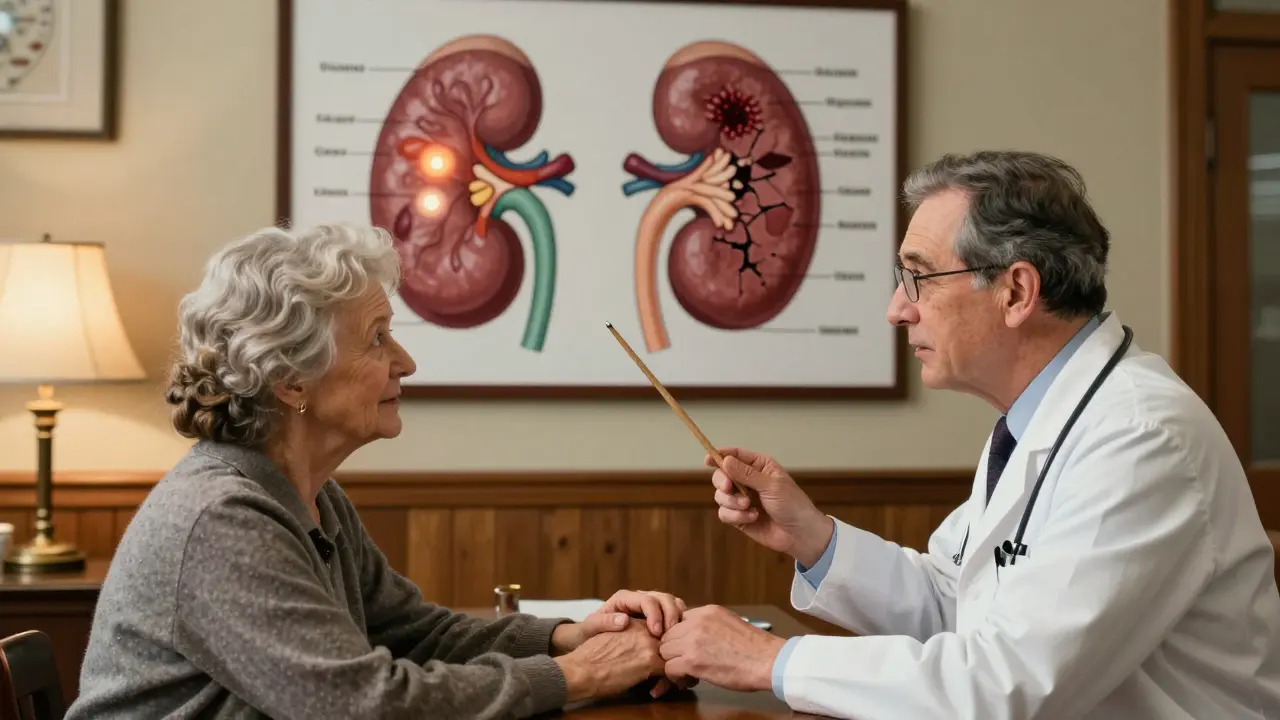
Diabetes is the number one cause of kidney failure worldwide. In the U.S., it accounts for nearly half of all new cases of ESRD. That’s not a coincidence. When blood sugar stays too high for too long, it starts tearing apart the tiny filters in your kidneys-the glomeruli. These filters are meant to keep protein in your blood and flush out waste. But over time, high glucose levels make them leaky and thickened.
Within the first year of diabetes, your kidneys may actually start filtering too much blood. This is called hyperfiltration. It sounds good, but it’s a trap. The extra workload stretches and damages the glomeruli. Studies show that 30% of people with type 1 diabetes and 40% with type 2 diabetes will eventually develop kidney damage. Many don’t even know they have it until they start losing protein in their urine.
One of the earliest signs is microalbuminuria-small amounts of protein in the urine. If caught early, you can slow or even stop the damage. The key? Tight blood sugar control. Getting your HbA1c below 7% within the first five years of diagnosis cuts your risk of kidney disease by more than half. New drugs like SGLT2 inhibitors (such as empagliflozin and dapagliflozin) have changed the game. The EMPA-KIDNEY trial showed they reduce the risk of kidney failure by 32% in diabetic patients, even if they already have some damage.
Hypertension: The Pressure That Crushes Kidneys
High blood pressure is the second biggest cause of kidney failure. It’s responsible for about 28% of ESRD cases in the U.S. And here’s the scary part: many people with hypertension don’t even feel sick. That’s why it’s called the "silent killer." But inside your kidneys, that constant pressure is slowly crushing the blood vessels.
When blood pressure stays above 140/90 mmHg, the small arteries feeding your kidneys thicken and harden. This is called nephrosclerosis. Less blood gets through, and the glomeruli start to die from lack of oxygen. Studies show that within five years of uncontrolled high blood pressure, blood flow to the kidneys drops by 15-25%. Over time, up to 70% of the filtering units can become scarred and useless.
What makes this worse? Diabetes and hypertension often go hand in hand. The Framingham Heart Study found that 75% of people with diabetes also develop high blood pressure. Together, they speed up kidney damage. While diabetes alone causes a decline of about 1.8 mL/min in kidney function each year, the combo pushes it to 3.2 mL/min. That’s nearly double the damage.
Controlling blood pressure isn’t just about feeling better-it’s about saving your kidneys. The KDIGO guidelines recommend keeping blood pressure below 130/80 mmHg for people with diabetes-related kidney disease. For those with protein in their urine, the target drops even lower-to 120/80. ACE inhibitors and ARBs are the go-to medications because they don’t just lower pressure-they directly protect the glomeruli. But here’s the catch: many people stop taking them because they don’t feel symptoms. That’s a deadly mistake.
Glomerulonephritis: When Your Immune System Attacks Your Kidneys
Unlike diabetes and hypertension, glomerulonephritis isn’t caused by lifestyle. It’s an immune system malfunction. Your body’s defense system turns on your own kidneys, attacking the glomeruli like they’re foreign invaders. This group of diseases includes IgA nephropathy, lupus nephritis, and anti-GBM disease. Though they make up only about 8% of ESRD cases, they’re often the hardest to catch early.
IgA nephropathy is the most common form. It happens when a type of antibody called IgA builds up in the filtering units. In Western countries, it affects 2.5 out of every 100,000 people. In Asia, that number jumps to 4.5. Over 20 years, 20 to 40% of people with IgA nephropathy will lose kidney function. The risk depends on how much protein leaks into the urine and how scarred the glomeruli become.
Lupus nephritis is another big player. About half of all people with systemic lupus erythematosus (SLE) will develop it. If it’s class IV-meaning severe inflammation-the chance of reaching ESRD within 10 years is 10 to 30%. Many patients describe a long diagnostic journey. One Reddit user shared that they saw seven doctors over 18 months before getting a correct diagnosis. That delay is common. Symptoms like swelling, foamy urine, or dark urine are often mistaken for something else.
Treatment here is different. You can’t just control blood sugar or blood pressure. You need to calm the immune system. Steroids, rituximab, and other immunosuppressants are used. The VALIGA study found rituximab cuts ESRD risk by 48% in high-risk IgA nephropathy patients. But it’s not risk-free. Aggressive treatment can raise infection rates, especially in older adults. That’s why doctors now tailor therapy based on age, protein levels, and biopsy results.
How Fast Do These Conditions Progress?
Not all kidney failure happens at the same speed. Diabetes tends to move faster. On average, it takes about 8.7 years from diagnosis to ESRD. Hypertension takes longer-12.3 years. Glomerulonephritis? It’s unpredictable. Some people hold onto function for decades. Others crash within a few years.
Here’s what the data says about progression based on early warning signs:
- If your urine albumin is normal (<30 mg/g), your 5-year risk of ESRD is just 1%.
- If you have microalbuminuria (30-300 mg/g), that risk jumps to 8%.
- If you have macroalbuminuria (>300 mg/g), your chance of kidney failure in five years is 44%.
That’s why testing matters. A simple urine test for albumin-to-creatinine ratio (UACR) can catch damage years before your GFR drops. And if you’re diabetic, you should get this test every year-even if you feel fine.
What Works? The Real Solutions
There’s good news: we now have tools to slow or even stop kidney failure in its tracks.
For diabetes: SGLT2 inhibitors and finerenone (a new drug approved in 2023) have proven they can protect kidneys beyond just lowering sugar. Finerenone cut kidney failure risk by 18% in people with albuminuria.
For hypertension: ACE inhibitors and ARBs are still the gold standard. They reduce protein leakage and lower pressure at the same time. New research suggests aiming for systolic pressure below 120 mmHg in high-risk patients cuts ESRD progression by 27%.
For glomerulonephritis: The future is in drugs like sparsentan. The 2023 PROTECT trial showed it reduced proteinuria by 47.7%-far more than older drugs. It’s expected to be approved in 2024.
But none of this works if you don’t catch it early. Most people with kidney disease don’t have symptoms until it’s advanced. No pain. No fatigue. No warning. That’s why regular checkups are non-negotiable.

What Patients Really Experience
Behind the numbers are real people. A survey by the National Kidney Foundation found that 68% of people with diabetes-related ESRD said they were constantly exhausted. Forty-two percent lived in fear of their next dialysis appointment. For those with hypertension-related failure, 35% admitted they skipped medications because they didn’t feel sick. And nearly half of glomerulonephritis patients waited over a year to get diagnosed.
But there are success stories too. One in three diabetic patients who started SGLT2 inhibitors within six months of spotting protein in their urine saw their kidney function stabilize. That’s not a miracle-it’s science.
Adherence is still a huge problem. Only 58% of patients stick with their ACE inhibitor or ARB after a year. And 63% struggle to follow the recommended low-protein diet. It’s not laziness. It’s confusion. Most people don’t understand how food, meds, and blood pressure all connect.
Learning takes time. One study found it takes nearly five months for patients to fully grasp their treatment plan. That’s why education matters as much as medication.
The Bigger Picture
By 2030, the number of people with kidney failure is expected to rise by 52%. Most of that growth will come from rising diabetes rates. The economic cost? $124 billion a year in the U.S. alone. Diabetic ESRD patients cost Medicare nearly $20,000 more per year than those with hypertension-related failure.
And here’s the inequality: in high-income countries, 95% of people with ESRD get dialysis or a transplant. In low-income countries, it’s 10%. That gap isn’t just about money-it’s about access to early testing, blood pressure meds, and diabetes care.
But the good news? Experts believe we could prevent 30 to 50% of future kidney failures if we focus on early detection and proven treatments. It’s not about fancy tech or expensive drugs. It’s about checking urine, controlling blood pressure, managing blood sugar, and listening to your body before it’s too late.
Your kidneys don’t shout. They whisper. And if you’re not listening, they’ll go silent.
Can kidney failure be reversed?
Once kidney damage reaches end-stage (ESRD), it cannot be reversed. But if caught early-before 50% of function is lost-progression can often be slowed or stopped. Tight blood sugar control, blood pressure management, and medications like SGLT2 inhibitors or ACE inhibitors can preserve remaining kidney function. The key is early detection through urine and blood tests.
Do I need to be tested if I don’t have symptoms?
Yes. Kidney disease is often silent. People with diabetes or high blood pressure should get a urine albumin test and eGFR check at least once a year-even if they feel fine. Many patients don’t know they have kidney damage until it’s advanced. Early testing is the only way to catch it before it’s too late.
What’s the difference between diabetic kidney disease and hypertensive kidney disease?
Diabetic kidney disease starts with high blood sugar damaging the glomerular filters, leading to protein leakage and thickening of the basement membrane. Hypertensive kidney disease is caused by high blood pressure damaging the small arteries feeding the kidneys, leading to scarring and reduced blood flow. While both can lead to ESRD, diabetic damage tends to progress faster and often includes more protein in the urine early on.
Are SGLT2 inhibitors only for people with diabetes?
Originally developed for diabetes, SGLT2 inhibitors (like empagliflozin and dapagliflozin) are now approved for kidney protection in people with chronic kidney disease-even without diabetes. The EMPA-KIDNEY trial showed they reduce kidney failure risk by 32% in patients with reduced eGFR and proteinuria, regardless of diabetes status. They’re becoming a cornerstone of kidney care.
Can lifestyle changes alone prevent kidney failure?
Lifestyle changes-like losing weight, cutting salt, quitting smoking, and eating less processed food-help. But they’re rarely enough on their own. For people with diabetes or hypertension, medications are essential. SGLT2 inhibitors, ACE inhibitors, and ARBs have been proven to slow kidney damage more than diet and exercise alone. The best approach combines lifestyle with targeted medical therapy.
Why is glomerulonephritis harder to diagnose than diabetes or hypertension?
Glomerulonephritis often has vague symptoms-swelling, foamy urine, fatigue-that mimic other conditions. Unlike diabetes and hypertension, there’s no simple blood test to screen for it. Diagnosis usually requires a kidney biopsy, which is invasive and not done unless there’s strong suspicion. Many patients wait over a year for answers because doctors don’t think of it early. That’s why awareness among both patients and providers is critical.
Maddi Barnes
February 21, 2026 AT 04:12Benjamin Fox
February 22, 2026 AT 00:21Robin bremer
February 22, 2026 AT 09:26Chris Beeley
February 24, 2026 AT 01:23Arshdeep Singh
February 25, 2026 AT 19:59Michaela Jorstad
February 26, 2026 AT 17:36Jeremy Williams
February 27, 2026 AT 23:35Davis teo
March 1, 2026 AT 23:10Jonathan Rutter
March 3, 2026 AT 01:12Ashley Paashuis
March 4, 2026 AT 23:02Caleb Sciannella
March 5, 2026 AT 05:01