Lot-to-Lot Variability in Biologics and Biosimilars: Why It Matters for Patients and Doctors
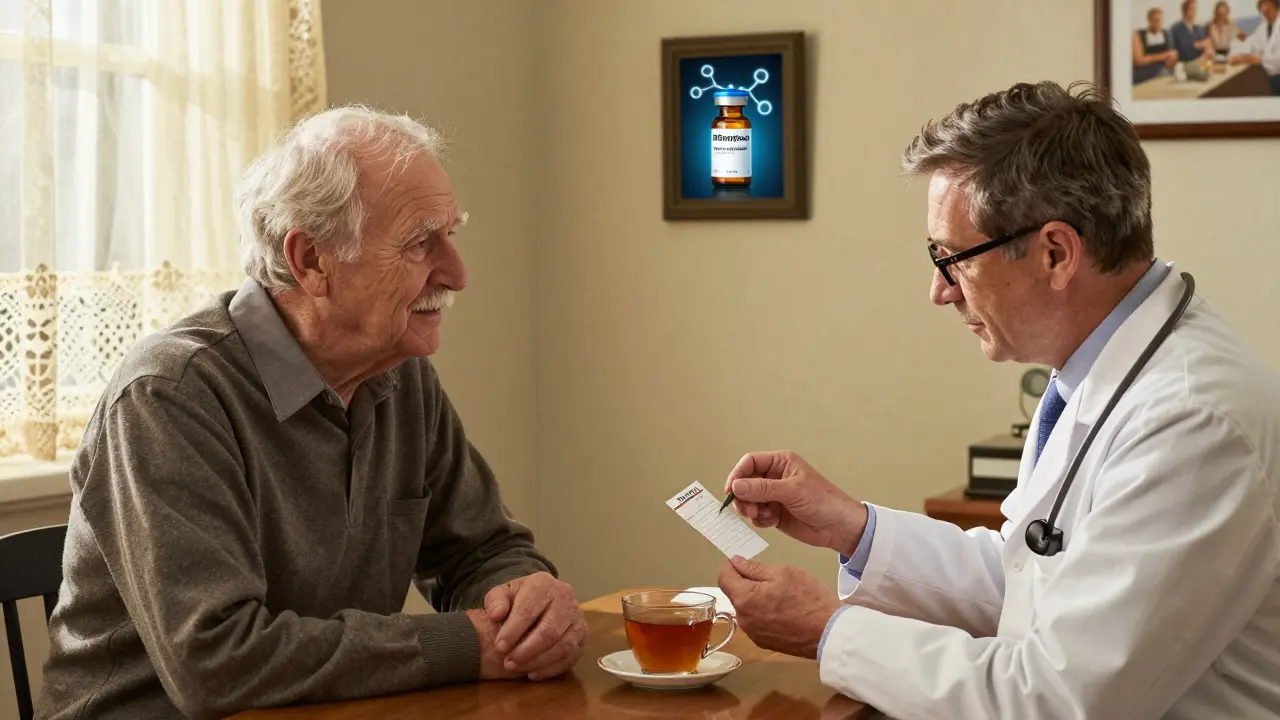
When you take a medication like Humira or Enbrel, you expect it to work the same way every time. But here’s something most people don’t know: lot-to-lot variability means no two batches of these drugs are exactly alike-even if they come from the same manufacturer. This isn’t a flaw. It’s biology.
What Is Lot-to-Lot Variability?
Lot-to-lot variability is the natural difference between production batches of biologic drugs. Unlike aspirin or metformin, which are made by mixing chemicals in a lab, biologics are grown inside living cells-usually yeast, bacteria, or mammalian cells. These cells don’t follow instructions like robots. They adapt. They stress. They change slightly with every batch. And that changes the final product. The FDA explains it plainly: each lot of a biologic contains millions of slightly different versions of the same protein. Some molecules might have extra sugar chains attached. Others might have a single amino acid shifted. These tiny differences are called post-translational modifications. They’re not random errors. They’re expected. And they happen in both the original brand-name drug and its biosimilar.Why Biosimilars Aren’t Like Generics
Think of a generic pill. If you switch from brand-name Lipitor to generic atorvastatin, the chemical structure is identical. The FDA requires it. That’s because small-molecule drugs are simple, stable, and made with predictable chemistry. Biosimilars? Not even close. A biosimilar is highly similar to its reference biologic-but not identical. The FDA calls this “no clinically meaningful differences.” That’s a careful phrase. It means: the variations are there, but they don’t change how safe or effective the drug is. To get approval, a biosimilar maker must prove their product behaves the same way in the body, even with those natural differences. This is why biosimilars go through a completely different approval path than generics. Generics use the ANDA process. Biosimilars use the 351(k) pathway, which requires thousands of lab tests, animal studies, and sometimes clinical trials. Why? Because you can’t just test blood levels and call it good. You have to prove the whole molecule acts the same, down to the sugar attachments.How Manufacturers Control the Chaos
If every batch is different, how do companies make sure patients get a safe drug every time? They don’t try to eliminate variation. They control it. Every manufacturer builds a “control strategy.” That’s a fancy way of saying: we know which parts of the process affect the product, and we monitor them tightly. Temperature. pH. Cell growth rate. Even the type of nutrient feed used in the bioreactor. Small changes in any of these can shift the protein structure. They also test each lot with advanced tools like mass spectrometry and high-performance liquid chromatography. These machines can detect differences smaller than a single atom. The goal? Make sure each new lot falls within the same range as the original reference product. The FDA doesn’t expect perfection. They expect consistency. If the variation pattern of a biosimilar matches the reference product, and both stay within acceptable limits, the drug gets approved.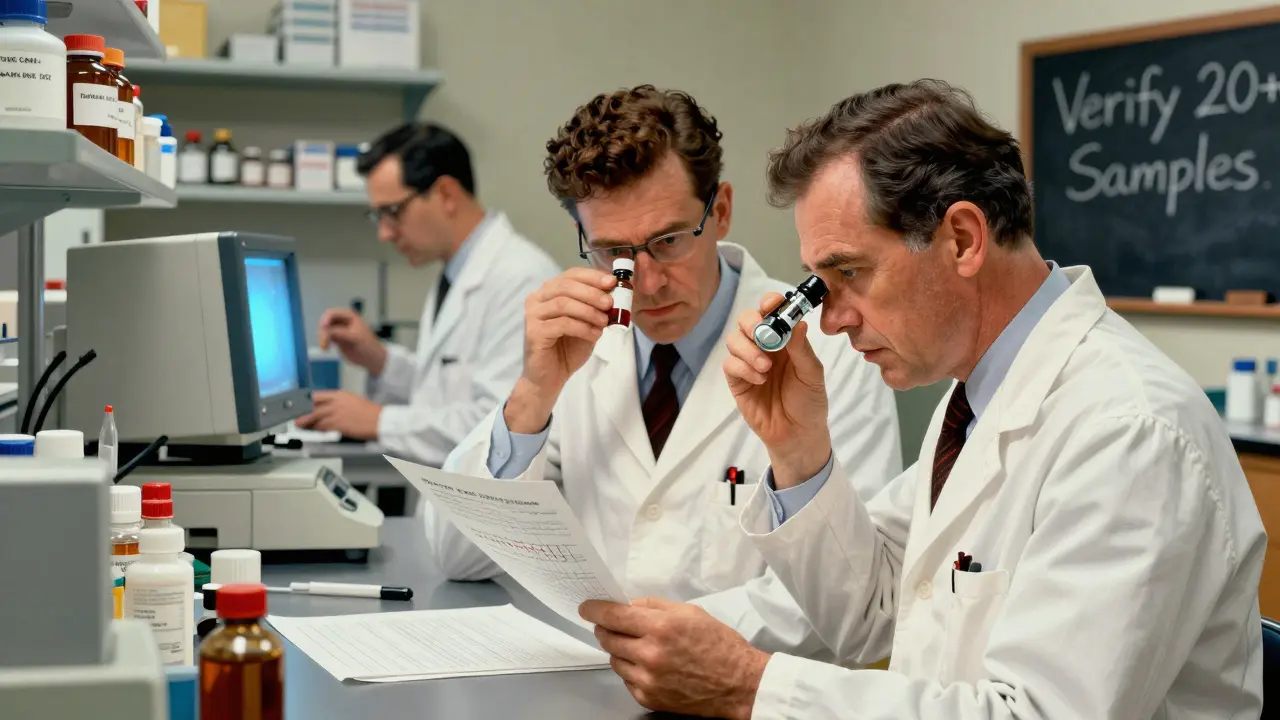
What Happens in the Lab When a New Reagent Lot Arrives?
This isn’t just a drug manufacturing problem. It’s a lab problem too. When a hospital or clinic switches to a new lot of a test reagent-say, one used to measure HbA1c for diabetes-the results can shift. A 2022 study found that 78% of lab directors consider lot-to-lot variation a major challenge. Why? Because quality control samples don’t always behave like real patient samples. A new reagent lot might give perfect QC results but still throw off patient numbers by 0.5%. That might sound tiny. But in diabetes, a 0.5% change in HbA1c could mean the difference between “well-controlled” and “poorly controlled.” And that could lead to a doctor changing a patient’s insulin dose unnecessarily. That’s why labs run verification tests with 20 or more patient samples, often with duplicates. They compare the new lot to the old one. If the difference is bigger than what the lab’s equipment can reliably measure, they reject the lot. This process can take days-and it eats up 15-20% of a lab tech’s time each quarter, especially in smaller facilities.Interchangeable Biosimilars: The Next Step
The FDA has a special designation for biosimilars that can be swapped for the original drug at the pharmacy-without a doctor’s approval. These are called “interchangeable.” To earn that label, a biosimilar must prove something extra: that switching back and forth between the reference product and the biosimilar doesn’t hurt patients. That means running clinical studies where patients alternate between the two drugs multiple times over months. No increase in side effects. No drop in effectiveness. As of May 2024, 12 biosimilars in the U.S. have this status. That number is expected to grow to nearly half of all new biosimilar applications by 2026. Interchangeability is the key to lowering costs at the pharmacy counter. But it only works if lot-to-lot variability is managed well enough to guarantee safety during switches.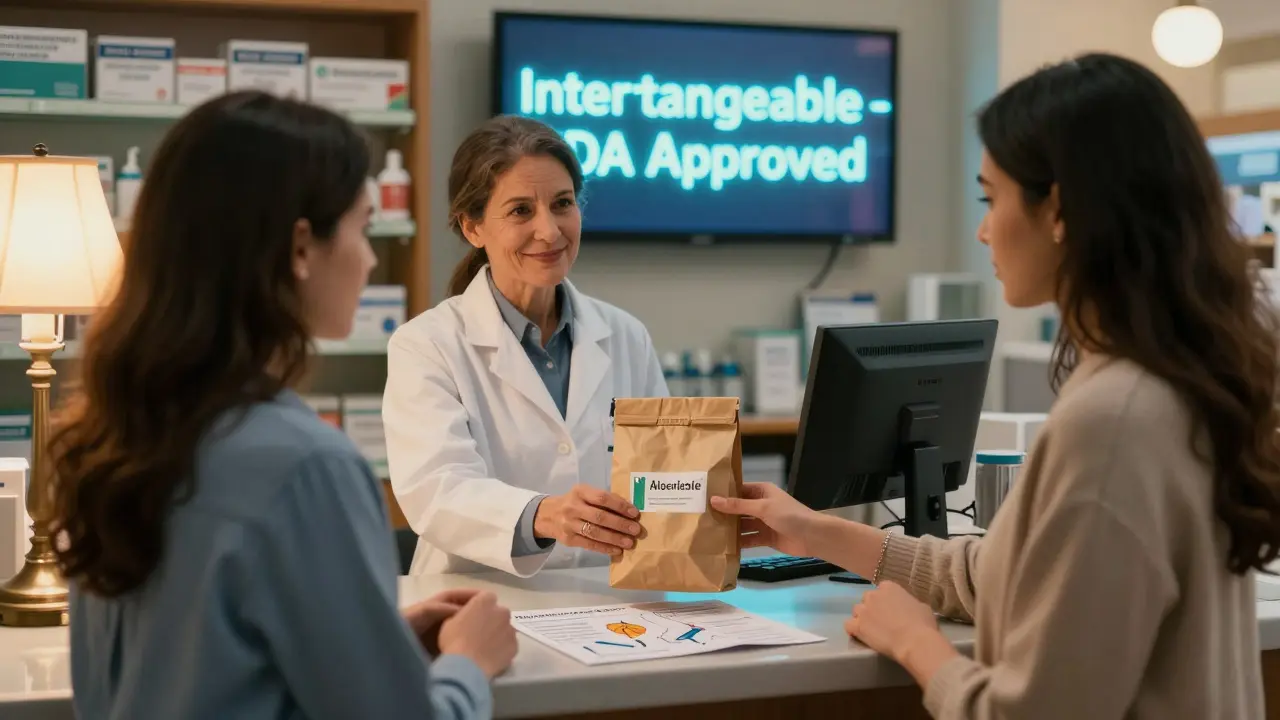
Why This Matters for You
If you’re taking a biologic for rheumatoid arthritis, Crohn’s disease, or cancer, you might be on a biosimilar now-or soon will be. They’re cheaper. They’re widely available. And they work just as well. But understanding lot-to-lot variability helps you ask better questions:- Does my doctor know which version I’m on?
- Has my lab tested my bloodwork since I switched?
- Am I getting the same drug every refill?
The Bigger Picture
Lot-to-lot variability isn’t going away. As biologics get more complex-think antibody-drug conjugates, cell therapies, gene therapies-the variations will get even harder to track. But so will the tools to measure them. The FDA, labs, and manufacturers are investing heavily in better analytics. AI is being used to predict how small process changes affect protein structure. Real-time monitoring systems are being built into bioreactors. The goal isn’t to make biologics perfect. It’s to make them predictable. And safe. And affordable. Right now, biosimilars make up about 32% of all biologic prescriptions in the U.S. by volume. That number will climb. And with it, the need to understand that variation isn’t a bug. It’s a feature of biology itself.Is lot-to-lot variability dangerous?
No, not when properly managed. Lot-to-lot variability is a natural part of how biologics are made. The FDA requires manufacturers to prove that the variation stays within safe, consistent limits. Both the original biologic and its biosimilar have the same type of variation. As long as the drug performs the same in the body, the slight differences in protein structure don’t affect safety or effectiveness.
Can I tell if my biosimilar is from a different lot?
No, you can’t. The packaging, appearance, and instructions are identical. Even the barcode doesn’t indicate the lot in a way patients can interpret. Only the pharmacy or your doctor’s records will show which lot you received. If you’re concerned about changes in how you feel after a refill, talk to your doctor-but don’t assume it’s the lot. Many other factors can affect how you respond to treatment.
Do biosimilars have more variability than the original biologic?
Not necessarily. Biosimilars are required to match the reference product’s variation profile. In fact, some biosimilar manufacturers use newer, more controlled production methods and may have less variability than the original product. The key is not which product has more variation-it’s whether the variation is controlled and doesn’t affect how the drug works.
Why do labs need to verify new reagent lots?
Because a new lot of a test reagent can change how patient results are reported-even if quality control samples look fine. This is called “lack of commutability.” Patient samples behave differently than control samples. If a lab doesn’t verify with enough real patient data, they might miss a shift that could lead to wrong diagnoses or dosing. That’s why best practices require testing at least 20 patient samples with duplicates.
Are interchangeable biosimilars safer than non-interchangeable ones?
They’re not safer-they’re proven to be switchable. An interchangeable biosimilar has gone through additional clinical studies to prove that switching back and forth between it and the original drug doesn’t increase risk or reduce effectiveness. That’s important for pharmacies and insurers who want to substitute automatically. But both interchangeable and non-interchangeable biosimilars are equally safe when used as directed.
Vince Nairn
January 7, 2026 AT 03:06So let me get this straight-we’re paying thousands for a drug that’s basically a living organism throwing a tantrum in a beaker? And we call that medicine? 🤔
At least my coffee has consistency. Sometimes I think we’re just throwing money at biology and hoping it doesn’t fart out the wrong protein.
Ayodeji Williams
January 8, 2026 AT 11:40Bro this is why I don’t trust Big Pharma 😭
They be playin’ god with cells and then actin’ shocked when you feel weird after switchin’ meds.
And now they wanna swap it out like it’s a new pair of socks??
🔥🔥🔥
Kyle King
January 9, 2026 AT 11:15Lot-to-lot variability? Yeah right.
That’s the cover story. The real reason? They’re testing secret AI-controlled bioreactors that rewrite your DNA slightly each time.
Ever notice how your mood changes after a refill? Coincidence? I think not.
They’re tracking your immune response. Building a profile. Next thing you know, your insulin dose is being adjusted by a server in Nebraska.
Wake up.
They’re not making medicine.
They’re making surveillance.
Kamlesh Chauhan
January 10, 2026 AT 15:15why do we even bother with all this science when we could just take turmeric and pray
also who cares if the protein has a sugar chain or not as long as it stops the pain
my cousin took some biosimilar and his arthritis went away so i guess it works
end of story
stop overthinking it
Emma Addison Thomas
January 11, 2026 AT 14:47It’s fascinating how we’ve come to accept biological complexity in food-artisan cheese, single-origin coffee, wild-caught salmon-but demand robotic precision from medicine.
Perhaps we’re not so different from the cells themselves: we adapt, we change, we’re imperfectly consistent.
Maybe the real question isn’t whether the drug varies-but whether we’ve learned to live with variation in ourselves.
Mina Murray
January 13, 2026 AT 02:57Umm hello? The FDA says 'no clinically meaningful differences' but that’s just legal weasel words.
They don’t test for long-term epigenetic effects. They don’t track antibody development across 50 different lots.
And don’t get me started on how labs verify reagents-20 patient samples? That’s barely a drop in the bucket.
Meanwhile, people are getting misdiagnosed because a reagent lot changed the HbA1c by 0.5% and now they’re on insulin they don’t need.
And you call that safety? That’s negligence dressed in a lab coat.
Rachel Steward
January 14, 2026 AT 12:46Let’s be real: biologics are the pharmaceutical equivalent of a jazz improvisation. The original is the composer. The biosimilar is the cover band.
They’re playing the same notes, but the soul? The timing? The vibrato? That’s all different.
And now we’re pretending it doesn’t matter because the crowd claps.
But if you’re the one who’s been listening to the original for 10 years, you notice.
And if your body’s the one that’s been tuned to that specific frequency? You feel it.
They call it 'no clinically meaningful difference'-but they’re not measuring your fatigue, your brain fog, your anxiety when you wake up wondering if this new batch is going to kill you.
That’s not science.
That’s capitalism with a lab coat.
Christine Joy Chicano
January 15, 2026 AT 09:04It’s poetic, really-the idea that life, at its most fundamental level, refuses to be perfectly replicated.
Our cells are messy, adaptive, beautifully imperfect machines.
And yet we demand that the medicine they produce be as predictable as a toaster.
But biology doesn’t do 'identical.' It does 'similar enough to survive.'
Maybe the real breakthrough isn’t controlling variation-it’s learning to trust it.
Like trusting your body to heal, even when the path isn’t linear.
Maybe the drug isn’t broken because it changes.
Maybe we are.
Maybe we’ve forgotten that healing isn’t about precision.
It’s about resilience.
Adam Gainski
January 15, 2026 AT 09:36As someone who’s worked in biologics QA for 12 years, I can say this: the control strategies are insane.
Every bioreactor has 300+ sensors monitoring pH, dissolved oxygen, temperature gradients, even trace metal ions.
We don’t just test the final product-we test the feedstock, the water purity, the air filters, the way the stirrer blades were polished.
And yes, every lot is different-but it’s different within a range tighter than your phone’s battery calibration.
Patients don’t need to know the lot number.
They need to know their doctor and lab are watching for changes.
That’s the real safety net.
Anastasia Novak
January 15, 2026 AT 18:24Oh my god I just realized-this is why I’ve been feeling like a zombie since my last refill.
I switched from Humira to the biosimilar and now I can’t even remember my cat’s name.
It’s not depression.
It’s not stress.
It’s the damn sugar chains.
Someone’s gotta sue someone.
My therapist says I’m overreacting.
But what if she’s on the same batch?
Are we all just lab rats in a protein-based reality show?
Someone call the New York Times.
Jonathan Larson
January 17, 2026 AT 11:42The evolution of biologic manufacturing reflects a deeper truth about medicine: we are moving from reductionist models toward systems thinking.
Where once we sought to isolate and replicate molecules with absolute fidelity, we now acknowledge that biological function emerges from dynamic, context-sensitive networks.
Lot-to-lot variability is not a flaw in the system-it is evidence of its fidelity to life itself.
Perhaps the goal should not be to eliminate variation, but to understand its role in therapeutic resilience.
In this light, biosimilars are not inferior copies-they are harmonious variations on a theme written by nature.
Alex Danner
January 18, 2026 AT 22:17My dad’s on a biosimilar for psoriasis. He switched six months ago. No issues. Same energy. Same skin.
But last month, his dermatologist switched him to a new lot-same drug, same manufacturer-and he broke out like crazy for two weeks.
They ran tests. Everything looked normal. No antibodies. No infection.
Then they checked the lot number. Turned out the new batch had a slightly different glycosylation pattern.
They switched him back. Symptoms vanished in 72 hours.
So yeah. It matters.
Not for everyone.
But for some? It’s everything.
Jessie Ann Lambrecht
January 20, 2026 AT 15:25Hey everyone-just wanted to say I’ve been on biosimilars for 5 years now. No drama. No side effects.
But I DO keep a little notebook: date, lot number, how I felt that week.
It’s not paranoia.
It’s self-advocacy.
If you’re switching meds, track it.
And if something feels off? Say something.
Doctors can’t read your mind.
But they’ll listen if you bring them data.
You got this.