Medicare Part D Economics: How Generic Drugs Lower Your Costs
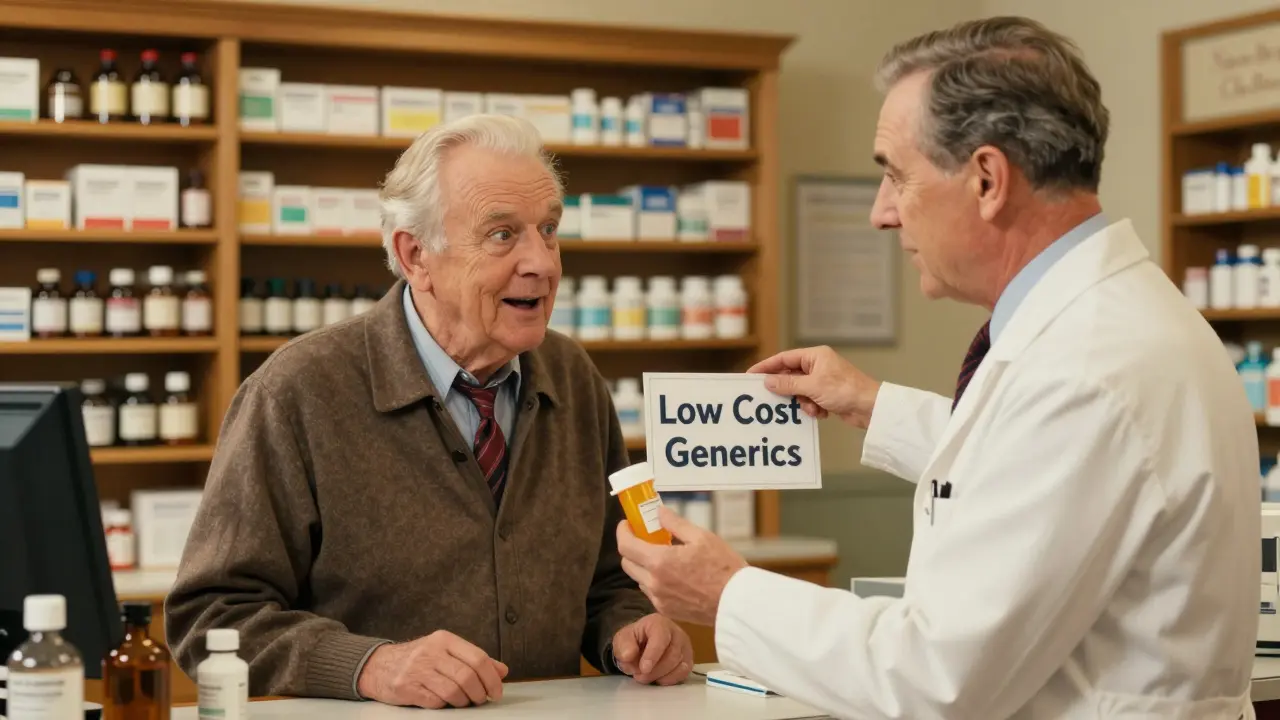
Imagine paying $45 a month for a blood pressure medication, only to find out that a chemically identical version costs exactly $0. This isn't a fluke; it's the core engine of Medicare Part D is a voluntary outpatient prescription drug benefit program administered through private insurance companies approved by the Centers for Medicare & Medicaid Services (CMS) . The entire economic model of the program relies on one thing: getting as many people as possible to switch from brand-name drugs to generics.
For the average person, this just looks like a different color pill. But behind the scenes, it's a massive financial lever. By strategically placing generics in lower-cost tiers, the program has driven generic utilization to 87.3% of all prescriptions. This shift isn't just about saving a few bucks at the pharmacy counter; it has cumulatively reduced program costs by an estimated $1.37 trillion since 2006. If you want to keep your out-of-pocket costs low, understanding how these economics work is the best way to navigate your healthcare spending.
How the Tiered Formulary Steers Your Spending
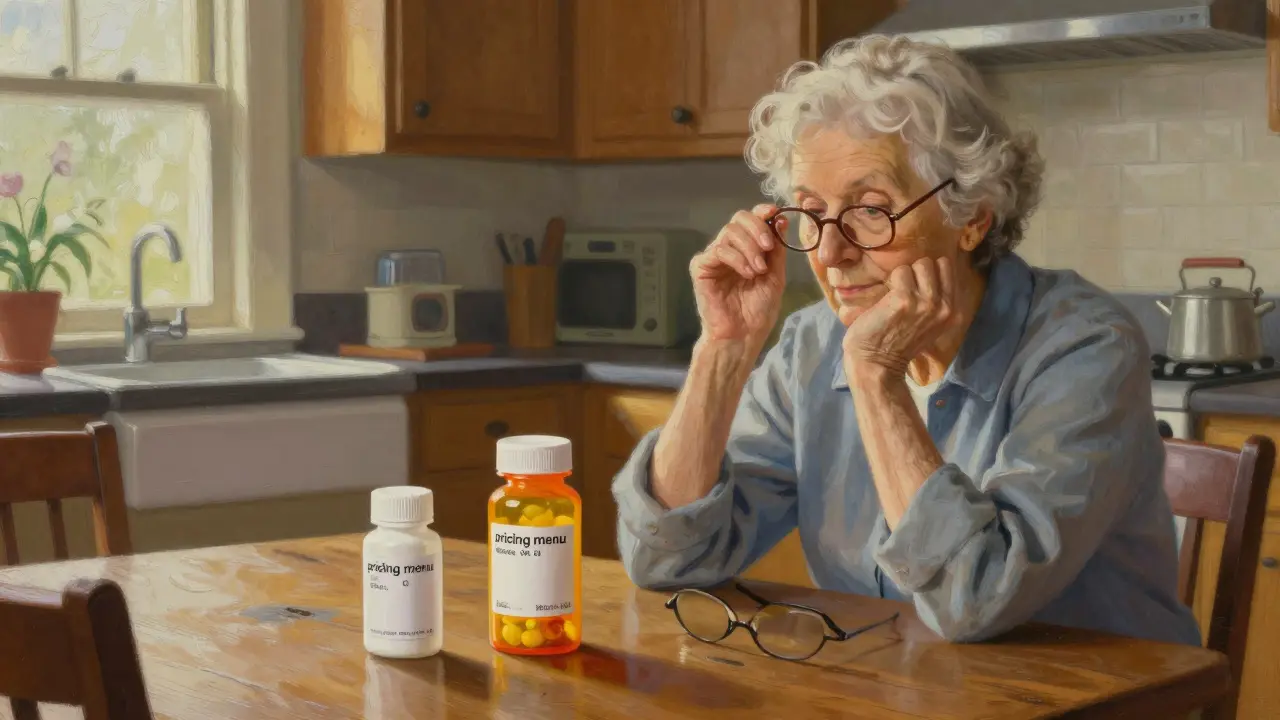
Part D plans don't treat all drugs the same. They use a system called a "tiered formulary," which is essentially a pricing menu. Most plans use a five-tier structure to push patients toward the most cost-effective options. If you're looking at your plan, you'll likely see Tier 1 as the "Preferred Generic" level. This is the economic sweet spot where copays often range from $0 to $10 for a 30-day supply.
As you move up the tiers, the cost climbs. Tier 2 typically covers standard generics with slightly higher copays-averaging around $15.25. By the time you hit Tier 3 (preferred brands) or Tier 4/5 (non-preferred and specialty drugs), the prices jump significantly. For a 30-day supply, a brand-name drug might cost you $45 to $75, while the Tier 1 generic remains a few dollars. This massive price gap is a deliberate economic incentive designed to make the generic choice an obvious one for the consumer.
| Attribute | Generic (Tier 1/2) | Brand-Name (Tier 3+) |
|---|---|---|
| Avg. 30-Day Copay | $0 - $15.25 | $45 - $75 |
| Plan Acquisition Cost | ~$18.75 per script | ~$156.42 per script |
| Market Utilization | 87.3% of fills | 12.7% of fills |
| Annual Out-of-Pocket Potential | Low / Minimal | High (Save $1,500+ by switching) |
The Math Behind the 'Donut Hole' and Catastrophic Coverage
The economics of generics become even more critical as you move through the different phases of Part D coverage. In the initial coverage phase, you typically pay a 25% coinsurance. While 25% of a cheap generic is negligible, 25% of a $600 brand-name drug is a serious hit to the wallet.
Then there's the coverage gap, famously known as the "donut hole." Thanks to the Bipartisan Budget Act of 2018, beneficiaries now pay 25% of the negotiated price for both generics and brands during this phase. However, the actual dollar amount remains vastly different because the base price of the generic is so much lower. When you finally hit the catastrophic coverage phase-which begins after you've spent $2,000 to $2,100 out-of-pocket (depending on the year)-the incentive persists. In 2024, the nominal copay for a generic in this phase was just $4.15, compared to $10.35 for brand names.
Recent changes are making this even more favorable. The Inflation Reduction Act introduced a $35 monthly cap on insulin and a hard $2,000 annual out-of-pocket cap starting in 2025. This fundamentally changes the math for people using "specialty generics"-drugs that are chemically generic but very expensive. These users will now hit their spending cap much faster, shifting the financial burden from the patient back to the insurance plan and the government.
Protected Classes: When Generics Are Mandatory
Not all drug categories are treated equally by CMS. To ensure patient safety and stability, there are six "protected classes" of drugs. Part D plans must cover "substantially all" medications in these categories: anti-cancer, anti-psychotic, anti-convulsant, anti-depressant, immunosuppressant, and anti-retroviral drugs.
From an economic standpoint, these classes are interesting because they often have less restrictive "utilization management." This means you're less likely to face hurdles like step therapy-where a plan forces you to try a cheaper generic before they'll pay for a brand-within these specific groups. If a generic exists for an anti-depressant, the plan will push it heavily, but they generally can't block access to the necessary medication in these high-stakes categories as easily as they might for a lifestyle drug.
Navigating the System to Maximize Savings
If you just pick a plan and hope for the best, you're leaving money on the table. A study by the Urban Institute found that people who use the official Plan Finder tool save an average of $427 annually. The secret is looking for plans that offer $0 copays for Tier 1 generics at "preferred pharmacies." About 42% of plans offered this in 2024.
But be careful: not all generics are created equal in the eyes of the plan. Some "specialty generics" might be placed in higher tiers despite being generic. This is a common point of frustration. If you're forced onto a generic that causes a bad reaction, don't just pay for the brand. You can request a "coverage determination." According to CMS data, these requests have a 78.4% approval rate, meaning you can often get the brand-name drug at the generic price if a doctor proves it's medically necessary.
Here is a quick checklist for your next enrollment period:
- Check if your primary medications are in Tier 1 or Tier 2.
- Compare "Preferred Pharmacies" to see if your local drugstore lowers the copay.
- Look for plans with a $0 generic copay structure.
- Verify if any of your meds fall into the six protected classes for easier access.
- Use the Medicare.gov Plan Finder tool rather than relying on a single agent.
The Bigger Picture: Market Power and Sustainability
To understand why generics are so cheap, you have to look at the market. The generic landscape is dominated by a few giants like Teva, Mylan, and Sandoz, who control over 60% of the market. This consolidation allows for massive scale, but it also makes the program vulnerable to supply chain shocks.
The federal government is essentially betting the future of the program on generic adoption. The CBO estimates that generic substitution saves the government about $14.2 billion every year in subsidies. In fact, the Medicare Trustees report suggests that the program's trust fund will only remain solvent through 2093 if generic utilization continues to climb at its current pace. In short, the more you use generics, the more sustainable the entire healthcare system becomes for everyone.
What is the difference between a Tier 1 and Tier 2 generic?
Tier 1 medications are "Preferred Generics" and typically have the lowest possible copay, often between $0 and $10. Tier 2 medications are standard generics that are still affordable but have a slightly higher copay, often averaging around $15. Both are significantly cheaper than brand-name drugs.
Can I get a brand-name drug at a generic price?
Yes, through a process called a "coverage determination." If you can provide medical evidence (via your doctor) that a generic version of a drug causes an adverse reaction or is ineffective, the plan may allow you to access the brand-name version at the lower generic copay rate.
Does the "donut hole" still apply to generics?
The coverage gap (donut hole) has been significantly altered. Beneficiaries now pay 25% of the negotiated price for generic drugs during this phase. Because the base price of generics is so much lower than brands, the actual out-of-pocket cost remains much lower for generics.
How does the $2,000 out-of-pocket cap affect generics?
Effective in 2025, the $2,000 annual cap limits how much you spend regardless of the drug tier. This is especially helpful for people using high-cost specialty generics, as it prevents them from facing unlimited costs before hitting the catastrophic phase.
Why do some plans have different generic lists?
Private insurance companies contract with CMS to run Part D plans. They negotiate their own prices with drug manufacturers. Because different plans negotiate different deals, one plan might place a drug in Tier 1 while another places it in Tier 2 or 3.
Mark Zhang
April 4, 2026 AT 03:40Getting that Plan Finder tool sorted really is the way to go. It can be so overwhelming to look at all these options, but just taking a moment to compare the preferred pharmacies can save a huge chunk of change over the year.
The Charlotte Moms Blog
April 5, 2026 AT 01:34Typical... the government "saves" money while the actual patients are left fighting with insurance companies over "coverage determinations"!!! Who has the time to argue with a robot on the phone for three hours just to get a drug that actually works??? Absolute joke!!!
Divine Manna
April 5, 2026 AT 23:26The structural reliance on generic substitution is a fascinating study in market coercion. By manipulating the tiered formulary, the state doesn't suggest a cheaper alternative; it effectively mandates it through economic pressure. One must wonder if the long-term sustainability mentioned is merely a fiscal illusion maintained by the suppression of brand-name innovation.
Brian Shiroma
April 6, 2026 AT 13:56Oh sure, because we all know the government is just doing this for our benefit and not because they're terrified of the trust fund collapsing. Truly heartwarming stuff.
Beth LeCours
April 7, 2026 AT 11:02Too long. Just use generics.
simran kaur
April 7, 2026 AT 20:20Funny how these "identical" chemicals are pushed so hard. Ever wonder why the big giants control 60% of the market? It's all about control. They tell you it's about economics, but it's really about making us dependent on a few select corporate entities who decide what we put in our bodies. I've read enough to know the "savings" are just a front for something bigger.
HARSH GUSANI
April 9, 2026 AT 08:16India makes the best generics anyway! 🇮🇳 Why listen to US plans when our pharma is the king of the world? 🚀 Stop complaining and just get the cheap stuff!! 💊
Jenna Carpenter
April 10, 2026 AT 21:57Honstly people just dont try hard enuff to find the right plan... its like they want to overpay. Just look at the list and pick the cheapest one, its not that hard lol.
Rachelle Z
April 12, 2026 AT 01:38Wow, a $2,000 cap... I'm sure that'll fix everything perfectly 🙄✨. I just love how the system waits until the absolute last second to make things slightly less miserable for us!!! 💖
Branden Prunica
April 12, 2026 AT 11:02Can we talk about the absolute NIGHTMARE of step therapy?! I had to try three different generics that made me feel like I was vibrating out of my skin before they finally let me have the brand name. It was a total disaster! I felt like a lab rat in my own living room! The stress of it all almost killed me before the meds even started working!
Ace Kalagui
April 14, 2026 AT 09:48It's really quite a journey to understand these systems, and I think it's wonderful that there are tools like the Plan Finder to help us all get on the right track, especially for those who might feel lost in the bureaucracy of healthcare. I always tell my friends that a little bit of patience and a few clicks can lead to a much more sustainable financial future for their families, and while it seems daunting at first, we can all support each other in navigating these tiers together to make sure nobody is left behind in the pursuit of affordable medicine.
Sakshi Mahant
April 15, 2026 AT 12:59It is very interesting to see how different countries handle this. In my experience, the balance between cost and quality is always a delicate one, but the shift toward generics seems to be a global trend for the better. I appreciate the clarity on how the tiers work as it helps in understanding the American perspective on healthcare costs.