Morning Sickness Remedies: OTC and Prescription Safety
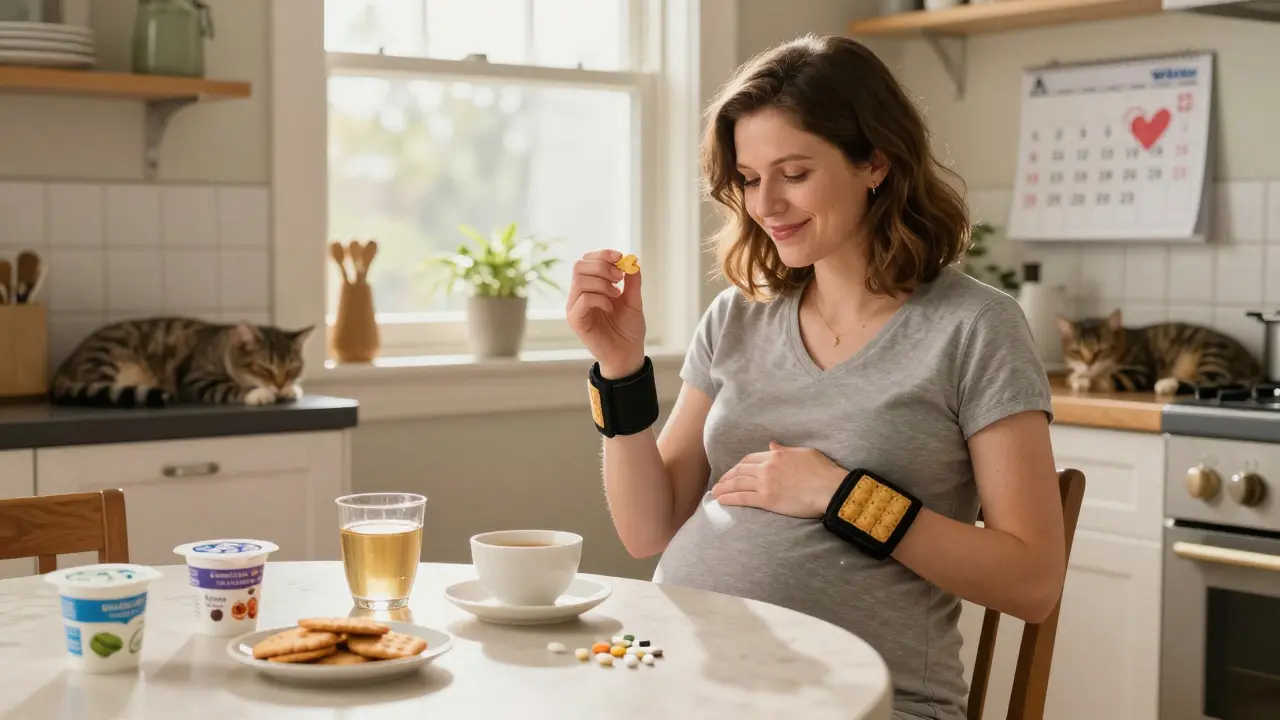
When you're pregnant and can't keep anything down-not even water-it's not just uncomfortable. It's exhausting. Morning sickness affects 70-85% of pregnant people, according to the American College of Obstetricians and Gynecologists. And while it’s called "morning" sickness, it can hit at any time of day. For some, it fades by week 14. For others, it lasts all trimester. The good news? There are safe, proven options-both over-the-counter and prescription-that actually work, without putting your baby at risk.
What Works Best? Start with the Basics
Before you reach for a pill, try the simplest fixes. Eating small meals every 2-3 hours helps. Aim for 45-60 grams of carbs and 15-20 grams of protein per snack. Cold foods often feel easier to tolerate than hot ones. Strong smells? Avoid them. Ginger is one of the most studied natural remedies. Research shows 1,000 mg of dried ginger root per day reduces nausea by 32% compared to placebo. Ginger chews, teas, or capsules are all fine. Just avoid raw ginger on an empty stomach-it can irritate your stomach lining.Another simple tool? Acupressure wristbands. They target the P6 point, located three finger-widths above your inner wrist crease, between the two tendons. A 2021 Cochrane Review of over 1,100 pregnant people found these bands cut vomiting episodes by 2.2 per day compared to no treatment. They’re not magic, but they’re safe, cheap ($8-$20), and worth trying before medication.
OTC Options: Vitamin B6 and Doxylamine
If diet and bands don’t cut it, the first-line OTC solution is well-established: pyridoxine (vitamin B6) and doxylamine succinate. You can buy these separately. Vitamin B6 comes in 10-25 mg tablets. Take one every 8 hours. Doxylamine is the sleep aid in Unisom SleepTabs-12.5 mg per tablet. Start with one at bedtime. If nausea continues after a few days, add a second dose in the afternoon.Both are safe. The FDA says up to 200 mg of B6 daily during pregnancy is acceptable. Doxylamine has been used for decades. Studies tracking over 200,000 pregnancies found no link to birth defects. And yes, it makes you sleepy-about 65% of users feel drowsy. That’s why it’s often taken at night. But if you’re working, you might need to adjust timing or switch to a prescription combo.
The Gold Standard: Diclegis
Diclegis is the brand name for a delayed-release pill that combines 10 mg of doxylamine and 10 mg of pyridoxine. It’s not OTC. You need a prescription. But it’s designed specifically for pregnancy nausea. The dosing is simple: one tablet in the morning, one in the afternoon, and two at bedtime. Clinical trials showed it reduced symptoms by 70% compared to 48% with placebo. In one study, 76% of women on Diclegis had better control than those on B6 alone.Its safety record is strong. The FDA classifies it as Pregnancy Category A-the highest safety rating. That means controlled human studies show no risk to the fetus. A 2014 analysis of 200,000 pregnancies found the odds of a major birth defect were almost identical (0.99) to those not taking it. It’s not cheap-around $250/month without insurance-but generic versions (doxylamine + B6) cost under $20. Many people start with generics and switch to Diclegis if symptoms are severe.

Prescription Alternatives: On-Demand Options
If first-line treatments fail, doctors may suggest other medications. Ondansetron (Zofran) is common. It’s a powerful anti-nausea drug used for chemo patients. It works fast-70-80% of users report major relief. But there’s controversy. A 2016 study suggested a possible link to oral clefts. A larger 2019 study of 1.2 million pregnancies found no significant risk. Still, experts like Dr. Gideon Koren recommend saving it for second-line use.Promethazine (Phenergan) is another option. It comes as a pill, shot, or suppository. It’s effective but causes drowsiness in 15% of users. It’s often used when someone can’t keep pills down. Rectal suppositories can be a lifesaver for those with severe vomiting.
What to Avoid
Marijuana is sometimes suggested online for nausea. But ACOG and the FDA warn against it. There’s no solid proof it helps, and studies show it may lower birth weight. The same goes for herbal teas with unknown ingredients or unregulated supplements. Stick to what’s studied: ginger, B6, doxylamine, Diclegis, and acupressure.
When to Call Your Doctor
Not all nausea is "morning sickness." If you’re losing weight, can’t keep fluids down, or have dark urine and dizziness, you might have hyperemesis gravidarum. That’s when vomiting is so severe it causes dehydration or ketones in your urine. The threshold for diagnosis has dropped: now it’s 3% weight loss plus ketonuria, not 5%. If this sounds like you, call your provider. Hospital IV fluids and stronger meds may be needed.Real People, Real Results
On Reddit’s pregnancy forums, 78% of users who tried Diclegis called it "highly effective." One wrote: "Finally got my life back at 9 weeks pregnant." Ginger users reported moderate relief with no side effects. But not everyone had luck. One user said, "Acupressure bands helped my car sickness, not my pregnancy nausea." Another on Drugs.com called ondansetron "a nightmare-severe headaches made the nausea seem mild."Cost matters too. OTC B6 and doxylamine cost $15-$30 a month. Diclegis runs $247.50. But if you’re missing work, skipping meals, or crying because you can’t eat, the cost of not treating it is higher.
Putting It All Together
Here’s what most doctors recommend:- Start with diet: small meals, cold foods, avoid triggers.
- Add ginger: 1,000 mg daily, taken after eating.
- Try acupressure bands: wear them 24/7 for best results.
- If still struggling, add B6: 10-25 mg three times daily.
- If nausea continues, add doxylamine: 12.5 mg at night, then twice daily if needed.
- If that fails, ask about Diclegis.
- Only consider ondansetron or promethazine if everything else fails.
There’s no shame in needing help. Nausea isn’t a sign of weakness-it’s a sign your body is changing. And you deserve to feel better.
Is it safe to take vitamin B6 and doxylamine together during pregnancy?
Yes. The combination of pyridoxine (vitamin B6) and doxylamine is one of the most studied and safest treatments for morning sickness. Over 200,000 pregnancies have been tracked, with no increased risk of birth defects. The FDA confirms safety at doses up to 200 mg of B6 daily. When taken as directed-10-25 mg B6 and 12.5 mg doxylamine-it’s considered first-line therapy by ACOG and other major medical groups.
Can I use ginger supplements instead of Diclegis?
Ginger is a safe and effective first step. Studies show 1,000 mg of dried ginger root daily reduces nausea by 32%. But it doesn’t work as well for vomiting. Many women find ginger helps with mild symptoms but still need medication for full relief. It’s often used alongside B6 and doxylamine-not as a replacement for them. Think of ginger as a helpful tool, not a cure-all.
Why is Diclegis more expensive than OTC options?
Diclegis is a branded, delayed-release formulation designed specifically for pregnancy. It combines doxylamine and pyridoxine in a timed-release pill that reduces side effects like drowsiness. The OTC versions are generic and immediate-release. While Diclegis costs around $250/month without insurance, the same active ingredients in generic form cost $15-$30. Many people start with generics and upgrade to Diclegis if symptoms are severe or if side effects are too disruptive.
Is ondansetron (Zofran) safe for pregnancy?
The data is mixed. A 2016 study suggested a possible link to oral clefts, but a much larger 2019 study of 1.2 million pregnancies found no significant increase in birth defects. Because of this uncertainty, most doctors reserve ondansetron for cases where first-line treatments (B6, doxylamine, Diclegis) have failed. It’s highly effective, but not first-choice due to lingering questions about long-term effects.
Can I use acupressure bands with medication?
Absolutely. Acupressure bands are non-invasive and have no drug interactions. Many women use them alongside ginger, B6, or Diclegis. Studies show they reduce the need for medication by 47%. They’re especially helpful for people who want to minimize pill use or who experience motion sickness alongside pregnancy nausea. Wear them consistently-24 hours a day-for best results.
Milad Jawabra
March 5, 2026 AT 00:27Man, I wish I had this guide when my wife was pregnant. We tried everything-ginger tea, wristbands, even just sitting in the car with the AC on full blast. Nothing worked until we stumbled on B6 + Unisom. She was crying at 7 weeks, and by week 10, she was eating tacos like a champ. Don’t overcomplicate it. Start simple. If you’re still puking, don’t feel guilty for asking for help. You’re not weak-you’re human.
Ivan Viktor
March 5, 2026 AT 03:50So let me get this straight. You’re telling me the FDA has approved a sleep aid and a vitamin to treat nausea, but if I want the exact same combo in a fancy delayed-release pill, I have to pay $250? Yeah, no thanks. I’ll stick with the $15 generic and call it a day. The body doesn’t care if it’s branded or not. It just wants to stop vomiting.
Zacharia Reda
March 6, 2026 AT 02:33Okay but why does everyone act like Diclegis is this magical unicorn? It’s literally just doxylamine + B6 in a timed-release shell. The science doesn’t change. The packaging does. And if you’re paying $250/month for that, you’re either rich or being scammed. My OB gave me a script for the generic and said, ‘This is what we’ve been using since the 90s.’ No magic. Just math.
Jeff Card
March 8, 2026 AT 01:35I had HG. Like, hospital-level. IVs, NG tubes, the whole thing. No one talked about this stuff when I was going through it. I wish I’d known about the 3% weight loss threshold-it’s so low, it’s almost invisible. But when you’re too weak to stand, you don’t notice the number on the scale. Just know: if you’re losing weight and can’t keep water down, it’s not ‘bad luck.’ It’s a medical emergency. Ask for help. No shame.
Matt Alexander
March 9, 2026 AT 22:27Just take B6 and Unisom. That’s it. Ginger helps a little. Bands help a little. But if you’re still throwing up, the combo works. I did it. My sister did it. My coworker did it. No drama. No scary studies. Just two pills, twice a day. You don’t need a PhD to fix morning sickness. You just need to try the thing that’s been proven for 30 years.
Gretchen Rivas
March 11, 2026 AT 10:19Acupressure bands work better if you wear them all day. Not just when you feel sick. Consistency matters. Also, cold ginger chews > hot tea. Hot smells = trigger. Simple.
Mike Dubes
March 11, 2026 AT 14:38so like… i tried the wristbands. they were cute. i wore them for 3 weeks. i still puked. then i took the b6 + unisom. i passed out on the couch for 4 hours. but i didn’t puke. so… i’ll take the nap. also, ginger is fine but don’t expect it to save your life. it’s a sidekick. not the hero.
Helen Brown
March 12, 2026 AT 22:13Wait. So you’re saying the FDA says it’s safe? What about the 2016 study? What about the babies with cleft palates? They’re not just disappearing. They’re being buried. And now they’re selling this as a cure? I’m not taking anything. I’m just eating crackers and praying. No pills. No science. Just faith.
marjorie arsenault
March 13, 2026 AT 08:51You’re not alone. I was terrified at 8 weeks-couldn’t eat, couldn’t sleep, felt like I was failing. Then I found this thread. Tried the B6 + doxylamine. Within 3 days, I could smell coffee again without gagging. I cried. Not from nausea-from relief. You’re doing better than you think. Even if you can only eat toast and applesauce, you’re still fighting. Keep going. You’ve got this.
Deborah Dennis
March 14, 2026 AT 08:52...And yet, people still take Zofran? Really? After the 2016 study? And then there’s promethazine? A suppository? You’re telling me someone would rather shove a pill up their butt than take a simple OTC combo? I’m not judging. I’m just… confused. And slightly horrified.
Donna Zurick
March 15, 2026 AT 16:22Start with the basics. Then add one thing at a time. Don’t try everything at once. Your body is already overwhelmed. Don’t add more stress. Ginger. Then bands. Then B6. Then doxylamine. If it’s still bad, talk to your doctor. You don’t need to suffer. You just need to take it one step.