Multicultural Perspectives on Generics: How Culture Shapes Medication Trust and Adherence
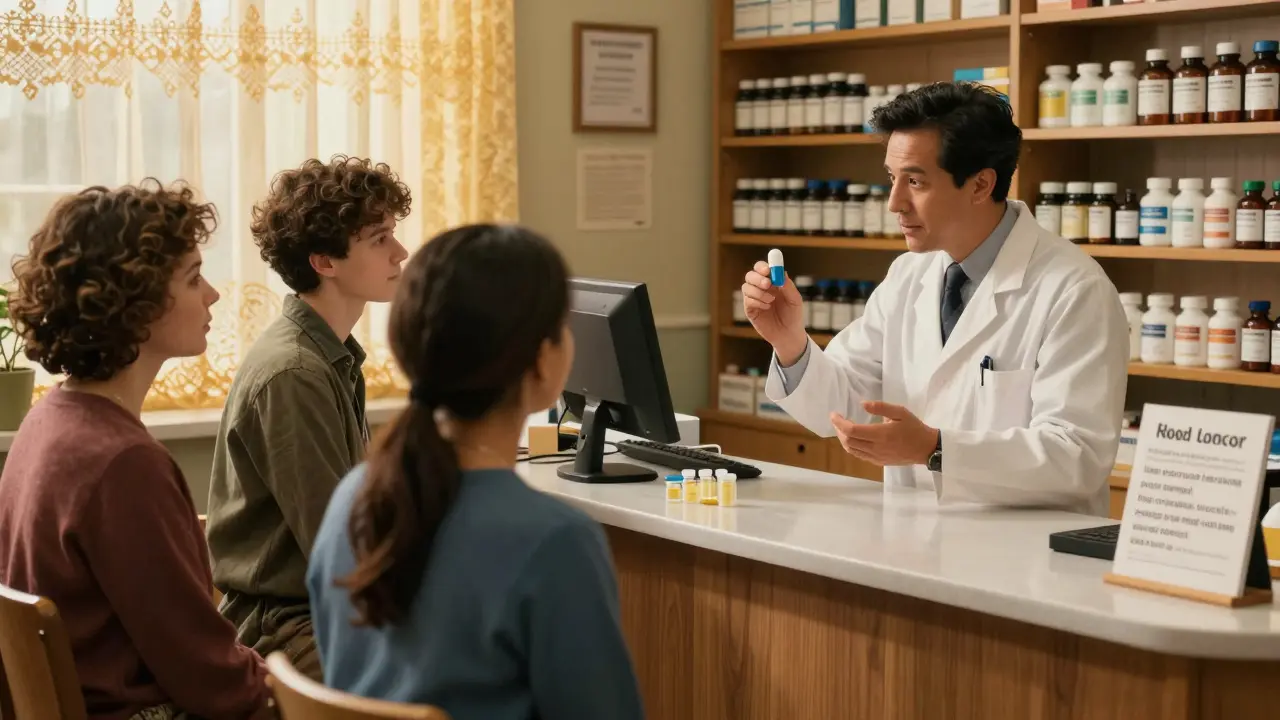
When you pick up a prescription, you don’t usually think about what’s inside the pill besides the active drug. But for many people around the world, the color, shape, or even the gelatin in the capsule can make the difference between taking their medicine-or refusing it altogether.
Why a Generic Pill Might Not Feel Like the Same Medicine
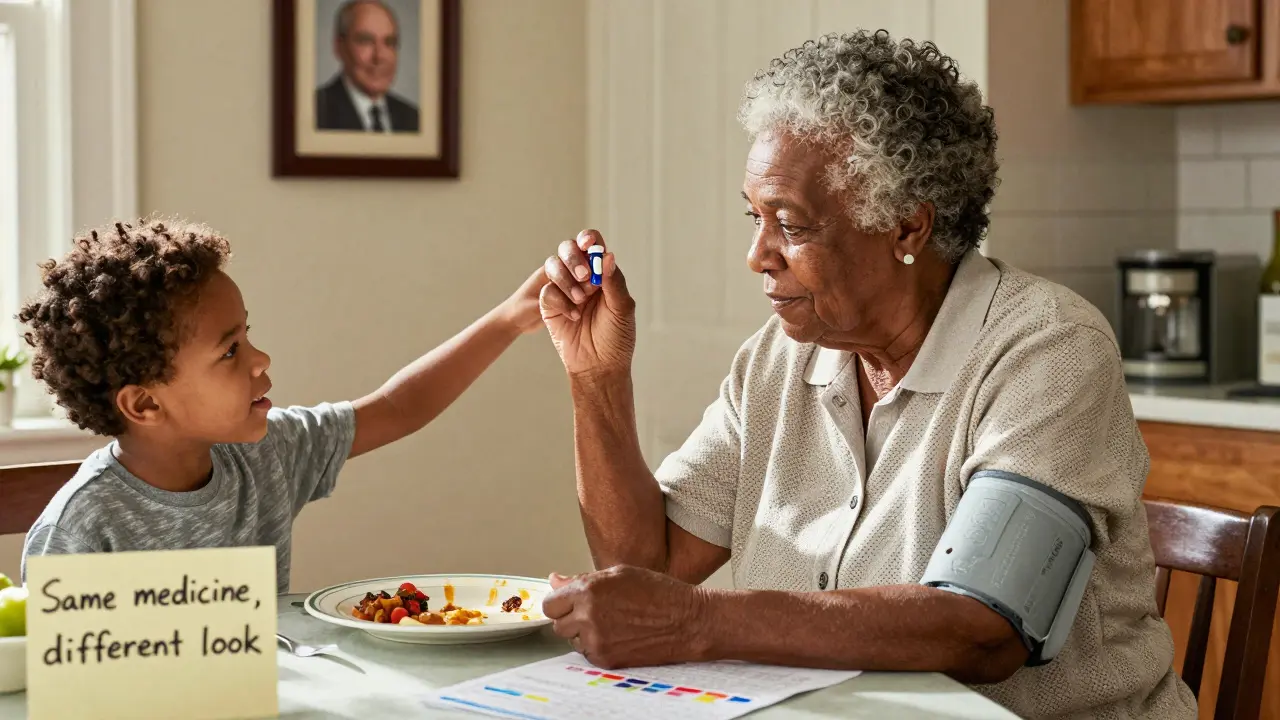
Generic drugs are supposed to work just like their brand-name cousins. Same active ingredient. Same dose. Same effect. But if you’ve ever switched from a branded pill to a generic version, you’ve probably noticed something: the pill looks different. Maybe it’s a different color. Maybe it’s smaller. Or maybe it’s oval instead of round. For some patients, that change isn’t just cosmetic. It’s alarming. In the U.S., 28% of African American patients say they believe generics are less effective than brand-name drugs, compared to just 15% of non-Hispanic White patients. Why? It’s not just about misinformation. It’s about culture. In some communities, the appearance of a pill carries meaning. A white pill might signal purity. A red one might mean danger. In parts of Southeast Asia, blue pills are associated with calming effects, while green ones are seen as stronger. When a patient’s usual blue hypertension pill suddenly becomes white, they might assume the dosage changed-or worse, that they’ve been given something fake.Religious and Cultural Restrictions in the Pill
It’s not just about looks. It’s about what’s hidden inside. Many generic medications use gelatin as a capsule shell. That gelatin often comes from pigs. For Muslim and Jewish patients, that’s a deal-breaker. Halal and kosher dietary laws forbid consuming pork products-even in medicine. Yet most generic labels don’t say where the gelatin comes from. Pharmacists in cities like Toronto, London, and Auckland report getting these questions at least once a week. One pharmacist in Dunedin told a patient, “I know this isn’t the same pill you used to take, but I spent two hours calling manufacturers just to find a vegetarian capsule.” That’s not normal. It shouldn’t be this hard. In 2023, a study found that 63% of urban pharmacists receive requests for halal or kosher-certified medications regularly. Yet only 37% of generic drug packages in the U.S. list excipients-those inactive ingredients-clearly. In the EU, it’s 68%. That gap matters. When a patient can’t trust the label, they don’t take the medicine.The Hidden Cost of Cultural Ignorance
Skipping medication because of cultural mismatch isn’t just inconvenient. It’s dangerous. Take hypertension. African American and Latino populations in the U.S. have higher rates of high blood pressure-and higher death rates from it. But they’re also more likely to stop taking their meds because they don’t trust the generics. Same with diabetes. In communities where medical discrimination has a history, the idea that a “cheap” pill might not work isn’t irrational. It’s rooted in real experiences. A 2022 FDA survey showed that patients from underrepresented groups are more likely to believe generics are “cut corners” versions of real medicine. That belief doesn’t come from nowhere. It comes from years of being treated as an afterthought-by insurers, by doctors, and by pharmaceutical companies. The cost? Billions. A 2024 analysis estimated that culturally mismatched generic medications contribute to $12.4 billion in unmet treatment needs in the U.S. alone. That’s not just money lost. It’s lives lost.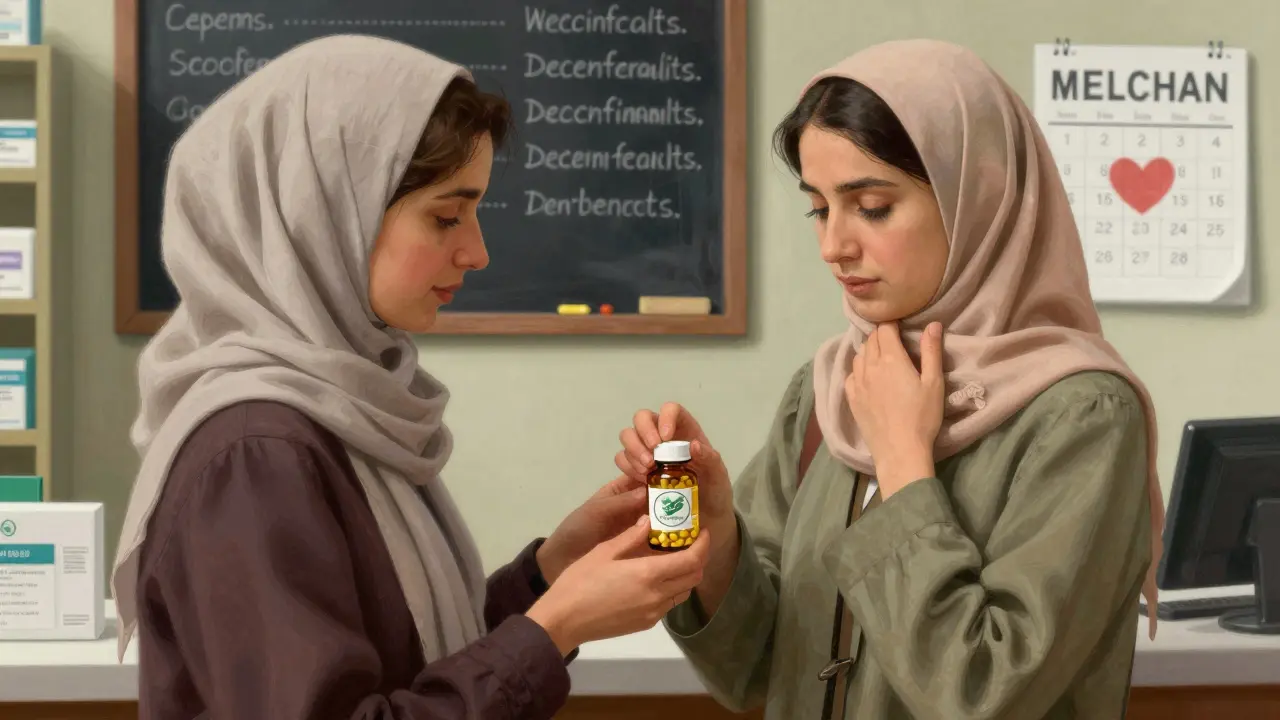
What’s Being Done-and What’s Not
Some companies are starting to wake up. Teva, the world’s largest generic drugmaker, launched a Cultural Formulation Initiative in 2023. They’re now documenting which of their 200+ generic products contain animal-derived ingredients-and which don’t. By the end of 2024, they plan to label every product with clear, accessible info on excipients. Sandoz, a Swiss giant spun off from Novartis, announced in January 2024 they’re building a Global Cultural Competence Framework. That means training staff, redesigning packaging, and creating multilingual patient guides that explain why a pill looks different-but still works. But here’s the problem: most of these efforts are happening at the top. Community pharmacies? Most still have no training. A 2023 survey found only 22% of U.S. community pharmacies have formal programs to address cultural considerations in generic meds. Many pharmacists don’t know where to find halal-certified alternatives. Or how to explain color differences without sounding dismissive.What Patients Need-and What Pharmacies Can Do
Patients don’t need more jargon. They need clarity, respect, and options. Here’s what works:- Ask, don’t assume. Don’t just hand over the generic. Say: “This is the same medicine, but it looks different. Do you have any concerns about the color or ingredients?”
- Know your excipients. Pharmacies should keep a simple, updated list of which generics contain pork gelatin, alcohol, or other restricted substances. That list should be accessible to every staff member.
- Offer alternatives. If a patient refuses a capsule because of gelatin, can you switch to a tablet? A liquid? A vegetarian capsule? Some manufacturers now make halal-certified versions of common generics-like metformin or atorvastatin. But you won’t know unless you ask.
- Train your team. Eight to twelve hours of training per staff member can make a huge difference. Learn about halal and kosher rules. Understand why color matters in different cultures. Practice how to talk about this without sounding robotic.
The Bigger Picture: Culture Isn’t a Side Note
Medicine isn’t just science. It’s human. And humans don’t live in a vacuum. Their beliefs, their faith, their history-all of it shapes how they see a pill. The Food and Drug Omnibus Reform Act (FDORA) of 2022 made it clear: diversity in clinical trials and cultural competence aren’t optional. They’re required. But laws don’t change practice. People do. The next time you hand someone a generic prescription, remember: you’re not just giving them a pill. You’re giving them trust. And trust, once broken, is harder to rebuild than any medication.What You Can Do Right Now
If you’re a patient:- Ask your pharmacist: “Is this generic made with pork gelatin or alcohol?”
- Ask: “Is there another version that looks more like my old pill?”
- Don’t be afraid to say no-if something feels wrong, it’s okay to ask for another option.
- Include cultural questions in your intake forms: “Do you have any religious or cultural reasons for avoiding certain ingredients?”
- Keep a list of culturally appropriate alternatives handy.
- Don’t dismiss concerns about pill appearance. Validate them. Then solve them.
Robert Cardoso
January 29, 2026 AT 12:23The data here is superficial at best. You cite percentages without contextualizing socioeconomic confounders. The real issue isn't cultural perception-it's systemic underfunding of primary care in marginalized communities. People don't distrust generics because of pill color; they distrust a system that gives them 12-minute appointments and then wonders why they stop taking meds. Correlation does not equal causation, and you're conflating symptom with root cause.
Jess Bevis
January 30, 2026 AT 23:33Pill color matters. Always has. Always will.
Lance Long
February 1, 2026 AT 08:56Let me tell you about my abuela. She took her blood pressure pills every day-until the blue ones turned white. She said, 'That’s not the medicine that saved me.' She hid them under the fridge. Not because she didn’t believe in science. Because she believed in the medicine that held her through the hardest years. That’s not irrational. That’s love. And if we’re going to fix this, we have to stop treating cultural memory like a glitch in the system. It’s the foundation. The FDA can mandate labels all day, but if your pharmacist doesn’t know how to say, 'I see you, and I hear you,' nothing changes. This isn’t about compliance. It’s about dignity.
fiona vaz
February 2, 2026 AT 03:36Great breakdown. I’ve worked in community pharmacy for 14 years, and this exact issue comes up weekly. The color-coded sticker system mentioned? Brilliant. We implemented something similar with QR codes linking to simple video explanations in Spanish, Hmong, and Arabic. Adherence jumped 27% in six months. It’s not expensive-it’s just thoughtful. We just need to stop assuming patients are being 'difficult' and start treating them as partners.
John Rose
February 3, 2026 AT 06:42This is one of the most compelling arguments I’ve read on medication adherence. The cultural dimensions of pharmaceutical design are almost entirely ignored in medical education. I’m a resident, and I’ve never had a single lecture on excipients, religious restrictions, or perceptual cues in pill design. We’re training doctors to treat diseases, not people. The fact that a Muslim patient has to beg for a halal metformin capsule in 2024 is a moral failure. This needs to be in every med school curriculum.
Brittany Fiddes
February 4, 2026 AT 22:04Oh, for heaven’s sake. This is what happens when you let the Americans turn medicine into a sociology thesis. In the UK, we have a simple solution: if you don’t like the pill, you pay for the branded version. End of story. No one here is crying about ‘cultural trust’-we’re too busy being rational. The fact that you need color-coded stickers and multilingual guides just proves how chaotic your healthcare system is. We don’t coddle patients; we educate them. And if they can’t handle a different-colored tablet? Well, perhaps they shouldn’t be in charge of their own health.
Colin Pierce
February 5, 2026 AT 15:30Brittany, you’re missing the point. This isn’t about coddling-it’s about access. In the U.S., 40% of people can’t afford brand-name meds. So if we’re going to give them generics, we owe them the respect of making sure they actually work for them-not just biologically, but emotionally and spiritually too. I had a patient last week who refused her diabetes meds because the capsule had a ‘fishy’ smell. Turned out, it was gelatin from beef tallow. She’s Muslim. We swapped it out for a vegetarian version. She cried. Not because she was weak. Because someone finally listened. That’s not chaos. That’s care.