Opioid-Induced Constipation: How to Prevent and Treat It Effectively

More than half of people taking opioids for chronic pain develop constipation-and it doesn’t go away on its own. Unlike the nausea or drowsiness that might fade after a few days, opioid-induced constipation (OIC) sticks around as long as you’re on the medication. It’s not just uncomfortable; it can lead to bloating, nausea, vomiting, and even bowel obstruction. Yet, many patients and even some doctors treat it as a minor side effect instead of a serious medical issue that needs proactive management.
Why Opioids Cause Constipation
Opioids work by binding to receptors in your brain to dull pain, but they also latch onto receptors in your gut. These receptors control how your intestines move, how much fluid gets absorbed, and how tightly your anal sphincter stays closed. When opioids activate them, your bowel slows down. Food moves slower through your intestines, your body pulls more water out of stool, and your muscles don’t contract the way they should to push waste out. The result? Hard, dry stools that are painful to pass-and you never feel fully empty after going.This isn’t normal constipation. It’s mechanistically different. That’s why regular over-the-counter remedies often fail. You can’t just eat more fiber or drink more water and expect it to fix this. The problem is rooted in how opioids interfere with your nervous system’s control of digestion.
Prevention Is the Best Strategy
The single biggest mistake doctors and patients make? Waiting until constipation starts before doing something about it. By then, it’s already entrenched. Experts agree: start a laxative on day one of opioid therapy. Studies show that proactive use prevents 60-70% of severe cases.Here’s what works best from the start:
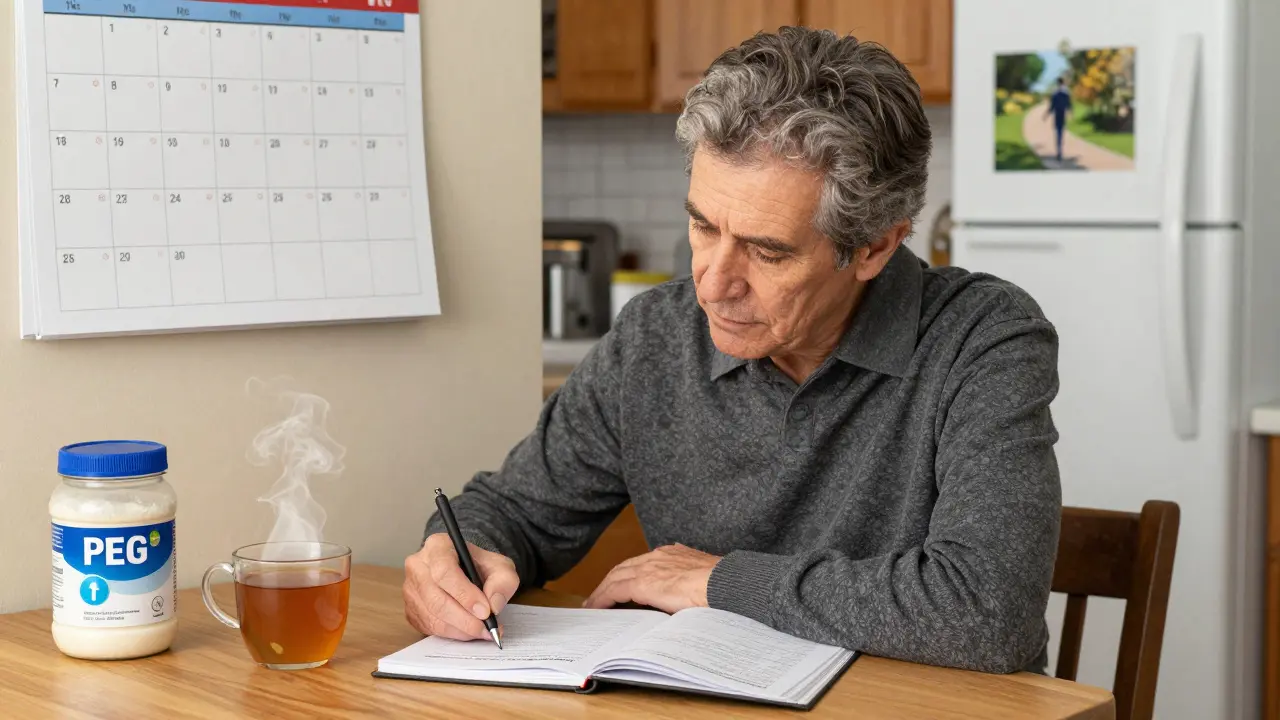
- Polyethylene glycol (PEG) - This osmotic laxative draws water into the colon, softening stool without irritating the bowel. It’s gentle, safe for long-term use, and recommended as first-line by multiple guidelines.
- Stimulant laxatives - Senna or bisacodyl help trigger muscle contractions in the colon. Use them in combination with PEG for better results. Don’t rely on them alone-they can cause cramping and dependence if used long-term without oversight.
- Diet and movement - Eat fiber-rich foods like oats, beans, and vegetables. Stay active. Even a 20-minute walk daily helps stimulate bowel motility.
Pharmacists play a critical role here. When they’re involved in prescribing opioids, they increase the chance that a patient gets a laxative prescription at the same time by 43%. If your doctor doesn’t mention it, ask. Don’t wait.
When Laxatives Don’t Work
About 68% of patients report that standard laxatives don’t fully relieve their symptoms. If you’re still struggling after a few weeks of consistent use, it’s time to consider prescription options called PAMORAs-peripherally acting μ-opioid receptor antagonists.PAMORAs block opioid receptors in your gut but can’t cross the blood-brain barrier. That means they fix your constipation without reducing your pain relief. There are four FDA-approved options:
- Methylnaltrexone (Relistor®) - Given as a subcutaneous injection. Works in as little as 30 minutes. Often used for patients in palliative care. A new once-weekly version is now available, making it easier to manage.
- Naldemedine (Symproic®) - An oral tablet taken daily. Shown to improve not just constipation but also reduce opioid-induced nausea and vomiting. Recommended by ASCO for cancer patients starting opioids.
- Naloxegol (Movantik®) - Another oral option. Works best when taken on an empty stomach.
- Lubiprostone (Amitiza®) - A chloride channel activator that increases fluid secretion in the intestines. Approved for women, but effective in men too. Can cause nausea in up to one-third of users.
These aren’t magic pills. They work for most people, but not all. In one Reddit thread with over 1,200 comments, 42% of users said PAMORAs gave them major relief. But 28% experienced abdominal pain or cramping. And cost is a huge barrier: without insurance, these drugs can run $500-$900 a month.
Who Should Avoid PAMORAs
PAMORAs are powerful, but they’re not safe for everyone. They’re strictly contraindicated in people with:- Known or suspected bowel obstruction
- Recent abdominal surgery
- Active inflammatory bowel disease (like Crohn’s or ulcerative colitis)
There’s a real risk of gastrointestinal perforation-tearing in the bowel wall-especially if the tissue is already weakened. The FDA requires all PAMORA manufacturers to include this warning and train prescribers on risk assessment.
If you’ve had surgery in the past year or have a history of bowel issues, talk to your doctor before starting a PAMORA. A simple CT scan or physical exam can help rule out hidden risks.
Tracking Progress: The Bowel Function Index
You can’t manage what you don’t measure. The Bowel Function Index (BFI) is a simple, validated tool used by specialists to track OIC severity. It asks three questions:- How difficult was it to have a bowel movement?
- How complete was your feeling of emptying?
- How much did constipation interfere with your daily life?
Each question is scored from 0 to 10. Add them up. A score above 30 means you have significant constipation and need a change in treatment. Many primary care doctors don’t use this tool-but you can ask for it. Print it out. Fill it out before each visit. It gives your doctor hard data, not just vague complaints.

Real Patient Experiences
On forums like PatientsLikeMe and PainForum.org, people share what actually works:- “Relistor injections work within 30 minutes when nothing else does.” - HealthUnlocked user, Feb 2024
- “Naldemedine let me stay on my pain meds without constant bathroom struggles.” - PatientsLikeMe user, Jan 2024
- “I tried everything. Then my pharmacist suggested switching from senna to PEG + naldemedine. My quality of life changed.” - Reddit user, March 2024
But the flip side is real too:
- “I couldn’t afford it. Insurance denied it twice.”
- “It helped for a month, then stopped working.”
- “I had cramps so bad I had to stop.”
A 2023 survey of 1,500 patients found that 57% stopped PAMORAs within six months-mostly because of cost or lack of results. That’s why starting with the right combination of laxatives and knowing when to escalate matters.
The Future of OIC Treatment
The market for OIC drugs is growing fast-projected to hit $2.1 billion by 2027. New developments are on the horizon:- Oral PAMORAs with better absorption and fewer side effects
- Combination pills that pair low-dose PAMORAs with laxatives
- Genetic testing to predict which patients respond best to which drugs
By 2026, experts predict personalized OIC treatment will become standard. Imagine a simple blood test telling you whether you’re more likely to respond to naldemedine or methylnaltrexone. That’s not science fiction-it’s already in early trials.
Meanwhile, advocacy groups like the American Society of Gastroenterology are pushing for better insurance coverage. Right now, 41% of Medicare Part D plans require prior authorization for PAMORAs, and 28% of private insurers force patients to try cheaper (and often ineffective) laxatives first. This delays relief and increases the risk of complications like fecal impaction or emergency hospital visits-costing the system $2.3 billion a year.
What You Can Do Today
If you’re on opioids:- Ask for a laxative prescription right away. Don’t wait for symptoms.
- Start with PEG and senna together. Take them daily, even if you feel fine.
- Track your bowel movements. Use the BFI tool every two weeks.
- Call your pharmacist. They can help you navigate insurance, find coupons, or suggest alternatives.
- If it’s not working after 3-4 weeks, ask about PAMORAs. Don’t suffer in silence.
Opioid-induced constipation isn’t something you have to live with. It’s treatable. But only if you act early, stay informed, and push for the right care. Your body deserves more than just pain relief-it deserves to work properly, too.
Is opioid-induced constipation the same as regular constipation?
No. Regular constipation is often caused by low fiber, dehydration, or inactivity. Opioid-induced constipation (OIC) happens because opioids directly slow down nerve signals in your gut. This means standard remedies like fiber or prune juice often don’t work well. OIC requires specific treatments like osmotic laxatives or PAMORAs that target the root cause.
Can I just use over-the-counter laxatives forever?
You can use osmotic laxatives like polyethylene glycol (PEG) long-term safely. But stimulant laxatives like senna or bisacodyl shouldn’t be used daily for more than a few weeks without medical supervision-they can cause dependency and damage the colon’s natural movement over time. If OTC laxatives aren’t working after 2-4 weeks, it’s time to talk to your doctor about prescription options.
Do PAMORAs reduce my pain relief?
No. PAMORAs are designed to block opioid receptors only in the gut, not in the brain. That’s why they fix constipation without making your pain medication less effective. Studies show patients maintain the same level of pain control while improving bowel function. This is why they’re preferred over older treatments that can interfere with analgesia.
Why are PAMORAs so expensive?
PAMORAs are brand-name drugs with limited competition. Without insurance, they cost $500-$900 a month. Many insurance plans require prior authorization or step therapy-meaning you must try cheaper laxatives first, even if they’ve failed. Some manufacturers offer patient assistance programs. Ask your pharmacist or the drug company’s website for coupons or savings cards.
Can I take PAMORAs if I’ve had bowel surgery?
Not if you’ve had recent abdominal surgery (within the past 6-12 months) or have a history of bowel obstruction, Crohn’s disease, or diverticulitis. PAMORAs increase bowel movement force, which can raise the risk of perforation in weakened tissue. Always tell your doctor about any past surgeries or digestive conditions before starting these drugs.
How long does it take for OIC treatments to work?
Osmotic laxatives like PEG usually take 1-3 days. Stimulant laxatives can work in 6-12 hours. Injectable methylnaltrexone works in as little as 30 minutes. Oral PAMORAs like naldemedine or naloxegol typically show results in 24-48 hours. If you don’t see improvement within 3-5 days, your dose or treatment plan may need adjustment.
Are there natural remedies that help with OIC?
Diet and movement help-but they’re not enough on their own. Drink plenty of water, eat fiber-rich foods, and walk daily. Some people find flaxseed or magnesium supplements useful as supplements to medical treatment. But because OIC is caused by nerve interference, not diet, natural remedies alone rarely solve the problem. Always combine them with medically recommended treatments.
What happens if I ignore OIC?
Untreated OIC can lead to fecal impaction-a hard mass of stool that gets stuck in the rectum. This can cause severe pain, vomiting, bloating, and even bowel perforation. It often requires emergency treatment like enemas, manual removal, or hospitalization. Chronic constipation also worsens nausea, appetite loss, and overall quality of life. Ignoring it doesn’t make it go away-it makes it worse.
Managing opioid-induced constipation isn’t about choosing between pain relief and comfort. It’s about getting both. With the right strategy, you can stay on your pain medication without being held hostage by your bowels.
Michael Camilleri
January 25, 2026 AT 02:08Darren Links
January 26, 2026 AT 18:50Helen Leite
January 28, 2026 AT 04:25Elizabeth Cannon
January 29, 2026 AT 14:35Phil Maxwell
January 31, 2026 AT 06:20Tommy Sandri
January 31, 2026 AT 13:04Sushrita Chakraborty
February 1, 2026 AT 05:23Amelia Williams
February 3, 2026 AT 01:46venkatesh karumanchi
February 4, 2026 AT 16:16Jenna Allison
February 5, 2026 AT 03:43