Personal Health Records: How to Manage Medications Across Pharmacies

Imagine you’re rushed to the emergency room after a fall. You can’t remember all the pills you take - not the blood pressure medicine from your local pharmacy, not the ibuprofen you buy over the counter, not the fish oil your sister swears by. The doctors have no idea what’s in your system. That’s not a hypothetical. It happens every day. Personal health records are the simplest, most powerful tool to stop that from happening to you.
Why Your Medication List Is Always Wrong
Most people think their doctor’s office has their full medication history. It doesn’t. If you fill prescriptions at three different pharmacies - one for your diabetes meds, another for your anxiety pills, and a third for occasional painkillers - each pharmacy only sees its own records. Your GP doesn’t automatically get updates. Even if you tell your doctor everything, studies show patients forget or misremember 30% to 50% of their medications. That’s not just inconvenient - it’s dangerous. The real problem? Over-the-counter drugs. You think it’s harmless to take melatonin or glucosamine. But these can interact with your prescriptions. A 2021 study found only 37% of digital health records even try to track OTC meds. That means your doctor might prescribe something that clashes with the turmeric supplement you’ve been taking for years. No one knows unless you tell them - and you probably won’t remember.How Personal Health Records Fix This
A personal health record (PHR) isn’t just a note in your phone. It’s a secure, centralized digital file that pulls together every medication you’ve taken - from every pharmacy, every clinic, every cash purchase. Unlike hospital systems that only show what your provider entered, a PHR is yours. You control what’s in it. You can add your vitamins, your herbal teas, your old prescriptions you stopped taking. And it updates automatically when you pick up a new pill. In Australia, the My Health Record system connects over 7,800 pharmacies. When you fill a script, the pharmacy sends the update directly into your record. In the U.S., Apple Health Records pulls data from over 200 million iPhones, syncing with pharmacies that use FHIR standards - the modern digital language for health data. Systems like Surescripts handle 22 billion transactions a year, matching your name, birth date, and address across hundreds of pharmacy networks with 99.2% accuracy. The result? A single, real-time list of everything you’re taking. No more guessing. No more “I think I take two of those.” Just clear, accurate information - whether you’re seeing a new doctor, getting discharged from hospital, or walking into a pharmacy during a holiday weekend.What You Can and Can’t Trust
Not all PHRs are built the same. Apple Health Records is easy to use - it shows up on your phone without you doing much. But it only captures about 68% of your medication history because it relies on pharmacies and insurers to send data. If you pay cash at a small pharmacy, it might not show up. Surescripts, used by hospitals and big chains like CVS and Walgreens, gets 92% of your prescription data because it connects directly to pharmacy benefit managers and dispensing systems. But you can’t log into it yourself - only your doctor or pharmacist can pull it up. That’s where the gap opens: you need a system you can control and that pulls in the full picture. The best approach? Use both. Let Apple or your hospital portal grab the automated data, then manually add what’s missing: supplements, old prescriptions, medications you stopped, even the occasional OTC painkiller you took last week. Don’t assume it’s there. Check. Update. Fix it.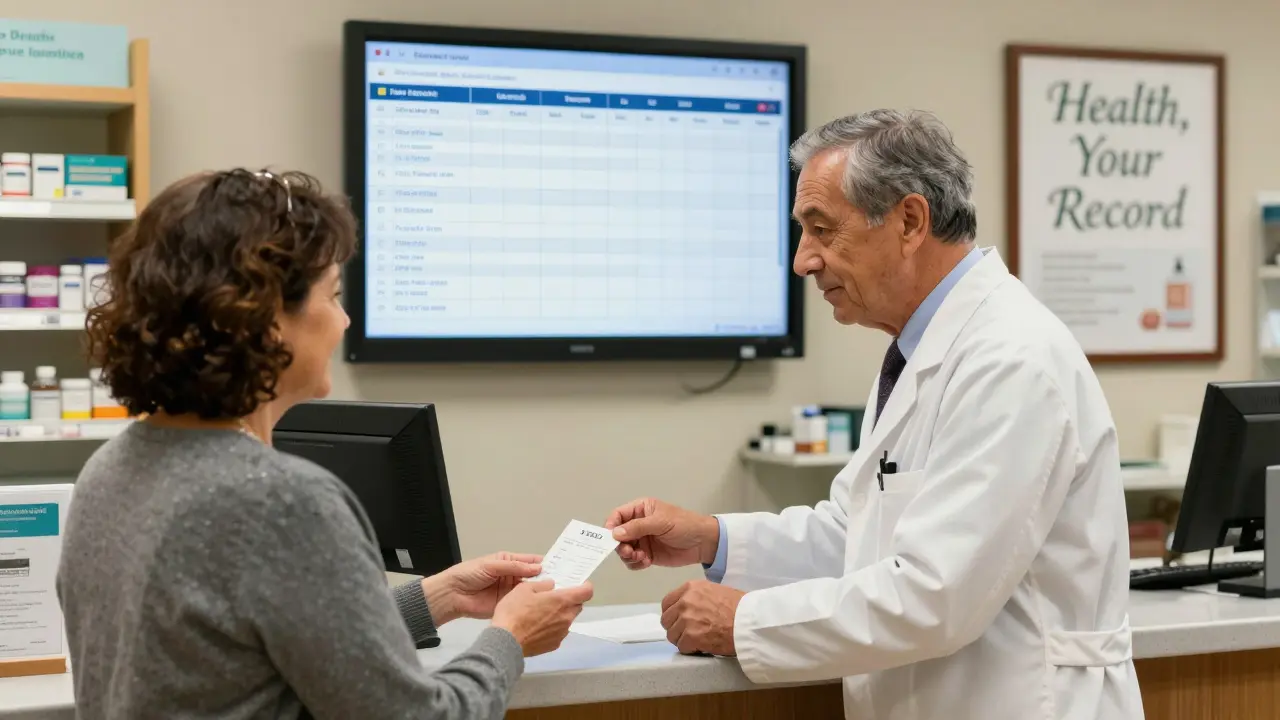
The Hidden Danger: Patient-Entered Errors
Here’s the catch. PHRs only work if you keep them accurate. A 2023 study at Duke University found that 61% of patient-entered medication lists had dosage errors. Someone writes “Lisinopril 5mg” when it’s actually 10mg. Or they list “as needed” for a drug that’s meant to be taken daily. That’s not just a typo - it’s a risk. Pharmacists spend an average of 8.3 minutes per patient just fixing wrong entries in PHRs. That’s time they could spend counseling you on side effects or checking for dangerous interactions. If you’re going to use a PHR, treat it like your bank account. Double-check every entry. Match the bottle. Confirm the dose. Don’t rely on memory. One patient told a clinic: “I take metformin 1000mg twice a day.” The PHR showed 500mg. Turns out, she’d switched brands and didn’t realize the new pills were half-strength. She’d been underdosing for six months. Her A1C was climbing. A simple PHR update could have prevented that.How to Set Up Your Own Medication PHR
You don’t need to be tech-savvy. Here’s how to get started in under 15 minutes:- Choose your platform. If you have an iPhone, use Apple Health. Android users can try Google Health or My Health Record (if in Australia). Otherwise, use a free PHR like MyChart (if your doctor uses Epic) or the Surescripts Patient Portal.
- Connect your pharmacies. In Apple Health, go to Health Data > Medications > Add from Pharmacy. Sign in with your pharmacy account. Repeat for each one.
- Manually add what’s missing. Open your medicine cabinet. Take a photo of each bottle. Enter the name, dose, frequency, and reason. Include vitamins, herbs, and OTC drugs. Don’t skip anything.
- Update after every fill. Every time you pick up a new script, open the app. Does it show up? If not, add it. If it’s wrong, fix it. Do this within 24 hours.
- Share it. Give your doctor, pharmacist, or a trusted family member access. Most systems let you grant temporary or permanent viewing rights.

What Happens When You Don’t Use One
The cost of not using a PHR isn’t just time - it’s money and safety. A 2022 study in JAMA Internal Medicine found medication errors during care transitions cost the U.S. system $528 per patient annually. That’s because doctors prescribe duplicates, miss interactions, or don’t know what you’ve already stopped. In one case, a 72-year-old man was admitted for confusion. His PHR showed he was on warfarin, aspirin, and a new antidepressant. The hospital didn’t have his records. They added another blood thinner. He bled internally. He spent 11 days in the ICU. His PHR had been accurate - but no one looked at it. On the flip side, patients who use PHRs report feeling more in control. A 2023 survey from UPMC showed 82% of chronic illness patients felt “more confident managing medications” when they had a complete list. That confidence? It reduces anxiety, improves adherence, and leads to better outcomes.The Future: Smarter, Not Just Digital
The next wave isn’t just about having a list. It’s about understanding your patterns. New systems are starting to track not just what you take, but when you take it. Some apps now use refill data to guess if you’re skipping doses. Others are testing AI that compares your PHR to your lab results - flagging if your blood sugar is high and you’re not taking your metformin. In 2024, Medicare will require insurers to share 45 days of your prescription history with your PHR if you give permission. That’s a big step. Soon, your PHR won’t just show what you’ve taken - it’ll predict what you might need next. But none of that matters if you don’t start now. The technology exists. The data is there. The risk is real. Your medication list shouldn’t be something you remember - it should be something you know.What to Do Today
Don’t wait for your next doctor’s visit. Don’t wait until you’re in the ER. Right now:- Open your phone’s health app.
- Go to medications.
- Check what’s already there.
- Add anything missing - even if it’s just “ibuprofen 200mg, as needed.”
- Set a reminder: every Sunday, spend 5 minutes updating it.
Can I use a personal health record if I don’t have a smartphone?
Yes. Many PHR systems work on desktop computers. You can use web portals like MyChart, Surescripts Patient Portal, or even paper-based templates printed from trusted health sites. The key isn’t the device - it’s consistency. Write down your meds, keep them in a folder, and update them after every pharmacy visit. Digital is easier, but paper still saves lives.
Do personal health records work with cash-pay pharmacies?
Sometimes. Pharmacies that use modern dispensing software (like those connected to Surescripts) can automatically send data. But small, independent pharmacies or those that only accept cash often don’t. That’s why you need to manually add those prescriptions. Don’t assume they’ll appear. If you pay cash, write down the name, dose, and date - then enter it into your PHR within 24 hours.
Are personal health records secure?
Yes, if you use a certified system. Apple Health, My Health Record, and other major platforms use AES-256 encryption, HIPAA compliance, and strict access controls. Only you can grant access to others. No one can view your records without your permission. Avoid random apps from unknown developers - stick to platforms tied to hospitals, pharmacies, or major tech companies.
What if my doctor doesn’t use a PHR system?
It doesn’t matter. Your PHR is yours - not your doctor’s. You can print it out and bring it to appointments. You can email it ahead of time. You can even show it on your phone during the visit. Many doctors now ask patients to bring their medication list. A complete PHR makes you the expert on your own health - even if your doctor’s system is outdated.
How often should I update my personal health record?
Update it every time you get a new prescription, stop a medication, or start a new supplement. At minimum, review and update it every Sunday. That’s 5 minutes a week. If you don’t, the record becomes useless - and dangerous. Outdated PHRs cause more harm than none at all because they give false confidence.