Plantar Fasciitis: Heel Pain Causes and Treatment Options
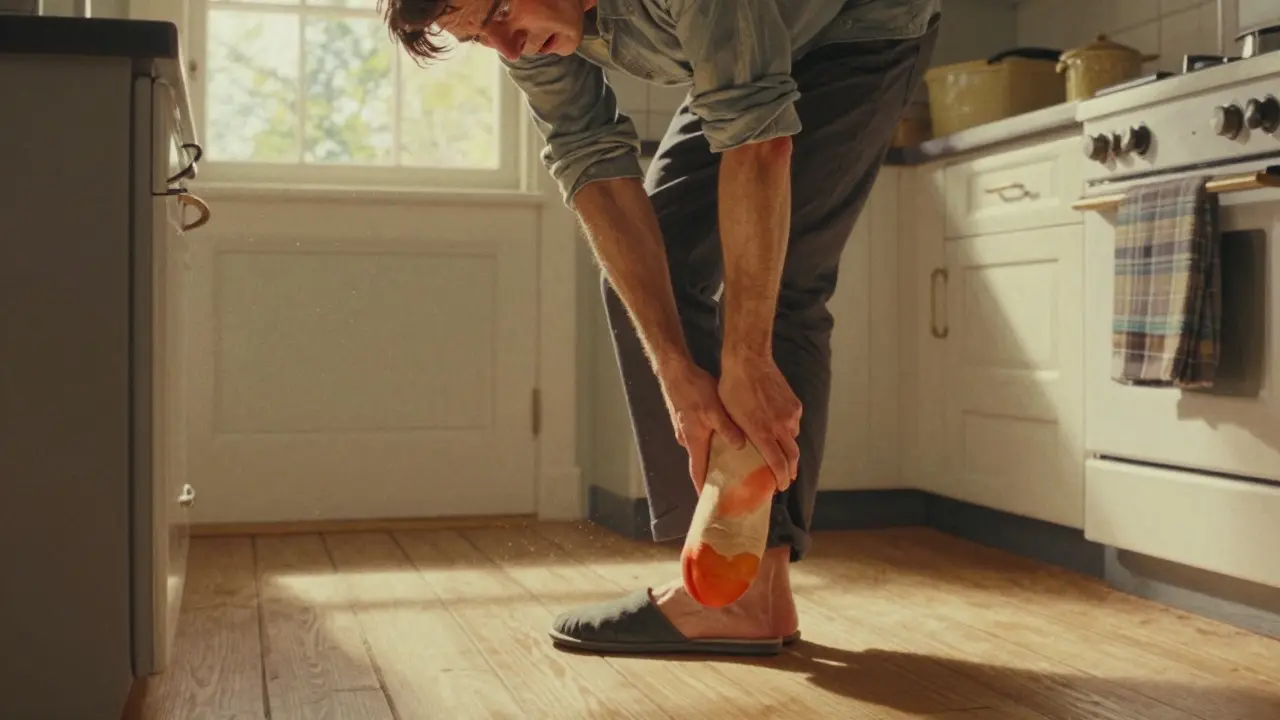
That first step out of bed in the morning shouldn't feel like stepping on a shard of glass. Yet for millions of people, it does. If you are wincing as your foot hits the floor, you are likely dealing with plantar fasciitis, now more accurately called plantar fasciopathy. It is not just "tired feet." It is a degenerative condition affecting the thick band of tissue connecting your heel to your toes. While it affects about 10% of the population at some point, most people suffer silently or try ineffective home remedies before finding relief. The good news? You do not need surgery. In fact, 90% of cases resolve within 10 months using structured conservative management.
Why Your Heel Hurts: The Real Cause
We used to think this was an inflammatory issue, hence the name "fasciitis" (meaning inflammation). But modern histology shows us something different. When doctors examine tissue samples from patients, they see myxoid degeneration and fragmentation of the plantar fascia, which supports the foot's arch and provides shock absorption. There is little actual inflammation. Instead, the tissue breaks down under stress. Think of it like a rubber band that has been stretched too many times-it loses its elasticity and develops micro-tears.
The pain is usually sharp and stabbing, located on the inner side of your heel. About 76% of patients report the worst pain during the first five steps after waking up or sitting for a long time. This happens because the fascia tightens while you rest. When you stand, you suddenly stretch that stiff, damaged tissue. As you walk, the tissue warms up and loosens, so the pain decreases. But if you stand all day, the pain returns.
Who gets this? It is not just runners. In fact, 63% of cases occur in sedentary individuals with a BMI over 27 kg/m². The extra weight puts significant stress on the fascia. However, active people are also at risk. Runners who log more than 10 miles a week account for 37% of cases. Other major risk factors include limited ankle flexibility (less than 10 degrees of dorsiflexion), flat feet (pes planus), and jobs requiring more than four hours of daily standing.
Is It Really Plantar Fasciitis?
Heel pain can mimic other conditions, so getting the right diagnosis matters. Many people assume they have a "heel spur" because their X-ray shows one. But here is the truth: 80% of people with clinical plantar fasciitis have no heel spurs on X-rays. Conversely, 15% of people with no foot pain have heel spurs. The spur is often a bystander, not the culprit.
You should consider other possibilities if your symptoms don't match the classic pattern:
- Baxter neuritis: This involves nerve entrapment and causes burning pain rather than sharp stabbing. It is specific to the medial heel.
- Tarsal tunnel syndrome: This causes tingling or numbness (paresthesia) in the sole of the foot, similar to carpal tunnel in the wrist.
- Stress fractures: These cause constant pain that worsens with activity, not just the first-step pain.
If you have localized tenderness 2-3 cm ahead of your heel bone, pain with the first morning steps, and pain when someone pulls your toes back toward your shin, you likely meet the diagnostic criteria for plantar fasciopathy.
The Gold Standard: Stretching Protocols
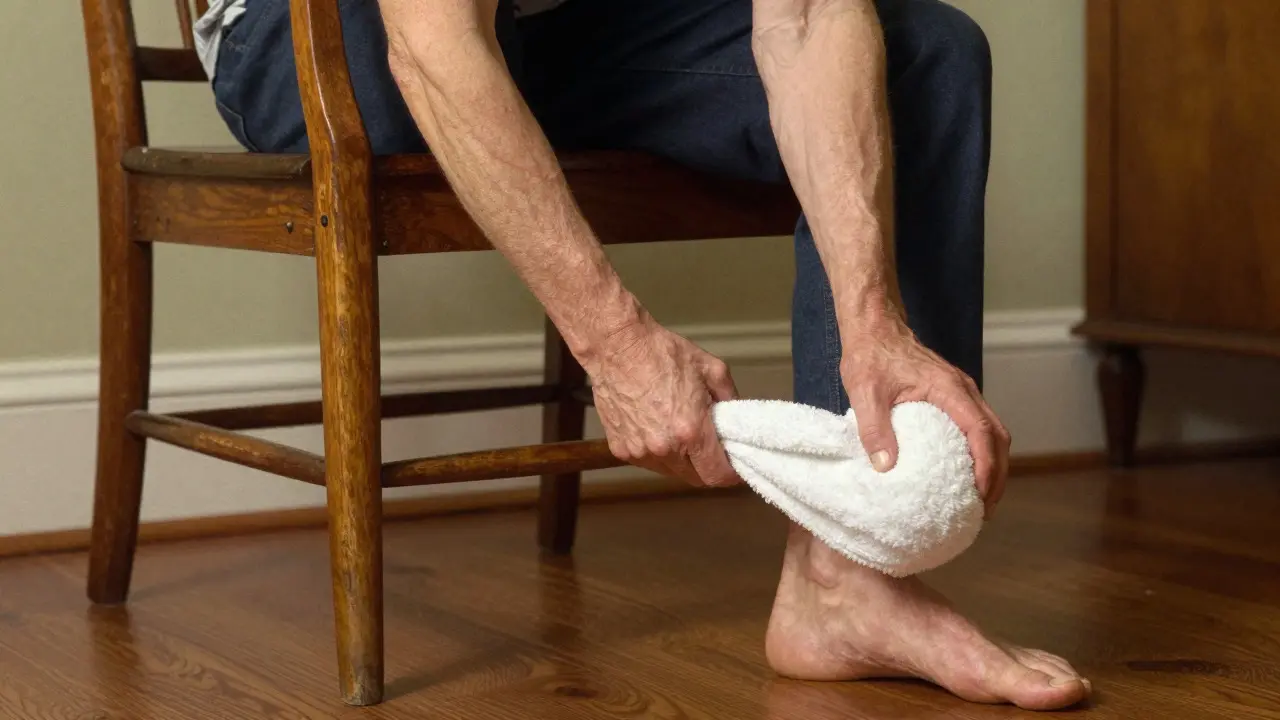
If there is one thing you must take away from this article, it is this: generic calf stretches are not enough. The American Academy of Orthopaedic Surgeons strongly recommends plantar fascia-specific stretching, which targets the plantar fascia directly through towel stretches with toes maximally dorsiflexed. Traditional Achilles tendon stretching alone is 23% less effective for pain reduction.
Here is how to do the correct stretch:
- Sit on a chair with your leg extended.
- Loop a towel around the ball of your foot.
- Pull the towel toward you while keeping your knee straight, focusing on pulling your toes back toward your shin (dorsiflexion).
- Hold for 10 seconds.
- Repeat 10 times.
- Do this 3 times a day.
Consistency is key. A protocol from the University of Rochester Medical Center showed that 92% adherence is needed for optimal results. Most people fail because they stop when the pain subsides slightly. You need to maintain this routine for at least 6-8 weeks. Studies show this specific method reduces pain by 37% more than standard calf stretches at just four weeks.
Footwear and Orthotics: What Actually Works
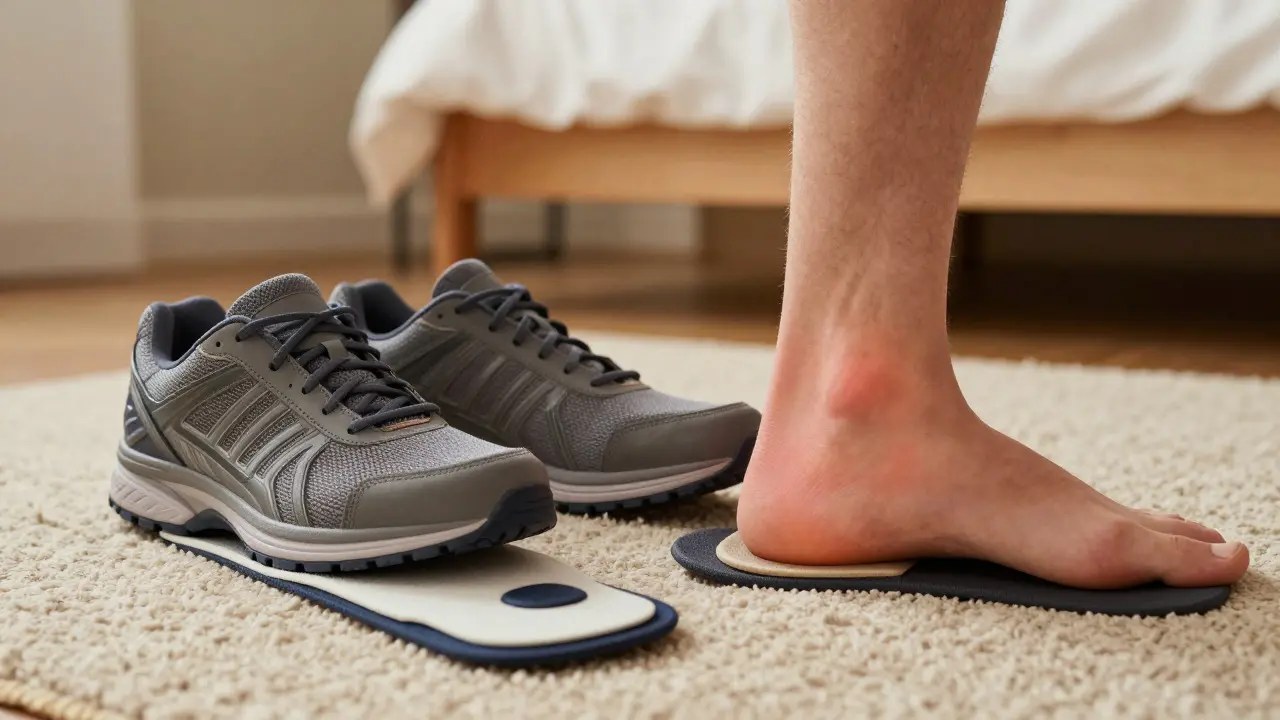
Your shoes play a massive role in either healing or hurting your feet. Barefoot walking on hard surfaces is the enemy. You need support. Look for shoes with a 10-15mm heel-to-toe drop and strong medial arch support. Models like the Brooks Adrenaline GTS and Hoka Clifton consistently rank high in patient satisfaction surveys due to their cushioning and stability.
What about orthotics? Custom orthotics provide better pain reduction (68%) compared to prefabricated ones (52%) at 12 weeks. However, custom pairs are expensive. For many, high-quality over-the-counter inserts are a sufficient starting point. The goal is to reduce the strain on the fascia by supporting the arch, preventing it from over-stretching with every step.
| Treatment | Effectiveness Rate | Time to Relief | Key Consideration |
|---|---|---|---|
| Fascia-Specific Stretching | 83% | 8 weeks | Zero cost; requires daily consistency |
| Night Splints | 72% | 6 weeks | Discomfort leads to 44% discontinuation rate |
| Corticosteroid Injections | 65-75% | Immediate (temporary) | 18% risk of fascia rupture; temporary relief |
| Shockwave Therapy | 70-80% | 3-4 treatments | Expensive ($2,500+); often not covered by insurance |
Night Splints and Weight Management
Night splints keep your foot flexed while you sleep, preventing the fascia from tightening overnight. They show a 72% improvement rate at six weeks. However, they are bulky and uncomfortable. Nearly half of users stop wearing them because they disrupt sleep. If you can tolerate them, they are highly effective, especially when combined with daytime stretching.
If you are overweight, losing weight is not just general health advice-it is direct medical treatment for heel pain. The American Academy of Family Physicians strongly recommends weight loss for patients with a BMI over 27. Data shows that reducing your BMI by just 1 point correlates with a 5.3% reduction in pain at six months. Every pound lost reduces the load on your plantar fascia significantly.
When Conservative Care Fails
If you have tried stretching, proper footwear, and orthotics for three months with no relief, it is time to escalate. Corticosteroid injections provide quick pain relief but come with risks. There is an 18% chance of plantar fascia rupture after multiple injections, and only 41% of patients are satisfied long-term because the relief is temporary (average 4.2 weeks).
A better second-line option is extracorporeal shockwave therapy (ESWT), which uses sound waves to stimulate healing in the plantar fascia. Recent guidelines now strongly recommend radial shockwave therapy after failed conservative care. It achieves a 78% success rate at 12 weeks. The downside is cost-expect to pay $2,500 to $3,500 out-of-pocket, as insurance coverage is limited.
Newer treatments like platelet-rich plasma (PRP) injections show promise, with 65% pain reduction at six months in recent trials. However, these cost $800-$1,200 per injection and rarely get covered by insurance. Surgery is a last resort, reserved for the small percentage of cases that do not respond to any non-operative treatment.
Avoiding Recurrence
Plantar fasciitis has a recurrence rate of 25-30%, usually within 12 months of feeling better. Why does it come back? Usually, people stop stretching once the pain goes away. The fascia needs maintenance. Keep doing your morning stretches even when you feel fine. Maintain your healthy weight. And never go back to unsupportive footwear.
How long does plantar fasciitis take to heal?
Most cases resolve within 6 to 12 months with consistent conservative treatment. About 90% of patients see full resolution within 10 months using structured stretching and lifestyle changes.
Are heel spurs the cause of my pain?
Rarely. Heel spurs are common in asymptomatic people. The pain comes from the degeneration of the soft tissue (plantar fascia), not the bone spur itself. Treating the fascia relieves the pain regardless of the spur's presence.
Should I ice my heel?
Icing can help manage acute pain after activity, but it does not fix the underlying degeneration. Focus more on mechanical relief through stretching and supportive footwear than on anti-inflammatory measures alone.
Can cortisone injections make it worse?
Yes. Multiple corticosteroid injections carry an 18% risk of rupturing the plantar fascia. They also weaken the fat pad under the heel, leading to increased pain later. Use them sparingly and only after failing conservative care.
What shoes are best for plantar fasciitis?
Look for shoes with a 10-15mm heel-to-toe drop and firm arch support. Avoid flat, flexible shoes like Converse or barefoot walking. Brands like Brooks and Hoka are frequently recommended by patients and physical therapists for their cushioning and stability.