Pregnancy Medication Safety Alerts: What They Mean and How to Act

Imagine you are two weeks pregnant and your doctor hands you a prescription for a chronic condition. You scan the label, but instead of a simple "safe" or "unsafe," you see dense paragraphs about fetal risk and limited data. This is the reality for millions of women today. The old letter system (A through X) that many remember is gone, replaced by a more nuanced but often confusing framework known as pregnancy medication safety alerts. These alerts are not just bureaucratic paperwork; they are critical signals from regulatory bodies like the FDA and EMA that help doctors and patients weigh the risks of treating a mother versus protecting a developing fetus.
The core problem is simple: we don't know enough. Because pregnant women were historically excluded from clinical trials, only about 5% to 10% of FDA-approved drugs have sufficient human pregnancy safety data. This gap creates anxiety. When a safety alert goes out, it doesn't always mean "stop taking this drug." Sometimes it means "we found new evidence," or "the risk is higher than we thought," or even "this drug is actually safer than previously believed." Understanding these nuances is essential for making informed decisions without falling into the trap of fear-driven discontinuation, which can sometimes be more harmful than the medication itself.
Why the Old Letter System Failed
For decades, the U.S. Food and Drug Administration (FDA) used a letter classification system ranging from A (safest) to X (contraindicated). It seemed straightforward, but it was deeply flawed. Most drugs fell into Category C, which meant there wasn't enough data to prove safety or danger. To many patients, Category C sounded like a warning sign, leading them to stop essential medications unnecessarily. In fact, studies showed that the ambiguity of these letters caused widespread misinterpretation. By 2015, the FDA decided to retire this system entirely.
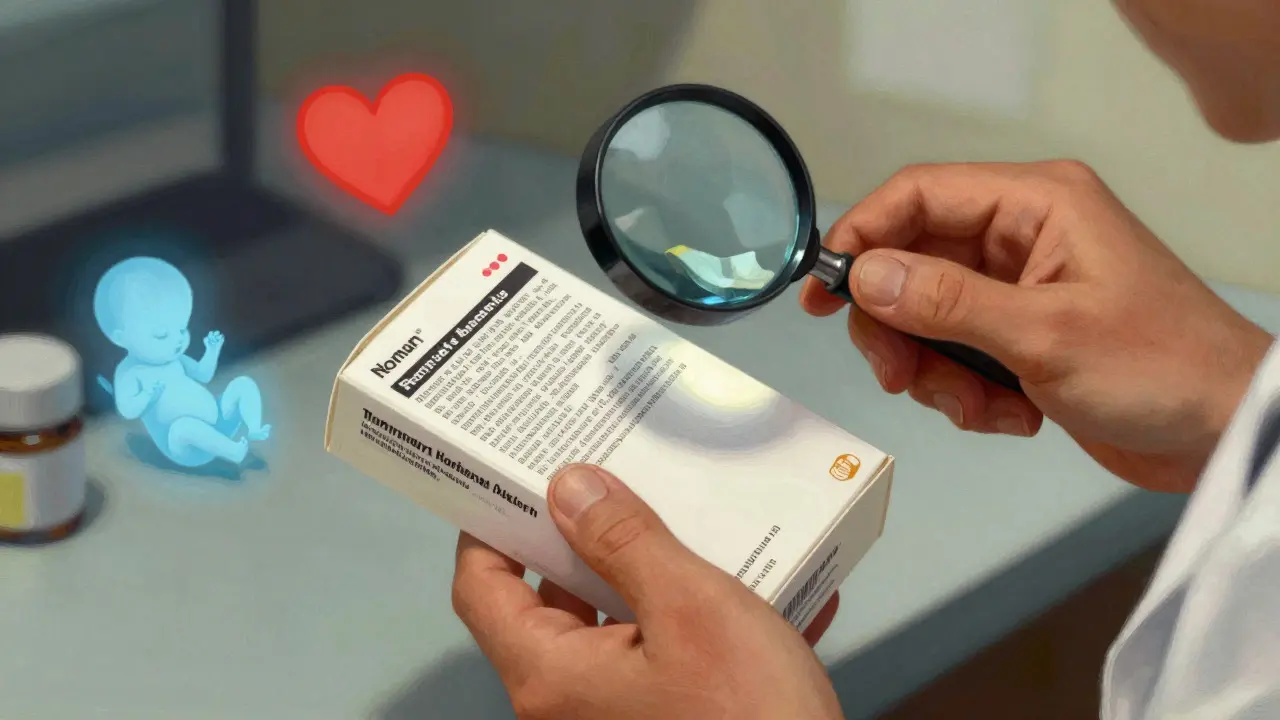
The replacement is the Pregnancy and Lactation Labeling Rule (PLLR). Instead of a single letter, drug labels now include three detailed narrative sections: Pregnancy, Lactation, and Females and Males of Reproductive Potential. These sections describe the actual risks based on available animal and human data. For example, a label might state that while no large-scale human studies exist, animal studies showed no adverse effects at doses up to ten times the human dose. This shift aims to provide context rather than a binary verdict, allowing healthcare providers to make individualized judgments based on the specific clinical scenario.
How Safety Alerts Are Triggered
Safety alerts don't appear out of thin air. They are the result of rigorous monitoring systems designed to catch rare or delayed side effects that slip past initial clinical trials. One of the primary tools for this is the pregnancy exposure registry. As of late 2023, the FDA maintains 38 active registries. These are specialized databases where doctors enroll pregnant patients who take specific high-risk or newly approved drugs. Participants typically enroll within 28 days of confirming pregnancy and follow up through delivery and postpartum care.
However, these registries capture less than 1% of all pregnancy medication exposures. This low participation rate creates significant data gaps. When a pattern emerges in a registry-such as an increase in neural tube defects among users of valproate-a formal safety alert may be issued. The European Medicines Agency (EMA) also plays a crucial role, requiring manufacturers to monitor post-authorization data actively. If a drug shows teratogenic potential in animal studies or has a mechanism of action suggesting fetal risk, the manufacturer must include a summary of potential pregnancy risks in their pharmacovigilance documents. This continuous surveillance is what allows regulators to issue timely warnings when new evidence arises.
Interpreting the Risk: Data vs. Fear
One of the biggest challenges in interpreting these alerts is distinguishing between absolute risk and relative risk. A common misconception is that if a drug increases the risk of a birth defect from 0.1% to 1%, the risk is "ten times higher," which sounds terrifying. But in absolute terms, the chance of having a baby with that specific defect remains low. Context matters. For instance, untreated maternal conditions like epilepsy, hypertension, or depression can pose greater risks to both mother and fetus than properly managed medication use. The American College of Medical Toxicology emphasizes that no medication is 100% safe, but stopping necessary treatment can lead to complications that outweigh the drug's potential harm.
Recent data highlights this tension. A 2021 survey found that 29% of women with chronic conditions stopped necessary medications upon confirming pregnancy, often due to fear rather than medical advice. Conversely, a study from Massachusetts General Hospital tracking 12,500 patients found that moving away from the letter system reduced inappropriate medication discontinuation by 18%. This suggests that clearer, data-driven information helps patients stay on track with their treatments. The key is to view safety alerts as prompts for conversation with your provider, not as immediate commands to stop therapy.
| Feature | U.S. FDA (PLLR) | European EMA |
|---|---|---|
| Labeling Structure | Narrative sections for Pregnancy, Lactation, and Reproductive Potential | Requires specific pregnancy prevention measures for high-risk products |
| Data Requirement | Mandatory submission of pregnancy data during approval/renewal | Active surveillance required for drugs with teratogenic potential in animals |
| Prevention Measures | Risk Evaluation and Mitigation Strategies (REMS) for high-risk drugs | Mandatory contraception and testing for drugs like lenalidomide |
| Compliance Status | 38 active exposure registries maintained | 41% of holders failed minimum monitoring requirements in 2022 audit |
Practical Steps for Patients and Providers
So, how do you navigate this landscape? First, treat your first prenatal visit as a full medication reconciliation. This isn't just about prescriptions; it includes over-the-counter pain relievers, herbal supplements, and vitamins. The American College of Obstetricians and Gynecologists (ACOG) recommends this process takes about 22 minutes to complete thoroughly. Bring a list of everything you take, including dosages and frequencies. This gives your provider a complete picture to assess against current safety alerts.
Second, read the label, but don't panic. Look for the "Pregnancy" section specifically. If the text mentions "limited data" or "animal studies," it’s a signal to discuss the benefit-to-risk ratio with your doctor. Third, consider joining a pregnancy exposure registry if prescribed a monitored drug. While participation is voluntary, it contributes to the collective knowledge base that makes future alerts more accurate. Finally, keep folic acid supplementation consistent. Taking 800 mcg daily through at least the 12th week is standard practice to prevent neural tube defects, a baseline safety measure independent of other medication choices.

The Future of Monitoring and Technology
The field is evolving rapidly. The FDA launched a pilot program in 2023 requiring real-time safety data submission for high-risk medications, mandating weekly reporting instead of quarterly updates. This faster feedback loop could significantly shorten the delay between identifying a risk and issuing an alert. Additionally, the NIH’s PREGNET initiative, launching in early 2024, aims to connect 45 academic medical centers to collect real-world data on 100,000 pregnancies over five years. This massive dataset will help fill the gaps left by traditional registries.
Artificial intelligence is also entering the picture. Companies like IBM Watson Health project that AI models analyzing millions of de-identified records could predict medication risks with 70% accuracy by 2027. While not a replacement for clinical judgment, these tools could help flag potential interactions or risks earlier. However, funding remains a challenge. The March of Dimes estimates a $312 million annual funding gap for comprehensive monitoring through 2030. Without sustained investment, the speed and accuracy of these safety alerts may remain limited, making patient education and provider vigilance more important than ever.
Frequently Asked Questions
What does a pregnancy medication safety alert actually mean?
A safety alert indicates that new evidence has emerged regarding a drug's use during pregnancy. It does not automatically mean the drug is unsafe. It may signal a need for closer monitoring, a change in dosage, or, in rare cases, a switch to an alternative therapy. Always consult your healthcare provider to interpret the alert in the context of your specific health needs.
Are pregnancy exposure registries mandatory?
For most drugs, enrollment in a pregnancy exposure registry is voluntary. However, some high-risk medications under a Risk Evaluation and Mitigation Strategy (REMS) may require enrollment as part of the prescribing process. Participating helps researchers gather real-world data to improve future safety guidelines.
Should I stop my medication if I find out I'm pregnant?
Do not stop any medication without talking to your doctor. Stopping essential treatments for conditions like asthma, diabetes, or mental health disorders can pose significant risks to both you and the baby. Your provider will evaluate the current safety data and determine if the benefits of continuing the medication outweigh the potential risks.
What is the difference between the FDA and EMA approaches to pregnancy safety?
The FDA uses the Pregnancy and Lactation Labeling Rule (PLLR), which provides detailed narrative information on drug labels. The EMA requires stricter prevention measures for high-risk drugs, such as mandatory contraception and regular pregnancy testing. Both aim to minimize fetal exposure but differ in their regulatory mechanisms and enforcement consistency across regions.
How much data do we actually have on drug safety in pregnancy?
Surprisingly little. Only about 5% to 10% of FDA-approved drugs have sufficient human pregnancy safety data. Most decisions are based on animal studies, case reports, or extrapolations from non-pregnant populations. This is why ongoing monitoring through registries and real-world data collection is so critical for improving future guidance.