Probiotics and Immunosuppressants: Understanding Infection Risks and Safe Use
Immunosuppressant Probiotic Risk Checker
This tool helps you understand your personal risk of probiotic-related infections based on medical conditions and treatments. Always consult your healthcare provider before using probiotics.
Category 4: Low Risk
Safe for standard probiotic use
Category 1: Highest Risk
Absolute contraindication
Category 2: Moderate Risk
Only with specialist approval
Category 3: Lower Risk
Single-strain probiotics only
Critical Safety Notes
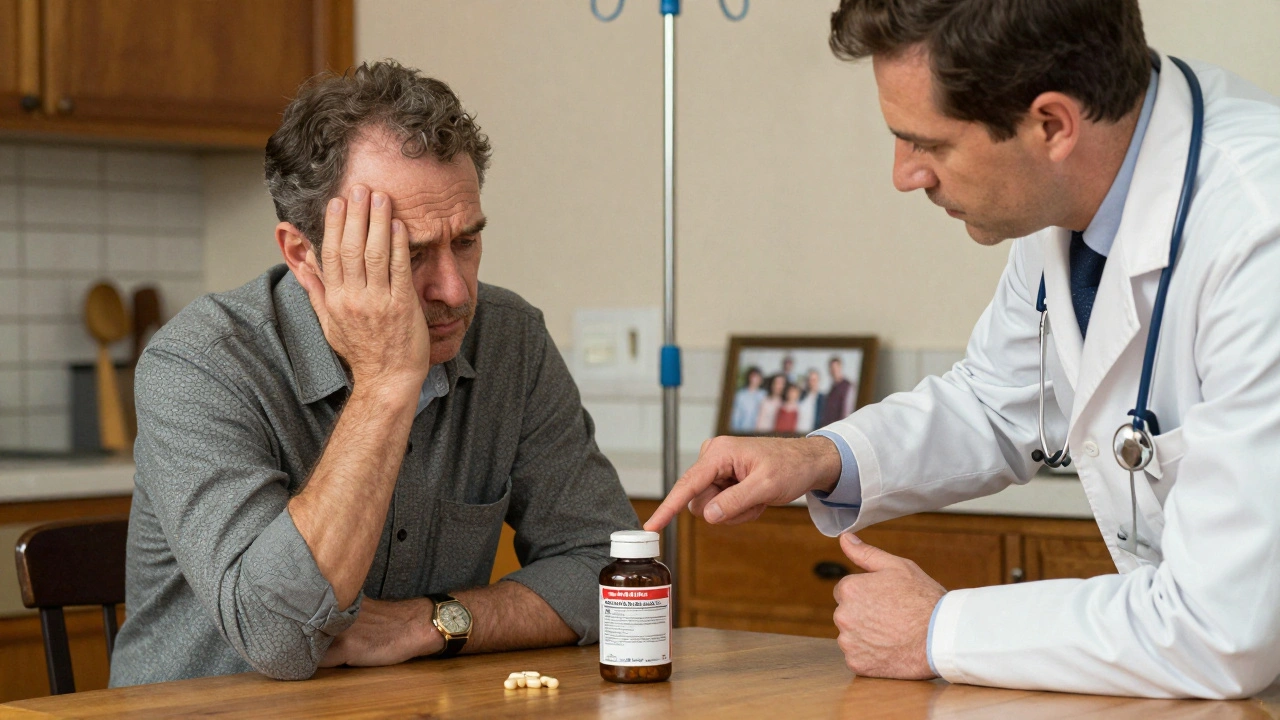
Probiotics Aren’t Always Safe When You’re on Immunosuppressants
People take probiotics to help with digestion, boost immunity, or recover from antibiotics. But if you’re on immunosuppressants - whether after a transplant, for lupus, rheumatoid arthritis, or cancer treatment - those same probiotics can turn dangerous. It’s not a myth. It’s not hype. It’s real, documented risk. In 2021, a review of 47 cases of probiotic-related infections found that 83% happened in people with weakened immune systems. And 36% of those cases were fatal.
Probiotics are live microbes. That’s the whole point. They’re supposed to colonize your gut, crowd out bad bacteria, and train your immune system. But when your immune system is turned down by drugs like tacrolimus, mycophenolate, or prednisone, those "good" microbes can slip through your gut lining and start growing where they shouldn’t - in your bloodstream, your heart, or your pancreas. This isn’t rare. It’s been seen in transplant patients, chemotherapy recipients, and people with advanced HIV.
Which Probiotics Are Most Dangerous?
Not all probiotics are created equal. Some strains carry far more risk than others, especially in people with weakened immunity.
Saccharomyces boulardii - a yeast used in many supplements - is the biggest red flag. It’s linked to fungemia (yeast in the blood), especially in people with central lines (IV catheters). One 2018 review found a 22% fatality rate in these cases. The FDA issued a safety alert in July 2023 requiring warning labels on all products containing this yeast.
Lactobacillus rhamnosus GG - one of the most popular strains - caused 28 of the 47 documented infections between 2000 and 2020. It’s found in over 70% of commercial probiotics. While safe for healthy people, it’s been tied to sepsis in transplant recipients and those on strong immunosuppressants.
Even Bifidobacterium, often considered gentler, has caused bloodstream infections in neutropenic cancer patients. The risk isn’t about the brand or the dose - it’s about your immune status and the strain’s ability to survive outside the gut.
Who’s at Highest Risk?
Not everyone on immunosuppressants needs to avoid probiotics. But some groups are in clear danger.
- Recent transplant patients - especially in the first 3 months. Your body is fighting to accept the new organ, and your immune system is at its lowest.
- People with neutropenia - absolute neutrophil count below 500 cells/µL. This is common during chemotherapy. At 87% of U.S. cancer centers, probiotics are banned during this time.
- Patients with central venous catheters - any probiotic can hitch a ride down the line and cause a deadly bloodstream infection. Saccharomyces boulardii raises this risk by 27%.
- Those with advanced HIV - CD4 counts under 100 cells/µL. Risk of fungemia jumps 3.8 times.
- People on multiple immunosuppressants - like a transplant patient taking three drugs at once.
On the other hand, people with stable autoimmune disease on a single drug - like methotrexate alone - may be okay with certain strains. But even then, you need medical approval.
What About Liver Transplant Patients?
Here’s the twist: one group shows clear benefit. Liver transplant recipients in a 2022 meta-analysis had a 34% lower rate of bacterial infections when taking specific probiotics - and no increase in serious side effects. Why? Their gut barrier tends to stay more intact, and their immune suppression is less extreme than in bone marrow or stem cell transplants.
But this doesn’t mean all liver transplant patients should take probiotics. It means the risk-benefit balance is different. Only certain strains, under medical supervision, might help. Don’t assume you’re in this group unless your doctor confirms it.
What Do Experts Actually Recommend?
There’s no one-size-fits-all answer. But major medical groups agree on one thing: don’t guess.
The Infectious Diseases Society of America (IDSA) 2023 guidelines break patients into four risk levels:
- Category 1 - Highest Risk: Neutropenia under 500, recent stem cell transplant, central lines. Absolute contraindication. Do not use.
- Category 2 - Moderate Risk: Solid organ transplant within 3 months, severe autoimmune disease on multiple drugs. Only use with infectious disease specialist approval.
- Category 3 - Lower Risk: Stable autoimmune disease on one drug, CD4 over 200. Single-strain probiotics only, with doctor’s OK.
- Category 4 - Low Risk: No immunosuppression. Standard use is fine.
And here’s a critical detail: avoid multi-strain products. A 2022 study showed single-strain probiotics had 63% less chance of crossing the gut barrier. If you’re cleared to use them, pick one strain - not a 12-strain blend.
What About Postbiotics? The Safer Alternative?
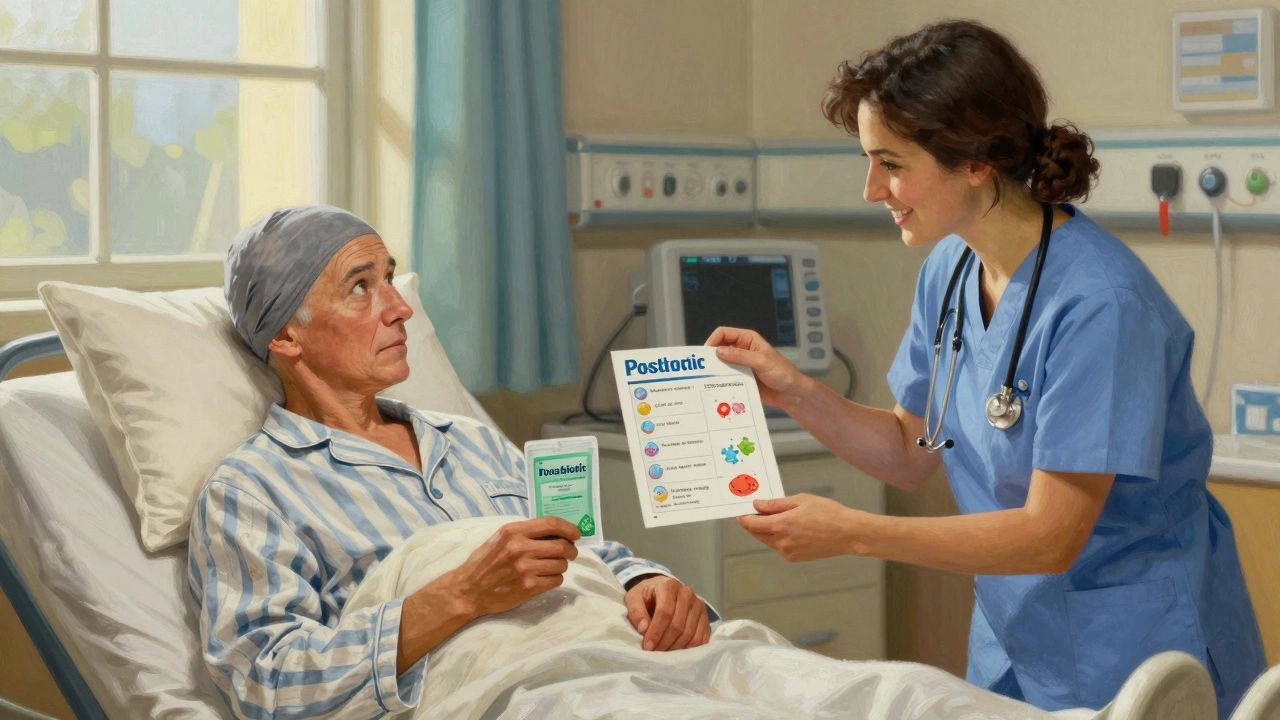
There’s new hope. Postbiotics are not live microbes. They’re the dead cells, enzymes, and metabolites that probiotics leave behind. They can still help with gut health and immune balance - but without the risk of infection.
A phase 2 trial (NCT04873011) tested a postbiotic in immunocompromised patients and found a 40% drop in C. difficile infections - with zero cases of bloodstream infection. No fever. No sepsis. Just benefit.
These aren’t widely available yet, but they’re the future. If you’re on immunosuppressants and want gut support, ask your doctor about postbiotic options. They’re not marketed like probiotics, but they’re gaining traction in hospitals.
What Should You Do?
Here’s the practical checklist - no fluff, just action.
- Stop taking probiotics immediately if you’re in Category 1 or 2 risk and haven’t talked to your doctor.
- Never self-prescribe. Even "natural" supplements can be deadly here.
- Ask for the exact strain. If your doctor says "yes," make sure they specify the strain (e.g., Lactobacillus rhamnosus GG ATCC 53103), not just "Lactobacillus." Different strains have different safety profiles.
- Watch for fever. If you develop a temperature over 38.3°C (101°F) after starting a probiotic, stop it and call your doctor. This could be the first sign of infection.
- Check your supplement label. If it contains Saccharomyces boulardii, throw it out - unless your infectious disease specialist says otherwise.
- Consider postbiotics. Ask if there’s a clinically tested, non-live alternative available.
And remember: if your doctor says "it’s fine," ask why. Request the evidence. Is it based on a study? A guideline? Or just their personal opinion? You have the right to know.

Why Is This So Confusing?
Because the market is a mess. Probiotics are sold as dietary supplements - not drugs. That means the FDA doesn’t require safety testing for people on immunosuppressants. Companies can say "supports immunity" without proving it. A 2023 survey found only 62% of U.S. hospitals have formal probiotic protocols for immunosuppressed patients. The rest? They’re guessing.
And the labels? They rarely mention risks. You won’t see "Do not use if you have a central line" on a bottle of probiotic gummies. That’s why you need to talk to your care team - not a supplement store clerk.
Real Stories, Real Consequences
A Reddit user named "ChronicWarrior87" wrote: "Probiotics gave me sepsis after my kidney transplant in 2021 - don’t risk it." He spent weeks in the ICU. Another user, "RheumaFighter," says they’ve taken probiotics for three years on methotrexate with no issues. Both are true. But one took a gamble. The other didn’t.
There’s no universal answer. But the data is clear: if your immune system is suppressed, the risk of infection from probiotics is real - and sometimes deadly. The safest choice isn’t always the most popular one.
What’s Next?
A new global registry called PROTECT is tracking 5,000 immunosuppressed patients across 47 centers to finally answer these questions. Preliminary results are expected in mid-2025. Until then, err on the side of caution.
Don’t stop caring about your gut health. But do stop assuming probiotics are safe just because they’re "natural." Your immune system isn’t just weak - it’s vulnerable. And what helps one person could harm you.
Ask your doctor for a clear, personalized plan. If they can’t give you one, ask for a referral to an infectious disease specialist. You’re not being paranoid. You’re being smart.
Kumar Shubhranshu
December 5, 2025 AT 16:42Mayur Panchamia
December 7, 2025 AT 10:52Karen Mitchell
December 8, 2025 AT 22:35Geraldine Trainer-Cooper
December 10, 2025 AT 14:47Nava Jothy
December 12, 2025 AT 08:16Kenny Pakade
December 13, 2025 AT 23:37brenda olvera
December 15, 2025 AT 09:11Myles White
December 15, 2025 AT 17:51olive ashley
December 16, 2025 AT 18:31Brooke Evers
December 17, 2025 AT 17:09Chris Park
December 18, 2025 AT 17:40Saketh Sai Rachapudi
December 19, 2025 AT 02:06joanne humphreys
December 19, 2025 AT 10:31Nigel ntini
December 20, 2025 AT 00:44Priya Ranjan
December 22, 2025 AT 00:18Myles White
December 22, 2025 AT 14:59