Sick Day Rules for Diabetes Medications: How to Prevent DKA and AKI During Illness
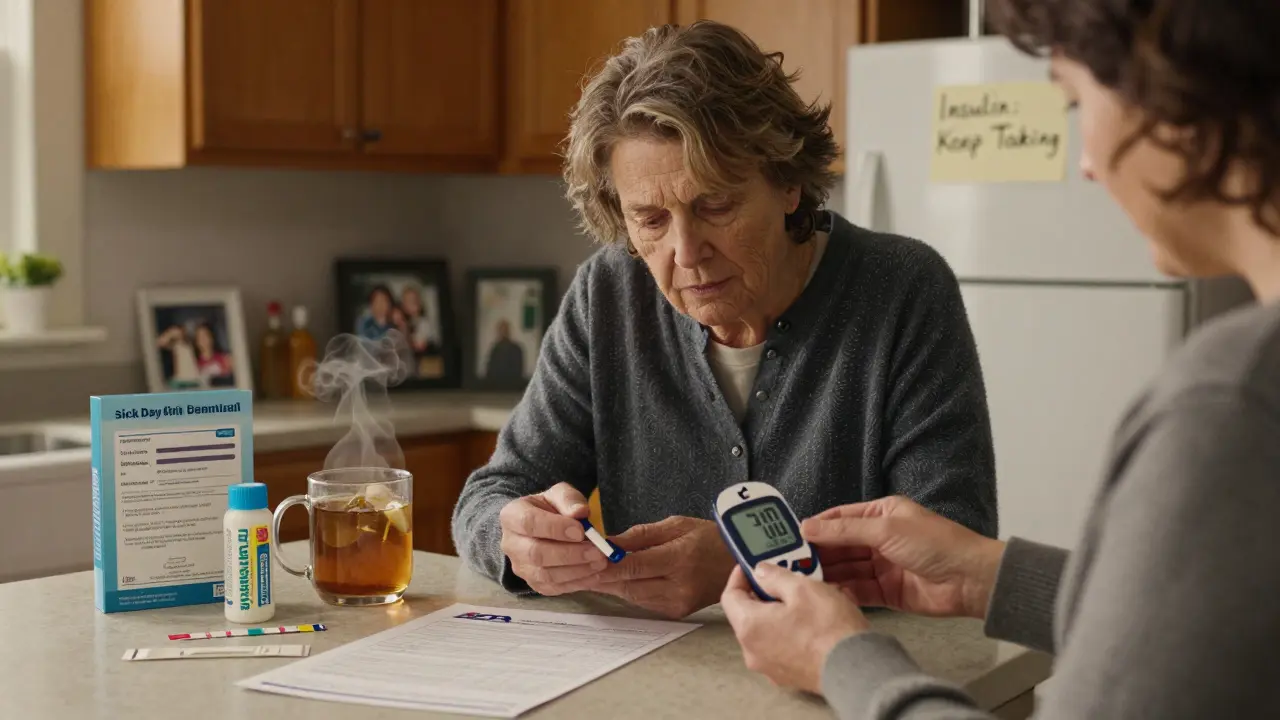
Sick Day Medication Guide for Diabetes
How This Tool Works
This guide helps you determine which diabetes medications to adjust when you're sick. Based on your symptoms and current medications, we'll provide personalized recommendations to prevent DKA and AKI.
Medication Assessment
When you’re sick with a cold, flu, or stomach bug, your body is under stress. For people with diabetes, that stress can turn a minor illness into a medical emergency. Diabetic ketoacidosis (DKA) and acute kidney injury (AKI) don’t wait for you to feel better-they can strike fast, especially if your diabetes medications aren’t managed correctly. The good news? You can prevent both with clear, simple rules. The bad news? Many people don’t know them-or worse, they’ve gotten conflicting advice from different doctors.
Why Illness Changes Everything for Diabetes Medications
Your body doesn’t care if you’re sick or not-it still needs insulin to process sugar. When you’re ill, your liver dumps extra glucose into your bloodstream. At the same time, you might not be eating, drinking, or taking your meds like usual. That’s a perfect storm for high blood sugar and ketone buildup. For type 1 diabetes, this can lead to DKA. For type 2, especially if you’re on certain meds, it can trigger AKI.
A 2022 JAMA Internal Medicine study of nearly 48,000 hospital admissions found that people with diabetes are 300% more likely to develop DKA during illness. The risk of AKI jumps by 200%. And here’s the kicker: 12.7% of all diabetes-related hospitalizations happen because someone kept taking the wrong meds-or stopped the wrong ones-when they were sick.
Which Medications to Stop, Pause, or Keep
Not all diabetes meds act the same when you’re sick. Some are safe. Some are dangerous. And some can kill you if you keep taking them without fluids.
- Metformin: Stop immediately if you’re vomiting, have diarrhea, or have a fever. Why? Metformin can cause lactic acidosis when your kidneys are under stress. A 2019 NEJM study showed an 8.3-fold increase in risk when creatinine levels rise above 1.5 mg/dL. Even if you feel fine, if you can’t keep fluids down, stop it.
- SGLT2 inhibitors (empagliflozin, dapagliflozin, canagliflozin): These drugs increase glucose loss through urine. During illness, that can lead to euglycemic DKA-dangerously high ketones even when your blood sugar looks normal. The FDA issued a safety alert in 2021 after 1,247 adverse events linked to these drugs during illness. Discontinue at the first sign of fever, nausea, or vomiting. Don’t wait.
- ACE inhibitors and ARBs (lisinopril, losartan, valsartan): These blood pressure meds protect your kidneys when you’re healthy. But when you’re dehydrated? They can crash your kidney function. A 2022 meta-analysis found a 40% higher risk of AKI when fluid intake drops below 1,500 mL per day. Pause them if you’re not drinking enough.
- Insulin: This one’s different. You almost always need to keep taking insulin-even more than usual. Type 1 patients should increase basal insulin by 10-20% every 4 hours if blood sugar is above 15 mmol/L (270 mg/dL). Type 2 patients on insulin often need higher doses too. A 2023 Diabetes Care trial showed 68% of type 2 patients needed increased insulin during illness.
- Sulfonylureas (glimepiride, glyburide): These can cause low blood sugar when you’re not eating. If you’re not eating, talk to your provider about reducing the dose. Don’t stop cold turkey-just lower it.
How Often to Check Blood Sugar and Ketones
Checking your blood sugar once a day during illness? That’s not enough. You need to check every 2 to 4 hours-minimum six times a day. Set alarms on your phone. Write it down. Use the ADA’s Sick Day Log to track trends.
Target range during illness? 100-180 mg/dL (5.6-10 mmol/L). It’s okay if it’s a little higher. What’s not okay is letting it climb past 240 mg/dL (13.3 mmol/L) without checking ketones.
When your blood sugar hits that level, test for ketones. Use urine strips or a blood ketone meter. If your blood ketones are above 0.6 mmol/L or urine ketones above 1.5 mmol/L, call your doctor or go to the ER. Don’t wait. Don’t assume it’s just a bad day. DKA doesn’t wait.
Hydration Is Non-Negotiable
You can’t manage diabetes without fluids. When you’re sick, your body loses water through fever, vomiting, or breathing faster. Dehydration makes everything worse-higher blood sugar, higher ketones, higher risk of kidney injury.
Drink at least 1,500 mL (about 6-7 cups) of fluid every day. Water is best. Sugar-free drinks like diet soda, broth, or electrolyte solutions (Nuun, Pedialyte) work too. Avoid sugary drinks unless you’re treating low blood sugar.
If you can’t keep fluids down for more than 4 hours, call your provider. If you haven’t urinated in 8 hours, that’s a red flag for AKI. Swelling in your legs or ankles? That’s another sign your kidneys are struggling.
What to Do If You Can’t Eat
You don’t need to eat three meals a day when you’re sick. But you do need carbs-about 15 grams every hour if you can’t eat solid food. Why? Your body still needs fuel, and without carbs, it breaks down fat, which makes ketones.
Keep these on hand:
- Apple juice (4 oz = 15g carbs)
- Regular soda (not diet)
- Glucose tablets or gel
- Applesauce or yogurt
If your blood sugar drops below 70 mg/dL, take 15g of fast-acting carbs. Wait 15 minutes. Check again. Repeat if needed. This is the 15-15 rule-and it works even when you’re too sick to think clearly.

When to Go to the ER
You don’t need to panic over every high reading. But some signs mean it’s time to get help now:
- Blood sugar below 70 mg/dL and doesn’t improve after 30g of carbs
- Ketones above 1.5 mmol/L for more than 2 hours
- Vomiting for more than 4 hours
- Diarrhea for more than 6 hours
- Confusion, trouble breathing, fruity-smelling breath
- Not urinating for 8+ hours
If you’re unsure, call your doctor. If you can’t reach them, go to urgent care or the ER. It’s better to be safe than sorry. DKA and AKI don’t care if it’s 2 a.m. or a holiday.
Prepare a Sick Day Kit Before You Get Sick
Waiting until you’re vomiting to figure out what to do? That’s how people end up in the hospital.
Build a sick day kit by October 1-before flu season hits. Include:
- Glucose meter with 50+ test strips
- Ketone test strips (urine or blood)
- 7-day supply of all your diabetes meds (in original bottles)
- 6 bottles of sugar-free drinks (12 oz each)
- Electrolyte packets (Nuun, Pedialyte)
- 15g carb snacks (juice boxes, glucose gel, crackers)
- ADA Sick Day Log (print or save on phone)
Keep it in your fridge or pantry. Label it. Tell a family member where it is. If you live alone, give a copy of your sick day plan to a neighbor.
Why Everyone Gives You Different Advice
You’ve probably heard conflicting things. Your endocrinologist says stop metformin. Your primary care doctor says keep it. The ADA website says one thing. Your Reddit thread says another.
Here’s why: guidelines aren’t perfectly aligned. The ADA says you can keep metformin during mild illness. The IDF says stop it for any illness. NICE (UK) says pause meds if you drink less than 1,200 mL/day. The Joslin Center says, “Just take your meds unless your provider says otherwise”-which confuses 28% of patients.
And insulin? A 2023 audit found 43% of clinics give conflicting advice on how to adjust insulin during illness. That’s not your fault. It’s the system’s failure.
Here’s what to do: Write down your own plan with your provider before you get sick. Ask: “Which of my meds do I stop? When? What’s my ketone threshold? Who do I call at night?” Get it in writing. Save it on your phone. Stick it on your fridge.
What Experts Are Saying
Dr. Robert Gabbay (ADA): “The 5-day rule is non-negotiable. Restarting meds after 5 days without checking with your doctor causes 18% of preventable AKI cases.”
Dr. Anne Peters (USC): “Waiting 24 hours to stop an SGLT2 inhibitor after vomiting increases DKA risk by 300%.”
Dr. Irl Hirsch (UW Medicine): “Current guidelines treat everyone the same. Someone taking 300mg of metformin isn’t at the same risk as someone on 2000mg. We need personalized rules.”
The truth? The rules are solid for most people. But they’re not perfect. And they don’t account for older adults with heart or kidney disease-who make up the fastest-growing group of diabetes patients.
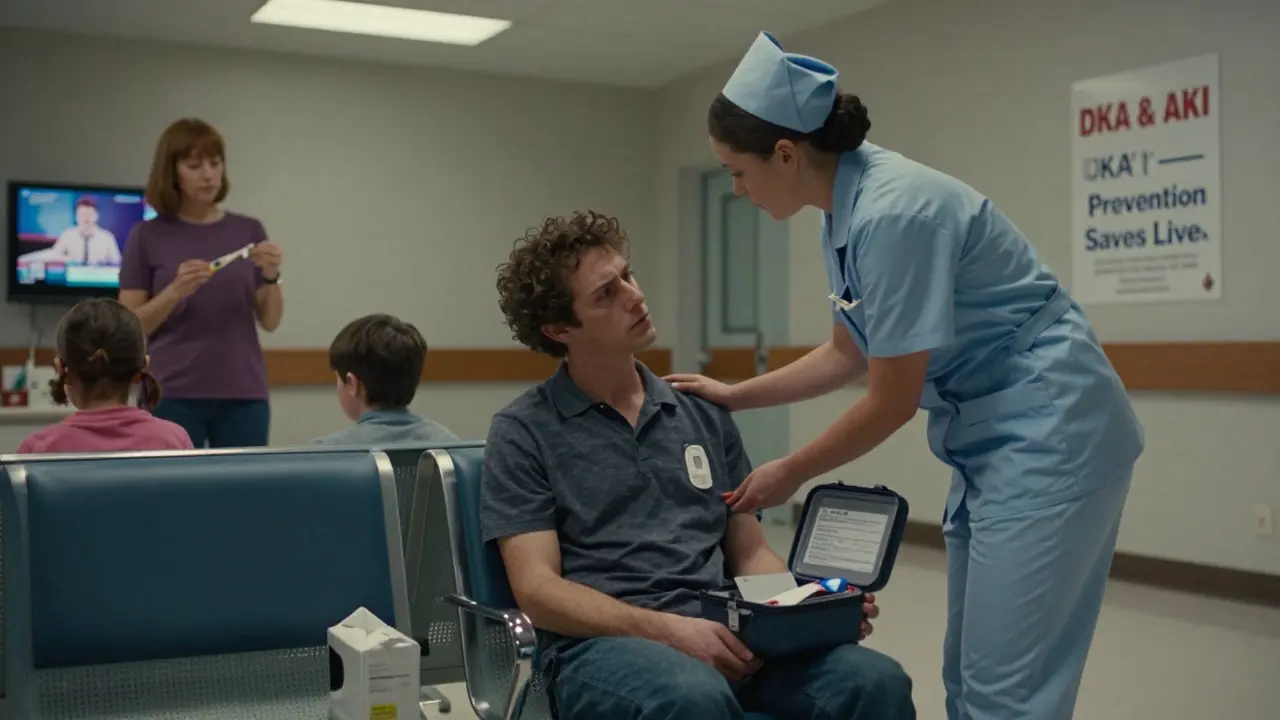
Real Stories, Real Consequences
One user on the ADA community wrote: “I stopped metformin during the stomach flu but didn’t know my lisinopril needed pausing too. I ended up in the hospital for three days with AKI.”
Another on Reddit said: “My endo said keep metformin. The ADA says stop. Who do I believe when I’m vomiting?”
These aren’t rare. A 2023 survey of 2,500 patients found 62% had a medication mismanagement incident during illness. Nearly 1 in 4 needed emergency care.
On the flip side, 78% of patients who used a prepared sick day kit avoided hospitalization. Preparation saves lives.
What’s Coming Next
By 2025, the ADA plans to update guidelines to include GLP-1 receptor agonists (like semaglutide and tirzepatide)-meds used by over 22 million Americans. Right now, there’s no clear sick day advice for them.
Apps like Glooko’s Illness Advisor (in beta testing) are starting to offer personalized alerts based on real-time glucose data. That’s the future: smart, adaptive, individualized.
But until then? Stick to the basics. Know your meds. Check your numbers. Drink water. Have a plan. And don’t trust advice from strangers online.
Frequently Asked Questions
Can I keep taking metformin if I have a mild cold?
No. Even a mild cold can cause dehydration or fever, which raises your risk of lactic acidosis. Stop metformin at the first sign of illness-whether it’s a runny nose or vomiting. Restart only after you’ve been eating and drinking normally for 24 hours, and your doctor says it’s safe.
What if I’m on SGLT2 inhibitors and I get sick? Do I need to go to the hospital?
Discontinue the SGLT2 inhibitor immediately. Test your ketones. If they’re above 0.6 mmol/L, call your provider. You don’t always need the ER-but you do need medical advice within hours. Euglycemic DKA can happen even if your blood sugar looks okay. Don’t wait for symptoms to get worse.
How do I know if I’m developing AKI?
Look for three signs: not urinating much (less than 300 mL in 8 hours), swelling in your legs or ankles, and feeling unusually tired or confused. These are early warning signs your kidneys are struggling. If you’re on ACE inhibitors or ARBs and you’re not drinking enough fluids, your risk goes up fast. Call your doctor before it becomes an emergency.
Should I take insulin if I’m not eating?
Yes. You still need insulin to stop your body from breaking down fat and making ketones. Even if you’re not eating, your liver is still releasing sugar. Skip insulin, and you risk DKA. Adjust the dose based on your blood sugar-don’t stop it. Talk to your provider ahead of time about how much to reduce if you’re not eating.
Is it safe to drink alcohol when I’m sick and have diabetes?
No. Alcohol can mask low blood sugar, worsen dehydration, and increase the risk of lactic acidosis if you’re on metformin. It also interferes with your liver’s ability to release glucose. Stick to water, broth, or sugar-free electrolyte drinks. No exceptions.
What if my provider doesn’t give me a sick day plan?
Ask for one. Say: “I want a written plan for what to do if I get sick-specifically which meds to stop, when to check ketones, and who to call.” If they say no, go to a diabetes educator or a clinic that specializes in diabetes care. Your life depends on this plan. Don’t accept vague advice.
Next Steps
If you have diabetes, do this today:
- Look at your medication list. Identify which ones need to be stopped during illness.
- Check your kit: do you have ketone strips? Enough glucose test strips? Sugar-free fluids?
- Call your doctor and ask: “What’s my sick day plan?” Get it in writing.
- Set phone alarms to check your blood sugar every 3 hours during illness.
- Save the ADA’s 24/7 helpline number: 1-800-DIABETES.
Being sick is stressful enough. You shouldn’t have to guess whether your medicine will save you-or hurt you. Know your plan. Be ready. Your body will thank you.
Ryan Pagan
January 30, 2026 AT 04:33Let me tell you something straight - this post is a goddamn lifesaver. I used to think ‘just drink water’ was enough when I got sick. Then I ended up in the ER with euglycemic DKA because I kept taking my dapagliflozin like it was Advil. The FDA alert? Yeah, I ignored it. Don’t be me. Stop the SGLT2 inhibitors the second you feel off. No excuses. Your kidneys don’t care about your ‘I’ll just tough it out’ attitude.
Megan Brooks
January 30, 2026 AT 13:41This is one of the most thoughtful, meticulously researched pieces I’ve read on diabetes management during illness. The distinction between metformin and SGLT2 inhibitors is critical - and yet so rarely communicated clearly. I’ve shared this with my entire support group. Thank you for not just listing rules, but explaining the *why* behind them. It transforms fear into preparedness.
Laia Freeman
January 31, 2026 AT 14:25OMG YES!! I just got over a stomach bug and I was like ‘I’ll just skip my metformin for a day’ and then my BG went to 380 and I had ketones like a science experiment?? I didn’t even know ketones could be a thing if my sugar wasn’t ‘super high’ 😭 this post saved my life. I’m making a sick day kit TODAY. Like, right now. I’m even buying Nuun. 💪
rajaneesh s rajan
February 1, 2026 AT 03:14Everyone’s panicking about meds, but nobody talks about how the system fails you. Doctors give conflicting advice because they’re overworked. Guidelines are outdated. You’re left to Google your own survival plan. This isn’t health care - it’s a survival game with a 20% chance of death if you pick wrong. And we’re supposed to be grateful for a blog post?
Paul Adler
February 2, 2026 AT 14:32I appreciate the depth of this post. It’s rare to see such a balanced synthesis of clinical evidence, patient experience, and practical action steps. The emphasis on hydration and ketone monitoring is especially vital - and often overlooked. I’ve forwarded this to my elderly patients who are on multiple antihypertensives and metformin. Many don’t realize that their ‘blood pressure pill’ could be silently harming their kidneys during illness.
DHARMAN CHELLANI
February 2, 2026 AT 16:39Typical ADA fluff. Stop metformin? Why not just tell diabetics to stop living? If you’re that fragile, maybe you shouldn’t have diabetes. I’ve been on metformin for 15 years, got the flu, didn’t stop anything, lived. Your fear-based advice is doing more harm than the illness.
Robin Keith
February 4, 2026 AT 14:46It’s ironic, isn’t it? We’re told to ‘listen to our bodies’ - yet when we’re sick, our bodies are screaming, and the medical system tells us to ignore the very signals we’re meant to trust. Metformin? SGLT2 inhibitors? Insulin adjustments? We’re being asked to become pharmacologists overnight while vomiting. The real issue isn’t the meds - it’s the abandonment of patient autonomy. Who authorized the state to make us responsible for our own survival? And why do we accept it?
Doug Gray
February 5, 2026 AT 12:13TL;DR: Stop everything except insulin. Drink fluids. Test ketones. Call your doc. If you’re still reading this, you’re probably the type who’ll wait until you’re in the ER to act. 🤦♂️
Kristie Horst
February 7, 2026 AT 00:41Oh, so now we’re supposed to be medical professionals too? Let me get this straight - I’m supposed to know the exact renal thresholds for SGLT2 inhibitors, monitor ketones every 2 hours, adjust insulin doses based on glucose trends, and remember to pause my ACE inhibitor - all while I’m feverish, dehydrated, and nauseated? And if I mess up? I’m the idiot. Meanwhile, my doctor’s office is closed on weekends and the helpline takes 47 minutes to answer. This isn’t a guide. It’s a guilt trip wrapped in a journal article.
Sheryl Dhlamini
February 7, 2026 AT 17:54I cried reading this. Not because I’m dramatic - but because I almost died last winter. I thought my nausea was just the flu. I kept my meds. I didn’t check ketones. I passed out on the bathroom floor. When I woke up, my husband was screaming at 911. I spent 5 days in the hospital. This? This is the list I wish I’d had. I’m printing it. Framing it. Taping it to my fridge. Please, if you have diabetes - DO THIS. Don’t wait for the floor to be cold.
Alex Flores Gomez
February 8, 2026 AT 14:13Y’all act like this is rocket science. Just stop all your meds except insulin. Drink Gatorade. Call your doc. Done. You don’t need a 2000-word essay. You need a damn checklist. And if you’re still reading this instead of making your kit, you’re already too late.
Andy Steenberge
February 10, 2026 AT 10:23One thing this post doesn’t mention: the psychological toll of being told you’re responsible for preventing life-threatening complications with zero support. I have a plan. I have a kit. I check ketones religiously. But every time I get sick, I feel like I’m failing - not because I did anything wrong, but because the system expects me to be perfect while I’m vulnerable. This isn’t just medical advice. It’s a cry for systemic change. We need better coordination, not just better checklists.
kabir das
February 11, 2026 AT 20:55STOP. STOP. STOP. You’re all acting like this is some kind of miracle cure. I’ve been on metformin for 12 years. I’ve had 3 flu seasons. I never stopped. I’m fine. You’re all just scared of your own shadows. Why do you need a kit? Why not just live your life? The system is broken? So what? You think the government is going to fix it? You’re waiting for permission to survive. Don’t wait. Just take your meds. Drink water. Stop being dramatic.
paul walker
February 13, 2026 AT 06:17Just got back from the ER. They said my AKI was from lisinopril + dehydration. I didn’t know I was supposed to stop it. I thought it was helping me. Now I’m on dialysis for a week. This post? I wish I’d read it 6 months ago. I’m making my kit tonight. I’m telling my mom. I’m telling my coworkers. Please - if you read one thing today, read this. Don’t be me.
Ryan Pagan
February 15, 2026 AT 05:36Just saw Paul Walker’s comment. Dude, you’re alive. That’s a win. Don’t beat yourself up. The system failed you. Not you. I’ve been there. I still have nightmares about ketone strips. But you’re doing the right thing now - and that’s what matters. Let’s get you that kit. I’ll send you a link to the ADA printable.