Statin Intolerance Clinics: How Structured Protocols Help Patients Tolerate Cholesterol Medication

Statin Tolerance Calculator
Find Your Path to Tolerable Cholesterol Treatment
What Really Happens When Statins Cause Muscle Pain?
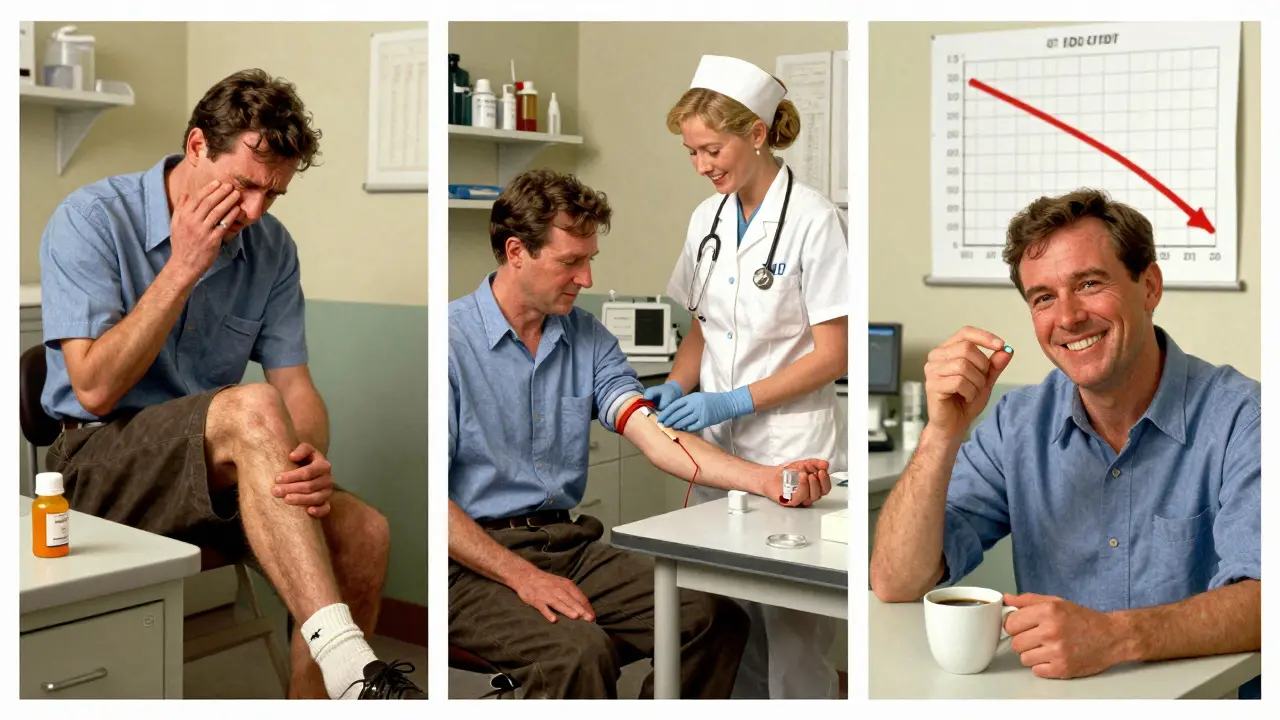
Most people know statins lower cholesterol and prevent heart attacks. But what happens when your muscles start aching, cramping, or feeling weak after taking them? For many, the answer has been simple: stop the statin. Forever. But that’s not always the right move. In fact, stopping statins without a plan can be riskier than the side effects themselves. That’s where statin intolerance clinics come in-not as a last resort, but as a smarter way to keep you protected from heart disease without leaving you in pain.
Statin Intolerance Isn’t Just ‘Too Many Side Effects’
It’s easy to blame statins for any muscle soreness. But not every ache means you’re intolerant. The National Lipid Association updated its definition in 2022: statin intolerance isn’t just discomfort. It’s when you can’t take at least two different statins-even at the lowest dose-because of symptoms that go away when you stop the drug and return when you restart it. This isn’t guesswork. It’s a process.
Up to 29% of people on statins report muscle symptoms. But only 5-15% actually have true statin-associated muscle symptoms (SAMS). The rest? Often things like vitamin D deficiency, thyroid problems, overexertion, or even the nocebo effect-where expecting side effects makes you feel them. That’s why clinics don’t just take your word for it. They test, rule out, and rechallenge.
The Four-Step Protocol That Works
Statin intolerance clinics follow a clear, step-by-step plan. It’s not magic. It’s science. Here’s how it typically unfolds:
- Stop the statin. You pause your medication for two full weeks. No replacements. Just rest. During this time, you track your symptoms daily-where it hurts, how bad (on a 0-10 scale), and when it started.
- Rule out other causes. Your doctor checks your thyroid, vitamin D, and kidney function. They ask about alcohol, supplements like CoQ10, and other meds that might be mixing poorly with statins. Sometimes, it’s not the statin at all.
- Rechallenge with a different statin. This is the key. Instead of giving up, you try a new one. Hydrophilic statins like rosuvastatin or pravastatin are often chosen because they’re less likely to enter muscle tissue. You start at the lowest possible dose-maybe 5mg once a week, not daily.
- Adjust or add non-statin options. If you still can’t tolerate statins, you move to ezetimibe, bempedoic acid, or PCSK9 inhibitors. These aren’t statins. They work differently. And they’re proven to cut heart attack risk, even without statins.
Cleveland Clinic’s data shows that 72% of patients who switched to a hydrophilic statin could tolerate it. Another 65% did well on intermittent dosing-like rosuvastatin 10mg twice a week. That’s not failure. That’s success.
Why Most Doctors Miss This
General practitioners aren’t trained to run rechallenge protocols. They see a patient with muscle pain, say ‘stop the statin,’ and move on. But without follow-up, 45% of patients never restart any lipid-lowering therapy. That’s dangerous. Every year you skip statins when you need them, your risk of heart attack rises by 10-15%.
Specialized clinics fix this. The VA system, which runs statin intolerance programs across 170 centers, cut false diagnoses by 38% just by following a strict protocol. They don’t assume. They test. They track. They give you back control.
Real Stories: From Pain to Progress
One patient, ‘HeartPatient87’ on Reddit, had been labeled statin-intolerant for five years. He stopped all meds. His LDL stayed above 140. Then he went to Johns Hopkins’ lipid clinic. They put him on rosuvastatin 5mg twice a week, added CoQ10, and within months, his LDL dropped to 89-with zero pain. He’s now off the ‘intolerant’ list.
At Kaiser Permanente, 82% of patients in their statin intolerance program got back on effective therapy. In regular clinics? Only 45%. The difference? Structure. Follow-up. Expertise.
What If You Still Can’t Tolerate Statins?
Even if you truly can’t take any statin, you’re not out of options. The first alternative is ezetimibe. It costs about $35 a month. It lowers LDL by 15-20% and reduces heart events by 6%, according to the IMPROVE-IT trial. That’s not nothing.
Next up: bempedoic acid (Nexletol). Approved in 2020, it lowers LDL by 18% without muscle side effects. It’s taken orally, doesn’t interact with muscles, and was tested in over 14,000 people. The CLEAR Outcomes trial showed it cuts heart attacks and strokes.
For high-risk patients who still need more, PCSK9 inhibitors like evolocumab work well. They’re injectables, cost about $5,850 a year, and can slash LDL by 60%. But insurance often fights it. Many clinics help patients appeal-sometimes over several months.

What’s Coming Next?
Genetic testing is starting to show promise. Mayo Clinic now checks for the SLCO1B1 gene variant, which makes some people extra sensitive to simvastatin. If you have it, you avoid that drug entirely. No trial and error needed.
Nanoparticle statins are in early trials. These tiny particles deliver the drug straight to the liver, bypassing muscles. Early results show 92% tolerability. That could change everything.
And intermittent dosing? More clinics are adopting it. The 2024 ACC Expert Consensus says 78% of lipid specialists plan to use it more. Why? Because it works. And it’s cheaper.
Barriers Still Exist
Not everyone can access these clinics. Wait times average 6-8 weeks. Insurance doesn’t always cover non-statin drugs. Some patients are scared to rechallenge-they’ve been told they’re intolerant for years, and it’s hard to trust the system again.
But the data is clear: structured care saves lives. The Cholesterol Treatment Trialists’ Collaboration found that every 1 mmol/L drop in LDL cuts major heart events by 20-25%. That’s the goal. Not just avoiding side effects, but staying alive.
What Should You Do If You Think You’re Statin Intolerant?
Don’t quit. Don’t assume. Ask for help.
- Request a referral to a lipid specialist or statin intolerance clinic.
- Keep a symptom diary before and after stopping your statin.
- Ask for blood tests: thyroid, vitamin D, CK levels.
- Don’t settle for ‘just take something else.’ Push for a plan.
- Know your LDL goal. If you’ve had a heart attack or have diabetes, you need it below 70. That’s non-negotiable.
Statin intolerance isn’t a dead end. It’s a detour. And with the right protocol, you can still reach your destination: a longer, healthier life without heart disease.
Can statin intolerance be reversed?
Yes, in most cases. Many people labeled as statin intolerant can tolerate a different statin, a lower dose, or an intermittent schedule. Up to 70% of patients who go through a structured clinic protocol can successfully resume lipid-lowering therapy. The key is a proper rechallenge process-not just stopping and never trying again.
Are muscle aches from statins always real?
Not always. Studies show that up to 80% of patients who report muscle pain may actually tolerate statins when tested under blinded conditions. This is called the nocebo effect-where the expectation of side effects causes symptoms. That’s why clinics use rechallenge protocols instead of relying on patient reports alone.
Is it safe to take statins every other day or twice a week?
Yes, for many people. Long-half-life statins like rosuvastatin and atorvastatin can be dosed intermittently-such as every other day or twice a week-and still lower LDL by 20-40%. This approach reduces muscle side effects while keeping cholesterol under control. Studies show 76% of previously intolerant patients tolerate this method.
What’s the best non-statin alternative to statins?
Ezetimibe is the first-line non-statin option. It’s affordable ($35/month), well-tolerated, and proven to reduce heart attacks and strokes by 6% in large trials. Bempedoic acid is another strong option, especially if you need more LDL reduction without muscle side effects. PCSK9 inhibitors work best for very high-risk patients but are more expensive and harder to get approved.
How do I know if I need to see a statin intolerance clinic?
If you’ve stopped statins because of muscle pain and still have high cholesterol-or if you’ve been told you’re intolerant but haven’t been properly tested-you should ask your doctor for a referral. If your LDL is above 100 and you’re at risk for heart disease, you need treatment. A statin intolerance clinic can help you find a way to get it safely.
Sumit Sharma
January 12, 2026 AT 14:08Statin intolerance is a well-documented pharmacological phenomenon, but the real issue lies in the systemic failure of primary care to implement rechallenge protocols. The NLA 2022 criteria are clear: true SAMS requires objective confirmation via double-blind re-exposure. Most clinicians skip this and default to discontinuation, which is clinically negligent. The 72% tolerability rate with hydrophilic statins isn’t anecdotal-it’s evidence-based. If your LDL is >100 and you’re at risk, you’re not ‘intolerant,’ you’re just mismanaged.
Jay Powers
January 13, 2026 AT 05:46Lawrence Jung
January 13, 2026 AT 23:59Craig Wright
January 15, 2026 AT 03:29It is frankly unacceptable that the United States lacks universal access to lipid clinics. In the UK, NHS lipid specialists are embedded within primary care networks. We do not wait six to eight weeks. We do not leave patients to fend for themselves. The fact that 45% of patients abandon lipid-lowering therapy entirely is a national scandal. This is not innovation. This is negligence dressed up as protocol.
Rinky Tandon
January 17, 2026 AT 00:07Ben Kono
January 18, 2026 AT 17:35Cassie Widders
January 19, 2026 AT 04:29Alex Fortwengler
January 19, 2026 AT 15:27jordan shiyangeni
January 20, 2026 AT 04:14It is deeply troubling that the medical establishment continues to prioritize pharmacological intervention over lifestyle modification. The very notion that one can pharmacologically override a lifetime of poor dietary habits, sedentary behavior, and chronic stress is not only scientifically unsound-it is morally irresponsible. The 20% reduction in cardiac events per 1 mmol/L LDL drop sounds impressive until you realize that 90% of those patients could achieve the same result through nutritional ketosis, daily movement, and sleep hygiene. This clinic model is a Band-Aid on a hemorrhaging artery. We are treating symptoms, not causes. And we are profiting from it.
Abner San Diego
January 20, 2026 AT 12:46Eileen Reilly
January 20, 2026 AT 23:35