Strabismus: Understanding Eye Misalignment and When Surgery Is Needed
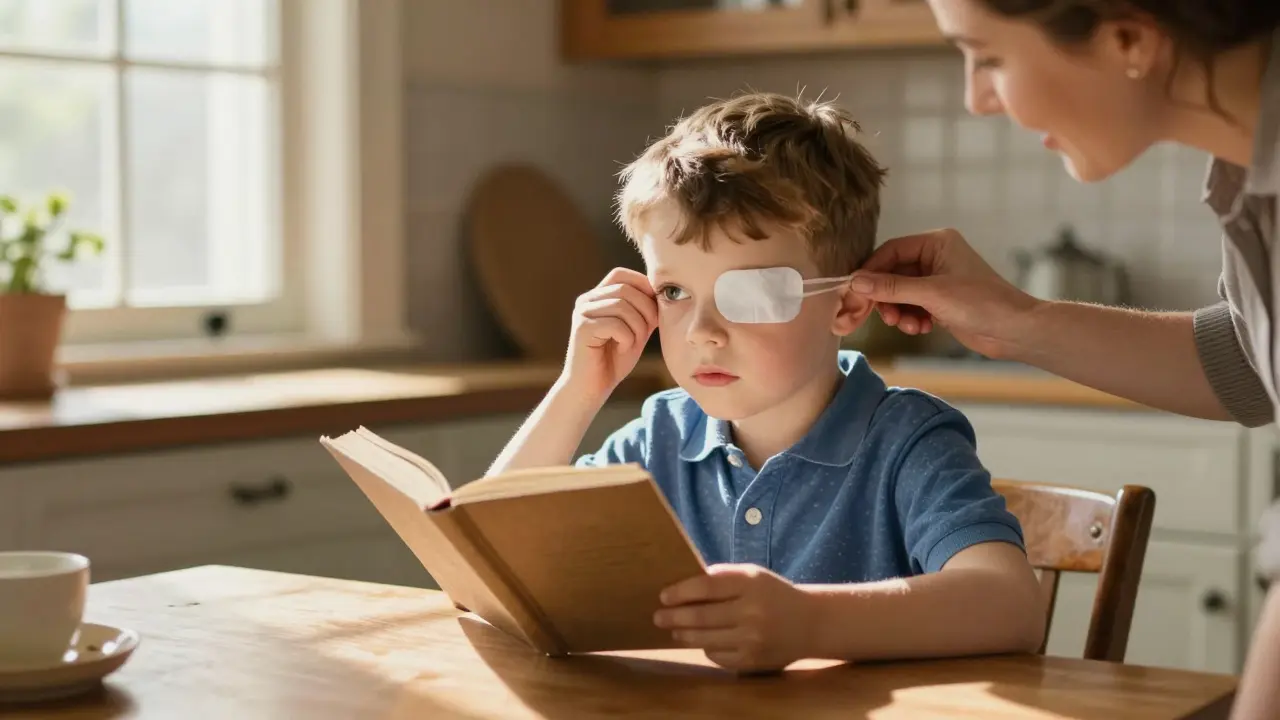
Strabismus, often called a squint, isn’t just about looks. It’s a real condition where one eye doesn’t line up with the other when you’re looking at something. One eye might turn in, out, up, or down - and it’s not something you can just will away. For kids, it can mess with how their brain learns to see. For adults, it can mean double vision, headaches, or even trouble keeping a job that requires good depth perception. The good news? It’s treatable. And when glasses and patches don’t cut it, surgery can make a life-changing difference.
What Does Strabismus Actually Look Like?
You’ve probably seen it: a child blinking hard while one eye drifts outward, or an adult tilting their head to avoid seeing double. That’s strabismus. It’s not random. There are four main types, each named for the direction the eye turns:- Esotropia - eye turns inward (about 50% of cases)
- Exotropia - eye turns outward (30% of cases)
- Hypertropia - eye turns upward (15% of cases)
- Hypotropia - eye turns downward (5% of cases)
It can be constant, or it can come and go. Some kids only show it when they’re tired. Adults often notice it after a stroke, head injury, or even just as they age. The real problem isn’t the turned eye - it’s what happens in the brain. When the eyes don’t point at the same spot, the brain gets conflicting images. In kids, it shuts off the weaker eye to avoid confusion. That’s how lazy eye (amblyopia) starts. In adults, the brain doesn’t ignore the signal - it just gets overwhelmed. That’s why double vision is so common.
Why Does This Happen?
Most of the time, it’s not a problem with the eye muscles themselves. It’s a brain issue. The brain sends signals to the muscles to move the eyes in sync. When those signals get mixed up - maybe because of genetics, premature birth, or a neurological event - the eyes go their own way. About 30% of kids with strabismus have a family history. That’s a strong clue it’s not just bad luck.In adults, strokes and trauma are the biggest culprits. Damage to the nerves controlling eye movement - especially the 4th or 6th cranial nerves - can cause sudden misalignment. This is called paralytic strabismus. It’s different from the childhood kind. It comes fast. Often with dizziness, nausea, and severe double vision. It’s a red flag that needs quick evaluation.
When Do You Know It’s More Than Just a Squint?
Symptoms aren’t always obvious. Kids might not say they see double. They might just rub their eyes a lot, squint in bright light, or hold books super close. Teachers might notice they lose focus during reading. A 2023 study found 57% of school-aged children with strabismus had trouble reading - not because they couldn’t read the words, but because their eyes couldn’t track together.Adults report:
- Double vision (almost everyone with constant strabismus)
- Eye strain or pain around the eyes (78% of cases)
- Head tilting to see straight (42% of kids)
- Difficulty judging distances - bumping into things, misjudging steps
- Light sensitivity and trouble concentrating
If you’re seeing double or your child keeps turning their head to look at things, it’s not normal. Don’t wait. Get it checked.
What Happens Before Surgery?
Surgery isn’t the first step. Doctors start with the least invasive options:- Glasses - especially for farsighted kids whose eyes turn in when they focus
- Patching - covering the stronger eye to force the weaker one to work
- Vision therapy - exercises to train the eyes and brain to work together
These work well for many, especially if caught early. But if the eye is always misaligned by more than 15 prism diopters - that’s about the width of a pencil held at arm’s length - or if double vision won’t go away with special prism glasses, surgery becomes the next step. The American Academy of Ophthalmology says surgery is recommended when misalignment causes real functional problems, not just cosmetic ones.
What Does Strabismus Surgery Actually Involve?
It’s not brain surgery. It’s muscle surgery. The eye has six tiny muscles that control its movement. The surgeon adjusts one or more of them to balance the pull. There are two main techniques:- Recession - the muscle is detached and reattached farther back, weakening its pull
- Resection - a section of the muscle is removed and the rest is tightened
For a child with inward-turning eyes (esotropia), the most common surgery is a bilateral medial rectus recession - both inner eye muscles are loosened. For outward-turning eyes, the outer muscles are tightened.
Here’s what you can expect:
- Anesthesia - general for kids, local with sedation for adults
- Duration - 45 to 90 minutes
- Incision - made through the thin membrane covering the white of the eye (conjunctiva), no skin cuts
- Adjustable sutures - used in 68% of adult cases, letting the surgeon fine-tune alignment the same day or next day
It’s outpatient. You go home the same day. No overnight stay.
How Successful Is It?
Success isn’t just about straight eyes. It’s about stable, functional vision.- 60-80% of patients get alignment within 10 prism diopters after one surgery
- Children under 2 have the highest success - 75-85%
- Adults see 55-65% success, partly because their brains have already learned to ignore one eye
But here’s the catch: 20-30% of cases need a second surgery. Undercorrection is the most common reason. The eye might still turn a little. Overcorrection - where the eye turns the other way - happens in 10-15% of cases. It’s fixable, but it’s another procedure.
Temporary double vision is normal after surgery. About 80% of patients feel it for a few days or weeks. It usually fades as the brain relearns how to fuse the images. But in 22% of cases, it sticks around - that’s why post-op vision therapy matters.
What Are the Real Risks?
Most people think surgery is risky. For strabismus, it’s actually very safe. But you need to know the real numbers:- Retinal detachment - 0.1% chance (1 in 1,000)
- Endophthalmitis - 0.04% chance (1 in 2,500)
- Infection or bleeding - rare, less than 1%
These are serious, but extremely uncommon. The bigger risks are the ones you can’t see right away: persistent double vision, poor depth perception, or dissatisfaction with how the eyes look - even if they’re technically straight.
Dr. Richard Hertle’s research found that 28% of patients who had technically successful surgery were unhappy because their brain still couldn’t use both eyes together. That’s why pre-op counseling is critical. If you’re only fixing the look, not the function, you might still feel like you’re not seeing right.
What Happens After Surgery?
Recovery isn’t quick. Don’t expect miracles in a week.- First 24 hours - eyes will be red, swollen, watery. It looks worse than it feels.
- Days 1-7 - use prescribed eye drops (antibiotic and anti-inflammatory) every few hours. 98% of patients stick to this if they’re told why.
- Weeks 2-6 - avoid swimming, heavy lifting, rubbing eyes. Vision therapy usually starts here. It’s not optional - it’s part of the fix.
- Follow-ups - at 1 day, 1 week, 3 weeks, and 6 weeks. Don’t skip them.
Adults often take longer to recover. Some feel discomfort for 4-6 weeks. Kids bounce back faster. But both need patience. And both need vision therapy to train the brain to use the eyes as a team.
What Do Real Patients Say?
On forums like Reddit and HealthUnlocked, the stories are powerful:- “I’ve avoided eye contact for 30 years. After surgery, I looked someone in the eye for the first time - and didn’t feel ashamed.”
- “I couldn’t read without double vision. Now I read the newspaper again.”
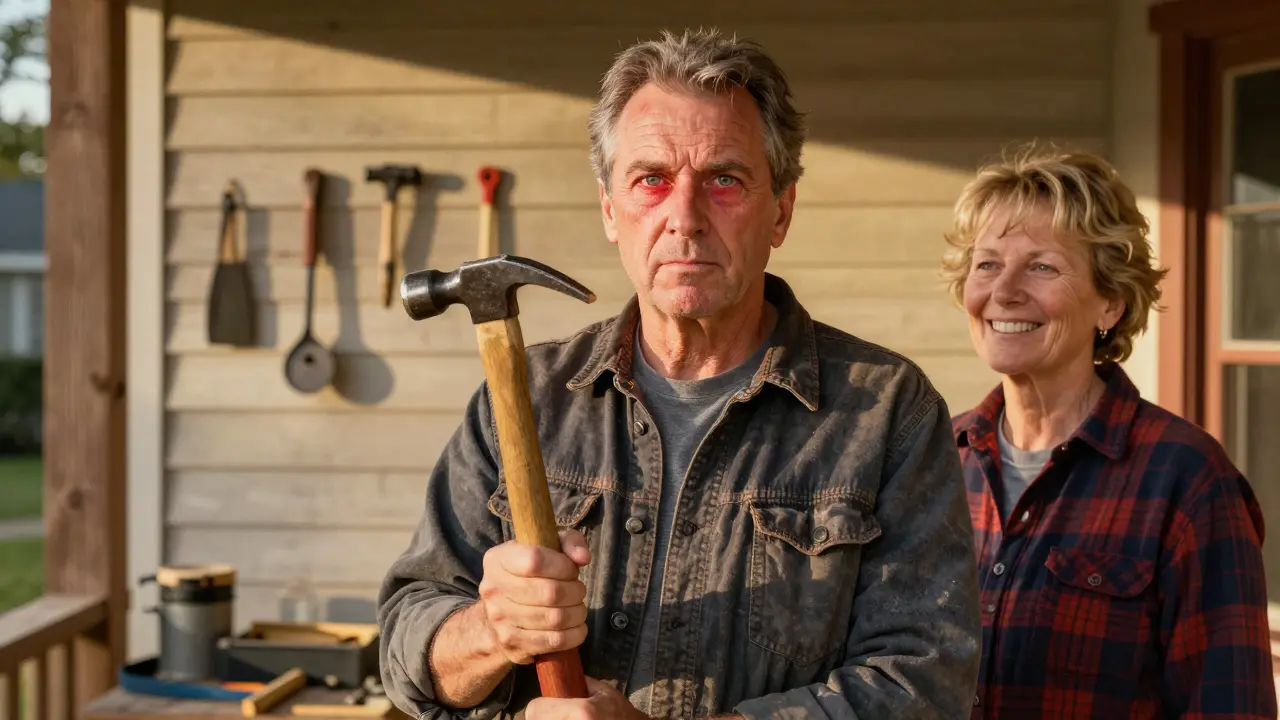
- “I’m a carpenter. I used to miss nails because I couldn’t judge depth. Now I’m accurate again.”
On RealSelf.com, 82% of 1,450 patients said the surgery was “worth it.” But the ones who were happiest? Those who had honest conversations before surgery. They knew they might need more than one procedure. They knew their eyes might look straight but still feel weird for a while. They didn’t expect perfection - they expected improvement.
Who Performs This Surgery?
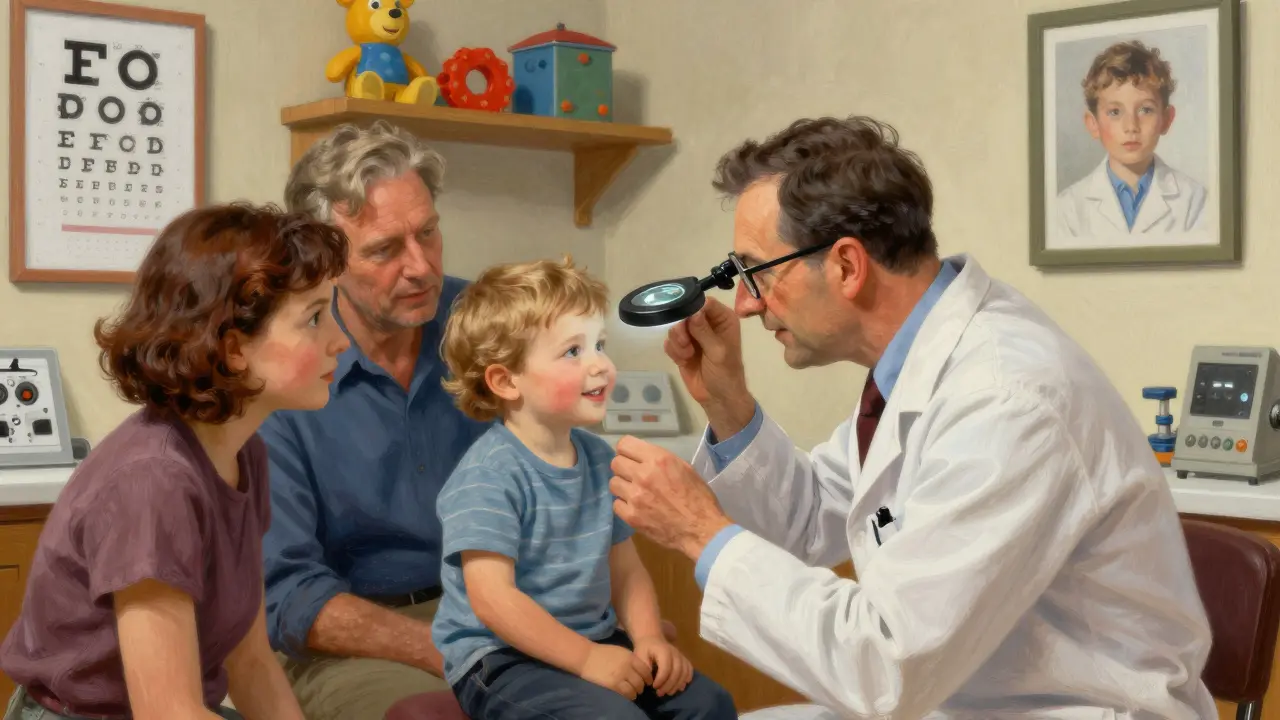
Not every eye doctor does it. Strabismus surgery requires specialized training - usually a fellowship in pediatric or neuro-ophthalmology. Only 35% of general ophthalmologists perform these procedures regularly. Surgeons need 50-75 supervised cases to get good at it. That’s why it’s best to go to a center that does this often. Ask: “How many of these do you do a year?”Academic hospitals and specialized eye centers lead in outcomes. Private practices are fine too - but make sure they have the right experience.
What’s New in 2025?
The field is getting smarter:- Adjustable sutures - now standard in most adult cases, thanks to better tools like the MiLoop system
- VR training - pre-op virtual reality programs help train the brain to fuse images before surgery, boosting success by 18%
- Robotic assistance - early trials at Johns Hopkins show robots can place sutures with 32% more precision than human hands
- Earlier surgery - the AAO now recommends surgery for infants as young as 3-4 months with large-angle esotropia, based on new long-term data
Even botulinum toxin (Botox) injections are being used before surgery to temporarily weaken overactive muscles - making the final surgery more predictable.
What About Cost and Access?
The global strabismus surgery market is growing fast - projected to hit $1.8 billion by 2027. But access isn’t equal. In the U.S., 120,000 surgeries are done yearly. In Germany, it’s 45,000 - but Germany has a higher rate per person. Why? Better screening and earlier diagnosis.In developing countries, only 28% of kids with strabismus get evaluated by age 5. In the U.S., it’s 72%. That’s a gap of nearly 50 percentage points.
Insurance is another hurdle. Medicare cut reimbursement by 4.2% in 2023. Many private insurers now require six months of failed non-surgical treatment before approving surgery. That delays care - and can make amblyopia permanent in kids.
Non-profits like NORA help cover costs for low-income families. They fund 200-300 surgeries a year. If you’re struggling, ask your doctor about financial aid options.
Final Thoughts: It’s Not Just About Looks
Strabismus isn’t vanity. It’s vision. It’s safety. It’s confidence. A child who can’t read well because their eyes don’t work together falls behind in school. An adult who avoids eye contact loses opportunities at work. Double vision makes driving dangerous.Surgery isn’t a cure-all. But when done right - with the right timing, the right team, and the right follow-up - it’s one of the most life-changing procedures in ophthalmology. It doesn’t just fix the eyes. It fixes how you see the world.
Is strabismus surgery painful?
Most patients report mild discomfort, not pain. After surgery, eyes feel scratchy, gritty, or watery - like having sand in them. This lasts a few days. Pain medication is rarely needed beyond the first 24 hours. The surgery itself is done under anesthesia, so you feel nothing during the procedure.
Can strabismus come back after surgery?
Yes, in about 20-30% of cases, the eye drifts again over time. This is called recurrence. It’s more common in adults, especially if the brain didn’t fully learn to use both eyes together. A second surgery can often fix it. That’s why follow-up visits and vision therapy are so important - they help stabilize the results.
Do I need glasses after strabismus surgery?
Maybe. Surgery corrects eye alignment, but it doesn’t fix refractive errors like nearsightedness or farsightedness. If you needed glasses before, you’ll likely still need them after. In some cases, your prescription might change slightly after surgery - your eye doctor will check this at your follow-up visits.
How long does it take to recover from strabismus surgery?
Most people return to normal daily activities within a week. But full healing takes 4-6 weeks. Redness fades over several weeks. Vision therapy usually starts 4-6 weeks after surgery and can last 3-6 months. Adults often take longer to recover than children, especially if they’ve had strabismus for years.
Can adults benefit from strabismus surgery?
Absolutely. While children have a better chance of developing full depth perception after surgery, adults still gain major benefits: elimination of double vision, improved eye contact, reduced headaches, and better performance in jobs requiring depth perception - like driving, surgery, or construction. Many adults report a huge boost in confidence and quality of life.
What’s the difference between strabismus and lazy eye?
Strabismus is when the eyes are misaligned. Lazy eye (amblyopia) is when one eye has poor vision because the brain ignores it. They often happen together - misalignment causes the brain to shut off the weaker eye. But you can have lazy eye without strabismus, and strabismus without lazy eye. Treatment for each is different: patching and glasses for lazy eye, surgery or vision therapy for strabismus.
Is strabismus surgery covered by insurance?
Yes - if it’s considered medically necessary. Most insurance plans cover strabismus surgery because it affects vision and function, not just appearance. However, insurers often require proof that non-surgical treatments (glasses, patches, therapy) were tried for at least six months. Always check with your provider and get pre-authorization.
Meina Taiwo
December 20, 2025 AT 22:29My niece had strabismus at 2. Patching worked, but only because we caught it early. Teachers noticed she was squinting during reading. Don’t wait for them to say something - get it checked.
It’s not vanity. It’s vision.
Adrian Thompson
December 21, 2025 AT 11:08They say it’s ‘medically necessary’ but ask yourself - who really benefits? The hospitals? The surgeons? The drug companies pushing ‘vision therapy’? I’ve seen the data - 80% of ‘success’ is just the brain adapting to the lie. The eye’s still crooked. They just retrained you to ignore it. That’s not a cure. That’s brainwashing with a scalpel.
And don’t get me started on adjustable sutures - that’s just corporate medicine trying to make surgery look like a magic trick.
Southern NH Pagan Pride
December 21, 2025 AT 18:40Did you know the FDA approved robotic-assisted strabismus surgery after a secret meeting with Lockheed Martin? They’re testing eye alignment tech for drone targeting systems. That’s why they push ‘precision sutures’ - it’s not for your vision, it’s for the military’s next-gen surveillance drones.
And Botox? That’s just the first step. Next they’ll implant microchips in the ocular muscles to ‘calibrate’ your gaze. You think this is about kids reading? It’s about controlling what you look at.
Wake up.
They’re not fixing your eyes. They’re programming them.
Orlando Marquez Jr
December 23, 2025 AT 15:56It is of paramount importance to underscore that strabismus, while often perceived as a cosmetic concern, constitutes a neuro-ophthalmological disorder with profound implications for binocular vision development.
The anatomical precision required in surgical intervention necessitates specialized fellowship training, as referenced in the American Academy of Ophthalmology’s 2024 guidelines. To defer care due to insurance barriers or socioeconomic constraints is to risk irreversible amblyopia - a condition that, once entrenched, cannot be fully reversed.
It is incumbent upon healthcare systems to prioritize early pediatric screening, particularly in underserved populations where diagnostic latency remains alarmingly high.
Jackie Be
December 23, 2025 AT 22:05I had this done at 32 and OMG it changed my life
I used to avoid mirrors because I felt like I had a glitch in my face
Now I look people in the eye and I dont feel like a robot
And yes I still need glasses but who cares
My brain finally works with both eyes and I can drive without feeling like im gonna crash into a tree
Do it. Do it now. Dont listen to the haters
John Hay
December 25, 2025 AT 05:41I’ve had two surgeries. First one at 8, second at 27. Both worked but the second one took longer to heal. The key isn’t just the surgery - it’s the vision therapy after. I skipped it the first time and regretted it. Second time I did the exercises every day. My depth perception finally clicked.
Don’t treat this like a quick fix. It’s a rehab process. Be patient. Follow through.
Jon Paramore
December 26, 2025 AT 16:42Prism diopters matter more than people think. If the deviation is >15PD and non-surgical options fail, surgery is indicated - not because it looks better, but because fusion potential drops off sharply after age 7.
Adults have lower success rates because cortical suppression is entrenched. That’s why VR pre-op training is promising - it’s essentially neuroplasticity hacking.
Adjustable sutures? Standard of care now. Reduces reoperation rates by 30%.
Don’t go to a general ophthalmologist. Find someone who does 50+ cases a year. Ask for their recurrence stats.
Swapneel Mehta
December 27, 2025 AT 10:24My cousin in India had strabismus since birth. No one took him to a doctor till he was 10. Now he’s 22 and still can’t read properly. It breaks my heart.
It’s not just about money - it’s awareness. In small towns, people think it’s just ‘a look’ or ‘bad luck’. They don’t know it affects learning, confidence, even job chances.
Maybe someone reading this can help spread the word. A simple check could change a life.
Cameron Hoover
December 27, 2025 AT 20:37I didn’t think I’d ever be the kind of person to get eye surgery. I thought I’d just live with it. But when I started missing steps on stairs and got dizzy driving at night… I knew I couldn’t keep pretending.
It wasn’t perfect. My eyes still feel ‘off’ sometimes. But I can look my daughter in the eye now. And that? That’s worth every ache, every drop, every week of therapy.
You’re not broken. You’re just waiting for the right moment to heal.
Stacey Smith
December 29, 2025 AT 01:47Insurance denied my kid’s surgery because they didn’t have 6 months of patching. What? That’s cruel. He’s 4. His brain is forming right now. Waiting is damaging him.
They treat this like a luxury. It’s not. It’s survival. If your kid can’t read because their eyes are fighting each other - that’s not a preference. That’s a medical emergency.
Stop making people jump through hoops to see clearly.
Ben Warren
December 29, 2025 AT 21:10It is regrettable that the prevailing narrative surrounding strabismus intervention has become increasingly emotive and anecdotal, to the detriment of clinical rigor. The assertion that surgery ‘fixes how you see the world’ is not merely hyperbolic - it is epistemologically unsound. Vision is not a metaphysical experience; it is a neurophysiological process governed by measurable parameters: deviation angle, fusion thresholds, suppression depth, and cortical plasticity windows.
When patients report ‘confidence’ or ‘eye contact’ as outcomes, they are describing psychosocial correlates, not clinical endpoints. To conflate these is to misrepresent the purpose of medical intervention.
Furthermore, the promotion of VR training and robotic assistance as ‘breakthroughs’ reflects a dangerous trend of technological fetishism in medicine - where novelty replaces evidence. The data on long-term outcomes for these modalities remains sparse.
One must ask: Are we treating patients - or performing spectacle?
Let us not mistake the appearance of alignment for the restoration of function. And let us not confuse hope with healing.