Taking Medications with Food vs Empty Stomach: When It Matters
Medication Timing Advisor
Find Your Medication
Search by generic name (e.g., Levothyroxine) or brand name (e.g., Synthroid).
Quick Reference Guide
- Empty Stomach = 1 hour before or 2 hours after eating.
- With Food = During or within 30 mins of a meal.
Why does timing matter?
Taking meds at the wrong time can reduce effectiveness by up to 50% or increase side effects. Select a medication to see specific instructions.
Common Medications
Instructions
Risks & Interactions
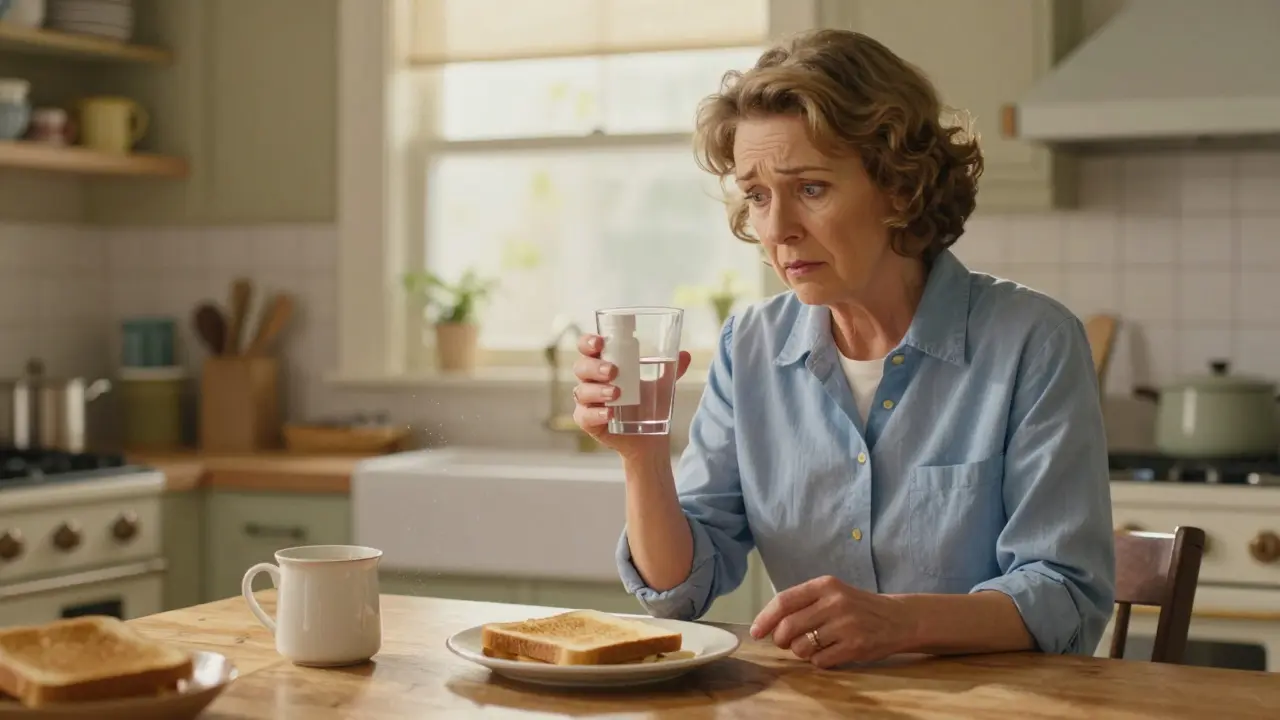
Have you ever swallowed a pill with a sip of water and wondered if that was enough? Or maybe you’ve taken your morning meds right after breakfast, only to feel nauseous an hour later. You are not alone. According to a 2023 review by GoodRx, about 25% of prescription medications have specific instructions about whether you should take them with food or on an empty stomach. Ignoring these directions isn’t just a minor mistake-it can slash the drug’s effectiveness by up to 50% or spike your risk of side effects by 40%. That is a huge difference between feeling better and feeling worse.
The reason this matters comes down to basic biology. Your stomach is a chemical reactor. When it’s empty, it’s highly acidic (pH 1-2). When you eat, that acidity drops (pH 3-5), and your body starts releasing bile and enzymes to break down nutrients. These changes directly impact how drugs dissolve and enter your bloodstream. The American Pharmacists Association defines "empty stomach" as taking medication one hour before eating or two hours after a meal. "With food" usually means during or within 30 minutes after a meal containing 500-800 calories. Getting this timing right ensures your body absorbs exactly what it needs, when it needs it.
Medications That Require an Empty Stomach
Some drugs are designed to be absorbed quickly and efficiently in an acidic environment. If you fill your stomach with food first, you slow down gastric emptying, which can delay or block absorption entirely. Here are the most common culprits:
- Levothyroxine (Synthroid): This thyroid hormone replacement is notoriously sensitive. A 2022 meta-analysis found that food can decrease its absorption by 20-50%. Even coffee with cream can interfere. For best results, take it at least 30-60 minutes before breakfast, or even better, right before bed after your last meal of the day.
- Bisphosphonates (Alendronate/Fosamax): Used for osteoporosis, these drugs are poorly absorbed. Taking them with food reduces absorption by 60%. They also need to be taken with plain water while standing upright to prevent esophageal irritation.
- Certain Antibiotics (Ampicillin, Tetracyclines): Ampicillin shows a 35% drop in peak plasma concentration when taken with food. Tetracyclines bind with calcium and iron in dairy products and fortified cereals, reducing absorption by 50-75%. Take these 30 minutes before or 2 hours after meals.
- Sucralfate (Carafate): This ulcer-healing drug works by coating the stomach lining. It needs an empty stomach to form that protective layer effectively. Take it one hour before meals.
- Zafirlukast (Accolate): An asthma medication that sees a 40% reduction in absorption if taken with food. Stick to the one-hour-before or two-hours-after rule.
If you miss the window, don’t double up. Just wait until your stomach is empty again. Consistency is key here-try to take these meds at the same time every day relative to your meals.
Medications That Need Food to Work Properly
On the flip side, some medications are harsh on the stomach lining or require fat to dissolve properly. Taking them on an empty stomach can lead to pain, nausea, or poor absorption. Here’s what needs a side of dinner:
- NSAIDs (Ibuprofen/Advil, Naproxen/Aleve): These pain relievers inhibit prostaglandins, which protect your stomach lining. Without food, they can cause ulcers. A 2020 meta-analysis showed that taking NSAIDs with food reduces gastrointestinal ulcer risk by 50-70%. Always pair them with a snack or meal.
- Aspirin (High Dose): While low-dose baby aspirin is often fine on an empty stomach, higher doses for pain or inflammation should be taken with food to cut gastric irritation incidence from 25% to 8%.
- Certain Antidepressants (Duloxetine/Cymbalta): Nausea is a common side effect. Taking Cymbalta with food lowers the chance of nausea by 30%, making it easier to stick with your treatment plan.
- Statins (Atorvastatin/Lipitor, Simvastatin/Zocor): Some statins absorb better with food. However, watch out for grapefruit juice. It can increase statin blood levels by 300-500%, raising the risk of muscle damage (rhabdomyolysis) by 15-fold. Stick to water or orange juice instead.
- Lipophilic Drugs (Griseofulvin): This antifungal needs fat to dissolve. Taking it with a high-fat meal can boost absorption by 50%.
Think of food as a buffer. It slows things down, protects your gut, and helps certain fats-soluble drugs get into your system.
The Science Behind the Interaction
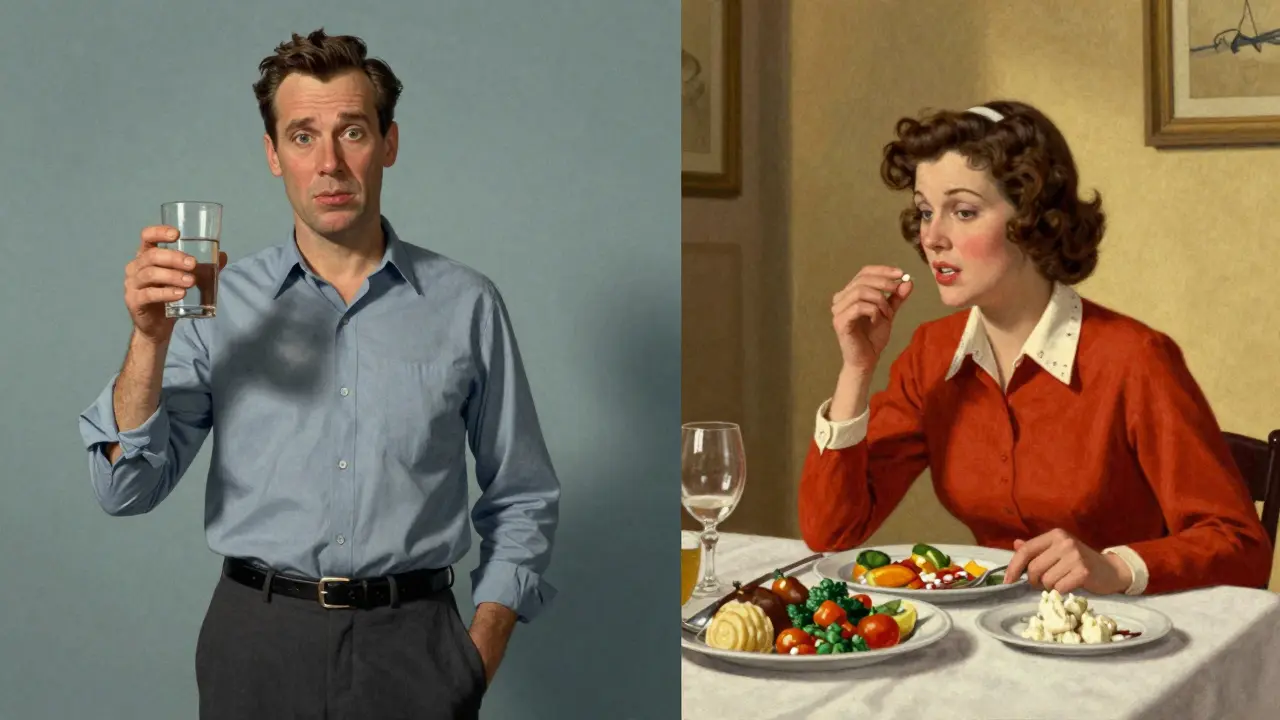
Why does food change everything? It’s not magic; it’s physiology. First, there’s pH. Your stomach acid breaks down many drugs. Food neutralizes that acid temporarily. Acid-labile drugs like Penicillin V degrade 40% faster in the higher pH environment created by a meal. Second, there’s gastric emptying. A high-fat meal can delay stomach emptying by 90-120 minutes. If you need a drug to hit your bloodstream fast, that delay matters. Third, there’s binding. Minerals like calcium, iron, and magnesium in food can chemically bind to antibiotics like tetracyclines and fluoroquinolones, forming a compound your body can’t absorb. Finally, bile secretion. Eating triggers bile release, which helps dissolve fat-soluble drugs. If you’re taking a lipophilic medication without fat, it might just pass through you unchanged.
Practical Tips for Better Adherence
Knowing the rules is one thing; living them is another. Life gets busy, and remembering to wait 60 minutes before breakfast can be tough. Here are some strategies that actually work:
- Use the 2-1-2 Rule: For empty stomach meds, aim for 2 hours after your previous meal, 1 hour before your next meal, or simply 2 hours after eating. It’s a simple mental checklist.
- Label Your Bottles: Many pharmacies now use color-coded stickers. Red often means "empty stomach," green means "with food." If yours don’t, grab a permanent marker and write it yourself.
- Stagger Your Meds: If you have multiple pills, spread them out. Take your empty-stomach thyroid med at 7 AM, eat breakfast at 8 AM, and take your food-requiring antibiotic with lunch. This maintains therapeutic levels without confusion.
- Leverage Technology: Apps like Medisafe or GoodRx allow you to set custom alerts. Set one for "Take Levothyroxine" and another for "Eat Breakfast" with a 60-minute gap. Data shows these reminders reduce administration errors by 28%.
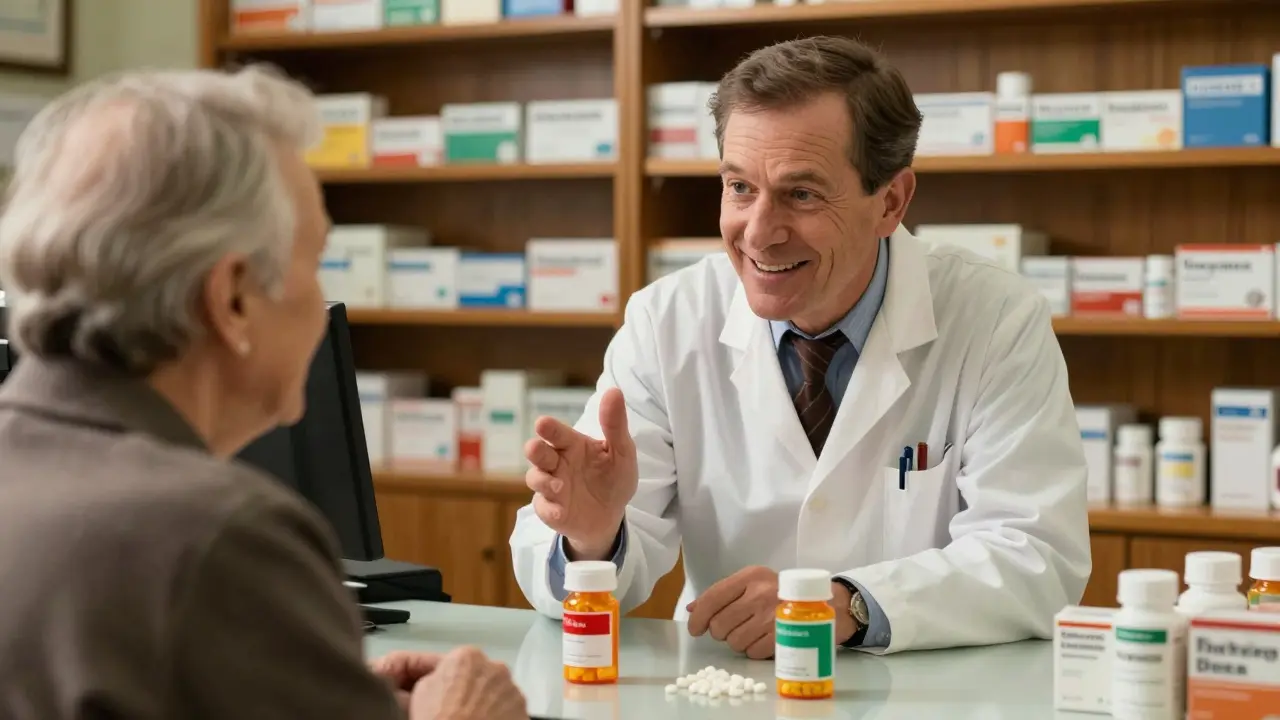
- Talk to Your Pharmacist: Pharmacists are the experts here. A 2021 JAMA study found that 92% of pharmacists provide specific timing instructions, compared to only 45% of physicians. Don’t leave the pharmacy without asking, "Does this need food?"
When Things Go Wrong
What happens if you mess up? Usually, nothing catastrophic happens immediately, but over time, the effects add up. Dr. Michael Cohen of the Institute for Safe Medication Practices notes that taking levothyroxine with breakfast is equivalent to missing 25% of your doses. You might feel tired, gain weight, or have brain fog, not realizing it’s because your thyroid levels are off due to bad timing. Similarly, taking NSAIDs without food regularly can lead to silent bleeding or ulcers. If you consistently feel like your medication isn’t working, check your timing first before asking for a higher dose. Often, the dose is fine-the delivery method is just flawed.
What counts as an "empty stomach"?
An empty stomach typically means taking medication at least one hour before eating or two hours after finishing a meal. This ensures your stomach is relatively free of food content, allowing for optimal absorption of sensitive drugs.
Can I take my pills with milk or juice?
It depends on the medication. Milk contains calcium, which can bind to antibiotics like tetracyclines and reduce their effectiveness. Grapefruit juice interferes with statins and some blood pressure meds. Water is always the safest bet unless your doctor says otherwise.
Why do some antibiotics need to be taken with food?
Many antibiotics cause nausea or stomach upset. Taking them with food acts as a buffer, reducing irritation. Additionally, some antibiotics are fat-soluble and require dietary fat to be properly absorbed into the bloodstream.
Is it okay to crush pills to make them easier to swallow?
Not always. Extended-release or enteric-coated pills are designed to release medication slowly or protect it from stomach acid. Crushing them can destroy this mechanism, leading to too much drug entering your system at once or the drug being destroyed by acid. Always ask your pharmacist before crushing any medication.
What if I forget to take my empty-stomach medication?
If you remember shortly after your scheduled time, take it if you haven’t eaten yet. If you’ve already eaten, wait until your stomach is empty again (usually 2 hours post-meal) before taking it. Do not double the dose to make up for the missed one.