Understanding Pharmacy Warning Icons on Medication Labels

Have you ever looked at your prescription bottle and seen a small yellow sticker with a picture of a car or a glass of wine? You might have thought, ‘What does this even mean?’ You’re not alone. Millions of people get medication labels every month with warning icons-tiny symbols meant to keep them safe-but too often, they’re confusing, unclear, or just ignored.
What Are Pharmacy Warning Icons?
Pharmacy warning icons are small, standardized symbols printed or stuck on medicine containers to alert you to serious risks. They’re not decorative. They’re safety tools. These icons work alongside short text phrases like ‘May cause drowsiness’ or ‘Take on empty stomach’ to warn you about side effects, interactions, or how to take the medicine properly. In New Zealand, these are called Cautionary and Advisory Labels (CALs). They’re usually small yellow stickers that pharmacists stick right on the bottle. In the U.S., they’re similar but less consistent. Some pharmacies use red, blue, or tan stickers. The colors aren’t random-they’re meant to signal urgency. Yellow usually means ‘caution,’ red means ‘danger,’ and white or green often mean ‘advice.’ But here’s the problem: not everyone reads them the same way.Why Do These Icons Exist?
Medication errors kill at least 7,000 people in the U.S. every year. Many of those deaths happen because someone took the wrong dose, mixed drugs that shouldn’t be mixed, or didn’t realize a medicine made them too sleepy to drive. Warning icons were created to stop that. The Institute for Safe Medication Practices (ISMP) started pushing for standardized symbols back in the 1990s. By 2005, big pharmacy chains like CVS and Walgreens began adopting them. The goal? Make safety messages clear even if you can’t read well, don’t speak English, or are in a hurry. The results? Studies show standardized icons cut certain errors by nearly 30%. But here’s the catch: 35% of patients still misunderstand them. One study found that 90% of people thought ‘For external use only’ meant ‘Don’t swallow it’-not ‘Don’t take it by mouth.’ That’s not just confusing. It’s dangerous.Common Warning Icons and What They Really Mean
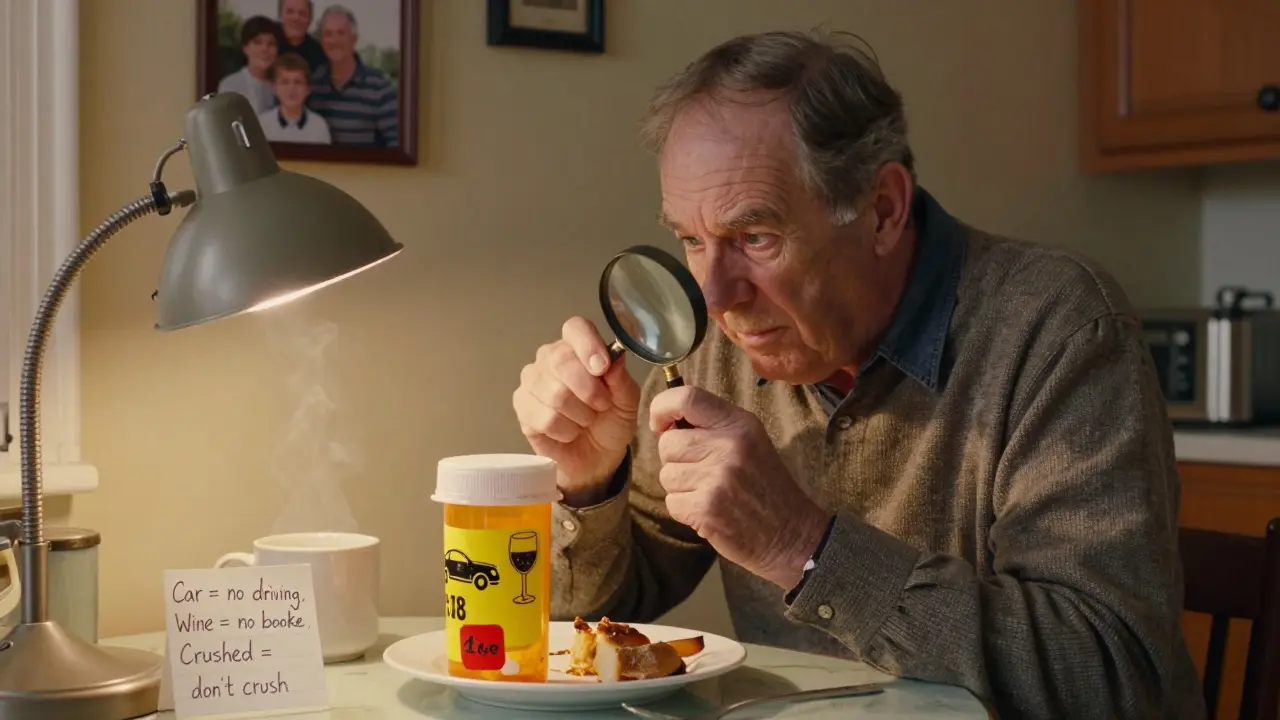
Not all icons are the same. But there are a few you’ll see again and again:- Car or steering wheel - ‘This medicine may make you sleepy. Don’t drive or operate machinery.’ This one’s common with painkillers, antidepressants, and allergy meds. People often think ‘a little sleepy’ means ‘I’ll be fine.’ But drowsiness can hit hard and fast.
- Glass of wine - ‘Limit alcohol.’ Many drugs, like antibiotics or blood pressure pills, react badly with alcohol. The risk isn’t just a hangover-it can be liver damage, dangerously low blood pressure, or sudden dizziness.
- Hand with a drop - ‘For external use only.’ This one’s especially tricky. Patients have swallowed eye drops, applied oral meds to their skin, and even injected topical creams. The icon looks like a dropper, so people assume it’s for swallowing.
- Empty stomach - ‘Take on empty stomach.’ This doesn’t mean ‘skip breakfast.’ It means wait 1 hour before or 2 hours after eating. Some meds get blocked by food and won’t work.
- Crushed pill - ‘Do not crush or chew.’ People do this because pills are hard to swallow. But crushing time-release pills can dump the whole dose at once. That’s how overdoses happen.
Why Do People Keep Misunderstanding Them?
You’d think these icons would be simple. But they’re not. Here’s why:- Too many labels - One study found 63% of patients said their bottles looked like a ‘wall of stickers.’ When everything screams ‘danger,’ nothing stands out.
- Small text - FDA rules say warning text must be at least 6-point font. That’s tiny. If you’re over 60, you might need glasses just to read it.
- Cultural differences - A symbol that means ‘caution’ in the U.S. might mean ‘optional’ in another country. Even the color yellow isn’t universal. In some cultures, it’s for warnings. In others, it’s for celebration.
- False confidence - People think they understand the icon because they’ve seen it before. But studies show 41% of patients who say they ‘understand’ the label actually get it wrong.
How New Zealand’s System Is Different (And Better)
New Zealand’s CAL system is simpler. There are only about 15 standardized labels, all yellow, all the same size, all placed in the same spot. The text is clear, plain, and written in everyday language. No fancy jargon. No confusing symbols. A 2022 study found Kiwis understood their labels 22% better than Americans. Why? Because it’s consistent. Every pharmacy uses the same ones. No CVS vs. Walgreens vs. corner pharmacy differences. The U.S. system is a mess. CVS uses 14 icons. Walgreens uses 17. Independent pharmacies? Some use 23. That’s not safety-it’s chaos. A patient who switches pharmacies might get completely different labels for the same drug.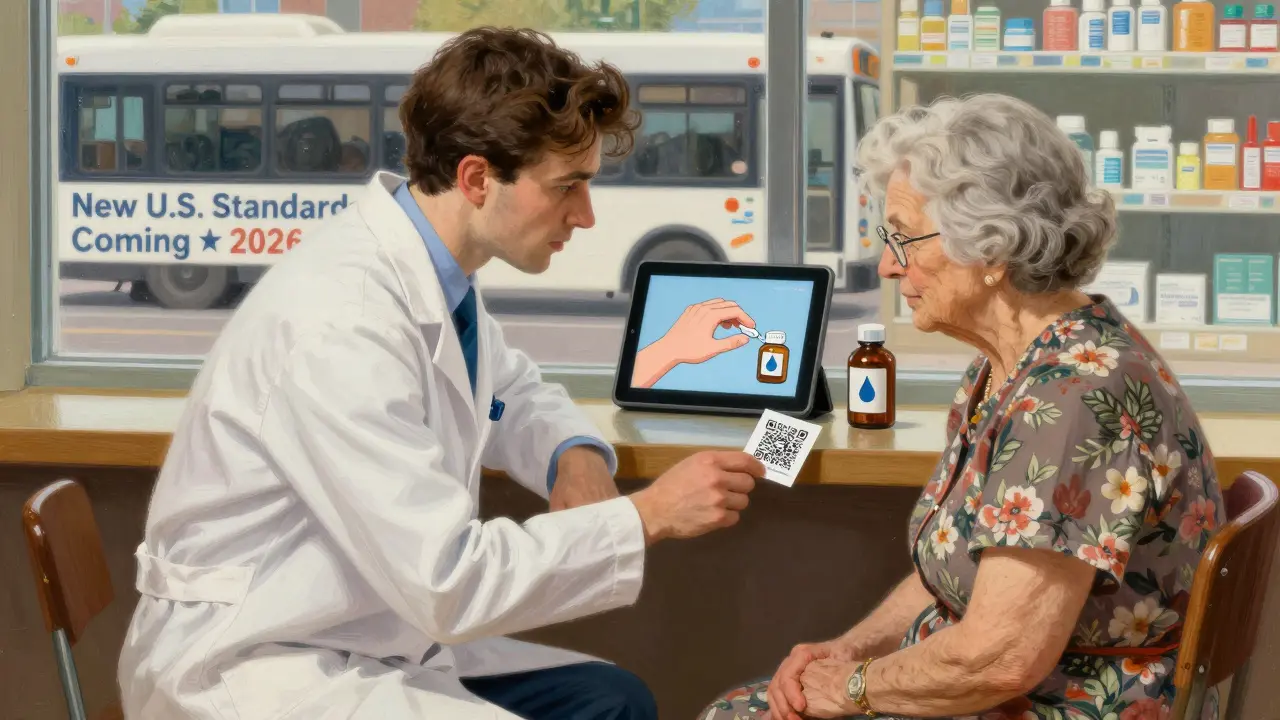
What’s Changing? The Push for National Standards
The FDA noticed the problem. In 2022, they released draft rules to standardize 12 core warning icons across the entire country. By 2026, every pharmacy in the U.S. should use the same set. CVS and Walgreens have already agreed to cut their labels down to match. New tech is helping too. Some pharmacies now add QR codes to labels that link to short videos explaining the warning. Kaiser Permanente tested this and saw comprehension jump from 58% to 89%. But there’s a catch: 24% of seniors don’t use smartphones. So the physical label still has to work on its own.What You Can Do to Stay Safe
You can’t control the system-but you can protect yourself:- Ask your pharmacist - Don’t assume you know what the icon means. Say: ‘Can you explain this sticker?’
- Read the text, not just the symbol - The words matter more than the picture. A car icon might say ‘May cause drowsiness,’ but if it says ‘Avoid alcohol and driving,’ that’s the real warning.
- Keep a list - Write down every medication you take, the warning icons, and what they mean. Bring it to every appointment.
- Don’t ignore the small print - If you’re unsure, call the pharmacy. It’s what they’re there for.
Final Thoughts: Icons Are Tools, Not Magic
Warning icons are meant to help. But they’re not foolproof. They’re only as good as the person who applies them and the person who reads them. The system is improving. Standards are coming. But until then, your best defense is simple: ask. Talk. Double-check. Medication safety isn’t about perfect labels. It’s about clear communication. And that starts with you asking the question: ‘What does this mean?’Why are pharmacy warning icons usually yellow?
In New Zealand and many parts of the U.S., yellow is used for cautionary labels because it’s highly visible and commonly associated with warnings in public signage. Yellow stickers typically signal moderate risks like drowsiness, alcohol interactions, or dietary restrictions. This color choice helps them stand out without causing panic-unlike red, which is often reserved for life-threatening warnings. However, color meanings aren’t universal, and some pharmacies use other colors inconsistently.
Can I ignore a warning icon if I’ve taken the medicine before without problems?
No. Just because you didn’t have a bad reaction last time doesn’t mean it’s safe now. Your body changes. You might be taking a new drug that interacts with it. You might be older, dehydrated, or sick. Warning icons are based on clinical evidence-not personal experience. Skipping them because ‘it was fine before’ is how serious side effects happen.
Do warning icons apply to over-the-counter (OTC) drugs too?
Yes. Many OTC medicines like sleep aids, pain relievers, and cold meds carry the same warning icons as prescriptions. For example, diphenhydramine (found in Benadryl and many sleep aids) carries a ‘may cause drowsiness’ icon. These drugs are sold without a prescription, but they still carry serious risks if misused. Always treat OTC labels with the same caution as prescription ones.
What should I do if I think a warning icon is wrong or doesn’t match my medicine?
Don’t take the medicine. Call the pharmacy immediately. It’s possible the wrong label was applied, especially if you picked up the prescription from a different location than usual. Pharmacists are trained to verify labels against the prescription. If there’s a mismatch, they’ll fix it before you leave. Never guess-always confirm.
Are there apps or tools to help me understand these icons?
Yes. The Institute for Safe Medication Practices (ISMP) offers a free online tool called the ‘Medication Safety Self-Assessment’ that includes a guide to common warning symbols. The CDC’s ‘Every Dose Counts’ campaign also provides printable charts and videos. Some pharmacies now offer QR codes on labels that link to video explanations. But always double-check with your pharmacist-technology can’t replace direct advice.
Phil Hillson
January 19, 2026 AT 21:24So let me get this right we spent billions on fancy stickers but people still swallow eye drops because they looked like juice? 🤡
Jacob Hill
January 19, 2026 AT 22:49I love that New Zealand simplified this. Consistency is everything. In the U.S., it’s like each pharmacy has its own private language. I got a ‘don’t crush’ icon on my blood pressure med last week, but the text said ‘take with food’-so which one do I trust? The sticker? The tiny print? My gut? I’m just tired.
Astha Jain
January 20, 2026 AT 02:09Yesss!! This is so true. I mean, why do we even have icons? Why not just use plain english? Like, ‘DO NOT SWALLOW THIS’? Not ‘hand with drop’? That’s just lazy design. Also, yellow? In India, yellow is for weddings and festivals. I thought my medicine was supposed to be lucky. 😅
Malikah Rajap
January 21, 2026 AT 06:28Can we talk about how we’ve turned safety into a visual puzzle? Like, we expect people to decode symbols while they’re dizzy, confused, or in pain? That’s not safety-that’s a cognitive test. And don’t get me started on seniors who can’t read 6-point font. We’re not just failing them-we’re endangering them. Why not just have a pharmacist call you? Or better yet, a 30-second video? People remember stories, not symbols.
sujit paul
January 21, 2026 AT 18:21It is not merely a failure of design; it is a systemic erosion of personal responsibility. The pharmaceutical industry, in its infinite wisdom, has outsourced cognition to the layperson. The icon is not the problem. The problem is the belief that a human being can be entrusted with life-altering substances without proper education. We have created a culture of passive compliance. And now we are surprised when people misinterpret a droplet as a beverage? This is not negligence-it is inevitability.
Lydia H.
January 23, 2026 AT 04:04I’ve been on meds for 12 years and I still ask my pharmacist every time. Not because I’m dumb-but because I’m smart enough to know I don’t know everything. And honestly? Most of them are happy to explain. They’re not just dispensing pills-they’re keeping people alive. We should treat them like the health heroes they are.
Josh Kenna
January 24, 2026 AT 01:44My grandma took her blood thinner with grapefruit juice because the sticker looked like a fruit. She ended up in the ER. This isn’t funny. We need standardized icons, yes-but we also need mandatory verbal explanations. Every. Single. Time. No excuses. I’m not asking for more paperwork-I’m asking for less dead people.
Erwin Kodiat
January 24, 2026 AT 20:57I’m from India, moved to the US five years ago. First time I saw a wine glass icon, I thought it meant ‘enjoy responsibly’ like on beer bottles. Turns out it meant ‘don’t drink or you might pass out.’ I was so confused. But now I always ask. I even made a little cheat sheet for my family. Small things help. And hey-if we can standardize traffic signs, why not medicine?
Valerie DeLoach
January 24, 2026 AT 23:23Let’s not forget the role of cultural literacy in health communication. A symbol that’s intuitive to one group may be meaningless-or misleading-to another. The U.S. system isn’t just inconsistent; it’s monocultural. We need multilingual, culturally adapted icons-not just translations. And QR codes? Great-but only if paired with printed alternatives. Accessibility isn’t a feature. It’s a right.
Christi Steinbeck
January 25, 2026 AT 01:56Enough with the stickers. Let’s just put a phone number on every bottle: ‘Call us if you’re unsure.’ No questions. No judgment. Just a line to a real person who cares. And if you’re over 60? They call you back. Simple. Human. Effective. Why are we still stuck in the 1990s?
Lewis Yeaple
January 25, 2026 AT 03:26It is evident that the current paradigm of symbolic communication in pharmaceutical labeling is fundamentally inadequate for a population with diverse literacy levels and cognitive capacities. The proposed standardization, while a step in the correct direction, fails to address the root issue: the commodification of healthcare, wherein patient education is treated as an ancillary service rather than a core component of therapeutic safety. Until pharmacists are compensated for time spent counseling, no icon, no matter how standardized, will suffice.