Uveitis: Eye Inflammation, Causes, and Steroid Therapy
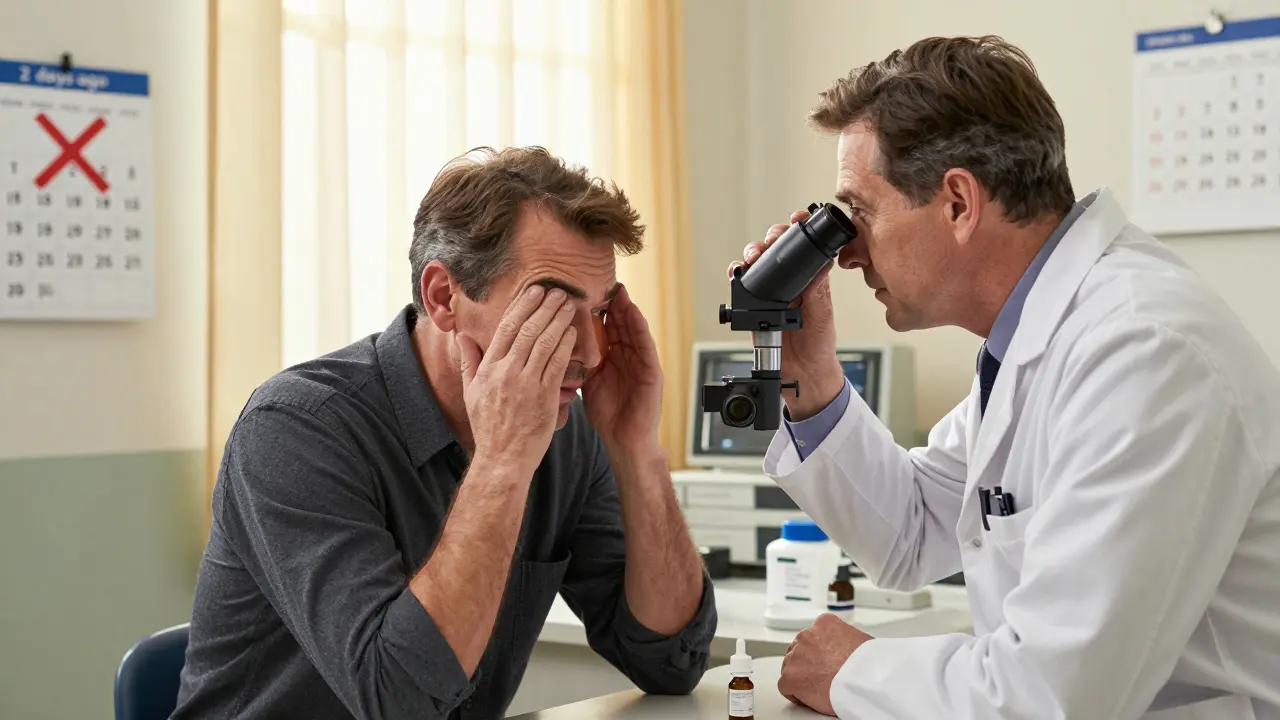
Uveitis isn't just a red eye. It's inflammation deep inside the eye - in the uvea, the middle layer that feeds the retina and iris. If left untreated, it can lead to permanent vision loss. This isn't rare. In fact, uveitis is the third leading cause of blindness worldwide. Many people ignore early signs, thinking it's just allergies or tired eyes. But uveitis doesn't clear up on its own. It needs fast, targeted treatment - and steroid therapy is the backbone of that treatment.
What Exactly Is the Uvea?
The uvea isn't one single part. It's three layers stacked together: the iris (the colored part), the ciliary body (which controls lens focus), and the choroid (a richly blood-filled layer under the retina). These layers supply oxygen and nutrients to the eye. When inflammation hits any of them, vision gets disrupted. The type of uveitis you have depends on which layer is affected.
- Anterior uveitis - affects the front, mostly the iris and ciliary body. This is the most common form, making up 75-90% of cases.
- Intermediate uveitis - targets the vitreous, the jelly-like fluid in the middle of the eye. Often called pars planitis.
- Posterior uveitis - attacks the retina and choroid at the back. This is the most dangerous type.
- Panuveitis - inflammation in all layers at once. It’s rare but severe.
Anterior uveitis usually comes on fast: red eye, sharp pain, sensitivity to light, blurry vision. You might notice it while reading or driving. Posterior uveitis? It creeps up. You might not feel pain at all. Instead, you start seeing floaters - little dark spots or squiggles - and your vision slowly fades. Often, it’s only caught during a routine eye exam.
What Causes Uveitis?
Doctors can find a clear cause in only about one-third of cases. The rest? Idiopathic - meaning no obvious trigger. That’s frustrating, but it’s normal.
Known causes include:
- Autoimmune diseases - like ankylosing spondylitis, multiple sclerosis, or rheumatoid arthritis. Your immune system accidentally attacks your eye tissue.
- Infections - herpes simplex or shingles (herpes zoster), cytomegalovirus (CMV), syphilis, toxoplasmosis, or histoplasmosis. These can wake up inflammation even years after the original infection.
- Eye trauma or surgery - a scratch, a blow, or even a cataract operation can trigger inflammation.
Here’s the thing: uveitis doesn’t always happen in isolation. If you’re over 40 and have recurrent anterior uveitis, doctors will check for underlying conditions like ankylosing spondylitis. If you’ve traveled to the American Southwest and developed posterior uveitis, they’ll test for histoplasmosis. It’s not just an eye problem - it’s often a signal from your whole body.
Why Steroid Therapy Is the First Line of Defense
When inflammation flares in the eye, it swells tissues, blocks fluid flow, and can scar the retina or iris. Steroids - corticosteroids - are powerful anti-inflammatories. They calm the immune response before it damages vision.
The delivery method depends entirely on where the inflammation lives:
- Anterior uveitis - treated with steroid eye drops, like prednisolone acetate 1%. You’ll start with drops every hour or two, then taper over weeks. It’s fast, effective, and avoids systemic side effects.
- Intermediate uveitis - eye drops don’t reach far enough. Doctors use periocular injections (shots around the eye) or oral steroids. Some patients get a steroid implant that slowly releases medicine over months.
- Posterior uveitis - requires deep penetration. Intravitreal injections (into the jelly of the eye) or oral prednisone are common. In chronic cases, implants like Ozurdex® deliver steroids for up to 6 months.
- Panuveitis - usually needs oral steroids, sometimes combined with injections.
Timing matters. If you wait more than a few days, you risk complications like synechiae - where the iris sticks to the lens, distorting the pupil and blocking fluid drainage. That can lead to glaucoma. Or macular edema - swelling in the center of the retina - which blurs your central vision. Both can be permanent.
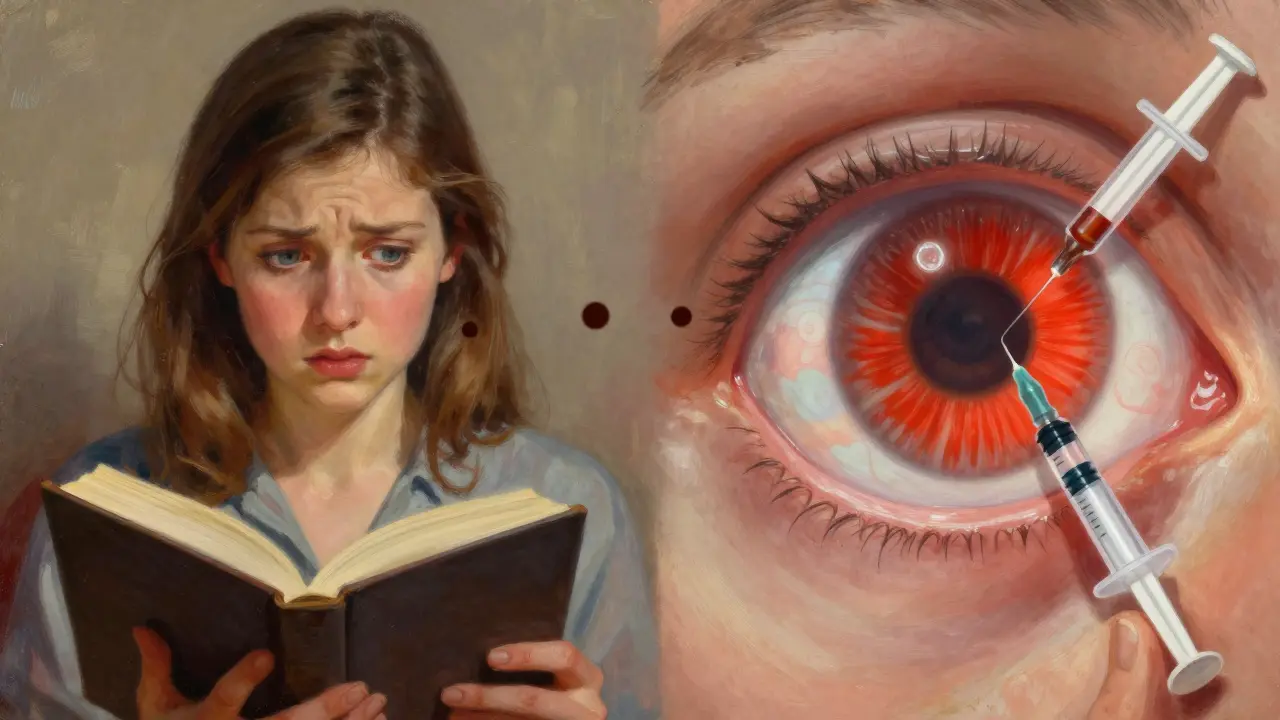
When Steroids Aren’t Enough
Steroids work fast - but they’re not safe long-term. After 3-6 months, side effects pile up: cataracts (clouding of the lens) and steroid-induced glaucoma (raised eye pressure) happen in up to 40% of long-term users. That’s why doctors don’t just prescribe steroids and walk away.
If uveitis keeps coming back, or if you need steroids for more than 3 months, you’ll likely be moved to steroid-sparing therapy. These are immunomodulatory drugs - like methotrexate, azathioprine, or biologics such as adalimumab. They don’t just suppress inflammation. They reset the immune system’s faulty signal.
For example, a 52-year-old patient with recurrent intermediate uveitis and macular edema might start on oral prednisone. After 4 months, they develop cataracts. Their doctor switches them to methotrexate. Within 6 weeks, the swelling reduces. Their vision stabilizes. They stop steroids. That’s the goal: control inflammation without damaging the eye trying to heal it.
Symptoms You Should Never Ignore
Don’t wait for “it gets worse.” Uveitis can progress in hours. Here’s what to watch for:
- Red eye that doesn’t improve with allergy drops
- Pain that gets worse when reading or focusing
- Sudden sensitivity to light - even a sunny window feels blinding
- Floaters that appear in clusters, not just one or two
- Blurred vision that doesn’t fix with glasses
- Vision loss in one eye - even if the other looks fine
These aren’t normal. If you have one or more of these, see an ophthalmologist within 24 hours. A routine eye exam won’t cut it. You need a slit-lamp exam - a specialized microscope that lets the doctor see inflammation inside the eye. Delaying by a week can mean losing months of vision recovery.
What Happens If You Don’t Treat It?
Untreated uveitis doesn’t just fade. It scars.
Anterior uveitis can cause synechiae - the iris fuses to the lens. That stops fluid from draining. Pressure builds. Glaucoma sets in. Vision narrows. Permanent.
Posterior uveitis attacks the retina. Inflammation damages photoreceptors. Scar tissue forms. Macular edema swells the center of your vision. You lose detail - reading, faces, driving. That’s often irreversible.
Chronic uveitis? It’s a slow burn. You might feel fine between flares. But each episode leaves more damage. Over time, optic nerve atrophy, retinal detachment, or cataracts take over. That’s why even mild symptoms need attention.
Studies show that patients who see a specialist within 7 days of symptom onset have 70% better visual outcomes than those who wait a month. This isn’t a “wait and see” condition. It’s a medical emergency.
How to Stay Ahead of Recurrence
Uveitis loves to return. Especially intermediate and posterior types. If you’ve had it once, you’re at higher risk.
Keep a symptom journal: note when redness, floaters, or blurriness appear. Track triggers - stress, illness, travel. Some patients notice flares after infections or colds. Others after sun exposure or eye strain.
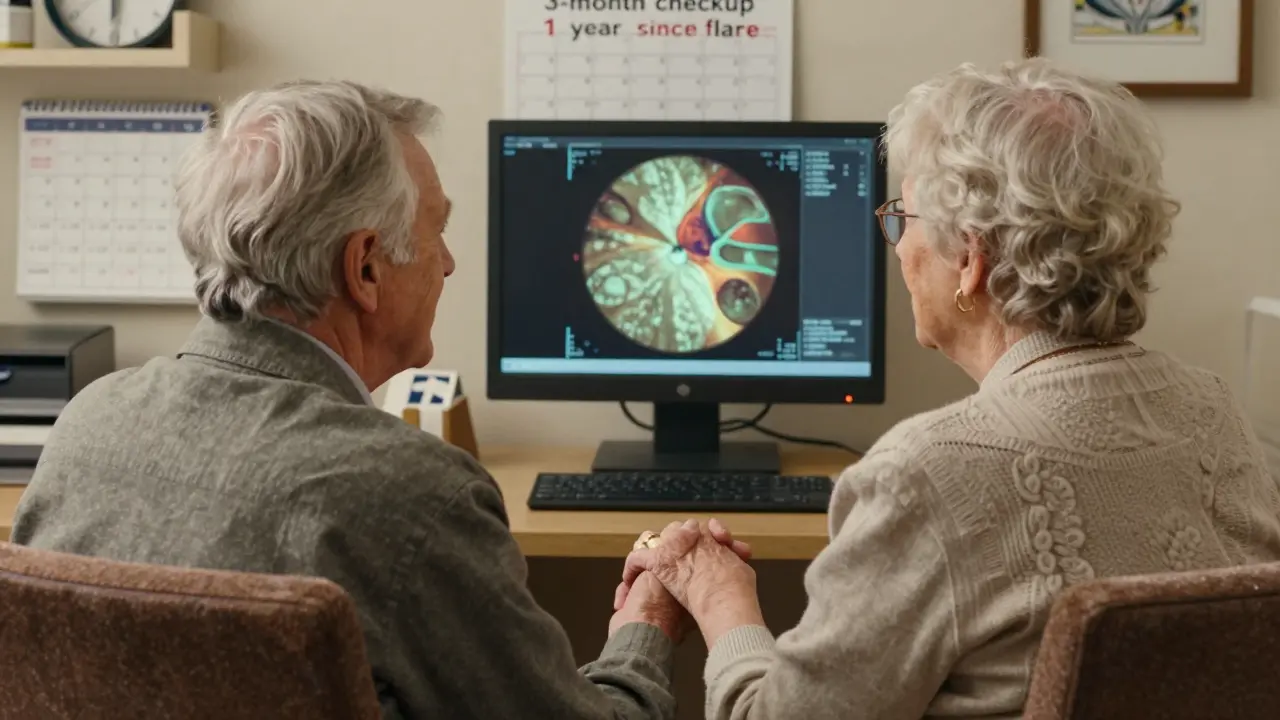
Regular eye exams every 3-6 months are non-negotiable. Even if you feel fine. Your doctor will check for early signs of recurrence before you notice them. They’ll monitor eye pressure, cataract development, and retinal health with OCT scans - a non-invasive imaging tool that maps the retina layer by layer.
And if you have an underlying condition - like psoriasis, Crohn’s, or lupus - manage it. Controlling your whole-body inflammation helps keep your eyes safe.
Can uveitis go away on its own?
No. While mild anterior uveitis might seem to improve temporarily, the inflammation doesn’t truly resolve without treatment. It can return worse, or cause hidden damage like synechiae or macular edema. Delaying care risks permanent vision loss. Always see an eye specialist.
Are steroid eye drops safe for long-term use?
Short-term use (under 6 weeks) is generally safe. But long-term use increases risk of cataracts and glaucoma. That’s why doctors taper doses quickly and switch to steroid-sparing drugs like methotrexate if inflammation persists. Never stop or adjust drops without medical advice.
Can uveitis affect both eyes?
Yes. Anterior uveitis often starts in one eye, but up to half of cases eventually affect both. Posterior uveitis and panuveitis usually involve both eyes from the start. If you have symptoms in one eye, monitor the other closely. Early detection in the second eye improves outcomes.
Is uveitis linked to autoimmune diseases?
In about 30-50% of cases, yes. Conditions like ankylosing spondylitis, sarcoidosis, Behçet’s disease, and juvenile idiopathic arthritis are common triggers. If you’re diagnosed with uveitis, especially recurrent or chronic, your doctor will likely order blood tests or imaging to rule out systemic conditions.
How long does steroid therapy last for uveitis?
It varies. Anterior uveitis often responds in 2-4 weeks. Intermediate or posterior uveitis may require 3-6 months of treatment. Chronic cases can need years of low-dose therapy or immunomodulatory drugs. The goal is the lowest effective dose for the shortest time to prevent side effects while protecting vision.
Final Takeaway
Uveitis is not a minor eye irritation. It’s a serious condition that can steal your vision silently. Steroid therapy saves sight - but only if started early and managed correctly. If you notice redness, pain, floaters, or sudden blur - don’t wait. Don’t guess. See an ophthalmologist immediately. Your eyes don’t warn you twice.
gemeika hernandez
March 20, 2026 AT 13:44Nicole Blain
March 21, 2026 AT 05:06Kathy Underhill
March 22, 2026 AT 02:26Srividhya Srinivasan
March 22, 2026 AT 11:55Prathamesh Ghodke
March 24, 2026 AT 06:12Manish Singh
March 25, 2026 AT 18:09Nilesh Khedekar
March 27, 2026 AT 16:43Suchi G.
March 28, 2026 AT 20:42becca roberts
March 29, 2026 AT 16:42