Vitamin D and Statin Tolerance: What the Evidence Really Shows
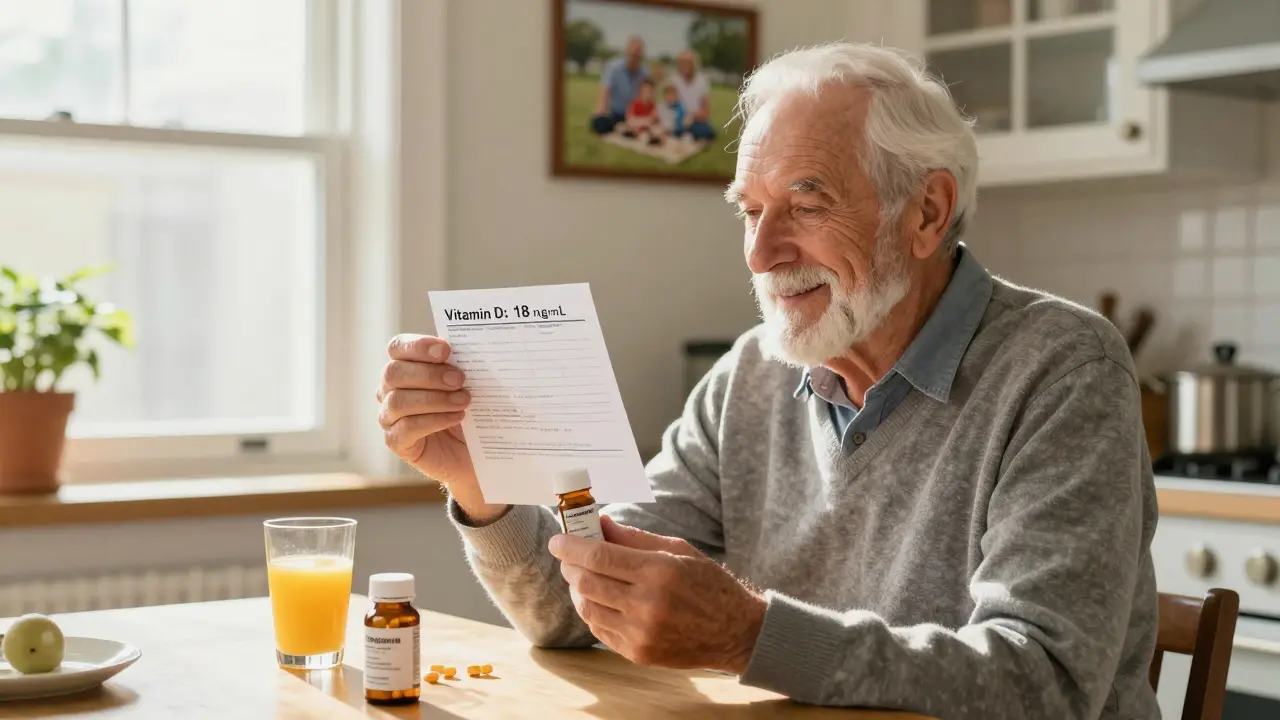
Vitamin D and Statin Tolerance Calculator
Find out if your vitamin D level is sufficient for statin tolerance and get personalized guidance based on the latest evidence.
For millions of people taking statins to lower cholesterol and prevent heart attacks, muscle pain isn’t just an inconvenience-it’s a dealbreaker. About 1 in 4 patients stop taking statins because of muscle aches, weakness, or cramps. But what if a simple fix-like checking your vitamin D levels-could help you stay on the medication that’s saving your life?
The idea sounds too good to be true. And for years, it looked like it might be. Back in 2009, a small study found that 92% of patients with statin-induced muscle pain felt better after fixing their vitamin D deficiency. That sparked a wave of clinical practice: doctors started testing vitamin D levels in anyone who complained about statin side effects. Many patients responded. Some even got back on statins after years of avoiding them.
But then came the big study that changed everything.
What the Science Actually Says
The story of vitamin D and statins isn’t just about one link-it’s about two competing truths.
On one side, you have observational studies. These look at real-world patterns. In one 2017 study, researchers found that patients with vitamin D levels below 20 ng/mL were far more likely to have muscle pain from statins. But here’s the kicker: after giving them 2,000 IU of vitamin D daily for a few weeks, 90% of them could tolerate statins again. Those with higher vitamin D levels? Only 33% could get back on statins. The researchers concluded that low vitamin D wasn’t just a coincidence-it might be a key reason statins fail for some people.
But observational studies have a flaw: they can’t prove cause and effect. Maybe people with low vitamin D are also less active, eat worse, or have other health issues that make muscle pain more likely. Maybe the act of taking supplements made patients feel better psychologically-even if their muscles didn’t change.
Then in 2022, the JAMA Cardiology study dropped. It wasn’t a small observation. It was a randomized controlled trial-gold standard science-with over 2,000 participants. Half got vitamin D supplements. Half got placebo pills. Both groups started statins. After tracking muscle symptoms for months, the results were clear: no difference. Both groups had the same rate of muscle pain. The same rate of people quitting statins. Vitamin D didn’t help. Not even a little.
This is the heart of the confusion. One set of studies says vitamin D fixes the problem. The other says it doesn’t. Which one do you trust?
Why the Conflict Exists
The answer lies in how the studies were done.
The 2017 study looked at people who were already having trouble with statins. They had failed multiple statins. Their vitamin D was very low. They were given supplements. Many got better. It’s a powerful story-and it’s why many doctors still test vitamin D in these patients.
The 2022 study looked at people who had never taken statins before. They were healthy, at risk for heart disease, and randomly assigned to take vitamin D or not. Then they started statins. No one was already in pain. No one was desperate to get back on medication. The results? Vitamin D didn’t prevent muscle pain from starting.
So here’s the real takeaway: vitamin D might not stop statin muscle pain in people starting statins for the first time. But it might help people who already have it-and who are severely deficient.

What Your Vitamin D Level Really Means
Vitamin D levels aren’t just ‘low’ or ‘normal.’ There are clear thresholds with real consequences.
- Below 20 ng/mL: Deficient. This is where muscle weakness becomes a real risk-on its own, even without statins. Studies show people in this range are far more likely to have statin-related muscle pain.
- 20-30 ng/mL: Insufficient. You’re not technically deficient, but your muscles may still be struggling.
- Above 30 ng/mL: Sufficient. Most experts agree this is the target for muscle health.
Here’s what the data shows: if your level is below 20 ng/mL and you’re having muscle pain on statins, supplementing might be your best shot at staying on the medication. If your level is already above 30, taking extra vitamin D won’t help.
And here’s another twist: some statins may affect vitamin D differently. One study found people taking atorvastatin had higher vitamin D levels than those on other statins. That doesn’t mean atorvastatin fixes vitamin D-it might mean the drug interferes with how vitamin D is broken down. The science here is still murky, but it’s another reason blanket advice doesn’t work.
What Doctors Are Actually Doing
In clinics across the U.S., Canada, and Europe, many doctors still test vitamin D in patients with statin intolerance. Why? Because even with the 2022 trial, they’re seeing real results in their patients.
One lipid specialist reported that after correcting vitamin D deficiency, 53% of patients who had failed three or more statins were able to restart a statin and stay on it for at least four months. Another doctor noted patients were more willing to stick with statins after fixing their vitamin D-even if the improvement was partly psychological. When people feel like something is being done, they’re more likely to trust the treatment.
And here’s the practical side: if you’re already taking a vitamin D supplement for bone health, you might be fine. But if you’re not-and you’re having muscle pain on statins-it’s worth checking.

What to Do If You’re Having Muscle Pain on Statins
If you’re struggling with muscle pain on statins, here’s what actually works:
- Get your vitamin D tested. Ask for a 25-hydroxyvitamin D blood test. Don’t guess. Don’t rely on symptoms alone.
- If it’s below 20 ng/mL, supplement. 2,000 IU daily for 6-8 weeks is standard. Retest after that.
- If it’s above 30 ng/mL, don’t bother. Extra vitamin D won’t help your muscles.
- Try switching statins. If you’re on simvastatin or lovastatin, consider switching to pravastatin or rosuvastatin. These are less likely to cause muscle issues, especially after vitamin D is fixed.
- Don’t stop statins without talking to your doctor. Stopping statins increases your risk of heart attack or stroke by up to 35% in high-risk patients.
There’s no magic pill. But if your vitamin D is low, fixing it might be the missing piece.
The Bigger Picture
Statins prevent 1 in 3 heart attacks in people at high risk. That’s huge. But if 1 in 4 people quit because of muscle pain, we’re losing ground.
Vitamin D isn’t a cure-all. But for the subset of patients with true deficiency, it might be the difference between staying alive and stopping medication.
The 2022 trial says vitamin D doesn’t prevent muscle pain in healthy people starting statins. That’s important. But it doesn’t answer the question for people who are already suffering.
For now, the best advice is simple: test, don’t guess. If your vitamin D is low, fix it. If it’s not, don’t waste time. And if muscle pain continues? Talk to your doctor about statin alternatives, lower doses, or non-statin options like ezetimibe or PCSK9 inhibitors.
This isn’t about vitamins replacing drugs. It’s about removing one unnecessary barrier to life-saving treatment.
Can low vitamin D cause muscle pain even without statins?
Yes. Severe vitamin D deficiency (below 20 ng/mL) is linked to muscle weakness, fatigue, and increased risk of falls, even in people not taking statins. The same muscle pathways affected by low vitamin D are also involved in statin-induced myopathy, which is why the two often overlap. Fixing deficiency can improve muscle strength regardless of statin use.
How much vitamin D should I take if I’m deficient?
For deficiency (below 20 ng/mL), most experts recommend 2,000 IU of vitamin D3 daily for 6 to 8 weeks, followed by a blood test to check improvement. After that, a maintenance dose of 800-1,000 IU daily is usually enough. Higher doses (like 5,000 IU) aren’t needed for most people and can increase the risk of toxicity over time.
Should everyone on statins get their vitamin D checked?
No. Routine testing isn’t recommended for people who tolerate statins well. But if you’re experiencing unexplained muscle pain, weakness, or cramps while on statins-especially if you have limited sun exposure, darker skin, or are over 65-getting tested is reasonable. It’s a low-cost, low-risk check that might help you stay on a life-saving medication.
What if my vitamin D is normal but I still have muscle pain?
If your vitamin D is above 30 ng/mL and you’re still having muscle pain, the issue is likely not vitamin D. Talk to your doctor about switching statins (pravastatin or rosuvastatin are often better tolerated), lowering the dose, or trying a non-statin cholesterol drug like ezetimibe or bempedoic acid. Muscle pain on statins can also be caused by genetics, thyroid problems, or other medications-so a full review is needed.
Can taking vitamin D make statins more dangerous?
No. There’s no evidence that vitamin D increases statin toxicity. In fact, some studies suggest correcting deficiency might reduce the risk of muscle damage by improving overall muscle health. However, taking extremely high doses of vitamin D (over 10,000 IU daily long-term) can lead to calcium buildup in blood vessels, which is harmful. Stick to standard doses unless directed otherwise by a doctor.
Melba Miller
March 7, 2026 AT 17:19Let me get this straight-you’re telling me we’re giving out vitamin D like candy because some small study said so, and now we’re ignoring a massive RCT? This is why medicine is broken. We chase anecdotes instead of data. If you’re not part of the solution, you’re part of the problem.
And don’t even get me started on how doctors are still testing this like it’s 2010. Wake up. Science moved on. Stop wasting people’s time and money on useless blood tests.
Katy Shamitz
March 8, 2026 AT 06:04Oh honey, I feel you-but let’s be real. My mom was on statins, hated them, had zero energy, and her vitamin D was at 14. After 6 weeks of supplements? She went from dragging herself to the fridge to walking 3 miles a day. I don’t care what JAMA says-she’s alive and moving. That’s the real science right there.
Some people need data. Others just need to feel better. And if vitamin D helps even 10% of people stay on life-saving meds? That’s worth it.
Neeti Rustagi
March 8, 2026 AT 18:14It is imperative to recognize that the dichotomy between observational and interventional studies does not inherently invalidate either body of evidence. Rather, it illuminates the necessity for context-specific clinical judgment.
Patients presenting with pre-existing statin intolerance and documented severe deficiency (serum 25(OH)D <20 ng/mL) represent a distinct phenotypic subgroup. In this cohort, the potential for clinical improvement via repletion is biologically plausible and clinically observable. To extrapolate the negative findings of a prophylactic trial to this specific population is methodologically unsound.
Therefore, targeted testing and repletion remain a reasonable, low-risk intervention in this context. Blanket rejection of the practice is not evidence-based-it is dogmatic.
Dan Mayer
March 9, 2026 AT 07:57Janelle Pearl
March 11, 2026 AT 04:37I’ve been there. My husband was terrified to take statins after one bad reaction. We didn’t even test his vitamin D at first-we just assumed it was the statin. Then we tested. His level was 18. We started him on 2,000 IU. Two months later, he’s on a low dose of rosuvastatin and says he feels better than he has in years.
I’m not saying it works for everyone. But for some? It’s the quiet hero no one talks about. If you’re suffering, get tested. It’s cheap. It’s safe. And if it helps? You’ve got your life back.
Ray Foret Jr.
March 12, 2026 AT 21:51Samantha Fierro
March 14, 2026 AT 17:43The clinical implications of this evidence are nuanced and require a tiered approach. The 2022 RCT is methodologically robust, yet its population does not reflect the real-world cohort most frequently presenting with statin intolerance.
For patients with documented deficiency, vitamin D repletion remains a low-cost, low-risk intervention with potential for meaningful clinical benefit. Dismissing this practice outright ignores the ethical imperative to alleviate suffering where possible, even if the mechanism is not fully elucidated.
Furthermore, the psychological component of patient adherence-often underestimated-is a legitimate therapeutic variable. If a patient believes they are being actively supported, their compliance and perceived well-being improve. This is not placebo-it is patient-centered care.
Robert Bliss
March 16, 2026 AT 17:20Peter Kovac
March 16, 2026 AT 21:32The entire narrative is a textbook case of confirmation bias in clinical medicine. The 2009 and 2017 studies were retrospective, unblinded, and lacked controls. Their findings are statistically vulnerable to regression to the mean, selection bias, and the placebo effect.
The 2022 trial was prospective, randomized, double-blind, and adequately powered. Its null result should be the new standard of care. Continuing to test vitamin D in this context is not evidence-based-it is medical folklore. It wastes resources, misleads patients, and erodes trust in science.
There is no subgroup analysis in the JAMA paper that suggests benefit. To claim otherwise is pseudoscience dressed in a lab coat.
APRIL HARRINGTON
March 17, 2026 AT 19:16Leon Hallal
March 18, 2026 AT 07:17Judith Manzano
March 19, 2026 AT 22:14