What Are Biosimilars? A Simple Guide for Patients
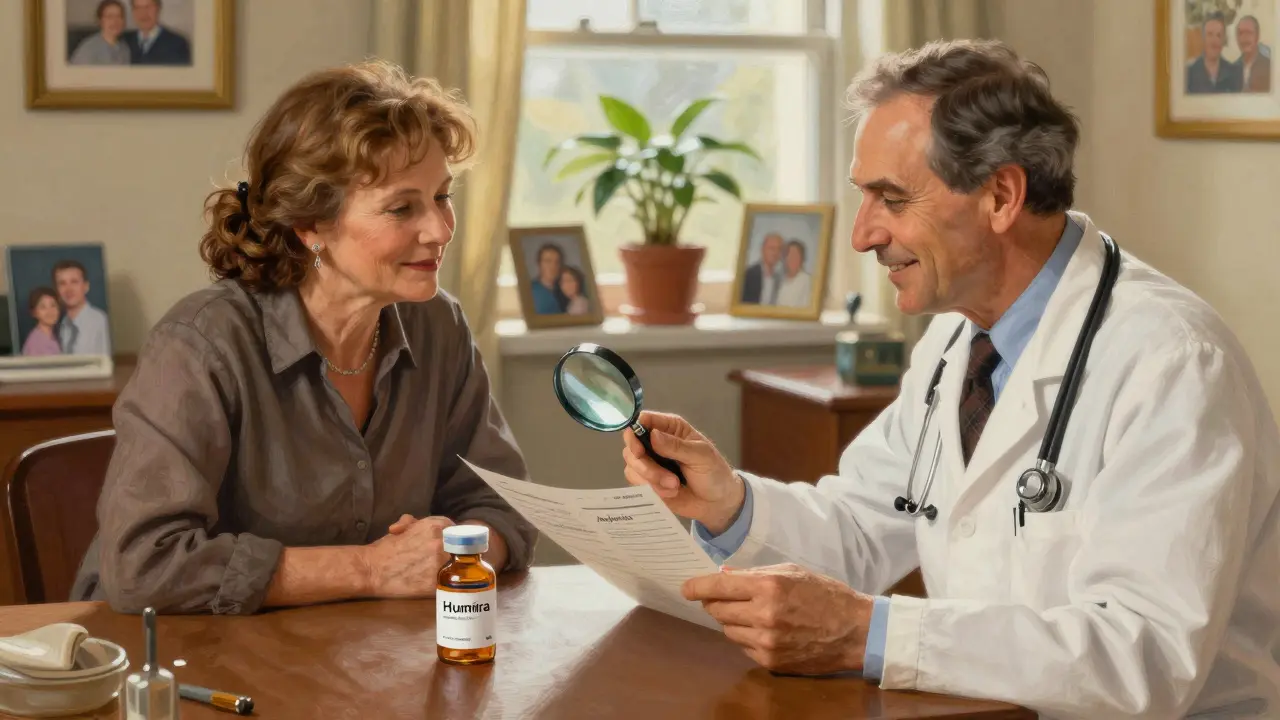
When your doctor talks about a new medicine called a biosimilar, it’s normal to feel confused. You’ve heard of generics - those cheaper versions of pills like ibuprofen or metformin. But biosimilars? They’re not the same. And that’s okay. Let’s break it down, plain and simple.
Biosimilars aren’t generics - and that matters
Generic drugs are copies of chemical pills. They’re made in labs using exact formulas. If you take a generic version of aspirin, it’s chemically identical to the brand name. Same atoms. Same structure. Same effect. Biosimilars? They’re different. They’re copies of biologic drugs - medicines made from living cells. Think of them like a handmade quilt. No two quilts are exactly alike, even if they’re made by the same person using the same pattern. Biologics are made in living cells - often from bacteria, yeast, or animal cells - and the process is incredibly complex. Tiny changes in temperature, pH, or how the cells are grown can change the final product. So a biosimilar isn’t an exact copy. It’s a highly similar version. Think of it like two different brands of whole milk. One comes from a farm in Wisconsin, another from a farm in New Zealand. They’re not identical - different cows, different feed, different handling - but they both give you the same nutrition. That’s what biosimilars do.How do we know they’re safe?
The U.S. Food and Drug Administration (FDA) doesn’t just approve biosimilars because a company says they’re similar. They demand proof. Before a biosimilar gets approved, it goes through years of testing:- Lab tests to compare its molecular structure to the original biologic
- Tests to see how it behaves in the body (called pharmacokinetics)
- Animal studies to check for toxicity
- Clinical trials with real patients - often hundreds - to prove it works just as well
What conditions are biosimilars used for?
Biosimilars aren’t for every illness - but they’re helping people with serious, long-term conditions:- Arthritis (like rheumatoid arthritis and psoriatic arthritis)
- Inflammatory bowel disease (Crohn’s disease, ulcerative colitis)
- Psoriasis and other skin conditions
- Certain cancers (like breast cancer, colon cancer, lymphoma)
- Diabetes (biosimilar insulins)
- Eye diseases (like macular degeneration)
What’s the difference between biosimilars and bioidenticals?
You might hear the term “bioidentical” thrown around. That’s not the same as a biosimilar. Bioidenticals are made using the exact same process as the original drug - same cells, same equipment, same steps. They’re essentially the same product from a different factory. Biosimilars? They’re made with a slightly different process, but the end result is just as good. Think of it like two chefs making the same recipe. One uses organic eggs, the other uses conventional. The taste? Almost identical. The ingredients? Slightly different, but the outcome? Still delicious.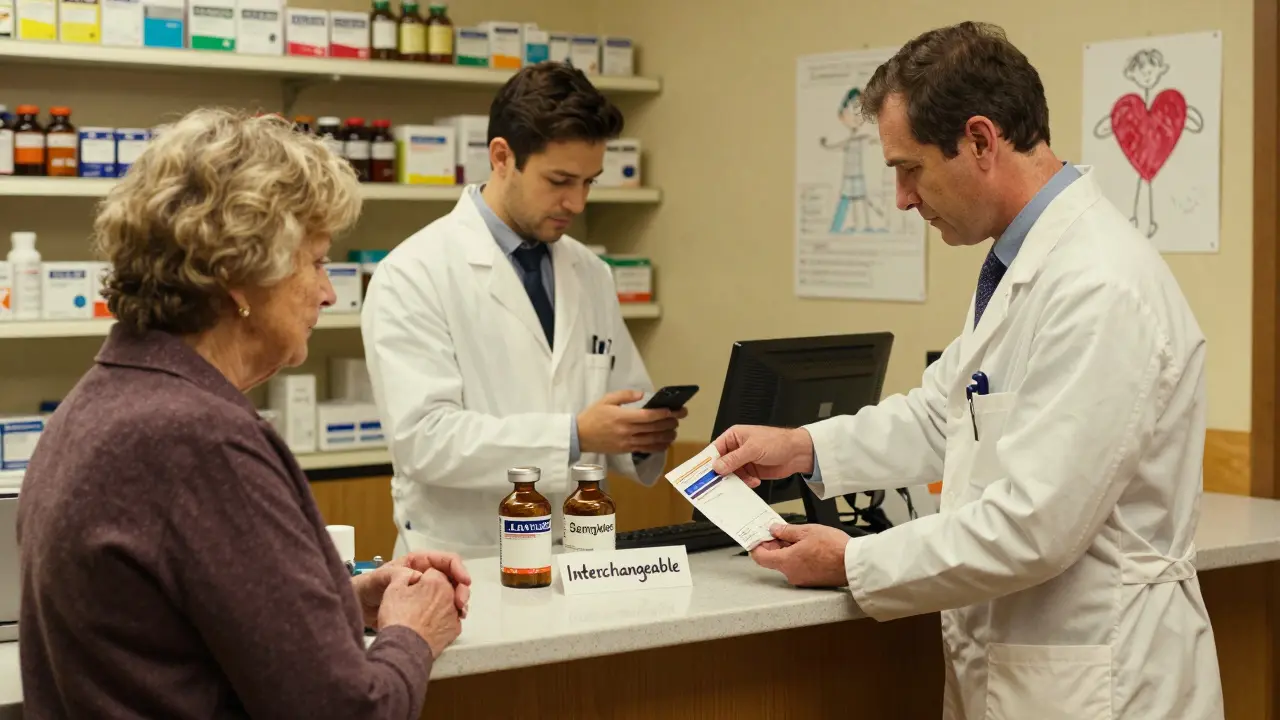
Will your insurance push you to use a biosimilar?
Yes. And that’s usually a good thing. Insurance companies know biosimilars are cheaper. So they often require you to try a biosimilar before they’ll pay for the original biologic. This isn’t a trick. It’s a way to save money so more people can get care. You’re not forced to switch. If your doctor says the original drug works better for you - or if you’ve been stable on it for years - you can usually stay on it. But if you’re new to treatment, starting with a biosimilar is a smart, safe choice.What do the names look like?
Biosimilars have confusing names. That’s by design. The original biologic might be called Humira (adalimumab). Its biosimilar might be Amjevita (adalimumab-atto). See the extra four letters? That’s the suffix - it’s there so doctors and pharmacists know exactly which product you’re taking. It’s not meant to confuse you. It’s meant to keep you safe. If something goes wrong, they can track which version you got.Can you switch from the original to a biosimilar?
Yes. And studies show it’s safe. In Europe, patients have been switching between biologics and biosimilars for over a decade. No increase in side effects. No drop in effectiveness. The Arthritis Foundation and the American Cancer Society both say switching is safe. If you’re doing well on your current drug, talk to your doctor before switching. But if you’re starting treatment, or your insurance requires it, don’t worry - you’re not taking a risk.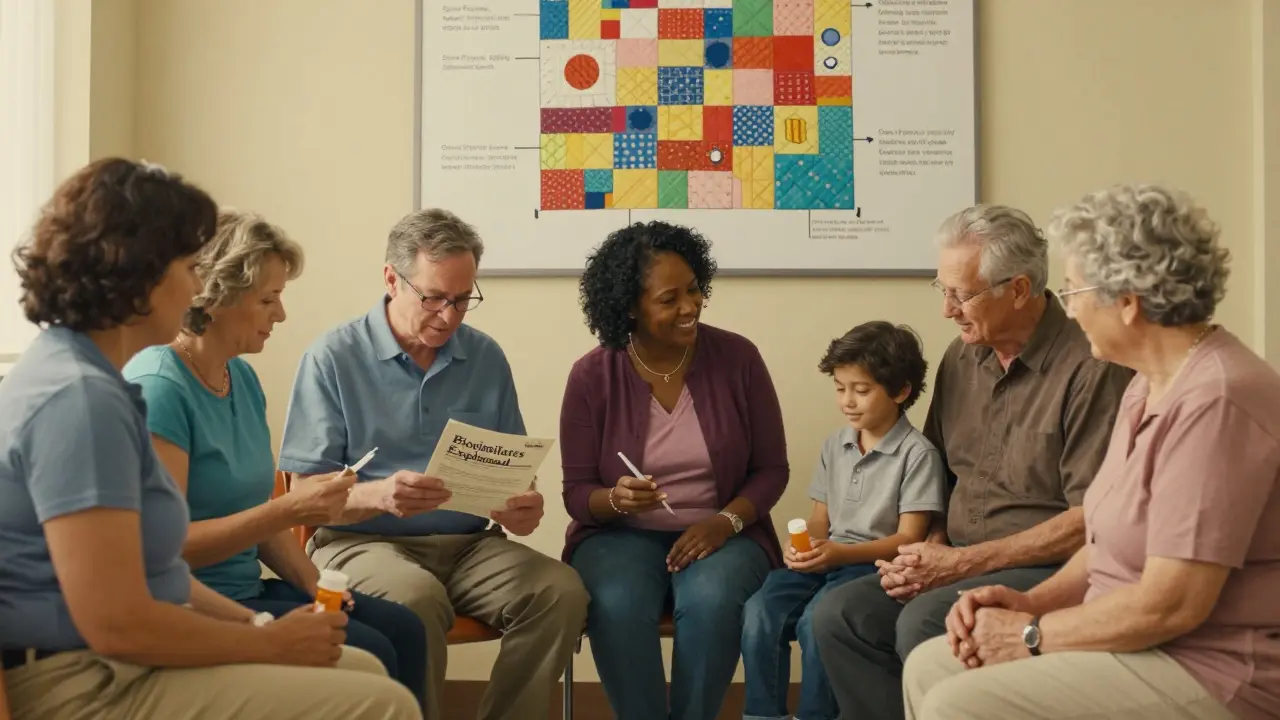
What about the future?
The first “interchangeable” biosimilar - Semglee, a version of insulin glargine - was approved in 2021. That means a pharmacist can swap it for the brand name without asking your doctor. It’s like switching from brand-name ibuprofen to generic - automatic, safe, and legal. More interchangeable biosimilars are coming. By 2028, the global market for these drugs is expected to hit $30.5 billion. That means more choices. Lower prices. Better access.What should you do as a patient?
You don’t need to be an expert. But here’s what you should know:- Biosimilars are not experimental. They’ve been tested like the original drugs.
- They’re just as safe and effective.
- They cost less - which helps you and the system.
- They have different names, but the same purpose.
- Always tell your doctor if you’re worried. You have the right to ask questions.
Still unsure? Talk to your doctor.
Your doctor isn’t trying to save money on your back. They’re trying to give you the best treatment possible - and sometimes, that’s a biosimilar. Ask them:- Is this a biosimilar?
- How is it different from the original?
- Has it been used successfully in other patients like me?
- What side effects should I watch for?
Are biosimilars the same as generics?
No. Generics are exact chemical copies of small-molecule drugs like aspirin or metformin. Biosimilars are highly similar versions of complex biologic drugs made from living cells. They can’t be exact copies because the manufacturing process is too complex - but they work the same way and are just as safe.
Are biosimilars safe?
Yes. The FDA requires extensive testing - including lab studies, animal trials, and clinical trials with hundreds of patients - before approving any biosimilar. Studies show they have no clinically meaningful differences in safety or effectiveness compared to the original biologic. Millions of patients worldwide have used them without unexpected issues.
Can I switch from my current biologic to a biosimilar?
Yes, and it’s been proven safe. In Europe, patients have switched between biologics and biosimilars for over 15 years with no increase in side effects or loss of effectiveness. If you’re stable on your current drug, talk to your doctor first. But if you’re starting treatment or your insurance requires it, switching is a safe and common choice.
Why do biosimilars have weird names with extra letters?
The extra four letters (like -dyyb or -atto) are added to the generic name to help doctors and pharmacists track exactly which product you’re using. It’s not meant to confuse you - it’s to keep you safe. If there’s ever a side effect, they can tell which version caused it.
Do biosimilars cost less than the original biologics?
Yes, typically 15% to 30% less. That doesn’t mean they’re lower quality - it means manufacturing has become more efficient, and competition is driving prices down. These savings help patients pay less out of pocket and make treatments available to more people.
What’s the difference between a biosimilar and an interchangeable biosimilar?
An interchangeable biosimilar is a special type that a pharmacist can swap for the original biologic without needing your doctor’s permission - just like switching from brand-name aspirin to generic. The first one approved in the U.S. was Semglee, a biosimilar to insulin glargine. Not all biosimilars are interchangeable yet - but more are on the way.
What conditions are treated with biosimilars?
Biosimilars treat serious chronic conditions like rheumatoid arthritis, Crohn’s disease, psoriasis, certain cancers (like breast and colon cancer), diabetes (insulin), and macular degeneration. They’re not for every illness - but they’ve changed how we treat these complex diseases.
There’s a lot of noise around new medicines. But when it comes to biosimilars, the science is clear: they’re safe, effective, and here to stay. You’re not being offered a compromise - you’re being offered a smarter, more affordable way to get the care you need.
Adarsh Uttral
January 30, 2026 AT 09:18Man, I thought biosimilars were just cheap knockoffs until I read this. Now I get it - it’s like two different brands of chai, same warmth, different spices. My cousin’s on one for RA and hasn’t had a flare in a year. No drama, just relief. Cool stuff.
Also, the name suffix thing? Genius. My pharmacist actually explained it to me last time. Didn’t even know they did that.
April Allen
January 31, 2026 AT 19:47It’s critical to understand that biosimilars are not ‘generic equivalents’ in the pharmacokinetic sense - they’re complex, high-molecular-weight proteins derived from living systems, and their structural heterogeneity necessitates a different regulatory paradigm than small-molecule generics. The FDA’s comparability protocol requires analytical, nonclinical, and clinical bridging studies that demonstrate no clinically meaningful differences in safety, purity, or potency. This isn’t marketing - it’s biopharmaceutical science at its most rigorous.
Sheila Garfield
February 2, 2026 AT 14:51I’m so glad someone explained this clearly. I was nervous when my insurance switched me to a biosimilar for my Crohn’s, but my GI doc sat down with me and showed me the data. Honestly? I feel the same. No weird side effects, same energy levels. Maybe we just need more stories like this - less fear, more facts.
Also, the milk analogy? Perfect. I’m stealing that for my mom next time she freaks out about my meds.
Shawn Peck
February 3, 2026 AT 06:49Let me cut through the BS - biosimilars are just Big Pharma’s way to keep charging you for the same drug. They don’t work as good. I read a guy on YouTube who got worse after switching. They don’t tell you that. The FDA’s in bed with the drug companies. You think they’d let a cheap version fly if it wasn’t a scam? Wake up.
My cousin’s on Humira and she’s fine. Why mess with it? They want you to switch so they can charge less and still make bank. It’s a trap.
Holly Robin
February 4, 2026 AT 11:15EVERYTHING YOU JUST SAID IS A LIE. Biosimilars are part of the globalist medical agenda to control populations. The FDA? A puppet. The ‘clinical trials’? Paid actors. The ‘no meaningful difference’? That’s what they said about thalidomide too. Look at the suffixes - -atto, -dyyb - those aren’t for safety, they’re for tracking. You’re being tagged. They’re using your meds to monitor you. Why else would they need unique names? Why now? Why so many? They’re preparing for the Great Reset. Don’t be a sheep.
My neighbor’s aunt’s dog had a reaction. They buried the report. I saw the redacted PDF. It’s all connected.
Shubham Dixit
February 5, 2026 AT 17:02India has been producing high-quality biosimilars for over a decade now - better than some Western brands. Our companies like Biocon and Dr. Reddy’s have saved millions of lives globally. Why do you think the US and EU import so many? Because we do it right. We don’t overcharge. We don’t hide behind patents. We make science accessible. You think your insulin is cheap? Blame America’s greed. We made it affordable. And you still doubt it? That’s your problem, not ours. We don’t need your approval - we’ve already changed the game.
My uncle got a biosimilar insulin in 2018. Paid $20 a month. In the US? $300. Who’s the real hero here?
KATHRYN JOHNSON
February 5, 2026 AT 19:02This article is dangerously misleading. The term ‘no clinically meaningful differences’ is a regulatory euphemism for insufficient long-term data. The FDA’s approval pathway for biosimilars is not equivalent to the original biologic’s full clinical development program. There are documented cases of immunogenicity shifts and loss of efficacy over time. Patients deserve transparency, not marketing. This is not a victory - it’s a compromise disguised as progress.
Jodi Olson
February 5, 2026 AT 19:32It’s funny how we fear what we don’t understand. We accept that two hand-knitted sweaters from the same pattern might differ in stitch tension - but when it comes to medicine made from living cells, suddenly it’s a conspiracy? The body doesn’t care if the cell line was grown in a bioreactor in Switzerland or in Bangalore. It responds to the protein. That’s all. The rest is noise.
Let science breathe.
Carolyn Whitehead
February 7, 2026 AT 18:43My dad switched to a biosimilar for his diabetes and didn’t even notice. He just said his bills were lower and his blood sugar stayed steady. That’s all I needed to hear. Honestly? I’m so glad we have these options now. Less stress, more access. Keep sharing stuff like this - it helps people like me who don’t know where to start.
Thanks for making it simple.
Amy Insalaco
February 9, 2026 AT 03:49While the article superficially presents biosimilars as benign cost-saving alternatives, it conspicuously omits the epistemological crisis inherent in their ontological status: they are not identical, not interchangeable in a metaphysical sense, and their heterogeneity introduces a latent uncertainty into the pharmacotherapeutic paradigm. The FDA’s ‘no clinically meaningful difference’ standard is a statistical sleight of hand - it reduces patient outcomes to p-values and ignores the lived, embodied experience of immunogenicity, suboptimal response, and therapeutic drift over time. This isn’t progress - it’s the commodification of biological complexity under the guise of efficiency. The ‘milk analogy’ is not just reductive - it’s infantilizing. Living systems cannot be homogenized without consequence. We are not dairy farmers. We are patients. And we deserve more than analogies.
kate jones
February 10, 2026 AT 00:24As someone who works in global health policy, I’ve seen how biosimilars have transformed access in low- and middle-income countries. In Kenya, biosimilar TNF inhibitors cut treatment costs by 70% - allowing entire clinics to scale up care. This isn’t just about price. It’s about dignity. The science is solid. The regulatory frameworks are robust. The fear? Mostly cultural, not clinical.
Patients deserve to know they’re not being ‘downgraded.’ They’re being upgraded - to affordable, evidence-based care. And yes, the naming conventions? Necessary. Safety first, always.
Natasha Plebani
February 10, 2026 AT 04:20There’s something deeply human about this whole thing - we’re terrified of complexity, so we demand perfect copies. But biology isn’t a recipe. It’s a dance. Biosimilars aren’t failures to replicate - they’re elegant approximations that work because the body doesn’t need perfection. It needs function. And function? It’s found in the margins, in the variations, in the subtle differences we’re trained to fear.
Maybe the real lesson here isn’t about drugs - it’s about trust. Trust in science. Trust in process. Trust that sometimes, ‘close enough’ is more than enough. And maybe, just maybe, that’s okay.