Why Generic Drug Shortages Happen and How They Block Patient Access
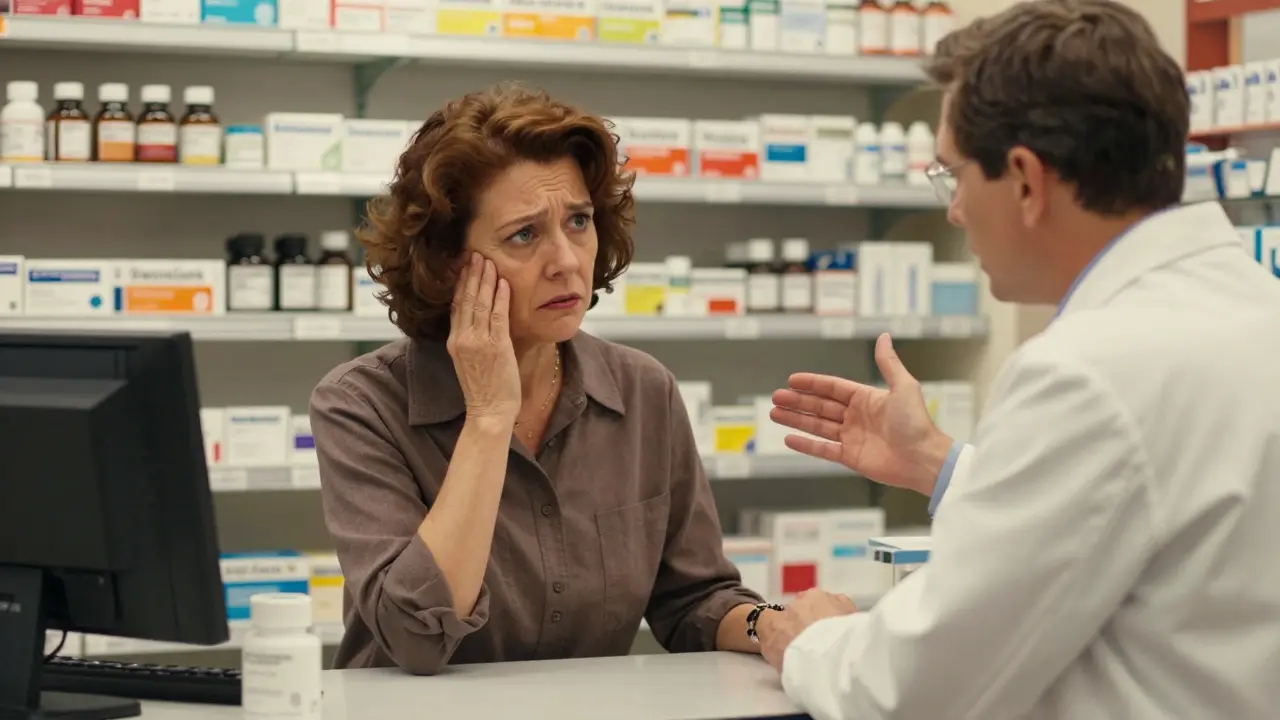
Imagine walking into your pharmacy for a refill on a medication you’ve taken for years, only to be told it’s gone. Not just out of stock, but unavailable anywhere in the country. This isn’t a rare glitch; it is a persistent crisis. As of mid-2025, there are over 270 active drug shortages in the United States. While headlines often focus on expensive brand-name medications, the real bottleneck lies in generic drugs, which are lower-cost copies of prescription medicines that have lost patent protection. These generics account for roughly 90 percent of all prescriptions filled, yet they represent more than twice as many shortages compared to their branded counterparts.
The problem isn’t new, but it has become systemic. Between 2018 and 2023, there were 1,391 generic drug shortages versus only 600 brand-name shortages. For patients, this means delayed treatments, higher costs, and sometimes dangerous gaps in care. Understanding why this happens requires looking past simple manufacturing errors to a fragile global supply chain and a market structure that penalizes reliability.
The Anatomy of a Shortage: Why Generics Fail First
To understand why generic drugs disappear so frequently, we need to look at how they are made and sold. Unlike brand-name drugs, which command high prices and robust profit margins, generics operate on razor-thin margins. Manufacturers often earn between 5 and 10 percent gross margin on these products. Compare that to the 30 to 40 percent margins seen in brand-name pharmaceuticals, and the incentive to invest in excess capacity or redundant supply lines vanishes.
This economic pressure creates a "just-in-time" manufacturing model with no buffer. If a factory machine breaks down, a raw material shipment is delayed, or an inspection fails, production stops immediately. There is no backup stockpile to draw from because storing extra inventory eats up those tiny profits. Dr. Erin Fox, Senior Director of Drug Information at University of Utah Health, notes that maintaining low to no excess manufacturing capacity makes the entire supply chain vulnerable when disruptions occur.
The vulnerability is compounded by where these drugs come from. More than half of the drugs used in the U.S. are manufactured abroad. Approximately 80 percent of active pharmaceutical ingredients (APIs)-the actual chemical compounds that treat disease-come from facilities in China and India. When geopolitical tensions rise, shipping lanes close, or local regulations change in these regions, U.S. pharmacies feel the impact weeks later. This geographic concentration turns international logistics issues into domestic health crises.
The Sterile Injectable Crisis
Not all generic drugs are equally likely to go missing. The highest risk category is sterile injectable drugs, which include medications administered via injection that must be manufactured under strict sterile conditions to prevent contamination. These account for about 60 percent of all generic drug shortages. Making a sterile injectable is complex and expensive. It requires specialized cleanrooms, rigorous testing, and highly trained personnel. Because the process is so stringent, fewer manufacturers can do it, leading to a concentrated market.
| Metric | Generic Drugs | Brand-Name Drugs |
|---|---|---|
| Average Gross Margin | 5-10% | 30-40% |
| Shortages (2018-2023) | 1,391 | 600 |
| Median Price Increase During Shortage | 14.6% | 0% |
| Availability of Therapeutic Alternatives | Limited | Frequently Available |
When a shortage hits this category, hospitals are stuck. You cannot simply substitute one IV antibiotic for another without careful clinical evaluation. The median duration of these shortages has doubled, jumping from 12 months in 2011 to 24 months in 2023. This long-term instability forces healthcare providers to constantly adapt, often with suboptimal results.

Impact on Patient Safety and Access
The human cost of these shortages is measurable and severe. A 2022 survey by the American Medical Association found that 63 percent of pharmacists reported serious adverse patient outcomes linked directly to drug shortages. What does "adverse outcome" mean in practice? It means a cancer patient receiving a less effective chemotherapy regimen because cisplatin is unavailable. It means a diabetic patient struggling to manage blood sugar because their specific insulin analog is out of stock.
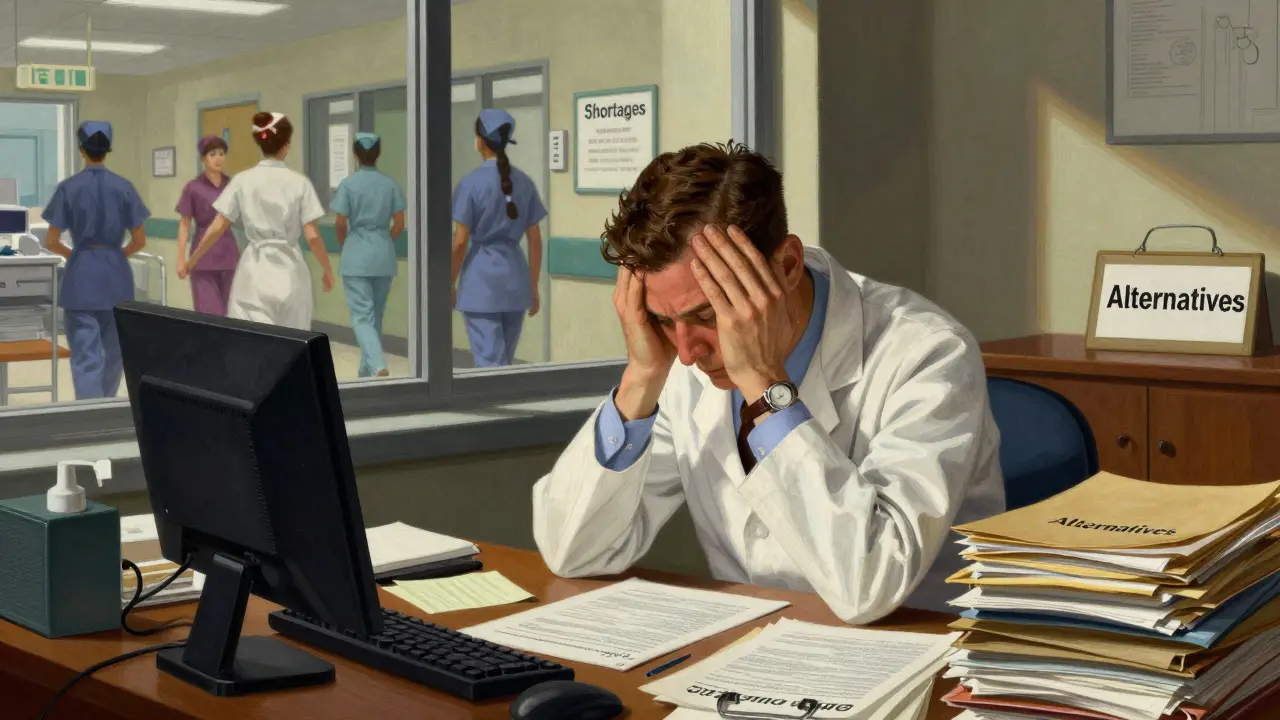
Hospitals bear the brunt of this operational chaos. According to a 2024 American Hospital Association survey, 89 percent of hospitals experienced critical shortages that forced treatment delays. Oncology departments are particularly hard hit, with two-thirds of cancer centers modifying regimens due to missing essentials. For independent pharmacies, the burden is administrative and financial. Pharmacists spend an average of 12.3 hours per week hunting for alternatives, time that could be spent on patient counseling or other care duties.
Patient abandonment is another silent consequence. When a preferred generic is unavailable, patients may be offered a more expensive alternative or asked to wait. In some cases, 43 percent of independent pharmacies report that patients simply abandon their prescriptions due to cost or availability issues. This leads to uncontrolled chronic conditions, increased emergency room visits, and ultimately, worse health outcomes.
Market Dynamics and Manufacturing Consolidation
The root cause of the shortage crisis is not just bad luck; it is a structural flaw in the generic pharmaceutical market. Over the last decade, the industry has consolidated significantly. The top 10 generic manufacturers now control approximately 60 percent of the market, up from 45 percent in 2015. Meanwhile, the number of FDA-registered generic manufacturing facilities in the U.S. dropped by 22 percent between 2015 and 2024.
This consolidation reduces competition and resilience. With fewer players, a single factory failure can cripple the national supply of a specific drug. About 70 percent of generic drugs have only one or two FDA-approved manufacturers. This creates single points of failure. If one plant shuts down for quality issues-which happen frequently, with FDA inspection citations rising 35 percent from 2020 to 2024-the entire market dries up.
Economic incentives play a major role. The current market structure rewards the lowest price, not the most reliable supply. As FDA Commissioner Robert Califf testified before Congress in March 2024, the system does not incentivize reliability and quality over the lowest price. Manufacturers who invest in better quality control or redundant supply chains face higher costs, making them less competitive against cheaper, less resilient rivals. This race to the bottom leaves the system fragile.
Regulatory Responses and Future Outlook
Recognizing the severity of the issue, regulators have attempted interventions. Executive Order 14050, signed in October 2020, created an Essential Medicines List aimed at stabilizing supply for critical drugs. Initially, this worked; shortages of these essential medicines fell by 32 percent from 2020 to 2023. However, progress stalled, and shortages began rising again in 2023, reaching an all-time high of 323 in the first quarter of 2024.
The FDA’s 2024 Drug Shortage Task Force identified four key strategies: diversifying manufacturing geographically, creating financial incentives for reliable supply, implementing advanced manufacturing technologies, and improving early warning systems. Yet, experts remain cautious. Dr. Valerie Malta of the University of Utah warns that fundamental market dynamics won’t change without significant policy intervention. Without addressing the pricing structures that disincentivize investment in quality manufacturing, shortages will persist.
Looking ahead, external factors like proposed tariffs on pharmaceutical imports could worsen the situation. Analysts warn that tariffs ranging from 50 to 200 percent would disrupt an already fragile global supply chain, particularly for generic sterile injectables. The Congressional Budget Office projects that without policy changes, active drug shortages could reach 350 by the end of 2026. For patients and providers, the status quo is not an option; the system needs a redesign that values stability over minimal cost.
Why are generic drugs more prone to shortages than brand-name drugs?
Generic drugs have much lower profit margins (5-10%) compared to brand-name drugs (30-40%). This discourages manufacturers from investing in excess capacity or redundant supply chains. Additionally, the generic market is highly consolidated, with many drugs having only one or two manufacturers, creating single points of failure.
What types of generic drugs are most affected by shortages?
Sterile injectable drugs, such as IV antibiotics and chemotherapy agents, are the most affected, accounting for about 60% of all generic shortages. Their complex manufacturing requirements and strict sterile conditions limit the number of qualified producers.
How do drug shortages impact patient safety?
Shortages can lead to treatment delays, use of less effective alternatives, and increased side effects. A 2022 AMA survey found that 63% of pharmacists reported serious adverse patient outcomes due to shortages. Patients may also abandon prescriptions if alternatives are too costly or unavailable.
Where are most generic drugs and their ingredients manufactured?
More than 50% of drugs used in the U.S. are manufactured abroad. Approximately 80% of active pharmaceutical ingredients (APIs) come from facilities in China and India, making the U.S. supply chain vulnerable to international logistical and regulatory disruptions.
What is being done to fix the generic drug shortage crisis?
The FDA has implemented strategies like diversifying manufacturing locations and creating financial incentives for reliable supply. Executive Order 14050 established an Essential Medicines List. However, experts argue that deeper policy changes are needed to address the economic disincentives for quality and reliability in the generic market.
mardy duffy
May 13, 2026 AT 20:35ugh this is such a depressing read but yeah i get it
Javier Arauz
May 14, 2026 AT 00:07The fact that we are relying on China and India for 80% of our active pharmaceutical ingredients is an absolute national security disaster waiting to happen. We need to bring manufacturing back to the US immediately, even if it costs more. Our lives shouldn't be held hostage by foreign supply chains. It's pathetic that we let this happen.
Jeremiah Cassandra
May 15, 2026 AT 09:15Oh look, another article blaming 'globalization' while ignoring that US companies moved there because they could pay workers pennies and ignore environmental regs 🙄 The solution isn't just 'bring it back,' it's realizing that cheap drugs are only cheap because someone else is paying the externalities. But sure, blame the geography instead of the greed 💉
Kris Wong
May 15, 2026 AT 14:19It’s not just globalization, it’s a coordinated effort by Big Pharma to keep us weak and dependent 😈 They want you sick so you buy their new miracle cure when the generic runs out. The FDA is in on it too, look at how they delay inspections for domestic plants but fast-track imports from their buddies overseas 👁️👄👁️ Wake up sheeple!
Yuvraj Singh
May 15, 2026 AT 21:09I work in pharma manufacturing in India, and I can tell you that the quality standards here are incredibly strict, often stricter than what people assume. The issue isn't necessarily the location or the intent to harm patients, but rather the economic reality that generics have razor-thin margins. When you earn 5-10% gross margin, you cannot afford the redundancy that brand-name drugs enjoy. It is a systemic economic flaw, not a conspiracy. We take pride in our work, but the market structure simply does not allow for safety buffers without raising prices significantly.
Danny S
May 16, 2026 AT 03:14You are being fed a narrative to make you feel guilty about supporting international trade. The truth is that these shortages are engineered to create panic and justify higher taxes and stricter regulations under the guise of 'safety.' The FDA citations rising by 35%? That is a cover-up for political pressure. Do not trust the official story. (¬‿¬)
Anthony Red
May 17, 2026 AT 23:38Hey everyone, thanks for sharing your perspectives here. It’s really interesting to see how different angles come into play, whether it’s the economic pressures or the geopolitical concerns. I think we can all agree that the current system is broken, but maybe we can find common ground on solutions. Let’s keep the conversation respectful and open-minded. We’re all trying to figure this out together! 🤝
Christina Moran
May 18, 2026 AT 03:25i mean like... why is no one talking about how this affects people with chronic conditions who cant just switch meds? its not fair that some ppl suffer because of corporate profits. we need to do better as a society. also typos r hard sorry im tired
Dana Ellington
May 18, 2026 AT 09:10Omg yes!! This is SO important! 😭 My mom has diabetes and she almost missed her insulin last month because of a shortage. It was terrifying! We have to demand change NOW! Companies are greedy monsters and we cant let them win! 💪✨ Please share this everywhere!
victoria catharinaa
May 19, 2026 AT 16:07I hear you guys and it sounds really tough. I am angry too because people are getting hurt. We should support each other and push for laws that help. It is not okay to leave people behind. Let us stand together.
Desirea Gaona
May 20, 2026 AT 19:22It is imperative that we address the structural deficiencies within the pharmaceutical supply chain with urgency and precision. The consolidation of manufacturers has created a fragile ecosystem that is ill-equipped to handle disruptions. We must advocate for policies that incentivize reliability over cost-cutting measures. Furthermore, the reliance on foreign sources for active pharmaceutical ingredients poses a significant risk to national health security. A comprehensive review of regulatory frameworks is necessary to ensure patient safety and access to essential medications.
Glen Speck
May 22, 2026 AT 15:10the problem is deeper than just money or politics. it is about how we value life versus profit. we have built a system that punishes caution and rewards speed. until we change that fundamental mindset nothing will fix itself. we need to rethink what matters most
Sam Mackellar
May 23, 2026 AT 15:31I believe that a collaborative approach involving government, industry, and healthcare providers is essential to resolving this crisis. By fostering dialogue and implementing strategic incentives for reliable manufacturing, we can enhance the resilience of our supply chain. It is crucial that we prioritize patient welfare above all else and work towards a sustainable solution that benefits everyone involved.