Workers' Compensation and Generic Substitution: What You Need to Know in 2025

When a worker gets hurt on the job, getting the right medicine quickly matters. But in workers' compensation systems across the U.S., there’s a quiet revolution happening behind the scenes: generic substitution. It’s not about cutting corners-it’s about using the same effective medicine at a fraction of the cost. And it’s working.
Why Generic Drugs Are the New Standard
Generic drugs aren’t cheap knockoffs. They’re exact copies of brand-name medications, approved by the FDA to have the same active ingredients, strength, dosage, and how they work in your body. The only differences? The color, shape, or inactive fillers-and the price. A brand-name painkiller like Voltaren Gel might cost $100. The generic version? Around $20. That’s an 80% drop. In workers’ compensation, where drug costs make up about 20% of total medical spending, that adds up fast. In 2015, generics were used in 84.5% of managed prescriptions. By 2023, that number jumped to 89.2%. In states like California, it’s hitting 92.7%. That’s not luck. It’s policy.How the Law Makes It Happen
Forty-four states and D.C. have laws that either require or strongly encourage doctors to prescribe generics unless there’s a clear medical reason not to. Tennessee’s 2023 Medical Fee Schedule says it plainly: “An injured employee should receive only generic drugs… unless the authorized treating physician documents medical necessity for the brand-name product.” This isn’t just a suggestion. Pharmacy Benefit Managers (PBMs)-the middlemen who handle drug claims for workers’ comp-use formularies and prior authorization rules to block brand-name drugs unless the doctor explains why the generic won’t work. That means if you’re prescribed a brand-name drug without justification, the claim gets denied. The system is designed to push generics first.Costs That Don’t Add Up
Brand-name drug prices have been skyrocketing. Over five years, the most common brand-name drugs used in workers’ comp saw list prices rise by 65.5%. Meanwhile, the same drugs in generic form dropped 35%. Compare that to milk and bread, which only went up 7.4% in the same period. That’s not inflation-it’s exploitation. The savings aren’t just theoretical. In 2016, generics made up 85.7% of all managed prescriptions in workers’ comp, and those prescriptions accounted for 77.7% of total pharmacy costs. That means nearly 9 out of every 10 prescriptions filled were generics-and they paid for 8 out of every 10 dollars spent on drugs. The math is simple: fewer dollars spent on meds means more money left for rehabilitation, lost wages, and preventing future injuries.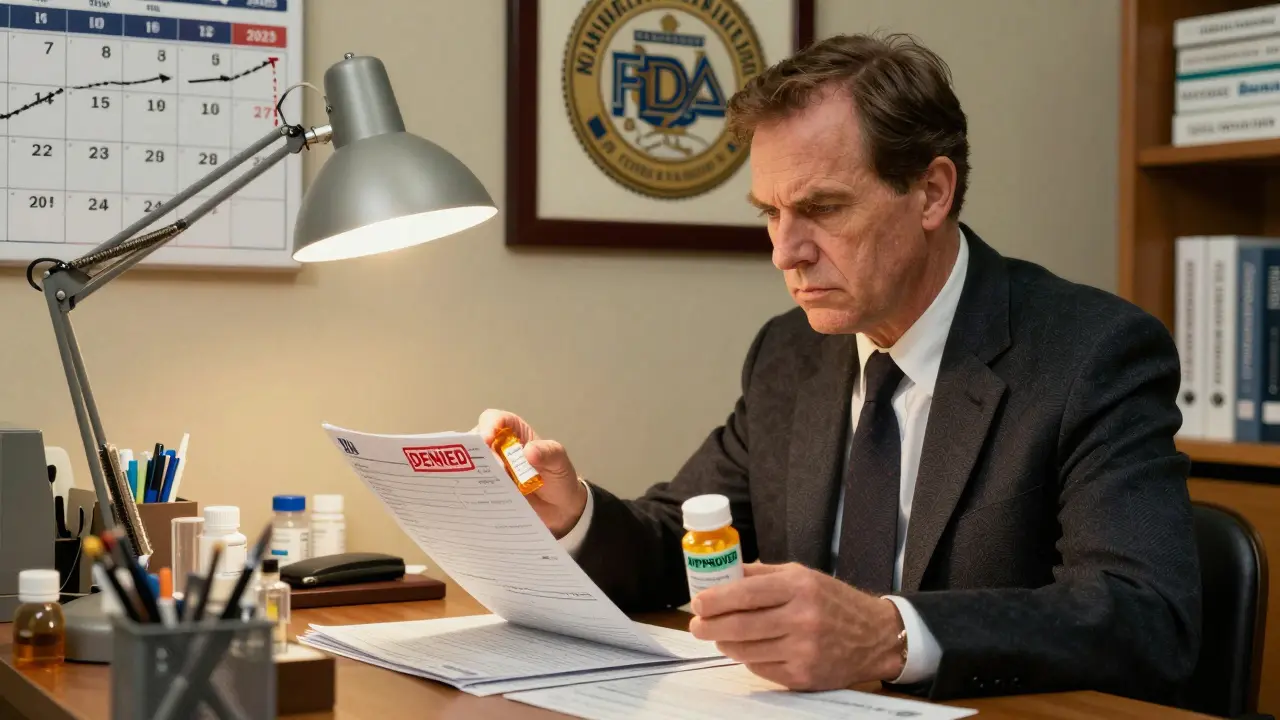
When Generics Don’t Work-And Why
Most of the time, generics work just as well. But there are exceptions. Some drugs have a narrow therapeutic index-meaning the difference between a helpful dose and a harmful one is tiny. Warfarin, lithium, and certain seizure meds fall into this category. For these, doctors may need to stick with brand-name versions to avoid dangerous fluctuations in blood levels. Even then, it’s rare. Less than 2% of cases involve therapeutic failures linked to generic substitution, according to Coventry’s 2016 data. But the perception problem is bigger than the reality. A 2019 survey found that 68% of injured workers believed brand-name drugs were better-even though 82% said they felt the same after switching to generics. That’s the real barrier: trust. Many workers, and even some doctors, still think “generic” means “weaker.” But the FDA doesn’t approve generics unless they’re bioequivalent. That means they’re chemically identical and perform the same way in the body. There’s no hidden downgrade.Who’s Driving the Change?
Three big PBMs-OptumRx, Express Scripts, and Prime Therapeutics-control about 65% of the workers’ comp pharmacy market. They’re the ones setting formularies, enforcing prior authorizations, and pushing for generics. Their goal? Lower costs without lowering care. Doctors are catching on too. The American College of Occupational and Environmental Medicine (ACOEM) has published guidelines supporting generic substitution where appropriate. But change doesn’t happen overnight. Many providers still default to prescribing brand names out of habit-or because they’re not trained on state-specific rules. In states with strong formularies like Tennessee or Colorado (which now requires 95% generic use for covered drugs), providers report smoother workflows. In states without clear rules, they’re stuck writing extra notes, justifying every brand-name prescription, and waiting for approvals. That’s not better care-it’s more paperwork.What Workers and Employers Should Do
If you’re an injured worker: Don’t assume brand-name is better. Ask your doctor if a generic is available. If they say no, ask why. If the reason is “I always prescribe this,” that’s not medical necessity. If they say “this generic didn’t work for me before,” ask for data-not anecdotes. If you’re an employer or claims adjuster: Push for training. Make sure your case managers know the state’s drug formulary. Train your occupational health nurses to explain bioequivalence to workers. Use patient education materials from the FDA or ACOEM. A simple conversation can reduce resistance and speed recovery.
Elaine Douglass
December 19, 2025 AT 02:36I’ve seen this first hand with my cousin who got hurt on the job. He was scared to take the generic because he thought it was fake. Turns out he felt the same, saved like $80 a month, and his boss didn’t even notice the difference. Just sayin’
Takeysha Turnquest
December 19, 2025 AT 21:06Generics are the silent revolution nobody talks about until their paycheck stops bleeding out for pills that do the exact same thing as the ones with fancy packaging. We’ve been conditioned to equate price with power. But the body doesn’t care about logos. It only cares about molecules. And the molecules don’t lie.
Emily P
December 21, 2025 AT 07:31Is there any data on how often doctors actually document medical necessity when they prescribe brand-name drugs? I’m curious if the 2% failure rate includes cases where the doctor just didn’t bother to justify it, or if it’s truly clinical failure.
Vicki Belcher
December 22, 2025 AT 03:05This is honestly one of the most hopeful things I’ve read all year 🙌 Generics aren’t cheap-they’re smart. And if we can fix the perception problem, we could redirect billions into real recovery instead of corporate profits. Thank you for writing this. 🌱💊
Allison Pannabekcer
December 22, 2025 AT 16:30There’s something deeply unfair about how we treat medicine like a luxury item. If a worker gets hurt, they shouldn’t have to fight for basic care because of how a pill looks. Generics aren’t second-rate-they’re second-to-none. The real question isn’t whether they work, it’s why we ever let branding dictate health outcomes in the first place. Let’s stop treating patients like customers and start treating them like people.
I’ve worked with injured workers for over a decade. The ones who get educated about bioequivalence? They heal faster. Not because the drug is different. Because they stop worrying. That’s the hidden benefit. Less anxiety. More trust. Better outcomes.
And honestly? The PBMs aren’t villains here. They’re just playing the system we built. The problem is we let the system get out of hand. We let marketing win over science. We let profit override compassion. But we can fix it. With education. With policy. With courage.
States like Tennessee and Colorado aren’t outliers-they’re blueprints. Other states should copy them. Not because they’re cheap, but because they’re right. And if doctors need help understanding formularies? Train them. Don’t punish them. We’re all trying to do the right thing here.
And for workers? Don’t be afraid to ask. Don’t be ashamed to say ‘I don’t know.’ Ask your doctor. Ask your case manager. Ask until you understand. You deserve to know what’s in your body. And you deserve to know it’s safe.
This isn’t about saving money. It’s about restoring dignity. And that’s worth fighting for.
Sarah McQuillan
December 23, 2025 AT 00:17Wait so now we’re supposed to trust generic drugs made in China? I mean really. Who’s inspecting those factories? And why are we letting foreign companies control our workers’ health? This isn’t progress-it’s surrender. Brand-name drugs are American-made. They’re tested. They’re reliable. Generics? They’re a gamble. And I don’t gamble with people’s pain.
Aboobakar Muhammedali
December 23, 2025 AT 08:32My brother got hurt in a factory in Ohio. They gave him the generic. He was fine. But his boss told him if he complained about it, they’d cut his hours. That’s the real issue. Not the drug. The power. People are scared to speak up. Even when they’re right.
Laura Hamill
December 23, 2025 AT 20:10MARKET MANIPULATION?? LOL. You think this is about drugs? Nah. This is Big Pharma’s cover-up. They made generics cheap so they could sell you the *real* stuff later-like opioids disguised as pain meds. They’re lulling you into compliance. Then when you’re hooked? They’ll charge you $500 for a pill you’ve been taking for $15. This is a trap. A slow, silent, FDA-approved trap. 💊🩸
Dikshita Mehta
December 25, 2025 AT 12:26Just to clarify something important-biosimilars aren’t generics. They’re not exact copies like small-molecule generics. They’re highly similar to biologics, which are complex proteins. The approval pathway is stricter, and they require additional clinical data. So when Texas started allowing them in workers’ comp, they didn’t just flip a switch. They built infrastructure. Testing. Monitoring. That’s the real story here-not just cost, but science catching up to complexity.
And yes, the 12.7% cost from specialty drugs? That’s the future battleground. But if we invest in pharmacogenomics now, we can avoid repeating the same mistakes. Personalized dosing could mean fewer trial-and-error prescriptions. Fewer side effects. Faster recovery. That’s the next leap.