Anaphylaxis from Medication: Emergency Response Steps You Must Know

When a medication triggers a life-threatening allergic reaction, every second counts. Anaphylaxis from medication doesn’t wait for a doctor to arrive-it strikes fast, and without the right response, it can kill. This isn’t theoretical. In hospitals, about 1 in every 2,000 medication doses causes a severe reaction. Outside hospitals, it’s rarer but no less dangerous. Antibiotics like penicillin, painkillers like ibuprofen, contrast dyes used in scans, and even muscle relaxants during surgery can set it off. The symptoms don’t always include hives or a rash. In fact, up to 20% of cases show no skin changes at all. That’s why you can’t wait for a visible reaction to act.
Recognize the Signs Before It’s Too Late
Anaphylaxis doesn’t always start with a rash. It starts with your body shutting down. Think ABC: Airway, Breathing, Circulation. If any of these fail, you’re in cardiac arrest territory. Look for:- Difficulty breathing or noisy, high-pitched breathing (wheezing)
- Swelling of the tongue or throat-so bad that talking becomes impossible
- A hoarse voice or feeling like your throat is closing
- Persistent cough or choking sensation
- Dizziness, fainting, or collapse-especially if it happens suddenly
- Pale, clammy skin, especially in children
- Rapid, weak pulse
These signs often come on within minutes after taking a drug. Sometimes, it’s less obvious. A person might just feel "really weird"-like something is terribly wrong. If they’ve had a reaction before, trust that feeling. Don’t wait for symptoms to get worse. If you suspect anaphylaxis, assume it’s real. The phrase "IF IN DOUBT, GIVE ADRENALINE" isn’t just a slogan. In Australia, 35% of preventable deaths from anaphylaxis happened because someone waited too long to act.
Immediate Action: Lay Them Flat
The first thing you do after recognizing anaphylaxis isn’t to grab medicine-it’s to position the person correctly. Do not let them stand or walk. This is critical. Lying flat prevents sudden blood pressure drop that can cause cardiac arrest. About 15-20% of people who stand up during anaphylaxis die because their circulation collapses. If they’re unconscious, roll them onto their left side if they’re pregnant, or onto their side if not. This keeps the airway open.If they’re struggling to breathe, let them sit up with their legs stretched out. This helps them breathe better without risking collapse. For young children, hold them flat on your lap-not upright. Sitting them up can make things worse. Don’t try to comfort them by holding them in your arms if they’re standing. Lay them down. Always.
Give Epinephrine-Now
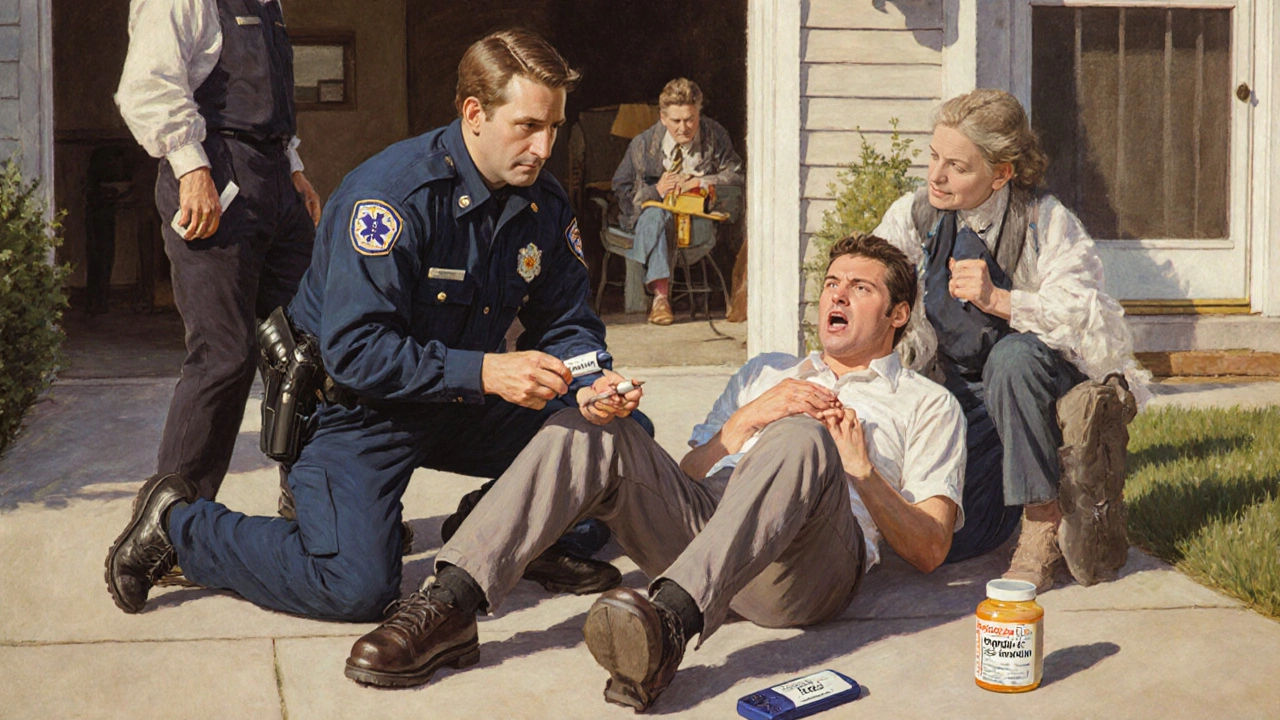
Epinephrine is the only thing that stops anaphylaxis from killing. Antihistamines like Benadryl? They help with itching or hives. But they do nothing for breathing or blood pressure. Corticosteroids? They don’t save lives in the moment. Only epinephrine works fast enough.Use an auto-injector-EpiPen, Auvi-Q, or Adrenaclick. Inject into the outer thigh. You don’t need to remove clothing. Just jab it in, hold for 10 seconds, then remove. The dose is 0.3 mg for adults and children over 30 kg. For kids 15-30 kg, use 0.15 mg. If you’re unsure, give the adult dose. It’s safer than waiting.
Epinephrine kicks in within 1 to 5 minutes. But it doesn’t last long-only 10 to 20 minutes. That’s why you need to call emergency services immediately. In New Zealand, dial 111. In the U.S., call 911. Don’t wait to see if symptoms improve. Even if they seem better after the shot, they can come back worse. That’s called a biphasic reaction, and it happens in 20% of cases, sometimes hours later.
Second Dose? Yes-if Needed
If symptoms don’t improve after 5 minutes-or if they get worse-give a second dose. The Resuscitation Council UK and other global guidelines say this clearly: don’t hesitate. In about 5-10% of cases, one dose isn’t enough. You might need two, even three. Some protocols recommend repeating every 5-10 minutes until help arrives. The fear of giving too much epinephrine is real-but the data says otherwise. Over 35,000 epinephrine doses were given for anaphylaxis between 2015 and 2020. Only 0.03% caused serious heart problems. The risk of not giving it? Death.Don’t Rely on Other Medications
You might hear someone say, "Give them a Benadryl first." Don’t. That’s outdated thinking. A 2022 study in the Journal of Emergency Medicine showed that antihistamines don’t reduce mortality. They’re for mild symptoms, not life-threatening ones. Same with steroids. They were once routine, but now experts like the Cleveland Clinic say they’re unnecessary unless the reaction is extreme and not responding to epinephrine. Delaying epinephrine to give antihistamines or steroids is a known cause of death.What Happens After the Shot?
Even if the person seems fine after the first epinephrine dose, they still need to go to the hospital. Minimum 4 hours of observation. Some guidelines now say 6-8 hours for medication-induced cases, because the risk of a second wave is higher than with food allergies. Hospitals will monitor blood pressure, oxygen levels, and heart rhythm. They might give IV fluids to support circulation. In rare cases where epinephrine doesn’t work, they’ll use IV epinephrine-but only trained teams can do that safely.
Why People Don’t Act-And How to Fix It
In hospitals, the average time from symptom recognition to epinephrine is over 8 minutes. That’s too long. The goal is 5 minutes or less. Why the delay? Nurses and doctors sometimes hesitate. They worry about side effects-racing heart, high blood pressure. But those are temporary. The alternative is death. A 2021 survey of 1,200 nurses found that 42% admitted delaying epinephrine because they feared legal trouble. That’s not just tragic-it’s preventable.Outside hospitals, 68% of people with known allergies carry an auto-injector. But only 41% feel confident using it. Common mistakes:
- Not holding the injector in place long enough (37% of users)
- Injecting into fat instead of muscle (18%)
- Not jabbing hard enough or missing the thigh (23%)
Practice with a trainer device. Watch videos. Do it with your family. The FDA approved a new auto-injector in 2023 with voice guidance-Auvi-Q 4.0. It tells you when to inject and how long to hold. In trials, correct use jumped from 63% to 89%.
Special Cases: Beta-Blockers and Obesity
If someone takes beta-blockers for high blood pressure or heart issues, epinephrine may not work as well. These drugs block the effects of adrenaline. In these cases, you might need higher doses-sometimes two or three times the usual amount. That’s why knowing someone’s medication history matters.Obesity is another factor. Traditional dosing by weight doesn’t always work in people with a BMI over 30. Early research shows dosing by body mass index gives more consistent results. If you’re giving epinephrine to someone who’s overweight, don’t hesitate to give the adult dose-even if they’re under 30 kg. Better safe than sorry.
Prevention: Know What You’re Allergic To
If you’ve had anaphylaxis from a drug, get tested. See an allergist. Get an action plan. Wear a medical alert bracelet. Always carry two epinephrine auto-injectors. One might not be enough. Store them at room temperature. Don’t leave them in your car-heat and cold ruin them. Check expiration dates. Replace them before they expire.And if you’re ever unsure-give the shot. There’s no downside to giving epinephrine when you’re not 100% sure. The risk of not giving it? Permanent brain damage. Cardiac arrest. Death. That’s why the rule is simple: when in doubt, give it.
Can you survive anaphylaxis without epinephrine?
Survival without epinephrine is possible, but extremely rare and risky. Epinephrine is the only treatment that reverses airway swelling, low blood pressure, and shock. Without it, the body can’t fight the reaction on its own. Most deaths from anaphylaxis happen because epinephrine was delayed or never given. Even with oxygen and IV fluids, survival rates drop sharply without epinephrine.
Is it safe to use someone else’s epinephrine auto-injector?
Yes. If someone is having anaphylaxis and you have an epinephrine auto-injector-even if it’s not their prescription-you should use it. The risk of not giving it far outweighs any legal or safety concerns. Auto-injectors are designed to be safe for most adults and children. Giving the wrong dose is better than giving nothing. In New Zealand and many other countries, Good Samaritan laws protect people who act in good faith to save a life.
Can you get anaphylaxis from a drug you’ve taken before without a reaction?
Yes. Anaphylaxis doesn’t always happen on first exposure. Your immune system can become sensitized after multiple uses. Penicillin, for example, can cause a severe reaction even after years of safe use. That’s why any new or recurring reaction to a medication-even if it was mild before-should be taken seriously. Never assume you’re "immune" because you’ve taken it before.
What should you do if you’re alone and have anaphylaxis?
If you’re alone and feel symptoms starting, inject yourself immediately with your epinephrine auto-injector. Then call emergency services. If you can’t call, press your phone’s emergency button or use voice command (like "Hey Siri, call 111"). Lie flat. If you’re too dizzy to move, try to stay on the floor and shout for help. Do not try to drive yourself to the hospital. Your reaction could worsen while driving. Always get checked after an injection-even if you feel fine.
Do children need different doses of epinephrine?
Yes. Children under 30 kg (about 66 lbs) should receive 0.15 mg. Children over 30 kg and adults get 0.3 mg. Some children weigh more than 30 kg but are still young-use the weight, not age, to decide. If you only have an adult dose and the child is under 30 kg, give it anyway. The risk of under-treating is greater than the risk of giving a slightly higher dose. Auto-injectors for children are designed to deliver a smaller needle and lower dose, but if that’s not available, use what you have.
Sam txf
November 28, 2025 AT 11:15Let me get this straight-you’re telling me people are still waiting to give epinephrine because they’re scared of a racing heart? Bro. That’s like refusing to pull the fire alarm because the sprinklers might make your shoes wet. Epinephrine isn’t a suggestion. It’s your last damn chance before your throat swells shut and your heart gives up. I’ve seen it. I’ve held someone’s hand while they turned blue because some nurse ‘didn’t want to overmedicate.’ Guess what? She didn’t overmedicate. She underkilled. And now that person’s dead. Stop hesitating. Give the shot. Always.
Michael Segbawu
November 28, 2025 AT 11:45Man I seen this happen in a Walmart parking lot last year some dude took a new painkiller and just collapsed no hives no nothing just turned ghost white and started gasping like a fish outta water I grabbed his EpiPen from his pocket he had it in his jeans I just jabbed it in his thigh held it 10 sec like they said and 2 minutes later he was sitting up asking for a coke I swear to god if that nurse had waited for her paperwork he woulda been a corpse
Jake Ruhl
November 29, 2025 AT 06:47You know what this really is right? This isn’t just about medicine. This is about control. The pharmaceutical companies don’t want you to know that epinephrine is cheap and effective because they make billions off those $300 auto-injectors and the follow-up hospital bills. They push the myth that you need steroids and antihistamines first to keep you dependent. And the doctors? They’re trained to fear lawsuits more than death. That’s why 42% of nurses delay. They’re not stupid. They’re scared. Scared of the system. Scared of being blamed. But here’s the truth-no one ever got sued for saving a life. But plenty got sued for letting someone die because they were too afraid to act. This isn’t medical. This is psychological warfare. And we’re losing.
Chuckie Parker
November 30, 2025 AT 21:39Epinephrine is the only intervention proven to reduce mortality in anaphylaxis. Antihistamines have no effect on airway obstruction or hypotension. Steroids have no acute benefit. Delaying epinephrine increases risk of biphasic reaction and death. Positioning matters. Lying flat prevents cardiovascular collapse. Second dose indicated if no improvement at five minutes. Auto-injector use must be practiced. Training improves efficacy from 63% to 89%. These are facts not opinions. Stop guessing. Start acting.
George Hook
December 2, 2025 AT 09:10I appreciate the clarity and urgency here. I’ve worked in emergency response for over 20 years, and I’ve seen too many cases where the delay wasn’t ignorance-it was fear. Fear of doing something wrong, fear of being criticized, fear of liability. But what’s worse? A patient with a temporary spike in heart rate, or a patient who never wakes up because someone was too cautious? I’ve trained dozens of nurses and EMTs, and I always tell them the same thing: if you’re not sure, you’re already too late. Give the shot. Then call 911. Then monitor. The body doesn’t care about your paperwork. It only cares if you acted in time.
Katrina Sofiya
December 4, 2025 AT 03:28This is such an important and life-saving guide. I’m so grateful someone took the time to lay this out so clearly. I have a son with severe allergies, and I’ve been terrified of using his EpiPen because I didn’t want to mess up. But after reading this, I’ve scheduled a training session with our local pharmacy. I’m also buying a second injector and keeping one in my purse, one in the car, and one at school. Knowledge is power, but action is survival. Thank you for giving us the courage to act.
kaushik dutta
December 6, 2025 AT 02:17In India, we have a similar crisis-people think anaphylaxis is just "allergy" and give antihistamines like it’s a cold. I once saw a young girl collapse after a vaccine. Her family gave her cetirizine for 20 minutes before calling an ambulance. She didn’t survive. Epinephrine is not a Western luxury-it’s a global necessity. We need community awareness campaigns, low-cost injectors, and training in rural clinics. The WHO should mandate epinephrine availability in every primary health center. No one should die because they were too poor to get the right drug at the right time.
doug schlenker
December 6, 2025 AT 16:47I just wanted to say thank you for writing this. My sister had anaphylaxis last year from a local antibiotic. She didn’t have an EpiPen because she didn’t think she was "that allergic." We thought it was just a bad stomach bug. By the time we got to the ER, she was in cardiac arrest. She survived, but barely. Now she carries two injectors. I carry one too. I didn’t know about the lying flat thing-that was a game-changer. I’ve shared this with my whole family. Please keep making stuff like this. It saves lives.
Hannah Magera
December 7, 2025 AT 12:47Wait so if someone has a beta-blocker and goes into anaphylaxis, does that mean epinephrine might not work? That’s terrifying. I have a friend on beta-blockers for her heart. Should she carry a higher dose? Or is there a different kind of injector? I never even thought about this. This post made me realize how much I don’t know. I’m going to ask her doctor tomorrow.
Nicola Mari
December 8, 2025 AT 04:42It’s pathetic. People are still dying because they don’t want to be "that person" who overreacts. You wait for a rash? You wait for someone to say "I think this is serious"? You wait for permission? There is no permission. There is only time. And time is the one thing you cannot buy back. If you hesitate, you are complicit. The statistics don’t lie. The deaths don’t lie. The families crying at funerals don’t lie. You think you’re being careful? You’re being cowardly.
Leah Doyle
December 8, 2025 AT 13:07OMG I just read this and I’m crying. I had no idea about the lying flat thing. My cousin passed out at a concert last year and we sat her up because we thought that was better. She was fine, but now I’m so scared I did something wrong. I’m watching the video on how to use an EpiPen right now. And I’m buying one for my backpack. Thank you for making me realize how much I didn’t know. ❤️
anant ram
December 9, 2025 AT 14:25Let me emphasize this point again, with full clarity and precision: epinephrine, administered intramuscularly into the lateral thigh, is the definitive, life-saving intervention in anaphylaxis; antihistamines, corticosteroids, and oxygen are adjuncts at best, and delays in administration are directly correlated with increased mortality; therefore, every layperson, caregiver, and healthcare provider must be trained to recognize the non-cutaneous signs of anaphylaxis, and must act immediately, without hesitation, without doubt, and without apology.
king tekken 6
December 11, 2025 AT 10:12you know what’s wild? the same people who panic over an epi pen are the ones who’ll text their ex at 2am or buy a $1000 phone they don’t need. but when it comes to saving a life? they’ll google "can benadryl fix this?" and wait 15 minutes. we’re a species that fears the wrong things. i used to be one of them. then my buddy went into anaphylaxis after a shot of amoxicillin and i gave him his epi pen even though he didn’t have a prescription for it. he’s alive. and now he gives talks at schools. so yeah. just give the shot. your fear won’t save them. your courage will.