How to Track Post-Marketing Studies for Drug Safety

When a new drug hits the market, the work doesn’t end with approval. In fact, the real test of safety begins only after thousands - sometimes millions - of people start taking it. Pre-approval clinical trials involve a few thousand patients under controlled conditions. They rarely include older adults, pregnant women, or people with multiple chronic conditions. That’s where post-marketing surveillance comes in. This is the ongoing process of tracking how drugs behave in the real world, catching side effects that were too rare or too slow to show up in trials. If you’re responsible for managing this process - whether you’re in pharma, regulatory affairs, or clinical research - knowing how to track these studies effectively isn’t optional. It’s critical.
Understand the Three Core Phases of Post-Marketing Surveillance
Post-marketing safety monitoring isn’t random. It follows a structured three-phase approach used globally by regulators like the FDA and EMA. First, you create a safety surveillance plan and a risk minimization plan. These aren’t just documents you file and forget. They lay out exactly what data you’ll collect, how you’ll collect it, and what steps you’ll take if red flags appear. For example, a new diabetes drug might require special labeling warnings about hypoglycemia in elderly patients, or a mandatory patient education guide distributed with every prescription.The second phase is ongoing reporting. This includes spontaneous reports from doctors and patients, data from electronic health records (EHRs), insurance claims databases, and dedicated post-marketing studies. The third phase is reevaluation - typically between four and ten years after launch. At this point, companies must prove the drug still works as intended and that its safety profile hasn’t changed dramatically. Missing any of these phases means you’re not just falling behind - you’re putting patients at risk.
Use the FDA’s FAERS and Sentinel Systems as Your Backbone
In the U.S., two systems do the heavy lifting: FAERS and Sentinel. FAERS (FDA Adverse Event Reporting System) is the largest spontaneous reporting database in the world, with over 30 million entries as of 2023. It collects reports from healthcare providers, patients, and drug manufacturers. These aren’t confirmed cases - they’re signals. A spike in reports of liver injury with a new antidepressant? That’s a signal. FAERS doesn’t prove causation, but it tells you where to look.But FAERS has limits. It’s passive. People have to report. Many don’t. That’s where Sentinel comes in. Sentinel is active surveillance. It pulls real-time data from over 300 million Americans through insurance claims and EHRs. It can track how many people on a new blood thinner had a stroke, how many were hospitalized, or how often lab results showed kidney stress. In 2023, Sentinel expanded to include linked EHR and claims data for 24 million people across six major health systems - finally giving regulators access to clinical details like blood pressure readings, lab values, and diagnosis codes that were previously missing.
If you’re tracking drug safety, you need to monitor both. FAERS tells you what people are saying. Sentinel tells you what’s actually happening in clinics and hospitals. Ignoring one is like trying to fix a leak with only half the tools.
Know How Signals Turn Into Actions
A signal isn’t a problem. It’s a starting point. The FDA uses a five-step process to turn a spike in reports into real-world changes. First, they identify the signal - maybe a sudden uptick in pancreatitis cases linked to a weight-loss drug. Then they triage it: Is this a rare side effect affecting 1 in 10,000? Or something that could impact thousands? Next, a team of epidemiologists, pharmacologists, and data scientists digs into FAERS, Sentinel, medical literature, and international databases. They look for patterns: Do patients have other conditions? Are they taking other drugs? Is the risk higher in older adults?Once they confirm a real risk, they decide on action. In 87% of cases between 2018 and 2022, the outcome was a label update - adding a new warning, contraindication, or dosage restriction. In 9% of cases, the FDA sent a “Dear Health Care Professional” letter. In 3%, they tightened the Risk Evaluation and Mitigation Strategy (REMS), like requiring special training for prescribers. Less than 1% of drugs were pulled from the market.
But here’s the catch: It takes time. The FDA issued 147 Drug Safety Communications between 2020 and 2022 - covering 112 different drugs. That’s one every 10 days. If your team isn’t set up to respond quickly, you’ll be scrambling when a safety alert drops. You need automated alerts, clear escalation paths, and a dedicated pharmacovigilance team ready to act.

Track Mandatory Studies - Or Risk Penalties
The FDA doesn’t just wait for problems. It often requires companies to conduct specific post-marketing studies as a condition of approval. These are called post-approval commitments. Between 2015 and 2022, 72% of these studies ran behind schedule. The average completion time? 5.3 years - more than double the 3-year deadline.Why? Data collection is messy. Getting access to EHRs across different hospitals, recruiting enough patients, navigating privacy rules - it all adds up. Companies that fail to meet deadlines risk fines, delays in new drug approvals, or even suspension of marketing rights.
Best practice? Set up a centralized tracking system. Use a dashboard that shows every mandated study, its deadline, current enrollment status, data quality metrics, and who’s responsible. Assign one person - a pharmacovigilance specialist - to own each study. The industry standard is one specialist for every $500 million in annual product revenue. If your drug brings in $2 billion a year, you need at least four dedicated people just to track safety studies.
Also, track your own metrics. Use the Post-Marketing Study Timeliness Index (PMSTI) - the percentage of studies completed on time. If your PMSTI is below 70%, you’re at risk.
Watch for the Hidden Gaps in Data
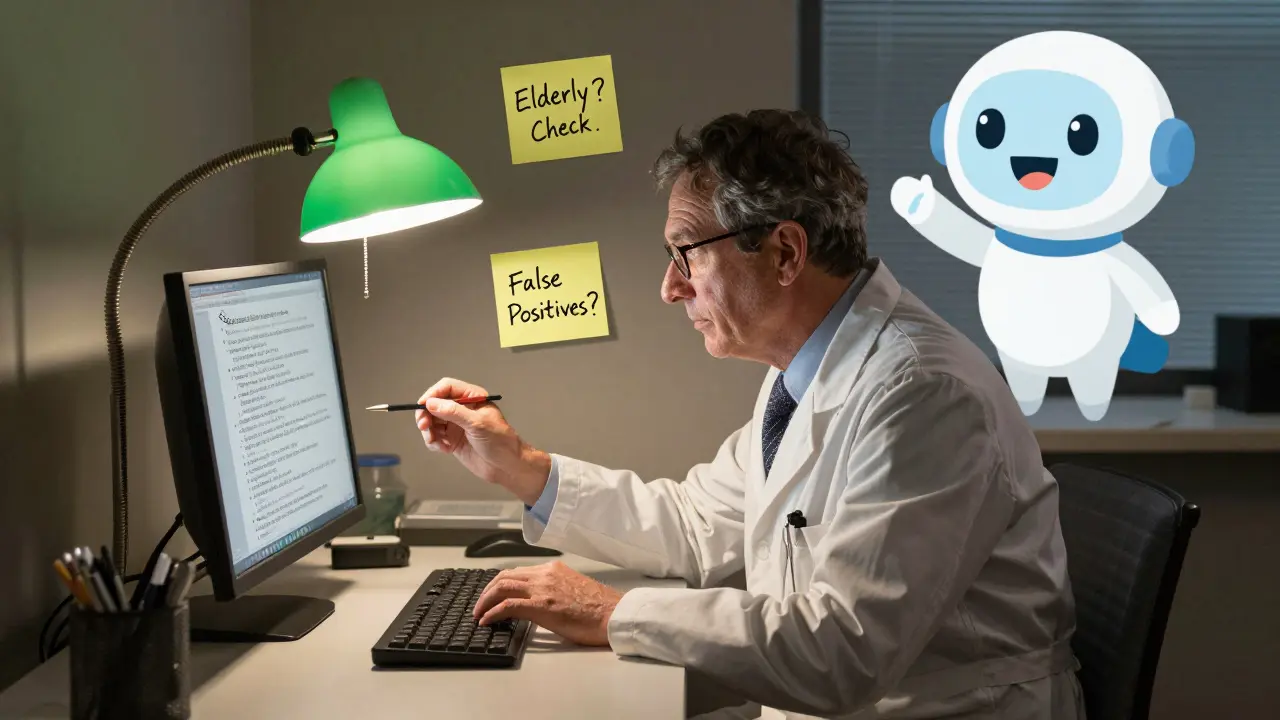
One of the biggest blind spots in drug safety? The elderly. In pre-approval trials, people over 65 make up only about 15% of participants. But in real life, they’re 43% of users. A 2022 EMA study found that 28% of serious adverse reactions identified after launch would never have been caught in trials because older patients were underrepresented.Same goes for women of childbearing age, children, and people with kidney or liver disease. If your post-marketing studies don’t specifically include these groups, you’re missing critical safety signals. Make sure your study protocols require stratified enrollment - not just “include all adults.” You need data broken down by age, sex, comorbidities, and ethnicity.
Another blind spot? Unstructured data. Doctors write notes in free text. Patients post about side effects on forums. These aren’t in FAERS or Sentinel. That’s where new tools like Large Language Models (LLMs) are starting to help. Pilot programs by the FDA and Lifebit AI showed LLMs could pull safety signals from clinical notes with 42% better accuracy than traditional methods. But there’s a downside: false positives went up by 23%. So use AI as a filter - not a decision-maker.
Prepare for the Future: AI, Global Data, and Genomics
The landscape is changing fast. By 2026, the FDA’s Sentinel Common Data Model Plus (SCDM+) will integrate genomic data with clinical records for 50 million patients. That means we’ll soon know if a patient’s DNA makes them more likely to have a bad reaction to a drug - before it happens.The European Union is rolling out an AI-powered signal detection system in EudraVigilance in 2025. The WHO is building a global pharmacovigilance network aiming to connect 100 countries by 2027. That means safety signals from Japan, Brazil, or South Africa could trigger alerts in the U.S. overnight.
If you’re not planning for this, you’re already behind. Start building partnerships with international regulators. Learn how to access global databases. Train your team on AI-assisted signal detection. The days of siloed, country-specific safety monitoring are over.
Final Checklist: Are You Tracking This?
Here’s what you need to be doing right now:- Monitor FAERS and Sentinel daily for new signals related to your products
- Track every mandated post-marketing study with deadlines, enrollment numbers, and data quality scores
- Ensure your studies include elderly patients, women, and those with multiple conditions
- Have a cross-functional team ready to respond to safety alerts within 48 hours
- Use automated alerts for protocol deviations or enrollment drops
- Calculate your PMSTI monthly - if it’s below 70%, fix your process
- Stay updated on global regulatory changes - especially in the EU and Japan
Drug safety isn’t a one-time task. It’s a continuous conversation between regulators, clinicians, patients, and manufacturers. The data is out there. The tools are getting better. But if you don’t know how to track it - and act on it - you’re not just failing compliance. You’re failing patients.
What is the main purpose of post-marketing surveillance for drugs?
The main purpose is to identify adverse effects or benefits that weren’t seen during pre-approval clinical trials. These trials are too small and too controlled to catch rare, delayed, or population-specific side effects. Post-marketing surveillance uses real-world data to find these hidden risks and ensure drugs remain safe after they’re widely used.
How do FAERS and Sentinel differ in drug safety monitoring?
FAERS collects voluntary reports from doctors, patients, and companies - it’s passive and relies on people reporting side effects. Sentinel actively pulls data from electronic health records and insurance claims across hundreds of millions of patients. It can detect patterns in real time, like increased hospitalizations or abnormal lab results, giving a more complete picture of how a drug behaves in the real world.
What happens if a drug company misses a post-marketing study deadline?
Missing a deadline can lead to regulatory penalties, including fines, delays in approving new drugs, or even suspension of the drug’s marketing authorization. The FDA tracks compliance closely, and companies with poor track records face increased scrutiny on future applications. It’s not just a paperwork issue - it’s a safety and credibility issue.
Why are older adults underrepresented in drug trials, and why does it matter?
Older adults are often excluded from trials due to complex health conditions, multiple medications, or concerns about compliance. But they make up 43% of actual drug users. This gap means side effects common in seniors - like kidney stress, dizziness, or bleeding - often go undetected until after launch. That’s why post-marketing studies must actively include older populations to catch these risks.
Can AI help improve post-marketing drug safety tracking?
Yes, but with limits. AI tools like Large Language Models can analyze unstructured clinical notes and patient forums to find safety signals faster - one pilot showed a 42% improvement in detection. But they also generate 23% more false positives than traditional methods. AI should be used to flag potential issues, not make final decisions. Human experts still need to verify and interpret the results.
What’s the recommended team size for managing post-marketing safety studies?
Industry best practice recommends one dedicated pharmacovigilance specialist for every $500 million in annual product revenue. For a $1 billion drug, that’s two specialists. These people should manage data collection, monitor signals, track study timelines, and coordinate with regulators - not just handle paperwork.
What’s the Post-Marketing Study Timeliness Index (PMSTI), and why should I track it?
PMSTI measures the percentage of mandated post-marketing studies completed on time. If your PMSTI is below 70%, your safety monitoring system is underperforming. Tracking this metric helps you spot delays early, fix bottlenecks in data collection, and avoid regulatory penalties. It’s a key indicator of your organization’s commitment to patient safety.
Next steps: If you’re managing drug safety, audit your current tracking systems this month. Are you using FAERS and Sentinel? Are your studies on schedule? Is your team trained on AI tools? Don’t wait for a regulatory warning - get ahead of the data.
Jessica Knuteson
January 27, 2026 AT 00:13rasna saha
January 28, 2026 AT 15:43Ashley Porter
January 29, 2026 AT 19:30Geoff Miskinis
January 30, 2026 AT 04:48Sally Dalton
January 30, 2026 AT 20:50Ashley Karanja
January 31, 2026 AT 14:10Karen Droege
February 1, 2026 AT 01:23Neil Thorogood
February 1, 2026 AT 23:06eric fert
February 3, 2026 AT 00:28