Obstructive Sleep Apnea: CPAP Therapy and Alternative Treatments
What Is Obstructive Sleep Apnea?
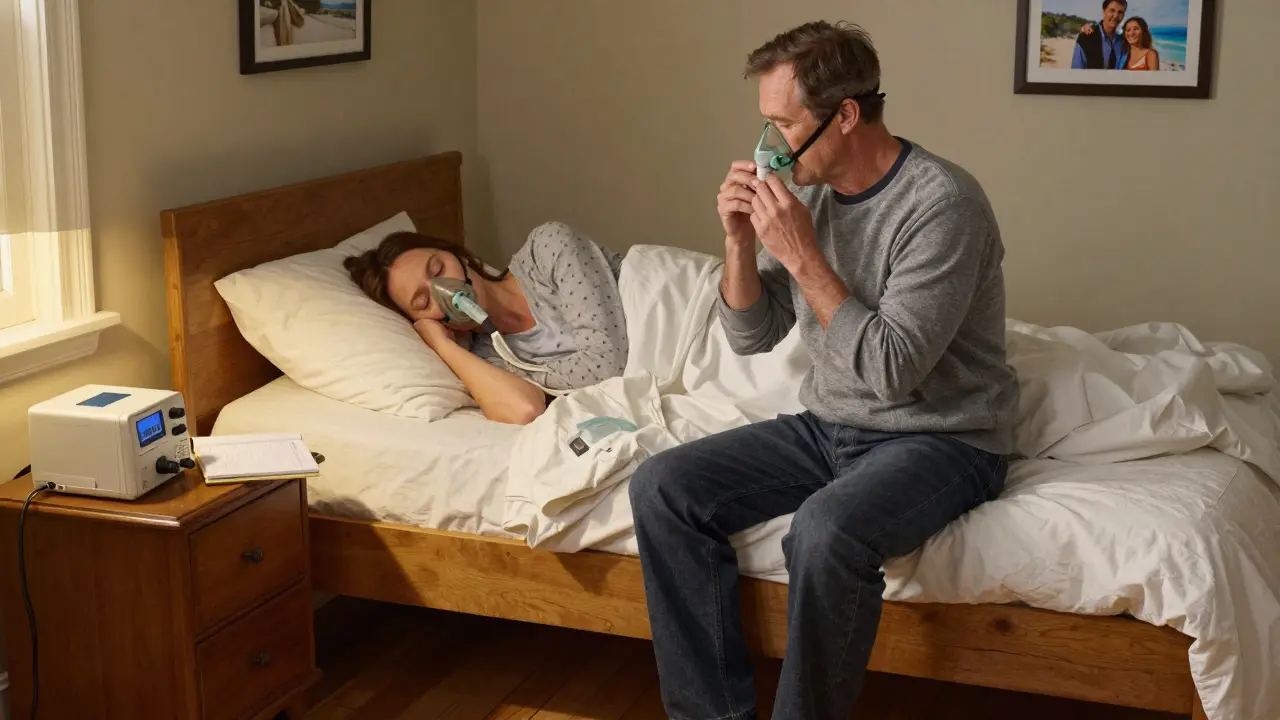
Obstructive sleep apnea (OSA) happens when the muscles in the back of your throat relax too much during sleep, blocking your airway. This causes breathing to stop and start repeatedly-sometimes dozens of times an hour. You might not even know it’s happening. But your body does. Each time your airway closes, your brain wakes you up just enough to restart breathing. This fragments your sleep, leaving you exhausted even after a full night in bed.
Snoring is the most obvious sign, but not everyone who snores has OSA. Other red flags include waking up gasping for air, morning headaches, dry mouth, and extreme daytime tiredness. If you’ve been told you stop breathing while sleeping, or if you fall asleep during the day even after what seems like enough rest, it’s worth getting checked. OSA doesn’t just make you tired-it raises your risk for high blood pressure, heart attacks, stroke, and even car accidents.
Why CPAP Is Still the Gold Standard
Continuous Positive Airway Pressure (CPAP) therapy has been the go-to treatment for OSA since the early 1980s. Developed by Australian doctors, it works by delivering a steady stream of air through a mask to keep your airway open while you sleep. It’s not glamorous, but it’s effective. When used correctly, CPAP can slash your apnea events from severe levels down to near-normal.
Modern CPAP machines are smaller, quieter, and smarter than ever. Most now adjust pressure automatically (called APAP), so they respond to your breathing in real time. Some even connect to apps that track your usage, leaks, and how well you’re sleeping. Devices from brands like ResMed and Philips typically weigh less than 3 pounds and run on about as much noise as a whisper-quiet enough to not disturb your partner.
For people with moderate to severe OSA (an AHI of 15 or more events per hour), CPAP is the most proven solution. Studies show it reduces daytime sleepiness by 40%, improves blood pressure by 5-10 mmHg, and cuts the risk of heart problems. In commercial truck drivers, CPAP use has been linked to a 70% drop in crash rates. If your doctor recommends it, it’s because the data backs it up.
Why So Many People Struggle With CPAP
Here’s the problem: CPAP works only if you use it. And a lot of people don’t. About half of those prescribed CPAP stop using it within the first year. Why? It’s not just about the machine-it’s about the experience.
Mask discomfort is the top complaint. Nasal masks can pinch, full-face masks feel claustrophobic, and nasal pillows can irritate the nostrils. One study found that 61.8% of people who started with nasal masks switched to full-face masks within six months because of mouth leaks. Dry mouth? That’s common too. So is nasal congestion, which affects about 30% of users.
Then there’s the noise, the tubes, the need to plug it in, the hassle of traveling with it. One Reddit user wrote: "I’ve tried five different masks over two years and still can’t tolerate more than two hours. The claustrophobia is unbearable." Another shared: "After three months of leaks, I switched to a nasal pillow mask and now get seven hours. My Epworth score dropped from 16 to 7." It’s personal. What works for one person fails for another.
Even when people stick with it, usage often falls short. Medicare and insurers require at least four hours per night, seven nights a week, to keep covering the device. Only about 70% of users meet that threshold. And here’s the catch: if you use CPAP for only two hours, you’re still getting moderate to severe OSA. The benefits don’t kick in unless you wear it long enough.
Oral Appliances: A Simpler, But Less Powerful Option
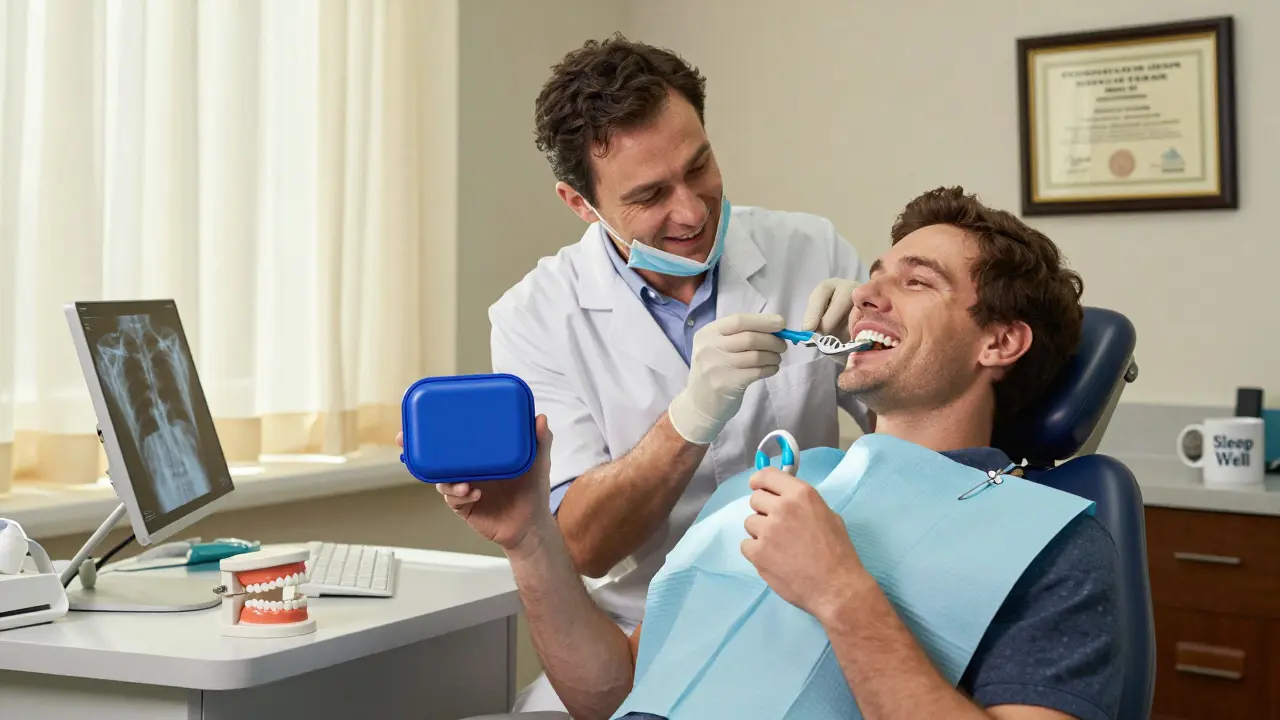
If CPAP feels too much, oral appliances are the most common alternative. These are custom-fitted mouthpieces-like sports guards-that hold your lower jaw slightly forward to keep your airway open. They’re small, quiet, and easy to travel with. No electricity. No mask. Just pop it in and sleep.
They’re not as powerful as CPAP for severe OSA, but they work well for mild to moderate cases. One review found that oral appliances are worn on 77% of nights after one year, compared to CPAP’s average of just 4-5 hours per night. In head-to-head trials, more patients preferred oral appliances simply because they were easier to live with.
They’re also cheaper. A CPAP machine costs $500-$3,000, while a custom oral appliance runs $1,500-$3,000 (though insurance often covers both). But here’s the trade-off: CPAP can reduce your apnea index from 39 to 7 events per hour. Oral appliances typically bring it down to 15-20. That’s still an improvement, but not a cure.
They’re not for everyone. If you have few teeth, severe gum disease, or jaw joint problems, they’re not safe. And they require regular check-ups with a dentist trained in sleep medicine to make sure they’re still fitting right.
Surgery and Implants: When Less Is More
Surgery is rarely the first choice. Procedures like UPPP (removing excess tissue from the throat) have a success rate of only 40-60%. That means more than half of people still need treatment after surgery. The risks-scarring, swallowing problems, voice changes-often outweigh the benefits.
Then there’s Inspire therapy: a small device implanted in your chest that stimulates the nerve controlling your tongue. It’s like a pacemaker for your airway. It detects when you’re breathing and gently moves your tongue forward to keep the airway open. Studies show it reduces apnea events by 79%. Sounds amazing, right? Except it costs about $35,000 out-of-pocket, requires major surgery, and isn’t approved for everyone. It’s only for moderate to severe OSA patients who can’t tolerate CPAP.
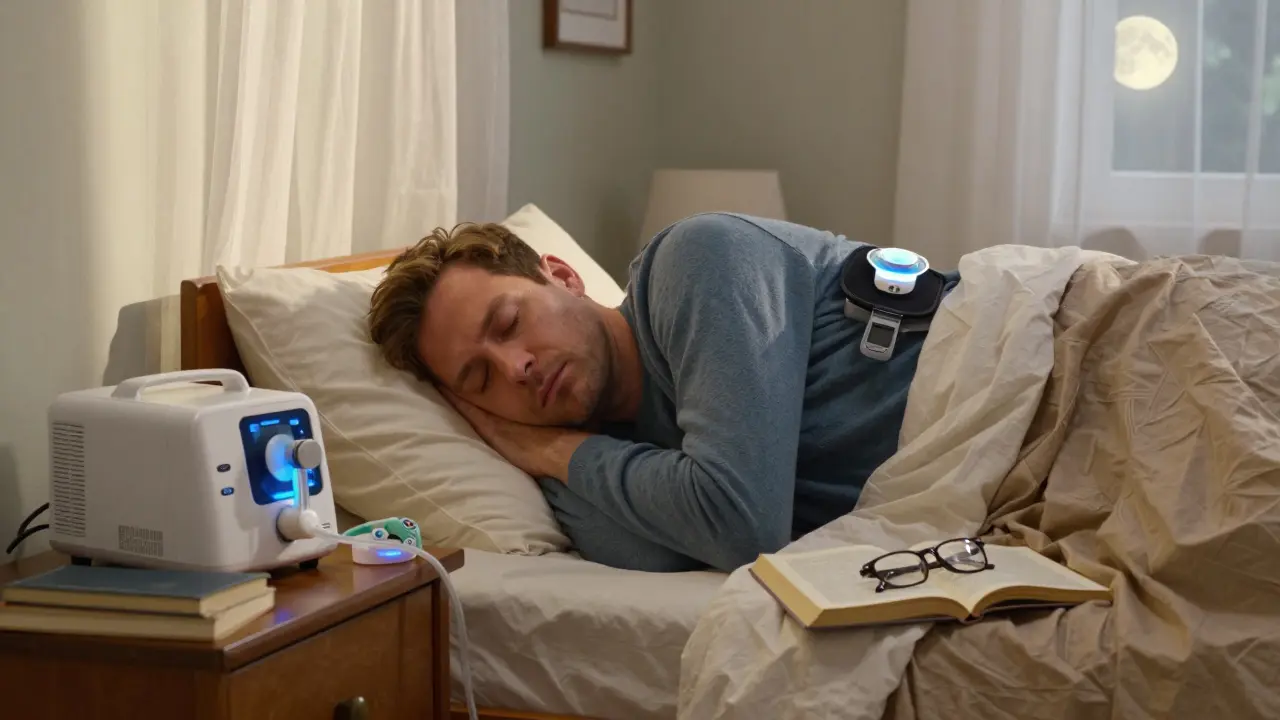
Positional therapy is another low-tech option. Some people only get apnea when they sleep on their back. Devices like NightBalance gently vibrate when you roll onto your back, nudging you to your side. For those with positional OSA, this can cut apnea events by over 50%. It’s simple, non-invasive, and works well-if your problem is purely positional.
Who Should Try What?
There’s no one-size-fits-all. Your best option depends on your OSA severity, anatomy, lifestyle, and tolerance.
- Severe OSA (AHI ≥ 30): CPAP is still the best bet. If you can’t tolerate it, consider Inspire therapy or a combination of treatments.
- Mild to moderate OSA (AHI 5-29): Oral appliances are a strong contender, especially if you travel often or hate masks.
- Positional OSA: Try a positional therapy device before anything else. It’s cheap, safe, and effective.
- People with high arousal thresholds: If you wake up easily during sleep, CPAP will likely feel like a miracle. You’ll notice the difference fast.
- People with low arousal thresholds: You might not feel better on CPAP, even if it works on paper. Talk to your doctor about alternatives.
Don’t assume CPAP is your only option. Don’t assume oral appliances are "weaker." The goal isn’t to use the most advanced tech-it’s to find what you’ll actually use every night.
Getting Started and Sticking With It
Starting CPAP isn’t a one-time setup. It’s a process. Most people need 2-4 weeks to adjust. Don’t expect to sleep through the night on day one.
Start slow. Use the mask for an hour while watching TV. Then two hours. Then overnight. Use the humidifier if your nose feels dry. Try different masks-nasal pillows, nasal masks, full-face. Your DME provider should help you test them. Don’t settle for the first one they hand you.
Keep a sleep journal. Note how you feel in the morning. Are you less tired? Less irritable? Less foggy? Track it. Small wins add up.
And if you’re struggling? Call your sleep clinic. Ask for a mask fitting session. Request a different machine. Try a different humidifier setting. There’s no shame in asking for help. Most people who stick with CPAP did so only after trying multiple versions.
The Future of Sleep Apnea Treatment
Technology is moving fast. New CPAP models can detect subtle breathing changes before full apneas happen. Apps like Nightware use biofeedback to help you fall asleep faster and stay asleep longer-boosting CPAP adherence by 22% in early trials.
Soon, treatments may be personalized. Imagine a CPAP machine that adjusts pressure based on your airway shape, your heart rate, your snoring pattern-all in real time. Or a pill that tightens throat muscles at night. Those are still in research, but they’re coming.
For now, the best treatment is the one you’ll use. CPAP works. Oral appliances work. Positional therapy works. Surgery works-for some. The key isn’t perfection. It’s consistency. One night of good sleep is better than zero. Two nights? Even better. Keep going.
Frequently Asked Questions
Can I use CPAP if I have a stuffy nose?
Yes, but you’ll need to address the congestion first. Heated humidification helps 78% of people with nasal dryness or blockage. Saline sprays, nasal strips, or a prescription steroid spray can also clear your airway. If your nose stays blocked, switching to a full-face mask lets you breathe through your mouth without losing pressure.
Is CPAP covered by insurance?
Most insurance plans, including Medicare, cover CPAP machines and supplies if you have a diagnosis of OSA and meet usage requirements. Typically, you need to use the device for at least 4 hours per night on 70% of nights over a 30-day period. After that, they’ll cover replacement masks, tubing, and filters every few months.
Do oral appliances really work as well as CPAP?
For mild to moderate OSA, yes-they’re nearly as effective when used consistently. For severe OSA, CPAP reduces apnea events more dramatically. But adherence is the real differentiator. Many people use oral appliances 7 nights a week, while CPAP users average only 4-5 hours per night. So for many, the oral appliance ends up being more effective in real life.
Can I travel with a CPAP machine?
Absolutely. Most modern CPAP machines are lightweight and come with travel cases. Many have built-in batteries for flights, and some can run on 12V power (like in a car). You can take it on planes as a medical device-no extra fee. If you hate the bulk, consider an oral appliance for trips.
What happens if I stop using CPAP?
Your symptoms return quickly-often within days. Snoring comes back. Daytime fatigue returns. Your blood pressure may rise again. The long-term risks-heart disease, stroke, diabetes-don’t disappear just because you stopped the machine. If you’re struggling with CPAP, talk to your doctor about alternatives, not quitting.
What Comes Next?
If you’re just starting out, give yourself time. Don’t judge CPAP after one bad night. If you’ve tried and failed, don’t give up-try a different mask, a different machine, or talk to a sleep dentist about an oral appliance. There’s no failure here, only mismatched solutions.
And if you’re still unsure? Get a second opinion. Sleep medicine isn’t one-size-fits-all. Your treatment should fit your life-not the other way around.
Allen Davidson
January 17, 2026 AT 09:04john Mccoskey
January 18, 2026 AT 16:17Rob Deneke
January 20, 2026 AT 08:00evelyn wellding
January 21, 2026 AT 00:21Isabella Reid
January 22, 2026 AT 05:24Jody Fahrenkrug
January 22, 2026 AT 06:16Kasey Summerer
January 24, 2026 AT 00:59Christina Bilotti
January 25, 2026 AT 20:37Melodie Lesesne
January 25, 2026 AT 21:10