Sleep Apnea and Respiratory Failure: When to Use CPAP vs. Oxygen Therapy
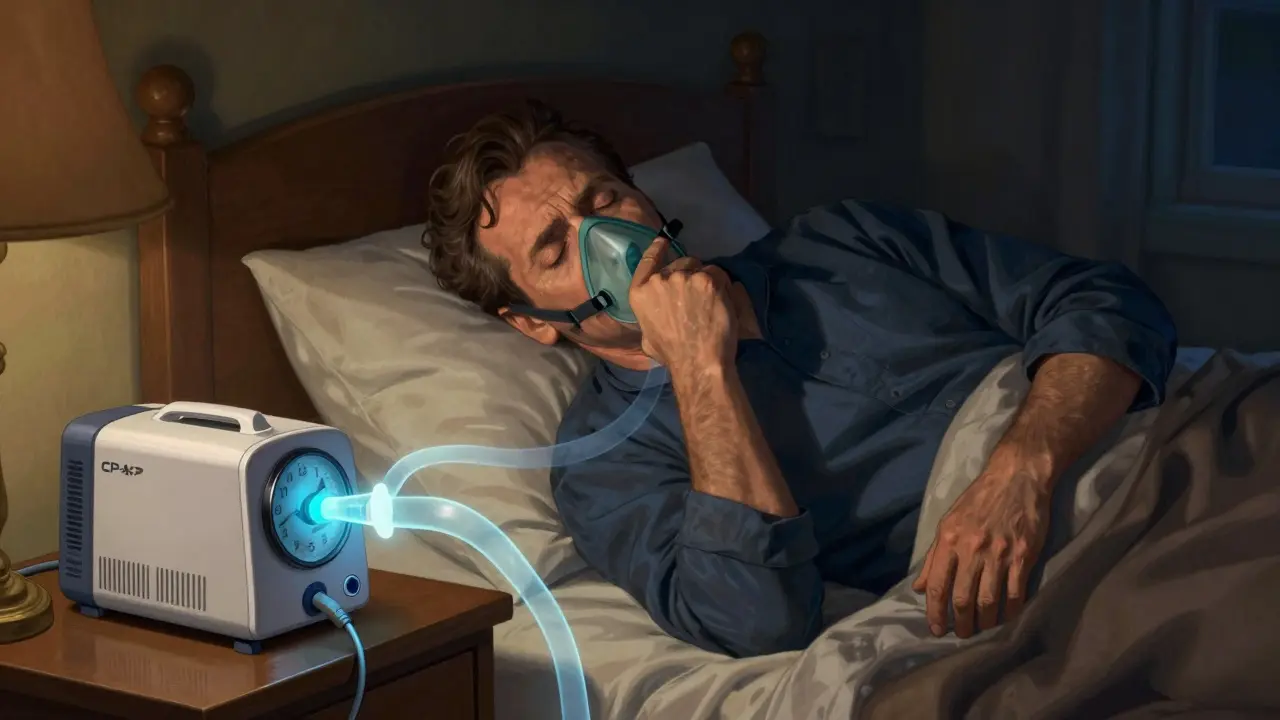
Waking up exhausted despite sleeping eight hours is a nightmare many people face daily. For those with obstructive sleep apnea (OSA), defined as a chronic disorder where the upper airway collapses during sleep, causing breathing interruptions, this fatigue signals a deeper danger. The real risk isn't just tiredness; it's the potential slide into respiratory failure, characterized by the inability of the lungs to maintain adequate gas exchange, leading to low oxygen or high carbon dioxide levels in the blood. Understanding the difference between standard oxygen therapy and Continuous Positive Airway Pressure (CPAP) is critical for managing these conditions effectively and safely.
The Core Difference: Airflow vs. Oxygen Concentration
Many patients mistakenly believe that breathing pure oxygen fixes sleep apnea. It usually doesn’t. In obstructive sleep apnea, the problem is mechanical-a physical blockage in the throat-rather than a lack of oxygen in the room. Think of it like a kinked garden hose. Turning up the water pressure at the spigot (adding oxygen) won't help if the hose is pinched shut. You need to straighten the hose first. That’s what CPAP therapy, introduced in 1981 by Dr. Colin Sullivan, does. It acts as a pneumatic splint, using pressurized air to keep your airway open.
Oxygen therapy, on the other hand, increases the concentration of oxygen you breathe but does nothing to prevent the airway collapse. In fact, giving supplemental oxygen to an OSA patient without addressing the obstruction can sometimes mask the severity of the condition while the body still struggles to move air. This distinction is vital because treating the wrong mechanism can lead to dangerous complications, including worsening hypoxia (low blood oxygen) and hypercapnia (high carbon dioxide).
How CPAP Prevents Respiratory Complications
CPAP machines deliver a continuous stream of air at pressures typically ranging from 4 to 20 cm H2O. This pressure pushes against the soft tissues in the back of the throat, preventing them from collapsing. According to data from StatPearls (2023), compliant CPAP use eliminates respiratory events in 90% of users. By stopping the repeated pauses in breathing, CPAP stabilizes blood oxygen levels and reduces the strain on the heart and lungs.
For patients who struggle with higher fixed pressures, alternatives exist. Bilevel PAP (BiPAP) provides two pressure levels: a higher inspiratory pressure (IPAP) to help you breathe in, and a lower expiratory pressure (EPAP) to make exhaling easier. This is often recommended for patients requiring pressures above 15 cm H2O or those with comorbidities like COPD. Auto-titrating PAP (APAP) devices dynamically adjust pressure throughout the night based on detected airflow limitations, offering a more personalized experience for those without severe comorbidities.
| Feature | CPAP | BiPAP | Mandibular Advancement Device (MAD) |
|---|---|---|---|
| Mechanism | Pneumatic splinting via air pressure | Dual-pressure ventilation support | Mechanical jaw positioning |
| Efficacy (Severe OSA) | Reduces AHI to <5 in 90% of users | High efficacy for complex cases | ~50% reduction in AHI |
| Adherence Rate (1 Year) | ~50% | Variable, often higher for difficult cases | ~70% |
| Best For | Moderate-to-severe OSA | High pressure needs, COPD overlap | Mild-to-moderate OSA |
When Oxygen Therapy Is Appropriate
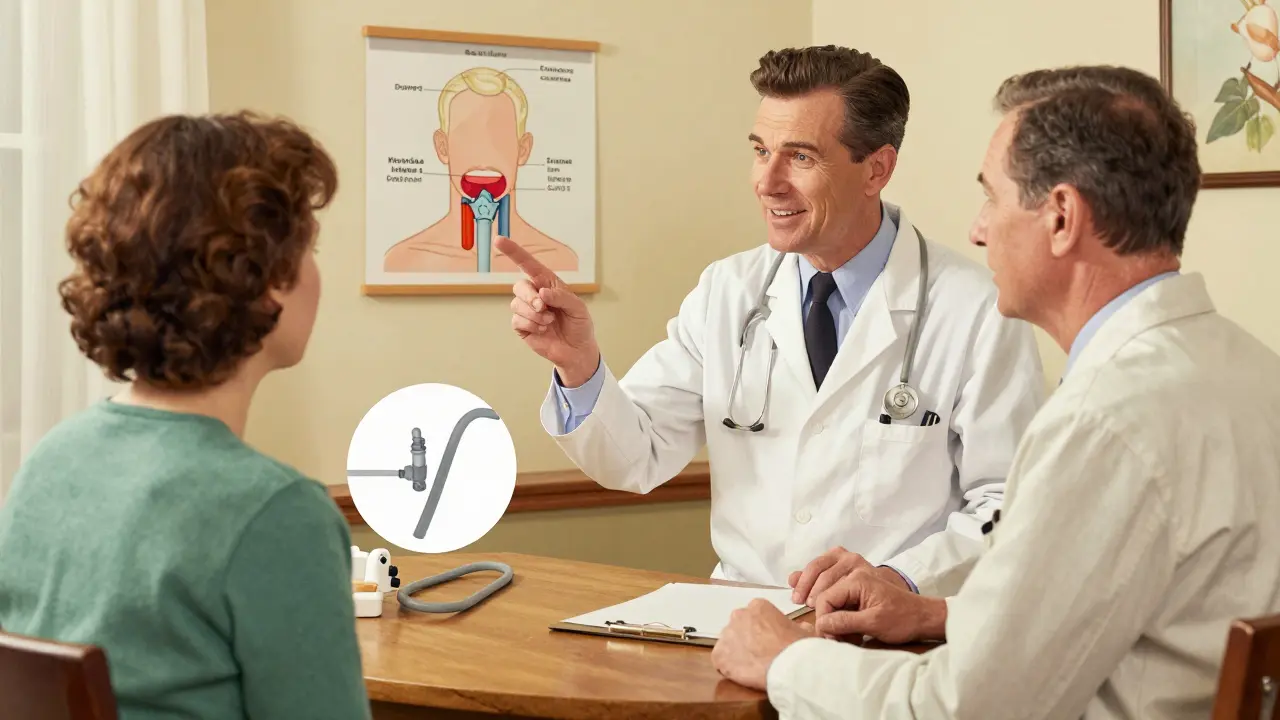
Oxygen therapy plays a specific role in respiratory care, but it is rarely the primary treatment for isolated obstructive sleep apnea. It is primarily used when hypoxemia (low blood oxygen) persists despite optimal CPAP settings, or in cases of central sleep apnea (CSA) where the brain fails to signal the muscles to breathe. In acute respiratory failure scenarios, such as exacerbations of Chronic Obstructive Pulmonary Disease (COPD), non-invasive ventilation (NIV) combined with controlled oxygen delivery can be life-saving.
Clinical guidelines emphasize that NIV trials should show improvement in pH and PaCO2 levels within 1-4 hours. A 2021 cohort study noted that patients failing NIV trials after more than six hours faced a 28% higher 30-day mortality rate compared to those who improved quickly. This highlights the importance of timely intervention and correct device selection. Pure oxygen alone cannot fix the neuromuscular disconnect in central sleep apnea or the mechanical blockage in OSA.
Adherence: The Biggest Challenge
Even the best technology fails if it isn't used. Adherence remains the primary hurdle in sleep medicine. The American Thoracic Society defines optimal adherence as using the device for more than four hours per night on over 70% of nights. However, real-world data shows adherence rates vary wildly, from 17% to 85%, depending on patient support and device comfort.
Why do people stop? Mask discomfort is the number one reason, cited by 42% of discontinuers in surveys from MyApnea.org. Claustrophobia, skin irritation, and noise are also common complaints. Interestingly, mandibular advancement devices (MADs) have higher long-term adherence (70%) compared to CPAP (50%), largely because they are less intrusive. However, MADs are significantly less effective for severe cases, making CPAP the gold standard despite its challenges.
To improve adherence, experts recommend:
- In-person setup: Patients receiving hands-on mask fitting and education had 32% higher 6-month adherence rates compared to telemedicine-only initiation.
- Heated humidification: Mentioned in 73% of positive user reviews, this feature reduces dry mouth and nasal congestion.
- Gradual acclimation: Starting with lower pressures and slowly increasing them helps patients adjust to the sensation.
- Regular follow-ups: Check-ins at 72 hours and 30 days allow for early troubleshooting of leaks and pressure issues.
Emerging Technologies and Future Directions
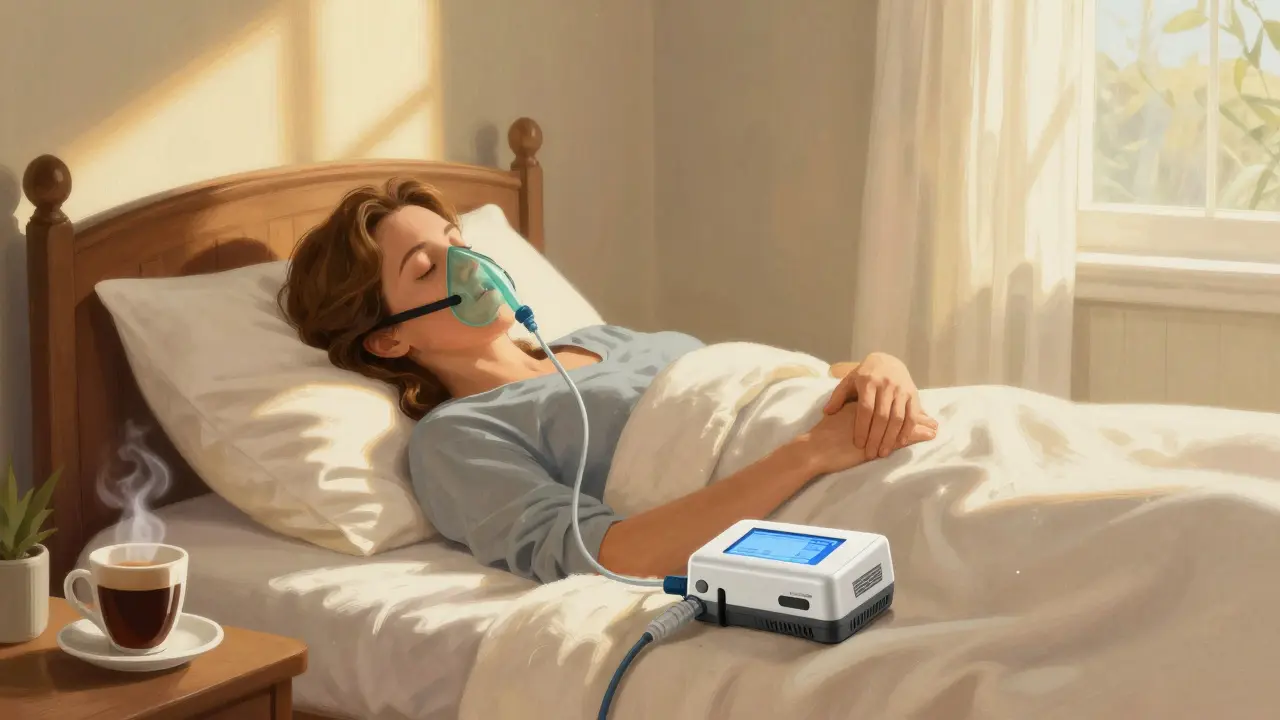
The landscape of sleep apnea treatment is evolving. In 2023, the FDA approved the first implantable alternative: the hypoglossal nerve stimulator (Inspire Medical Systems). This device stimulates the tongue muscle to keep the airway open during sleep. Clinical trials showed 79% adherence at 12 months, significantly higher than the 46% seen in CPAP groups for similar patients. While expensive and invasive, it offers hope for those who cannot tolerate masks.
Remote monitoring has also become standard, with 92% of new CPAP devices featuring connectivity. Platforms like ResMed’s AirView allow clinicians to track usage and adjust pressures remotely, reducing the need for frequent clinic visits. The 2024 AASM guidelines are shifting focus from rigid time-based adherence goals to personalized outcomes, considering individual symptom response and cardiovascular risk profiles.
Safety Considerations and Regulatory Changes
Safety is paramount in respiratory therapy. The 2021 recall of 3.5 million Philips Respironics devices due to degrading sound abatement foam highlighted the risks associated with manufacturing defects. The FDA reclassified CPAP devices from Class II to Class III, increasing regulatory scrutiny. Patients should regularly inspect their equipment for signs of wear, particularly in the foam components, and report any unusual odors or tastes immediately.
Additionally, certain treatments carry specific risks. Adaptive Servo-Ventilation (ASV), while effective for central sleep apnea, is contraindicated in patients with severe heart failure (NYHA class III-IV) due to increased cardiovascular mortality risks demonstrated in the SERVE-HF trial. Always consult with a sleep specialist to ensure the chosen therapy aligns with your overall health profile.
Can I use home oxygen for sleep apnea instead of CPAP?
No, home oxygen alone does not treat obstructive sleep apnea. It increases oxygen levels but does not prevent the airway from collapsing. Using oxygen without CPAP can mask symptoms while leaving the underlying obstruction untreated, potentially leading to worse outcomes. CPAP is required to keep the airway open mechanically.
What is the difference between CPAP and BiPAP?
CPAP delivers a single, constant pressure throughout the night. BiPAP (Bilevel PAP) delivers two different pressures: a higher pressure when you inhale and a lower pressure when you exhale. BiPAP is often prescribed for patients who need higher pressures or have difficulty exhaling against a fixed pressure, such as those with COPD or obesity hypoventilation syndrome.
How do I know if my CPAP pressure is set correctly?
Correct pressure settings should eliminate snoring and breathing pauses, resulting in a residual Apnea-Hypopnea Index (AHI) of less than 5 events per hour. If you still feel sleepy during the day or experience frequent mask leaks, your pressure may need adjustment. Most modern APAP devices auto-adjust, but manual titration studies may be needed for complex cases.
Is sleep apnea considered a form of respiratory failure?
Untreated severe sleep apnea can lead to chronic respiratory failure, particularly if it causes persistent hypoxia or hypercapnia. While OSA itself is a disorder of airway obstruction, the resulting intermittent hypoxia strains the cardiopulmonary system. Over time, this can contribute to right-sided heart failure (cor pulmonale) and exacerbate existing lung diseases, pushing patients toward acute respiratory failure episodes.
What should I do if I can't tolerate my CPAP mask?
Mask intolerance is common but manageable. Try switching mask types (nasal pillows, full-face, or nasal masks), use heated humidification to reduce dryness, and ensure a proper fit through professional fitting services. Gradual pressure ramp-up features can also help. If mask issues persist, discuss alternative therapies like oral appliances or hypoglossal nerve stimulation with your doctor.
Tim Reynolds
May 28, 2026 AT 18:02You are completely delusional. The Philips recall was due to chemical off-gassing from the sound abatement foam which is a documented manufacturing defect. There is no conspiracy here just bad engineering and corporate negligence. Please stop spreading misinformation that could harm vulnerable patients who need accurate information about their therapy.
Ryan Jones
May 29, 2026 AT 17:26Oh look another sheep defending the system. You think you are smart because you read a label? They want you to believe it is just foam. It is not. It is about compliance data. They track every breath you take. Why do you think they added connectivity to 92% of devices? To spy on you while you sleep. I am not going to let them into my bedroom. I would rather die than be monitored by a corporation that cares more about stock prices than human lives.
Groman Neta
May 31, 2026 AT 09:57This entire thread is pathetic. Ryan is clearly unstable and Tim is wasting his time arguing with him. The article states clearly that CPAP is the gold standard for moderate to severe OSA. If you cannot follow simple medical advice or are too paranoid to use a machine then perhaps you should not be commenting on health topics. Your ignorance is showing and it is embarrassing for everyone involved.
Lisa Russo
May 31, 2026 AT 10:42Actually you are wrong. CPAP adherence is only 50 percent according to the table in the post. That means half the people give up. So it is not really the gold standard if half the population rejects it. Mandibular advancement devices have 70 percent adherence. Maybe the problem is the machine itself and not the patient. People hate being forced to wear a mask. It is uncomfortable and ugly. Why do doctors insist on this when there are simpler options?
Groman Neta
June 1, 2026 AT 10:11MADs are significantly less effective for severe cases as stated in the text. You are comparing apples to oranges. Efficacy matters more than comfort when discussing respiratory failure. A 50 percent reduction in AHI is not enough to prevent long term cardiovascular damage. You are prioritizing aesthetics over survival which is a lazy and dangerous perspective. Read the section on BiPAP for high pressure needs instead of making baseless claims.
Gareth Tyler
June 3, 2026 AT 03:02I find the discussion about adherence rates quite interesting. In Australia we see similar issues with mask fit. Many patients struggle with claustrophobia initially. However the gradual acclimation technique mentioned in the post works wonders. Starting with lower pressures helps reduce anxiety. It is important to remember that technology like heated humidification makes a huge difference in user experience. We should focus on supporting patients rather than criticizing their choices.
Sharon O’Mahonh
June 3, 2026 AT 18:11Gareth is absolutely right about the support aspect. As an inclusive mentor i always tell my community that healing is a journey not a destination. The biofeedback loop between mind and body is crucial here. When we feel safe and supported our parasympathetic nervous system engages allowing for deeper rest. The jargon heavy terminology in the post can be intimidating but breaking it down reveals the beauty of physiological harmony. Let us uplift those struggling with mask intolerance instead of shaming them.
Jonhnnie john13
June 3, 2026 AT 22:08The statistical correlation between remote monitoring and improved outcomes is undeniable yet often overlooked by skeptics. Data driven approaches allow for precise titration adjustments without unnecessary clinic visits. This efficiency reduces healthcare costs while maintaining therapeutic efficacy. Critics who dismiss telemedicine fail to recognize the paradigm shift in chronic disease management protocols established by recent AASM guidelines.
Elizabeth Fandry
June 4, 2026 AT 12:44One must consider the ontological implications of relying on mechanical ventilation for basic biological functions 🤔. Are we truly alive if our respiration is governed by algorithms? The hypoglossal nerve stimulator represents a fascinating intersection of biology and technology yet it raises ethical questions about bodily autonomy. Perhaps we should embrace these advancements as extensions of our will rather than viewing them with suspicion. After all progress demands sacrifice 😌.
Madeline Petes
June 5, 2026 AT 07:11Wow Elizabeth that is some deep stuff but honestly i just want to sleep through the night without waking up gasping for air. I tried the MAD first because it looked easier but my dentist said my apnea was too severe. Now i am using CPAP and yeah the mask is annoying at first but i feel so much better during the day. My husband says i dont snore anymore which is a win for both of us. Just stick with it guys it gets easier.
Ramanath Rao
June 6, 2026 AT 04:29In India we face significant challenges with power stability which affects CPAP usage for many patients. Battery backups are essential but expensive. The cost barrier prevents many from accessing proper treatment despite awareness campaigns. We need affordable solutions tailored for developing nations where grid reliability is poor. International manufacturers must consider these regional disparities when designing devices. Access to healthcare should not depend on electricity infrastructure quality.